
In a world increasingly defined by movement and connection, passports have evolved far beyond mere travel documents—they are keys unlocking the world’s borders. From humble beginnings as simple paper slips stamped by officials, today’s passports are complex symbols of identity, security, and international cooperation. As nations reshape travel policies and embrace new technologies, the very concept of what a passport represents is transforming before our eyes. This article explores the fascinating journey of global passports, tracing their evolution and unveiling how they continue to shape the way we cross boundaries in an ever-changing world.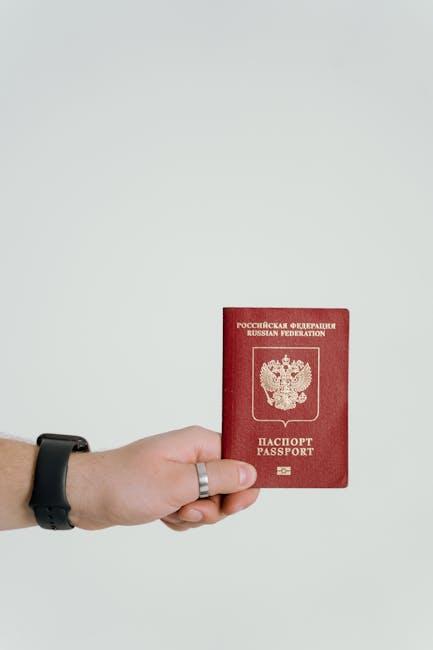
The Historical Journey of Passports from Paper to Digital
Centuries ago, passports were rudimentary letters of safe conduct, penned by monarchs or local rulers, granting travelers protection and permission to cross borders. These paper documents were simple—often handwritten on parchment, varying widely in design and security. Over time, the expanding web of global diplomacy and increasing mobility demanded more standardized and secure forms of identification. By the early 20th century, the evolution of passports saw the introduction of printed booklets with designated spaces for stamps and visas, ensuring a traveler’s journey could be recorded at each checkpoint with more consistency.
As technology progressed, so did the passport’s sophistication. The late 20th century ushered in biometric data, embedding fingerprints and photographs in machine-readable zones. Today, the digital transformation is redefining what it means to be a citizen of the world, with e-passports storing encrypted information accessible by border authorities worldwide. Below is a glimpse into this transformative timeline:
| Era | Passport Feature | Significance |
|---|---|---|
| 1500s | Handwritten Letters | Monarch-issued safe conduct |
| 1900s | Printed Booklets | Standardized international travel |
| 1980s | Machine-readable Zones | Faster processing at borders |
| 2000s | Biometric Passports | Enhanced security through biometrics |
| 2020s | Digital Passports | Mobile and encrypted identity |

Technological Innovations Shaping Modern Travel Documents
Embedded chips and biometrics are at the heart of today’s travel documents, transforming passports from mere paper booklets into high-tech gateways. These e-passports incorporate microprocessors that securely store biometric data such as fingerprints, facial recognition templates, and iris scans. This advancement not only fortifies identity verification but also accelerates border processing, reducing wait times and enhancing traveler convenience globally. The integration of Near Field Communication (NFC) technology allows border control agents to quickly read encrypted data, making counterfeiting nearly impossible in an era where security breaches grow increasingly sophisticated.
- Biometric authentication: Unique identifiers embedded in the chip
- Digital data security: Encrypted passports safeguarding privacy
- Global interoperability: Standardization through ICAO guidelines
Beyond biometric enhancements, the rise of blockchain technology is poised to revolutionize passport management by introducing immutable and transparent records of issuance and usage. Governments are experimenting with decentralized systems that can verify traveler identities without relying solely on centralized databases, minimizing risks of data breaches. Furthermore, augmented reality (AR) is beginning to find a place in travel documents, allowing officials and even travelers to access dynamic, real-time updates and visual guides via smartphones. These technological leaps are steering passports towards a future where identity verification is not just robust and secure but intuitive and adaptive.
| Innovation | Primary Benefit | Implementation Status |
|---|---|---|
| Biometric chips | Enhanced security | Widely adopted |
| Blockchain verification | Data integrity | Experimental |
| Augmented reality passports | Interactive guidance | Pilots underway |
Global Security Challenges and Passport Verification Advances
In an era marked by increasing geopolitical complexities and growing threats from cyber-attacks to international terrorism, safeguarding national borders has never been more critical. Governments worldwide are embracing cutting-edge technology to enhance passport verification systems, fundamentally transforming how identities are validated at checkpoints. These advances not only fortify defenses against forged documents but also expedite the flow of legitimate travelers, balancing stringent security measures with efficiency. Innovations such as biometric data integration, real-time database syncing, and AI-driven pattern recognition have become paramount tools in the fight against illegal entry and identity fraud.
Today’s passport verification technologies often feature multi-layered authentication procedures that combine physical and digital security elements. Some of the leading techniques include:
- Facial recognition matched against biometric chip data
- Encrypted RFID chips protecting data integrity
- Blockchain systems for tamper-proof traveler histories
- AI algorithms detecting subtle document anomalies
These methods, supported by global cooperation and shared intelligence networks, have helped reduce the risk of cross-border crimes and human trafficking substantially. The ongoing evolution in this space signals a future where borders are not just controlled by walls or guards, but by a sophisticated integration of technology and information.
| Verification Technology | Primary Benefit |
|---|---|
| Biometric Scanning | Accurate identity confirmation |
| RFID Encryption | Secures data from unauthorized access |
| AI Pattern Analysis | Detects forged or altered documents |
| Blockchain Logs | Ensures data transparency and immutability |
The Role of International Cooperation in Passport Standardization
Global passport standardization is a remarkable feat achieved through decades of collaborative effort among nations. International organizations like ICAO (International Civil Aviation Organization) have spearheaded initiatives to harmonize passport features, ensuring security and interoperability across borders. This cooperation has ushered in innovations such as biometric data inclusion, machine-readable zones, and tamper-proof materials, which facilitate smoother immigration processes worldwide.
Key benefits of this global synergy include:
- Enhanced security: Uniform standards help combat forgery and identity theft.
- Simplified travel: Travelers experience faster clearance with consistent verification techniques.
- International trust: Countries rely on standardized passports for confident cross-border exchanges.
- Technological innovation: Sharing expertise accelerates the adoption of cutting-edge features.
| Cooperating Entity | Contribution | Impact |
|---|---|---|
| ICAO | Passport design standards | Global uniformity in e-passports |
| INTERPOL | Database sharing for stolen passports | Reduced passport fraud |
| UN | Policy frameworks for cross-border travel | Strengthened international cooperation |
Future Trends and Best Practices for Seamless Cross-Border Mobility
As the world becomes increasingly interconnected, the future of global mobility hinges on embracing technological innovation and international collaboration. Emerging trends such as biometric verification, blockchain-based identity management, and AI-driven border control systems promise to streamline traveler experiences while enhancing security. Governments and organizations are moving towards unified digital identities that transcend national borders, allowing for real-time verification and seamless transit without cumbersome paperwork. Key strategies include:
- Integrated digital passports embedded with encrypted biometric data.
- Global interoperability standards fostering cooperation among immigration authorities.
- Privacy-first policies ensuring data protection while facilitating mobility.
To illustrate the impact of these advances, consider the evolving attributes of passport technology:
| Feature | Current Usage | Future Potential |
|---|---|---|
| Biometric Integration | Fingerprints, facial recognition | Multi-modal biometrics & continuous authentication |
| Digital Credential Storage | Paper-based + embedded chips | Fully digital IDs on blockchain |
| Verification Speed | Manual checks or semi-automated | Instant AI-assisted cross-border clearance |
By adopting these best practices and forward-thinking innovations, the borders of tomorrow won’t just open—they’ll dissolve into gateways that encourage global unity and effortless passage.
Closing Remarks
As the world continues to intertwine through technology, culture, and commerce, the passport remains both a symbol and a tool of our shared journey. From humble beginnings etched in ink to the sophisticated digital gateways of today, these small booklets have unlocked not just borders, but possibilities. In understanding their evolution, we glimpse the changing face of global connection—one that balances security, identity, and the enduring human desire to explore. The story of passports is, ultimately, the story of us all: travelers crossing thresholds, bridging divides, and stepping boldly into the future.




