
In the vast tapestry of human history, migration has woven intricate patterns that span continents and centuries, shaping the world as we know it today. “Waves Across Borders: Unraveling the Story of Global Migration” invites readers on a journey through the ebb and flow of movement—tracing the footsteps of those who dared to cross boundaries in search of new beginnings. This exploration delves beyond mere statistics and policies, uncovering the shared threads of hope, challenge, and resilience that define the ever-evolving story of migration across the globe.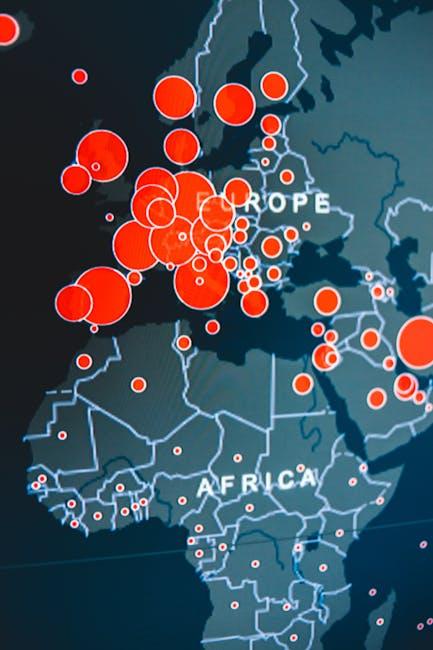
The Historical Currents Shaping Global Migration Patterns
The ebb and flow of human movement across continents have long been dictated by a mosaic of forces—economic needs, environmental shifts, and political upheavals. From ancient trading routes to colonial expansions, these currents have woven a complex tapestry of cultural exchanges and demographic transformations. Economic opportunity has often served as a powerful magnet, drawing waves of migrants to burgeoning cities and thriving industries. Conversely, famine, war, and natural disasters have acted as relentless push factors, compelling people to seek safety and stability beyond their homelands.
- Colonialism: Redrew borders, creating new migration pathways and forced relocations.
- Industrial Revolution: Sparked urban migration and global labor demands.
- World Wars: Displaced millions, reshaping demographics worldwide.
- Globalization: Facilitated not just trade but human mobility on an unprecedented scale.
| Era | Dominant Migration Driver | Impact |
|---|---|---|
| Pre-Industrial | Trade and Exploration | Expanded cultural frontiers |
| Industrial Age | Job Opportunities | Urban growth and labor shifts |
| 20th Century | Conflict and Decolonization | Mass displacement & new nations |
| Modern Era | Globalization & Tech | Increased mobility & connectivity |

Economic Tides Driving Movement Across Continents
Economic currents play a profound role in shaping the patterns of human migration, much like the tides that ebb and flow across vast oceans. When industries flourish in one region while stagnating in another, individuals and families are compelled to seek new horizons in search of opportunity, safety, and prosperity. These movements are not random waves but are driven by a complex interplay of factors, including wage disparities, employment availability, and the promise of higher living standards. As nations open their borders and markets intertwine, the resulting economic mosaic paints a vivid picture of aspirations, resilience, and adaptation.
To grasp this phenomenon more tangibly, consider some of the key economic motivators fueling transcontinental movements:
- Job Availability: Vocational prospects often act as the primary current steering migration.
- Income Gaps: Significant disparities in earnings push labor from lower-wage areas to stronger economies.
- Cost of Living: Affordable housing and basic services beckon migrants to urban and suburban hubs alike.
- Investment and Growth: Expanding economies create ripple effects that attract global talent and manpower.
| Region | Main Economic Pull Factor | Typical Migrant Origin |
|---|---|---|
| North America | High-tech & service sector jobs | Latin America, Asia |
| Europe | Manufacturing & finance opportunities | Africa, Eastern Europe |
| Gulf States | Construction & energy projects | South Asia, North Africa |
| Australia | Mining & healthcare | Asia, Pacific Islands |
Cultural Crossroads and the Impact on Identity
At the intersection of diverse cultures, identity becomes a fluid tapestry woven from countless narratives. Migration breathes life into this tapestry, infusing traditions, languages, and belief systems with new rhythms and colors. As individuals navigate between heritage and adaptation, they craft unique identities that reflect both roots and routes, grounding themselves in a dual sense of belonging. This fusion often blossoms into vibrant communities where the echoes of ancestral stories harmonize with the promises of new beginnings.
The dynamics of cultural crossroads shape identity through:
- Language evolution: blending tongues to create hybrid dialects and expressions.
- Culinary innovation: reinterpreting recipes to reflect diverse influences.
- Artistic expressions: merging styles that tell stories of displacement and connection.
- Social practices: negotiating traditions in changing landscapes.
| Aspect | Cultural Crossroads Effect | Identity Impact |
|---|---|---|
| Language | Blending dialects | New modes of self-expression |
| Cuisine | Fusion flavors | Shared cultural heritage |
| Art | Hybrid styles | Visual storytelling of migration |
Challenges and Opportunities in Modern Migration Policies
Modern migration policies stand at a complex crossroads, balancing humanitarian concerns with national security and economic interests. The intricacies lie not only in controlling borders but also in fostering integration and mutual respect among diverse populations. Policymakers face challenges such as addressing undocumented migration, adapting to the rapid flow of climate refugees, and responding to fluctuating labor market demands. Moreover, these policies must navigate the unpredictable tides of political will and public opinion, which often sway between compassion and caution.
Yet within these challenges lie remarkable opportunities to reshape societies into more inclusive and dynamic communities. Embracing innovative approaches — such as technology-driven visa systems, targeted integration programs, and international collaboration frameworks — can transform migration into a powerful engine for growth and cultural enrichment. Consider the following key elements that could redefine success in migration policy:
- Flexible legal pathways for different migrant profiles
- Robust support structures for newcomer adaptation
- Data-driven policy adjustments to respond swiftly to evolving trends
| Factor | Challenge | Opportunity |
|---|---|---|
| Border Management | Ensuring security without stifling mobility | Smart technologies for efficient, humane processing |
| Social Integration | Cultural clashes and discrimination | Community engagement initiatives |
| Economic Impact | Job market competition fears | Harnessing migrant skills for innovation |
Building Bridges Toward Inclusive and Sustainable Migration Futures
Crafting a future where migration is both inclusive and sustainable requires more than just policy—it demands a fundamental shift in perspective. It means recognizing migrants not as mere statistics or challenges, but as vibrant contributors to the social, cultural, and economic tapestry of societies. Central to this vision is the creation of safe pathways that honor human dignity, encourage cross-cultural dialogue, and empower communities on both sides of the borders. By fostering partnerships among governments, civil society, and private sectors, we pave the way for equitable access to opportunities and resources, ensuring that migration becomes a bridge rather than a barrier.
To effectively build these bridges, several key elements must be championed:
- Collaborative governance: Unified efforts in policy-making that address root causes and support integration.
- Inclusive economic strategies: Programs that enhance skill development and fair labor market access.
- Cultural exchange initiatives: Platforms that promote understanding, reduce stigma, and celebrate diversity.
- Environmental resilience: Solutions addressing climate-induced migration with sustainable practices.
Below is a snapshot illustrating these elements and their impact on migration futures:
| Element | Outcome | Key Stakeholders |
|---|---|---|
| Collaborative Governance | Coherent policies and reduced irregular migration | Governments, NGOs |
| Inclusive Economy | Improved migrant livelihoods and local growth | Businesses, Training Institutes |
| Cultural Exchange | Enhanced social cohesion and acceptance | Community Groups, Educators |
| Environmental Resilience | Adaptive migration strategies in crisis zones | Environmental Agencies, Aid Organizations |
Concluding Remarks
As the tides of migration continue to ripple across continents, the story of human movement remains an ever-evolving narrative—complex, multifaceted, and deeply intertwined with our shared history. “Waves Across Borders” invites us to see beyond statistics and headlines, to recognize the enduring human spirit carried on these journeys. In unraveling the threads of global migration, we uncover not just patterns of change, but the timeless quest for connection, opportunity, and belonging that unites us all.




