
In a world where borders blur and cultures intertwine, the concept of nationality is no longer confined to a singular identity. Double nationality, a legal and personal phenomenon, presents a unique tapestry of opportunities and challenges for those who live with feet on two different grounds. Navigating identity across borders invites a deeper exploration of belonging, allegiance, and the fluid nature of self in an increasingly interconnected globe. This article delves into the complexities and nuances of holding dual citizenship, revealing how it shapes lives, perspectives, and the very notion of home.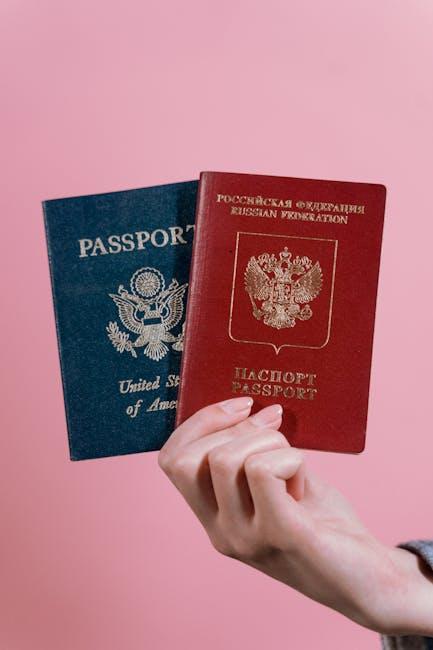
Understanding the Legal Landscape of Dual Citizenship
Embarking on the journey of dual citizenship reveals a complex tapestry woven with multiple legal threads. The nuances vary dramatically across countries, where some embrace double nationality with open arms, while others impose rigid restrictions. It’s crucial to grasp that dual citizenship is not a universal right but a privilege governed by each nation’s legislation. For example, some countries require you to declare allegiance to one citizenship, potentially renouncing the other, while others may permit seamless holding of both passports, each carrying distinct rights and responsibilities.
Understanding these legal landscapes involves more than knowing passport eligibility; it means navigating tax obligations, military service requirements, voting rights, and diplomatic protections that come attached to holding two national identities. Key considerations include:
- Whether both countries allow dual citizenship explicitly or implicitly
- Tax implications and potential for double taxation
- Legal consequences in matters of inheritance, property ownership, and business
- Obligations for national service or jury duty in either country
| Country | Dual Citizenship Policy | Key Legal Note |
|---|---|---|
| Country A | Permitted | No requirement to renounce prior citizenship |
| Country B | Restricted | Renunciation mandatory upon naturalization |
| Country C | Conditional | Allowed only for specific cases such as marriage |

Balancing Cultural Identity in a Multinational Life
Living between two cultures often means weaving together stories, traditions, and values that might seem worlds apart yet create a rich tapestry of personal identity. It involves more than just switching languages or celebrating different holidays; it’s about embracing the nuances that define each nationality. This dynamic balance challenges individuals to cultivate a flexible mindset, allowing them to honor their heritage while adapting to diverse societal norms and expectations. Rather than feeling divided, many find strength in this duality, discovering new perspectives that shape their worldview in profound ways.
To successfully navigate this complex terrain, it helps to acknowledge and nurture the elements that reinforce identity on both sides. These include:
- Family traditions: Rituals passed down generate a sense of continuity and belonging.
- Language fluency: Maintaining proficiency keeps connections alive and authentic.
- Cultural celebrations: Participating actively fosters pride and community bonds.
- Personal values: Selecting the best from each culture to create a unique moral compass.
| Aspect | Challenges | Benefits |
|---|---|---|
| Identity Clarity | Confusion, Social Pressure | Broader Perspective, Adaptability |
| Community Belonging | Exclusion, Misunderstanding | Rich Networks, Cultural Exchange |
| Linguistic Skills | Language Barriers | Enhanced Communication, Cognitive Flexibility |
Challenges and Opportunities in Employment and Travel
Holding two nationalities can open a world of employment possibilities, granting individuals access to job markets in multiple countries without the usual visa restrictions. This dual access often translates into better career advancement, higher salaries, and the ability to leverage diverse cultural perspectives at work. However, this advantage isn’t without its hurdles. Dual citizens frequently face complex tax obligations, social security confusion, and sometimes conflicting labor laws that can make choosing a work location a logistical chess game rather than a straightforward decision.
When it comes to travel, double nationality can be a passport to freedom or a source of complication. While the privilege allows smoother border crossings, visa exemptions, and the flexibility to select the most convenient nationality at entry points, it also requires vigilance. Travelers must be aware of which passport to present depending on political tensions, bilateral agreements, or travel restrictions. Below is a quick overview of both the perks and pitfalls experienced by dual nationals in employment and travel:
- Employment Perks: Broader job market access, simplified work permit issues, diverse networking opportunities
- Employment Challenges: Double taxation, complex social security coordination, legal ambiguities in cross-border work
- Travel Perks: Multiple passports for visa-free countries, avoiding consular issues, increased entry options
- Travel Challenges: Confusion over which passport to use, potential dual allegiance scrutiny, restrictions in countries disallowing dual citizenship
| Aspect | Opportunity | Challenge |
|---|---|---|
| Employment | Access multiple labor markets | Complex legal and tax obligations |
| Travel | Visa-free entry in more countries | Passport choice and diplomatic sensitivities |
Financial Implications and Tax Considerations for Dual Nationals
Managing finances across two countries introduces a layer of complexity that dual nationals must navigate carefully. Currency fluctuations, differing banking systems, and conflicting financial regulations can all impact how assets and income are handled. It’s essential to be proactive in understanding the financial rules in both nations, particularly regarding investments, property ownership, and retirement funds. Failure to do so may not only lead to unexpected financial penalties but also complicate wealth transfer between countries. By establishing clear, compliant financial practices early on, dual nationals can preserve and grow their wealth more effectively.
Taxation is another critical aspect where double nationality plays a pivotal role. Many dual nationals face the challenge of filing tax returns in multiple jurisdictions, which can result in double taxation unless properly managed through tax treaties or foreign tax credit provisions. To minimize tax liabilities, dual nationals should consider:
- Consulting tax professionals familiar with international tax law
- Keeping detailed records of income and expenses earned or paid across borders
- Exploring tax treaties that exist between the two countries involved
- Understanding residency rules in relation to tax obligations
| Tax Aspect | Consideration for Dual Nationals | Action Step |
|---|---|---|
| Income Tax | Possible double tax on worldwide income | Claim foreign tax credits |
| Estate Tax | Varies widely between countries | Plan cross-border inheritance carefully |
| Reporting | Stringent disclosure of foreign assets | Maintain comprehensive documentation |
| Social Security | Contribution and benefit coordination | Review bilateral agreements |
Practical Tips for Managing Dual Nationality Documentation
Keeping dual nationality documents organized is essential to avoid legal complications and ensure smooth travel or residency processes. Start by creating a dedicated folder, physical or digital, clearly labeled with categories such as passports, birth certificates, naturalization papers, and residency permits. Regularly update this collection when new documents are issued or renewed. A color-coded system or cloud-based backup can provide quick access and peace of mind regardless of where you are.
Understanding the specific requirements and expiration dates for each country’s documents can save time and hassle. Consider maintaining a simple comparative checklist like the one below to track renewals, application timelines, and essential fees. This approach helps prevent overlooked deadlines or missing paperwork during critical moments such as visa applications or border crossings.
| Document | Country A | Country B | Renewal Interval |
|---|---|---|---|
| Passport | 10 years | 5 years | Varies |
| National ID | 15 years | 10 years | Depends |
| Residency Permit | 2 years | 3 years | Fixed |
- Keep certified translations handy if documentation is in different languages.
- Stay aware of legal changes in both countries to ensure compliance with evolving regulations.
- Consult professionals for complex situations like renunciation or inheritance rights.
Wrapping Up
In the intricate dance of borders and belonging, double nationality emerges as both a bridge and a mirror—connecting individuals to multiple worlds while reflecting the rich complexity of identity itself. As we navigate these overlapping spheres, we come to understand that nationality is not merely a legal status, but a tapestry woven from culture, memory, and choice. Embracing double nationality invites us to rethink the boundaries that define us and to celebrate the diverse stories that shape our global community. In the end, identity across borders is less about division and more about the myriad possibilities of belonging.




