
In an era defined by shifting borders and the reimagining of national identity, a new kind of currency is emerging-one that transcends the traditional confines of wealth and status. The concept of a “Passport for Investment” is rapidly evolving from being a mere trophy of affluence into a strategic instrument of economic influence and geopolitical power. Far beyond its allure as a gateway to luxury lifestyles or exotic locales, this phenomenon is reshaping global economic landscapes, fostering new alliances, and challenging the very notions of citizenship and sovereignty. As countries compete not just for capital, but for connectivity and influence, the passport has become a powerful asset in the intricate dance of modern economics and diplomacy. This article explores why “Passport for Investment” is the new frontier of economic power-and why its implications reach far deeper than the pursuit of personal wealth.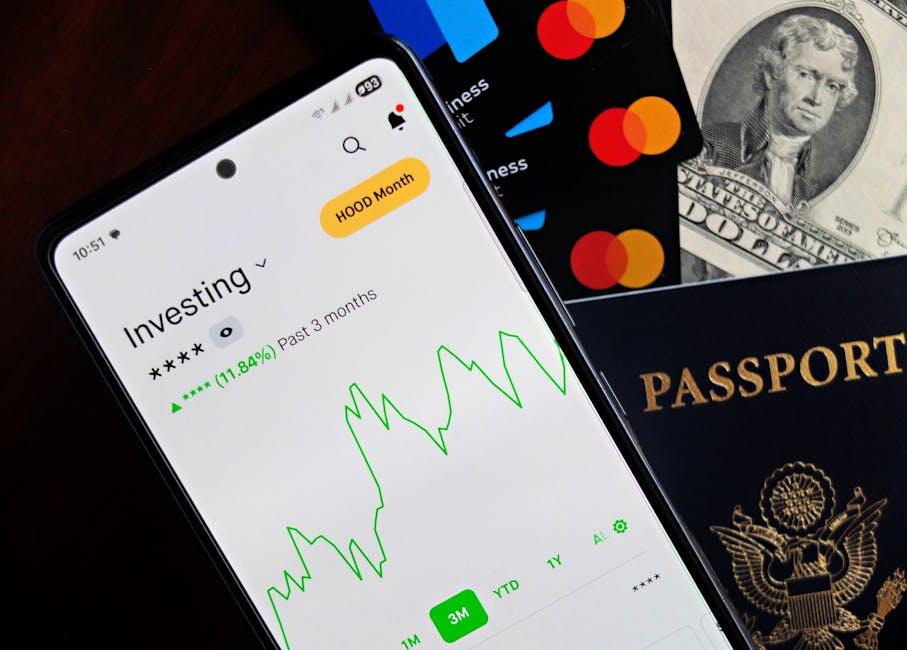
The Geopolitical Chessboard Behind Passport Investment Beyond Monetary Gains
At first glance, the allure of passport investment programs might seem purely financial-a straightforward exchange of capital for mobility. Yet, the underlying geopolitical dynamics reveal a more strategic tableau where sovereign interests, population management, and soft power converge. States participating in these schemes are not merely raising funds; they are curating a demographic profile, influencing global economic flows, and subtly reshaping diplomatic alignments. This redefinition of citizenship challenges conventional notions of national loyalty and sovereignty. As countries selectively grant potent passports, they effectively forge transnational networks of influence, blending economic pragmatism with geopolitical foresight. However, this practice also raises thorny trade-offs: prioritizing affluent investors risks alienating domestic populations and undermining social cohesion, while indiscriminate inclusivity can dilute strategic control and invite regulatory scrutiny on the world stage.
Policy architects and investors alike must navigate these complexities with sophistication:
- States should integrate passport-by-investment schemes within broader geopolitical strategies, balancing immediate fiscal gains against long-term diplomatic capital and societal integrity.
- Investors must recognize the intangible dividends of such passports, weighing enhanced global mobility and access against potential geopolitical vulnerabilities, including the risk of sudden regulatory reversals or geopolitical tensions that may affect their newfound rights.
Crucially, the geopolitical chessboard demands nuanced judgment rather than transactional thinking. Countries that meticulously design their programs with transparent due diligence and adaptive frameworks-notably incorporating anti-money laundering safeguards and reciprocal diplomatic engagements-can reposition themselves as pivotal nodes of influence in an increasingly multipolar world. The evolving passport economy, therefore, is less about immediate wealth and more about embedding economic power within the shifting tectonics of global governance and identity politics.
Unseen Costs and Complex Risks in the Global Race for Investment Passports
In the race to capitalize on investment passports, many overlook the hidden costs that extend far beyond the upfront financial requirements. These include intricate due diligence processes, ongoing compliance fees, and the tacit costs of reputational risk. A passport obtained through investment is not a mere transactional asset but a dynamic instrument tied to evolving geopolitical climates and regulatory landscapes. Investors often underestimate how political shifts in host countries can rapidly alter the value or even the validity of these passports, creating a volatile mix of opportunity and vulnerability. Additionally, while the allure of mobility and tax optimization dominates headlines, the long-term socioeconomic consequences-such as the potential dilution of national identity, social cohesion, and domestic market distortions-warrant more rigorous scrutiny from policymakers and investors alike.
Nuanced decision-making is crucial when navigating this complex terrain. Instead of viewing investment passports as uniform commodities, one must weigh key distinctions such as:
- Political stability vs. regulatory unpredictability: Stable jurisdictions often demand higher investment thresholds but offer stronger guarantees of sustained rights and protections.
- Economic integration vs. superficial affiliation: Does the investment passport facilitate genuine access to the economy and social systems, or does it serve as a procedural shortcut with limited practical utility?
- Short-term liquidity vs. long-term risk exposure: Quick citizenship can unlock immediate benefits, but the geopolitical cost of holding a passport from a volatile region can outweigh initial gains.
| Factor | Common Assumption | Critical Reassessment |
|---|---|---|
| Economic Impact | Investment passports spur immediate capital inflow. | Inflows can distort local real estate, inflate inequality, and create dependency on volatile foreign capital. |
| Mobility | All investment passports offer seamless global access. | Visa-free travel varies drastically; strategic choice is essential to match personal and business needs. |
| Reputational Risk | Simply a personal asset with neutral perception. | Can trigger global scrutiny and negative media attention, affecting business and social stature. |
In sum, a more discerning approach-recognizing the layered risks and trade-offs-is imperative. Investors and states should foster transparency and adaptive frameworks that align citizenship-by-investment schemes with broader strategic objectives rather than short-term wealth accumulation, lest they undermine the very sovereignty and stability they aim to enhance.
Rethinking Citizenship Strategies Amid Shifting Power Dynamics and Economic Realities
Traditional notions of citizenship as merely a birthright or ethnic affiliation have been profoundly destabilized by the interplay between geopolitical realignments and volatile economic conditions. The surge of “passports for investment” programs underscores a critical shift: citizenship is increasingly commodified, yet it cannot be reduced to a mere transactional asset without reckoning with its broader implications. Countries offering these programs often assert they seek economic revitalization, but the reality demands a sharper critique. These strategies reflect a deliberate recalibration of sovereignty, where states balance short-term capital inflows against potential long-term costs such as eroded national identity, unequal access to civic rights, and the dilution of governance accountability. The crucial distinction lies in whether these programs serve as blunt instruments of wealth extraction or as strategically integrated components of a broader economic diversification agenda.
Decision-makers must navigate a nuanced landscape featuring multiple trade-offs. On one axis lies the imperative to attract global capital and talent amidst competitive international markets; on the other, the risk of fostering enclaves of privilege that clash with democratic norms and exacerbate social inequality. To move beyond simplistic portrayals that champion these schemes as quick economic fixes, governments should embed citizenship-by-investment programs within frameworks that emphasize:
- Rigorous due diligence: Preventing misuse by clearly differentiating genuine investors whose contributions align with long-term strategic national interests.
- Transparent benefit-sharing: Ensuring that the generated wealth circulates into public goods and infrastructure rather than private enclaves alone.
- Adaptive governance models: Incorporating feedback loops that adjust eligibility criteria and investment channels based on evolving geopolitical and economic conditions.
Such calibrated approaches recognize that citizenship strategies must respond dynamically to the intersection of security concerns, economic development goals, and the increasing fluidity of global power structures. This is not an endorsement to commodify identity wholesale, but rather a call to harness these initiatives thoughtfully-transforming them from mere “wealth plays” into instruments of intentional, sustainable economic empowerment.
Why Economic Influence Trumps Wealth Accumulation in Passport Investment Schemes
Traditional discourse around passport investment schemes often fixates on the mere accrual of wealth, mistaking possession for power. Yet, this perspective is reductive and misses the seismic shift toward economic influence as the true currency behind these programs. Wealth accumulation offers static security, often confined within borders or tethered to volatile markets, whereas economic influence functions dynamically-reshaping geopolitical relationships, trade flows, and global capital allocation. Investors leveraging passports for more than just financial refuge are effectively buying access to economic ecosystems, where influence can be wielded with a multiplier effect far exceeding initial monetary input.
Understanding this distinction uncovers critical trade-offs and strategic nuances seldom acknowledged. For instance, pursuing a passport solely based on its ‘wealth protection’ narrative may overlook how such citizenship enables participation in regional economic blocs or preferential access to emerging markets. Below is a succinct comparison highlighting core differences:
| Aspect | Wealth Accumulation Focus | Economic Influence Focus |
|---|---|---|
| Primary Goal | Asset safety and value preservation | Enhanced capital mobility and market integration |
| Scope of Benefit | Individual or familial wealth | Network effects impacting industries and economies |
| Time Horizon | Medium to long-term financial security | Long-term geopolitical and economic positioning |
| Risk Profile | Predominantly financial risk | Political, regulatory, and reputational risks |
- Recommendation: Investors should recalibrate their evaluation criteria beyond just financial metrics, considering factors such as diplomatic ties, trade agreements, and regional economic strategies of the host country.
- Strategic Insight: Passport investment can catalyze broader economic agency-transforming participants from mere wealth holders to influential stakeholders positioned at vital crossroads of global commerce.
Navigating Ethical Dilemmas and Strategic Benefits of Buying a Place in the World
Buying a passport through investment schemes is frequently framed as a straightforward wealth acquisition tactic, yet this obscures a more complex ethical landscape demanding nuanced consideration. These programs straddle a thin line between opportunity and exploitation: on one hand, they can enable entrepreneurs and skilled professionals to unlock global mobility, diversify geopolitical risk, and catalyze economic renewal in host countries. On the other hand, they risk commodifying citizenship, potentially undermining the foundational social contract and eroding the intrinsic value of national identity. The ethical dilemma intensifies when such schemes inadvertently favor the ultra-rich, widening inequality not only between individuals but also between states that can leverage or resist these flows. Transparency, regulatory rigor, and ensuring tangible socio-economic contributions from investors are crucial guardrails that must evolve alongside this new frontier-without them, passport-for-investment programs risk becoming transactional loopholes rather than strategic economic engines.
From a strategic vantage, the decision to acquire a second passport demands discerning trade-offs. It is not simply about economic capital-it’s a transformative geopolitical asset conferring freedoms and security hedges in an unpredictable world order. However, buyers must weigh factors beyond visa-free travel or tax benefits, such as the geopolitical stability of the issuing country, potential diplomatic fallout, and the authenticity of the due diligence exercised. Governments, meanwhile, face the dual challenge of attracting meaningful investment while maintaining their sovereignty and national security prerogatives. Below is a selective framework highlighting key considerations for prospective buyers and issuing states alike:
| Dimension | Buyer’s Strategic Benefit | Issuer’s Ethical and Economic Trade-off |
|---|---|---|
| Mobility & Security | Global access, escape hatch from home-country volatility | Potential loss of exclusivity and dilution of national identity |
| Economic Impact | Access to new markets, tax planning advantages | Risk of superficial capital inflows lacking long-term commitment |
| Reputation & Regulation | Enhanced credibility if passport comes from a well-regulated jurisdiction | Governance burden to maintain robust due diligence and avoid abuses |
Ultimately, the passport-for-investment paradigm is neither inherently exploitative nor unequivocally benevolent. It is a strategic chessboard where buyers and states must exercise sophisticated judgment and operate with a calibrated balance of principle and pragmatism-recognizing that citizenship, while a passport to opportunity, is simultaneously a covenant of shared responsibility.
Insights and Conclusions
As the global landscape shifts and borders blur in the pursuit of opportunity, the “Passport for Investment” emerges not merely as a symbol of wealth but as a strategic lever of economic influence. Beyond the allure of luxury and convenience, these passports are reshaping how capital flows, how nations compete, and how individuals navigate the complexities of a rapidly evolving world. In this new frontier, investment becomes a passport not just to a destination, but to a form of power that transcends traditional definitions-heralding a future where economic mobility and global citizenship intertwine in unprecedented ways.




