
In a world where borders shift and opportunities transcend geography, the concept of global mobility has evolved far beyond mere convenience. “Passport through investment” is often dismissed as a quick fix-a transactional shortcut to bypass lengthy immigration hoops. Yet, this perspective overlooks a more profound reality: these programs represent a strategic reimagining of mobility as an asset of considerable value. Rather than a simple commodity to be bought and sold, investment-based citizenship is reshaping how individuals and nations navigate the complexities of identity, security, and opportunity. This article explores why viewing global mobility through this nuanced lens reveals dimensions of strategy and long-term planning that deserve thoughtful consideration.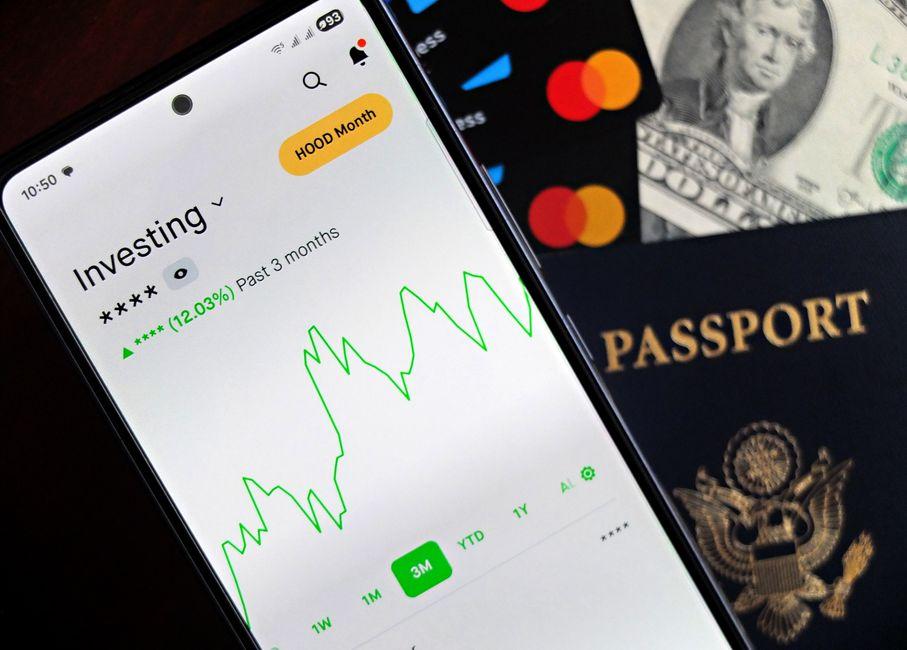
The Illusion of Easy Access and the Complex Reality Beneath Global Mobility
At first glance, the promise of “passport through investment” schemes appears deceptively straightforward: invest a certain amount, and in return, obtain a second citizenship or residence permit-seemingly a fast lane to global freedom. Yet, this simplistic transaction masks the intricate web of geopolitical, legal, and economic realities underpinning global mobility. While such schemes suggest an easy bypass of complex immigration protocols, they often overlook the nuanced trade-offs involved-ranging from the stability of the issuing country’s governance to the variable acceptance of these passports in the global arena. The illusion of easy access fails to account for the dynamic nature of international relations; a passport’s value is not intrinsic but continuously shaped by diplomatic ties, visa reciprocity, and global security concerns.
It’s critical to distinguish between the transactional and the strategic when evaluating these programs. Here are several dimensions demanding deeper scrutiny:
- Geopolitical durability: Not all passports are equal, and second citizenships from politically volatile nations may offer limited mobility and higher risk exposure.
- Compliance and reputation risk: Global trends toward stricter anti-money laundering (AML) and due diligence standards mean that passports obtained solely through investment can face future scrutiny or even revocation.
- Long-term asset integration: True global mobility should integrate with broader wealth and lifestyle planning rather than serve as a mere transactional shortcut.
Rather than viewing citizenship-by-investment as a commodity, it should be approached as a strategic asset whose value grows or diminishes depending on how well it aligns with evolving personal, professional, and geopolitical contexts. The challenge lies in transcending the allure of quick access and adopting a principled, informed approach that anticipates and addresses the complex reality beneath the surface.

Beyond Convenience The Strategic Value of Citizenship as a Long-Term Asset
Citizenship acquired through investment often suffers from being pigeonholed as merely a convenient tool for easing travel restrictions or tax burdens. However, this narrow framing obscures its profound strategic potential as a lifelong asset, not a transient shortcut. Far beyond immediate convenience, citizenship grants access to a complex lattice of socio-political networks, economic opportunities, and legal protections that can stabilize and amplify long-term personal and familial legacies. The true value lies in its ability to serve as a diversified global anchor-mitigating geopolitical risks and opening doors to international markets, education systems, and healthcare infrastructures that are otherwise inaccessible. Investors should measure the worth of citizenship through the prism of durable global mobility, safeguarding wealth and freedom across generations rather than short-term gains.
That said, not all citizenship-by-investment programs offer equal strategic value, and buyers must exercise rigorous discernment. The trade-offs involve more than cost and bureaucratic ease; they encompass the integrity of the program’s legal framework, the geopolitical clout of the passport, and its compatibility with the investor’s broader financial and personal ecosystem. For instance, a passport from a politically volatile country, no matter how quick to obtain, might undermine the very security it promises. Furthermore, the allure of pure convenience can overshadow the importance of substantive benefits such as visa-free access, dual citizenship permissibility, or post-citizenship economic integration. To navigate these nuances, prospective investors should weigh:
- Program Transparency and Legal Robustness: Reliability over rapid approvals
- Passport Strength: Depth of visa-free travel and international acceptance
- Economic Ecosystem Access: Opportunities for business establishment and wealth growth
- Long-Term Residency Rights: Inclusion of family members and multi-generational stability
Ultimately, citizenship via investment must be seen not as a transactional commodity but as a keystone in a comprehensive, forward-looking portfolio of global assets.
Weighing Risks and Rewards The Hidden Pitfalls in Investment-Based Passport Programs
Investment-based passport programs often masquerade as straightforward gateways to seamless global mobility, yet the reality beneath this veneer is far more complex. The risk-reward calculus here defies simplistic interpretation. On one hand, these programs promise expedited access to coveted markets, tax havens, and global networks, potentially accelerating personal and corporate growth. On the other, they carry latent vulnerabilities-geopolitical shifts, regulatory changes, and public backlash-that can abruptly erode the intended benefits. The assumption that a sizeable financial commitment guarantees unfettered freedom is increasingly untenable; rather, investors must weigh nuanced contingencies such as policy volatility and reputational risks. Strategic patience and a deep understanding of jurisdictional stability become as critical as capital infusion, underscoring that the real asset acquired is not merely a document but a dynamic, sometimes fragile, geopolitical positioning.
Crafting an intelligent approach to these programs demands moving beyond the transactional mindset to viewing citizenship through investment as an enduring strategic decision. This involves discerning which trade-offs align with one’s broader mobility, financial, and legacy goals. For instance, not all passports deliver equal long-term value-some offer stronger visa-free access but weaker economic ties or fewer protections against shifting international norms. Investors should consider factors such as:
- Regulatory transparency: Are program criteria and processes clearly defined and stable?
- Geostrategic relevance: Does the citizenship connect holders to vital global trade corridors or economic blocs?
- Exit flexibility: What are the implications if one wishes to abandon or transfer the investment?
Below is a concise evaluation framework to guide discerning applicants:
| Factor | High-Risk Pitfall | Strategic Mitigation |
|---|---|---|
| Policy Volatility | Sudden tightening or suspension undermining passport validity | Prioritize countries with consistent, transparent legislative records |
| Due Diligence Scrutiny | Reputational damage or application denial due to opaque backgrounds | Engage experts to ensure impeccable compliance and vetting |
| Economic Dependency | Overreliance on a single jurisdiction’s economy or political climate | Diversify mobility portfolio; combine passports with residence permits |
Ultimately, those who treat investment passports as mere commodities risk overlooking their inherent fragility and the need for ongoing strategic management. Recognizing these pitfalls is essential to transforming global mobility from a transactional privilege into a resilient, adaptive asset.
Crafting Mobility with Purpose Integrating Citizenship into Broader Wealth and Security Strategies
Viewing citizenship solely as a transactional commodity undermines the profound strategic potential embedded in mobility rights. When mobility is crafted with purpose, it becomes a linchpin in broader wealth and security frameworks, rather than a mere escape hatch. The binary lens-treating citizenship either as a quick visa shortcut or a luxury-oversimplifies the intricate calculus individuals and corporations must navigate. Smart investors recognize that citizenship is both a safeguard and a catalyst: a safeguard against geopolitical volatility, economic instability, and regulatory unpredictability; a catalyst enabling access to diversified markets, financial systems, and global talent pools. This dual role demands a nuanced strategy where citizenship investments are evaluated not just on cost and convenience but on their long-term resilience and integrative value within personal or organizational portfolios.
Integrating citizenship into wealth and security strategies requires deliberate trade-offs and an appreciation of its multi-layered impact. For example, rapid acquisition programs might offer immediate entry to desirable jurisdictions, yet they potentially compromise long-term benefits such as strong legal protections, robust social infrastructure, or favorable tax regimes. Conversely, pursuing citizenship in countries with stringent due diligence and stable governance is often more resource-intensive upfront but yields durable advantages that outperform short-term gains. Practical frameworks for assessment should weigh:
- Political stability: How does the jurisdiction’s governance model withstand global shocks?
- Legal rigor and reputation: Does the citizenship confer legitimacy and safeguard against international scrutiny?
- Financial and tax implications: What are the medium-to-long-term effects on wealth preservation and growth?
- Mobility scope: Beyond visa-free travel, does it enable strategic business or residency options?
| Factor | Quick Citizenship Programs | Strategic Citizenship Planning |
|---|---|---|
| Timeframe | Months | Years |
| Depth of vetting | Limited | Comprehensive |
| Long-term benefits | Variable, often superficial | Robust and sustainable |
| Global perception | Susceptible to reputational risks | Respected and widely recognized |
Ultimately, embedding citizenship within wealth and security planning transcends transactional thinking; it requires a deliberate, discerning approach that balances immediacy against durability. Decision-makers must reject the notion that all passport-through-investment options are equal, embracing instead a selective methodology that prioritizes qualitative outcomes over quantitative speed. This mindset shift enables citizenship not just as a travel convenience but as a foundational asset woven into the tapestry of global strategic resilience.
Reimagining Freedom Rethinking Passports as Tools of Influence Rather Than Mere Status Symbols
Passports have long been imagined as mere symbols of national identity and status, tokens granting access or enforcing exclusion based on birthplace. This outdated lens ignores the dynamic reality that passports function fundamentally as tools of influence within an increasingly interconnected geopolitical landscape. Far from being passive documents, they actively shape individuals’ capacities to navigate global power structures, determine economic opportunity, and wield soft power. The real value of a passport today is measured less by prestige alone and more by its capacity to expand or restrict agency-unlocking or locking down access to markets, networks, or even political leverage. Consequently, the simplistic view of passport acquisition as a vanity purchase or “quick fix” to bureaucracy fails to recognize the strategic calculus inherent in reimagining citizenship as a form of global capital.
This reframing demands critical trade-offs and nuanced evaluation of what “freedom” entails in context. For instance, while some passports offer broad visa-free travel, their geopolitical influence may be curtailed by diplomatic tensions or surveillance regimes, limiting authentic mobility despite formal access. Conversely, countries offering investment-based passports represent more than transactional corridors-they are nodes of emerging geo-economic influence, where citizenship is a negotiated asset tied to long-term economic integration rather than instant privilege. As such, the judgment for prospective global citizens should shift toward balancing:
- Functional flexibility-how versatile the passport is across diverse geopolitical theaters, not just in restricted airspace.
- Strategic depth-the extent to which passport acquisition connects to evolving economic ecosystems and diplomatic stability.
- Legitimacy and durability-whether citizenship through investment sustains genuine rights or remains vulnerable to policy reversals.
This lens calls for more discerning decisions beyond brand-name allure, urging stakeholders to view passports not just as keys, but as evolving currencies within a multifaceted system of global influence.
Wrapping Up
In reimagining “passport through investment” not merely as a transactional shortcut but as a deliberate strategic asset, we open doors to a broader understanding of global mobility’s true potential. It is no longer just about gaining access but about shaping opportunities, fostering resilience, and building bridges across economies and cultures. As borders evolve and the world grows ever more interconnected, embracing this mindset shifts the narrative from commodification to empowerment-where mobility becomes a catalyst for innovation, security, and lasting influence. Ultimately, the passport we hold today is more than a document; it is a key to navigating a complex global landscape with intention and insight.




