
In a world where borders can both define and confine, the concept of mobility has evolved into one of the most coveted forms of freedom. Enter the realm of passport by investment-a strategic move that transcends traditional notions of nationality and citizenship. More than just a document, it represents a calculated power play, wielding the ability to unlock opportunities, safeguard assets, and redefine personal and professional horizons. Yet, despite its undeniable advantages, this path remains one that few dare to tread. Why is this ultimate passport to privilege so rarely embraced, and what does it reveal about the stakes behind global freedom and security? This article delves into the intricate world of obtaining citizenship through investment, exploring why it stands as the ultimate power play that many admire but few are willing to make.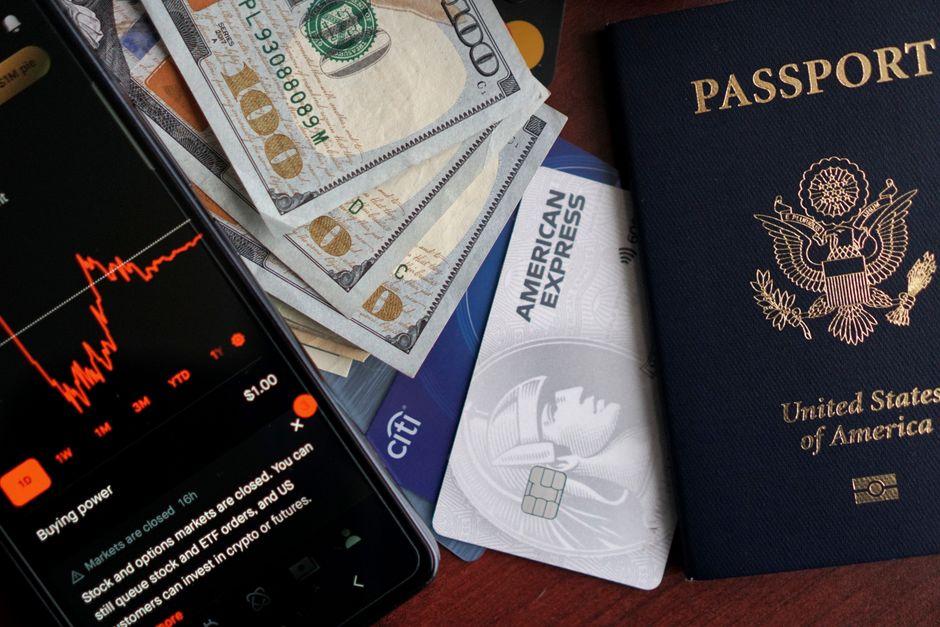
The Cost of Convenience: Unveiling the Hidden Risks Behind Buying a Passport
Acquiring a passport through investment undeniably caters to an elite desire for speed and convenience, yet this shortcut harbors risks that are often masked by glossy marketing and selective success stories. Contrary to popular belief, the process is rarely as frictionless as promised; governments’ due diligence procedures have tightened significantly in recent years, and regulatory frameworks can suddenly shift, rendering investments illiquid or, worse, passports temporarily void. It’s critical to distinguish between genuine legal residency and meaningful citizenship. Many programs grant second passports without strong ties to the country, which can backfire when geopolitical tensions arise or when global mobility restrictions tighten. The assumption that these passports confer untouchable freedom is outdated, especially given enhanced international scrutiny over financial transparency and anti-money laundering compliance.
Investors must weigh the tangible benefits against nuanced trade-offs, which often involve hidden costs beyond the initial price tag:
- Reputational risk: Citizenship-by-investment programs are under increasing scrutiny, potentially affecting future visa issuance in key countries.
- Financial risk: Real estate or business investments tied to these schemes can suffer from market volatility and limited exit options.
- Legal risk: Variations in global diplomatic relations may erode the passport’s utility or create complex compliance challenges.
| Aspect | Common Perception | Nuanced Reality |
|---|---|---|
| Speed | Fast-track citizenship within months | Due diligence and bureaucratic delays often extend timelines |
| Security | Guaranteed safe legal status | Changing policies and geopolitical risks may impact status |
| Mobility | Unrestricted global travel | Visa restrictions can apply and evolve |
Ultimately, the “cost of convenience” isn’t just financial-it’s strategic. A wise investor approaches passport-by-investment not as a silver bullet but as one calculated move within a diversified global mobility strategy. This requires ongoing vigilance, expert counsel, and an acceptance that some degree of unpredictability is an inherent part of playing this high-stakes game.
Beyond the Hype: Why Passport by Investment Often Misses the Mark for True Global Mobility
While the allure of passports by investment dazzles with promises of seamless border crossings and fiscal advantages, the reality often falls short of genuine global mobility. These programs tend to prioritize transactional citizenship over substantive integration into a new society, resulting in a passport that is a hollow card rather than a gateway to belonging. The key trade-off here is between ease of acquisition and the depth of the associated rights and privileges. For instance, many jurisdictions offering passports on a fast track impose residency requirements that, if neglected, risk revocation or diminished benefits. Moreover, such passports can sometimes attract heightened scrutiny at borders or suffer reciprocal restrictions from countries wary of “investment citizenship,” undermining their purported convenience. Far from being a panacea, these passports sometimes represent a reputational gamble rather than a golden ticket, especially for those seeking more than just the facade of mobility.
To navigate this complex landscape intelligently, prospective investors must weigh not just the quantity of visa-free access but the qualitative facets of each passport. Considerations should include:
- Diplomatic leverage: Does the passport holder enjoy protection and assistance from their issuing state globally?
- Legal security: Are rights such as property ownership, business operation, and political participation accessible?
- Long-term sustainability: Is the program stable, with a transparent regulatory framework, or subject to abrupt changes?
Below is a concise comparison highlighting these often overlooked dimensions:
| Factor | Typical Investment Passport | Traditional Naturalization |
|---|---|---|
| Residency Requirement | Often minimal or non-resident | Extended physical presence |
| Political Rights | Limited or absent | Full participation |
| Program Stability | Variable, prone to policy shifts | Generally consistent |
In sum, true global mobility demands more than the transactional acquisition of a new passport-it requires a nuanced understanding of what authentic citizenship entails and readiness to invest in those dimensions. Passport by investment, for all its flash, is no shortcut to these deeper privileges and freedoms.
Strategic Citizenship: When Paying for a Passport Aligns with Long-Term Wealth and Security Goals
Strategic citizenship via investment is far more than a transactional acquisition; it is a deliberate recalibration of one’s geopolitical and financial vectors. The value lies not merely in the passport itself but in the sophisticated alignment of this new legal identity with broader wealth preservation and security imperatives. For discerning global citizens, the calculus includes evaluating the stability of the host country’s political and economic systems, tax optimization frameworks, visa mobility, and access to vetted financial instruments. This means rejecting simplistic “safe haven” narratives and instead prioritizing jurisdictions that offer a synergistic mix of pragmatic benefits: diverse asset protection, robust institutional integrity, and entry points to high-growth markets. These factors cannot be generalized, as the efficacy of strategic citizenship hinges on nuanced trade-offs rather than universal solutions.
Moreover, the decision to invest in a second passport should be considered a dynamic, long-term strategy rather than a quick fix to mobility challenges. Here, two critical distinctions emerge: citizenship-by-investment as a hedge against regional volatility versus as a catalyst for global opportunity. Those seeking refuge from economic or political turmoil must weigh whether their chosen jurisdiction can sustainably safeguard their assets and rights amid instability. Conversely, those pursuing growth-oriented portfolios should scrutinize passports that grant preferential access to lucrative financial ecosystems or entrepreneurial frameworks. The trade-offs are frequently subtle-such as balancing lower upfront costs against the potential for greater legal protections or privileging expedited processing times over comprehensive residency requirements. An informed approach involves a matrix of priorities framed by individual risk tolerance and future aspirations, as illustrated below:
| Priority | Citizenship as a Hedge | Citizenship as an Opportunity |
|---|---|---|
| Geopolitical Stability | Paramount; political upheaval protection essential | Important but secondary to economic openness |
| Tax Efficiency | Moderate; focus on preserving existing structures | High; passport enables active wealth optimization |
| Mobility | Essential for crisis exit routes | Leverage for global business travel and investment |
| Investment Return | Low priority; risk aversion dominates | Weighted heavily; citizenship as part of asset allocation |
- Judicious selection demands matching citizenship programs to a clear and prioritized strategic blueprint rather than defaulting to popular choices or lowest-cost options.
- Periodic reassessment is crucial, as geopolitical and fiscal climates evolve, potentially recalibrating the relative value of a given citizenship’s benefits.
Navigating the Ethical Maze of Economic Citizenship in a Globalized World
Economic citizenship programs indisputably reshape the traditional notions of nationality, demanding a sharper ethical compass than most critics acknowledge. The prevailing narrative often frames these schemes as mere “citizenship for sale,” overlooking the nuanced realities where sovereign nations exercise their right to attract investment by offering legal and structured routes to citizenship. However, the ethical tension lies less in the existence of such programs and more in their execution and regulatory rigor. A discerning approach recognizes that economic citizenship, when embedded within transparent frameworks and robust due diligence mechanisms, can act as a catalyst for development rather than a loophole for evasion. The stark trade-off emerges between upholding national security and inviting foreign capital-a balance that few governments navigate flawlessly, but one that is indispensable if economic citizenship is to be sustainable and legitimate.
To transcend oversimplified critiques, stakeholders must differentiate between countries leveraging these programs to genuinely diversify their economies and those using them as quick-fix revenue streams. This distinction calls for a multi-dimensional ethical assessment, incorporating:
- Rigorous vetting processes: To prevent abuse by illicit actors without rendering the program inaccessible to genuinely beneficial investors.
- Transparent use of funds: Ensuring inflows contribute meaningfully to public goods, rather than political patronage or corruption.
- Respect for global mobility equity: Avoiding the creation of a privileged class whose enhanced passport power exacerbates systemic inequalities in freedom of movement.
Only through this calibrated ethical lens can passport-by-investment programs avoid becoming mere symbols of exclusion or commodification of belonging. They must be reframed as complex, pragmatic instruments requiring ongoing scrutiny, refinement, and accountability-because in a globalized world, citizenship is no longer a static birthright but a dynamic social contract that carries responsibilities as profound as its privileges.
Unlocking Freedom or Creating New Constraints? The Complex Trade-Offs of Investment-Based Passports
Investment-based passports are often hailed as tickets to global freedom, yet this portrayal glosses over a crucial paradox: while they unlock access to new geographies and opportunities, they simultaneously embed holders within a fresh lattice of legal, financial, and social constraints. Acquiring citizenship through investment isn’t simply an exercise in bypassing bureaucratic inertia-it is a calculated acceptance of a complex matrix of obligations, from hefty capital requirements to the risk of reputational entanglement. This nuance shakes the myth of effortless liberty; rather than being a pure emancipation, investment passports often tether individuals to particular economic spheres and political landscapes where their fortunes and freedoms become intertwined with state priorities and regulatory unpredictabilities.
When evaluating this complex trade-off, it’s imperative to parse distinctions between mere mobility enhancement and strategic geopolitical positioning. While enhanced travel facilitation remains a tangible benefit, the real value lies in leveraging citizenship as a tool for diversified asset protection, cross-border financial agility, and access to regional trade blocs or business ecosystems. However, blindly chasing the “ultimate freedom” narrative ignores key pitfalls:
- Regulatory volatility: Citizenship programs can face sudden policy shifts, risking invalidation or increased scrutiny.
- Social integration challenges: New citizens may confront cultural barriers or limited social capital in their adopted countries.
- Ethical and reputational risks: The opacity of some programs can attract scrutiny from international watchdogs, impacting personal and business credibility.
To navigate these waters, prospective applicants must adopt a discerning stance, treating investment passports not as unilateral gains but as components of a broader, multifaceted strategy. Aligning passport choices with clear long-term objectives-be it tax optimization, political risk diversification, or global entrepreneurship-enables a purposeful evaluation of what freedom truly entails beyond the veneer of convenience.
Final Thoughts
In a world where borders define opportunity and freedom, passport by investment stands as a bold invitation to rewrite the rules. It is not merely a transaction but a strategic move-an emblem of foresight and adaptability that few dare to embrace. While the path demands resources and resolve, those who choose it unlock a realm of possibilities that transcend geography and convention. Ultimately, this power play is more than a passport; it’s a gateway to new horizons, a testament to the audacity of vision in an increasingly interconnected world.




