
In a world where lines on maps both divide and connect, holding a dual passport is more than just a convenience-it’s a bridge between identities, cultures, and legal landscapes. Behind the glossy pages stamped with travel history lie stories of belonging, choice, and sometimes conflict. Navigating borders with two passports is not merely a matter of paperwork; it is an intricate dance of privilege, responsibility, and complexity. This article delves into the real experiences of those living between nations, unraveling the nuanced realities and challenges that come with carrying multiple citizenships in an increasingly interconnected yet fragmented world.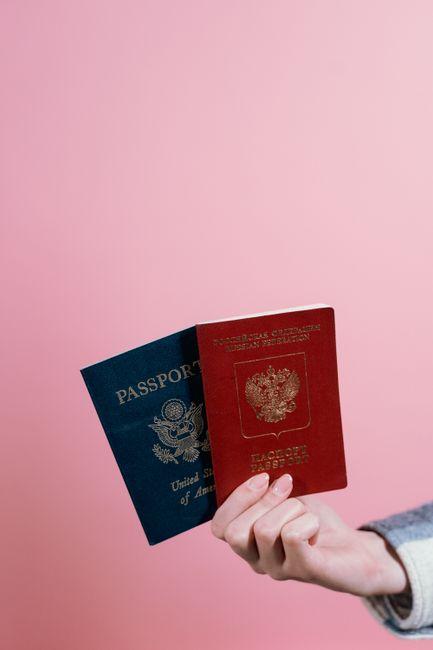
Crossroads of Identity Exploring How Dual Passports Shape Personal Journeys
At the heart of every dual passport lies an intricate dance of identity and belonging. Consider Sara, born in Brazil to Italian parents, who grew up feeling the tug of two cultures but struggling to fully claim either. Obtaining her Italian passport opened unexpected doors-a sense of connection to her heritage and professional opportunities across Europe. Yet, it also sparked moments of introspection: Was she Brazilian, Italian, or some blend neither country fully recognized? This crossroads of identity isn’t just about legal status; it reflects a deeply personal journey where each border crossed challenges and reshapes who a person thinks they are. Many face the same dilemma-balancing pride in one nationality while embracing the privileges and responsibilities of another can be as complex emotionally as it is logistically.
Decisions often emerge in life’s pivotal moments, such as voting, military service, or where to settle down. Take Amir, who holds passports from the US and Iran. The expectations attached to each identity sometimes conflicted sharply with reality, especially during geopolitical tensions. His dual citizenship brought a spectrum of benefits, from eased travel to job opportunities, but also a set of hard choices-should he vote in the US, where he lives, or engage with Iranian politics remotely? The duality also influenced how others saw him: a symbol of bridge-building to some, a potential outsider to others. Such experiences highlight a key lesson: dual citizenship is not merely a bureaucratic advantage but a powerful, often challenging intertwining of narratives, loyalties, and life paths that few ever fully untangle.
Between Two Flags Tales of Negotiating Legal and Cultural Complexities
Between Two Flags: Tales of Negotiating Legal and Cultural Complexities
Take Ana, for example, a young professional holding both Spanish and Argentine passports. Initially, she imagined leveraging her dual status as a seamless gateway – free movement, expanded job opportunities, and diverse cultural experiences. However, her first hurdle came during a property purchase in Spain when she confronted differing tax obligations tied to each nationality. The Spanish government expected her to declare residency and taxes differently than what Argentine authorities would recognize. This legal quagmire forced Ana to navigate layers of bureaucracy, requiring consultations with lawyers conversant in cross-border taxation laws. What started as a straightforward transaction unfolded into a delicate balancing act, redistributing time and resources she hadn’t anticipated spending.
- Legal expectations: Smooth integration and equal treatment under both countries’ laws.
- Reality: Conflicting tax codes and reporting requirements.
- Lesson learned: Dual citizenship demands proactive legal awareness, especially regarding fiscal responsibilities.
Meanwhile, Seth’s experience highlights the cultural intricacies layered beneath legal frameworks. Holding Canadian and Indian passports, he encountered surprising social expectations tied to dual identity during a family wedding in India. While some relatives welcomed his Westernized views, others expected unwavering adherence to traditions linked to his citizenship. Seth had to negotiate these subtle cultural norms delicately-not through legislation, but through empathy and open communication. His story underscores how dual citizens often operate in a liminal space where cultural values don’t always synchronize, prompting ongoing adaptation and self-reflection.
When Loyalty is a Balancing Act Stories of Navigating Conflicting National Obligations
Consider Amina, born to Indian parents in the UK, holding both British and Indian passports. When political tensions flared between the two nations, she found herself torn between her cultural identity and her professional obligations. Amina’s company required her to travel frequently to India, but growing diplomatic distrust at times meant she faced rigorous scrutiny upon entry, complicating her business dealings. Yet, when she returned to the UK, she grappled with friends and family questioning her loyalties, reflecting a deeper question many dual passport holders confront: How do you authentically navigate dual allegiances when national narratives demand singular loyalty? Such moments force tough choices-whether to openly embrace both her identities or downplay one to ease social friction-and reveal how holding seemingly equal citizenships is often a complex emotional balancing act beyond legal status.
These conflicting demands also extend into obligations like mandatory military service, tax responsibilities, or civic duties. Take Daniel, a young man with Israeli and American citizenship, who faced mandatory conscription in Israel while simultaneously pursuing university studies in the U.S. The expectation to serve contrasted sharply with his desire to build a career abroad, illustrating a core tension within dual citizenship. His experience underscores practical questions many encounter:
- Which country’s laws take precedence in specific situations?
- How do you reconcile competing duties without compromising personal goals?
- What happens when civic obligations clash with professional or ethical priorities?
Daniel’s navigation through military deferments, legal deadlines, and family expectations led him to a nuanced understanding: dual citizenship is less about seamless privilege and more about wrestling with complex compromises that shape identities in both visible and invisible ways.
Moments of Choice Realizing the Unexpected Impacts of Holding Dual Citizenship
Maria, born in Mexico but raised in Canada, always viewed her dual citizenship as a straightforward benefit-access to two countries, two passports, and endless travel opportunities. However, the reality surfaced during a routine medical emergency abroad. While seeking care in a third country, the clinic insisted she use her Mexican passport for documentation, as her Canadian one offered no local entitlements. The unexpected bureaucracy meant delays and added stress in a moment when she craved simplicity. It was a stark contrast to the seamless convenience she had anticipated from holding dual citizenship. This moment of choice underscored the complex balancing act dual citizens often face: which identity to embrace depending on the situation, and how that choice can tip the scales from privilege to predicament.
Similarly, Arjun, who grew up in the UK with Indian citizenship through his parents, once aimed to leverage his passports for career opportunities. Yet, when applying for a prestigious role requiring security clearance, his dual nationality raised unforeseen red flags. His employers questioned his allegiance, imposing longer vetting times and a feeling of divided trust. His expectation was increased freedom, but the reality introduced a layer of doubt and negotiation. These stories teach invaluable lessons about the nuanced repercussions of holding two national identities.
- Decision-making: Dual citizens often face moments where passports become political statements, not just travel tools.
- Legal implications: Rights and responsibilities don’t always align neatly across countries.
- Emotional complexity: The pull between identities can create internal as well as external conflicts.
| Scenario | Expectation | Unexpected Outcome |
|---|---|---|
| Using Mexican vs. Canadian passport for medical aid | Seamless access to healthcare | Administrative delays due to jurisdictional issues |
| Job application with dual nationality | Competitive edge & mobility | Security scrutiny and prolonged clearance |
Building Bridges and Facing Barriers Real Life Lessons from Dual Passport Holders
For many dual passport holders, the promise of seamless travel and expanded opportunities often meets the reality of unexpected hurdles and complex decisions. Take Maria, for instance, born in Brazil with an Italian passport through her grandparents. While she anticipated easy access to Europe, she quickly learned that merely holding the passport doesn’t guarantee job offers or a straightforward bureaucratic process when moving abroad. Facing differing employment laws, tax obligations, and social security systems, she had to navigate not only visa-free entry but also the intricate web of legal and cultural expectations in both countries. Maria’s story highlights a critical lesson: a dual passport can be a bridge, yes, but crossing it requires careful planning and resilience.
Meanwhile, consider Ahmed, whose dual Egyptian-German citizenship offered distinct freedoms but also moments of tension. Though his German passport provided visa-free access to much of the world, returning to Egypt demanded a different kind of negotiation – being seen as a local and an outsider simultaneously. Moments like mandatory military service inquiries or differing political views among family members created situations where identity felt like a double-edged sword. His experiences underscore two important contrasts often overlooked:
- Expectation: Dual citizenship equals twice the opportunities.
- Reality: Dual citizenship often means twice the regulatory complexity and cultural negotiation.
Sometimes, these barriers foster greater empathy and adaptability, shaping a global identity that’s both enriched and challenged by the borders it crosses.
| Scenario | Expectation | Reality | Lesson |
|---|---|---|---|
| Employment across borders | Easy job mobility | Complex work permits and qualifications | Research local regulations thoroughly |
| Family obligations | Balanced cultural belonging | Conflicted identities and responsibilities | Embrace flexibility and open communication |
| Travel freedom | Visa-free global access | Unexpected restrictions in one country | Plan routes carefully and understand local laws |
The Conclusion
As we close the chapter on these multifaceted journeys, it becomes clear that holding a dual passport is far more than a simple matter of convenience or chance. It is a tapestry woven with threads of identity, opportunity, and sometimes, contradiction. Behind every stamped page lies a story – of blending cultures, navigating legal labyrinths, and redefining what it means to belong. In a world increasingly connected yet divided by invisible lines, these real stories remind us that borders are as much about the human experience as they are about geography. Navigating them requires patience, resilience, and, above all, the courage to embrace complexity.




