
In an increasingly interconnected world, the notion of identity is no longer confined to a single place or culture. For those who hold dual nationality, life unfolds at the intersection of two distinct yet intertwined worlds. This unique position offers a blend of opportunities and challenges, shaping how individuals perceive themselves and relate to the communities around them. “Straddling Two Worlds: Navigating Identity and Belonging Through Dual Nationality” explores the complex journey of balancing multiple cultural ties, illuminating the diverse ways people forge a sense of belonging when their roots span borders.
Balancing Morning Rituals in Two Languages
Every morning, Ana faces a familiar yet subtle crossroads. At 6:30 AM, her alarm buzzes softly in French, a language that connects her to the streets of Paris where she spent her childhood. She often begins her day flipping through a French newspaper or listening to a podcast, a morning ritual steeped in the cadence and culture of one world. Yet, as she brews her morning tea, the TV switches over to a Spanish news channel. This duality in her morning routine reflects a deeper balancing act-navigating two identities through language, where sometimes the comforting familiarity of French debates with the vivacious energy of Spanish talk shows. Ana’s decision of which ritual to prioritize often depends on her mood or upcoming events: choosing French to center herself before a work call with European clients or leaning into Spanish when planning weekend family gatherings in Madrid. These small, intentional choices underscore the real, daily negotiation between linguistic worlds-sometimes reinforcing a sense of belonging, other times highlighting the dissonance that dual nationality can bring.
Jorge, a father of two bilingual children, encountered an unexpected lesson in balancing morning rituals. He tried to regiment their mornings strictly by language: French-only breakfasts, Spanish-only car rides. However, real life resisted these tidy boundaries. His children would switch fluidly between languages, correcting vocabulary or singing songs in a hybrid mix. The contrast between his hopes and the spontaneous, blended reality of his family’s speech highlighted that identity is less about rigid separation and more about integration. Lessons from their experience include:
- Allowing linguistic flexibility fosters a natural embrace of both cultures.
- Rigid language rules can inadvertently create small tensions or feelings of exclusion.
- Morning rituals serve not just as language practice but as moments of cultural connection.
| Expectation | Reality | Lesson |
|---|---|---|
| Strict language boundaries during morning activities | Children naturally mix languages without stress | Flexibility supports authentic bilingualism |
| Morning rituals as separate cultural zones | Rituals blend, reflecting lived identity | Integration is key to feeling fully at home |
Ultimately, is less about perfect adherence and more about creating space where different parts of identity coexist and converse-a practice that, over time, shapes a richer, more nuanced sense of belonging.
When Family Traditions Collide and Converge
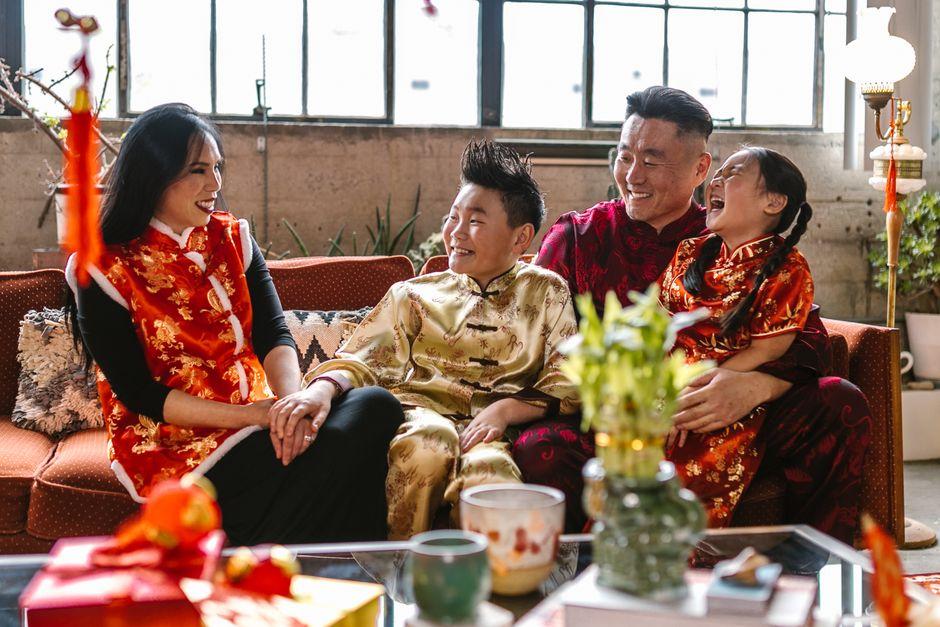
For many who grow up straddling different cultures, family traditions can become a site of both tension and unexpected harmony. Take the story of Lina, whose Chinese-Mexican household celebrated Lunar New Year with dragon dances and tamales simultaneously filling the family table. Initially, the blending felt awkward: the heaviness of the traditional Chinese red envelopes felt out of place next to the spicy, festive Mexican dishes. Lina’s mother insisted on honoring both, reminding the family, “It’s not about the perfect blend but the respect we give to each part of who we are.” Over time, these moments evolved from a clash of customs into a unique family ritual, embodying a shared history rather than two separate ones. The delicate act of choosing which traditions to emphasize each year became less about compromise and more about storytelling, weaving together fragments of identity that felt equally valid and meaningful.
Decision points often emerge around festivals, food, or even language, revealing deeper questions of belonging. Imagine the case of Arjun, whose Indian-American family faced yearly dilemmas: should Diwali be celebrated with a formal puja or by sending thank-you notes during Christmas? The expectations from both sides often pulled him in opposite directions, sometimes leading to feelings of guilt or exclusion. His family eventually created a simple calendar marking major celebrations from both cultures, embracing the idea that participation does not have to mean perfection. What Arjun learned was profound: navigating these dual traditions isn’t a test to be passed, but a personal journey marked by dialogues, occasional awkwardness, and shared laughter around a table laden with dishes from two distinct homelands. These moments teach that honoring dual heritage is less about strict adherence and more about cultivating space for multiple ways of belonging to coexist.
Finding Home in Unexpected Places
For many with dual nationality, the idea of “home” is fluid-shaped less by geography and more by moments of genuine connection. Take Amira, who spent her childhood shuttling between her Middle Eastern roots and a European upbringing. In her early 20s, she expected to find comfort in the familiar streets of her parents’ homeland, anticipating a seamless belonging. Instead, she encountered cultural nuances that made her feel like an outsider, despite her fluent language skills. It was only during a local community gathering, where stories and laughter transcended borders, that Amira realized home isn’t just a place on a map-it’s the feeling of shared experience. This shift from expectation to unexpected belonging highlights how identity often unfolds in the subtleties of interaction rather than in broad labels.
Navigating these spaces often involves reconciling contrasting realities-what one predicts about their dual identity and the lived experience. Consider Luis, who grew up in the US with Mexican heritage. He had always identified strongly with American culture but, upon visiting Mexico for the first time as an adult, discovered a layer of his identity that was both unfamiliar and welcoming. The warmth of his extended family and the local customs challenged his preconceived ideas, creating a new sense of belonging he hadn’t anticipated. Moments like these underscore that dual nationals may find home not in traditional expectations but in the rich, sometimes surprising intersections of their worlds. Here’s a quick look at some turning points many face in this journey:
- Expectation vs. Reality: Anticipating fluency in cultural norms only to realize that belonging requires ongoing learning.
- Family Ties: Strengthening identity through shared stories and heritage, even if distant geographically.
- Community Encounter: Finding acceptance in unexpected places that embrace hybridity.
Lessons Learned from Cultural Crossroads
Growing up between two cultures often means confronting moments where expectations clash with reality. Take Sarah, for instance, who was born in Brazil but raised mostly in Canada. At family gatherings in Brazil, she was expected to dive into lively, unfiltered conversations about politics and history-subjects she barely touched upon in her polished Canadian social circles. The initial discomfort she felt stemmed not just from language barriers but from feeling like she was letting both sides down: “too reserved” for her Brazilian family and “too loud” for her Canadian friends during celebrations. However, this tension became a powerful lesson when she realized it wasn’t about choosing one identity over the other, but rather embracing the fluid nature of her cultural self. Instead of striving for a fixed sense of belonging, Sarah learned to navigate these spaces by honoring the distinct communication styles rather than resisting them.
- Lesson 1: Belonging is situational, not static. Context shapes your cultural expression.
- Lesson 2: Perfection in either culture is less important than authenticity in how you engage.
Another common crossroads emerges in professional settings, where the values from one culture may clash with those of another. Rajiv, who holds Indian and British citizenship, faced this during his first international job assignment. He was accustomed to a hierarchy that valued deference and seniority, but his London office prized directness and egalitarian dialogue. Initially, Rajiv hesitated to voice dissent, fearing it would be seen as disrespectful. After a pivotal feedback session where his silence was misinterpreted as disengagement, he realized the need to recalibrate his approach and communicate more openly without abandoning his cultural roots. This experience highlighted a crucial insight: cross-cultural competence isn’t about erasing differences but translating them in ways that foster mutual understanding and respect.
| Challenge | Initial Expectation | Outcome & Lesson |
|---|---|---|
| Deference in workplace | Silence = Respect | Open dialogue fosters trust; silence can mislead |
| Family gatherings | Blend styles seamlessly | Embracing situational identity reduces pressure |
Bridging Generations Through Shared Stories
In families where dual nationality threads through the generations, the act of sharing stories becomes a pivotal bridge between past and present. Take Maria, for example, a second-generation immigrant in Canada whose parents always spoke of their life in Portugal with a blend of nostalgia and pride. Initially, Maria felt detached from these stories, viewing them as distant chapters unrelated to her own identity. However, a decision to record her grandmother’s memories during a summer visit shifted her perspective. Through these candid conversations, Maria discovered how her grandmother’s resilience and cultural values had subtly shaped the family’s traditions, from the way they celebrated holidays to the food they cooked. This tangible connection to her heritage redefined Maria’s sense of belonging, illuminating the nuanced ways that shared stories can transmit identity beyond language or geography.
Moreover, these intergenerational narratives often reveal the contrasts between expectation and reality within dual-national experiences. Families may anticipate seamless integration into their new country, only to face moments of cultural clash or misunderstanding that redefine their sense of self. For instance, a family table might look like this:
| Expectation | Reality |
|---|---|
| Children growing up fully fluent in heritage language | Gradual loss of language as dominant culture prevails |
| Instant cultural acceptance in new country | Ongoing negotiation of identity amid stereotypes |
Stories shared at dinner tables or during family gatherings provide a space to process these discrepancies and find meaning in them. Each story becomes a lesson in adaptability, respect, and acceptance, passing the torch of a multifaceted identity from one generation to the next, creating a lineage not just of nationality but of shared experience and understanding.
Closing Remarks
In the delicate dance between two homelands, those who straddle dual nationalities continually redefine what it means to belong. Their identities, woven from diverse cultures and histories, resist simple labels and challenge conventional notions of allegiance. Navigating this complex terrain is not just about choosing one path over another but embracing the richness found in the convergence. As borders blur and global connections deepen, the experience of living between worlds becomes a profound testament to the evolving nature of identity itself-a journey marked not by division, but by the harmony of multiplicity.




