
In a world crisscrossed by lines drawn on maps, borders have long stood as markers of division-separating nations, identities, and destinies. Yet, as waves of migration sweep across continents with increasing velocity, these static lines begin to blur, revealing a dynamic tapestry of movement that challenges traditional notions of power. “Borders in Motion” invites us to rethink migration not merely as the story of people in transit, but as a profound force reshaping political landscapes, economic hierarchies, and cultural narratives worldwide. This is a story of how human journeys are redrawing the map of influence, proving that borders are not just about who crosses them-but about who controls what happens on either side.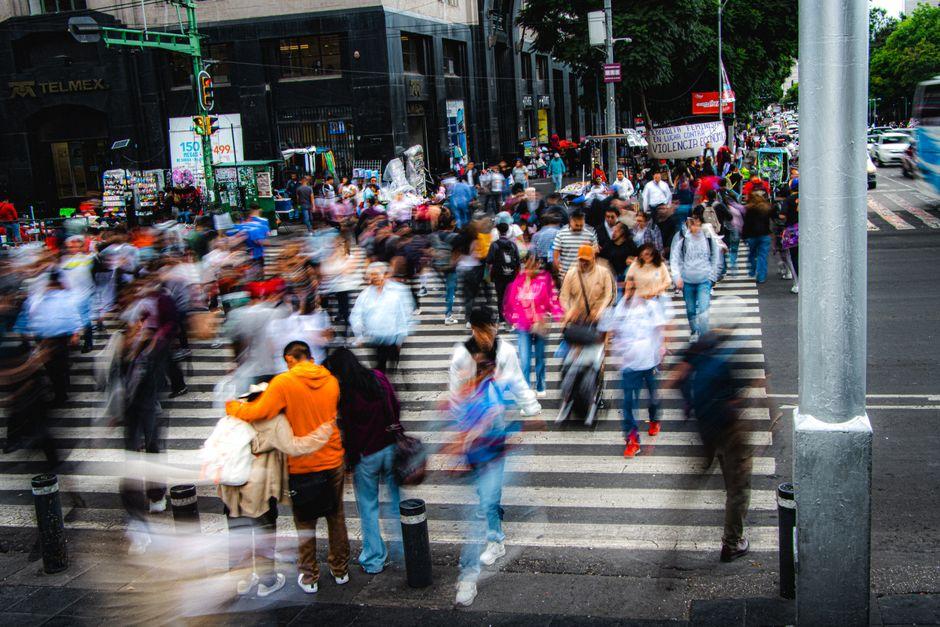
Reconsidering Migration Myths Where Power Shifts Challenge Conventional Wisdom
- Myth: Migration is a unidirectional drain of resources from host countries. This oversimplifies complex socio-economic feedback loops. Migrants often fill critical labor shortages and create fresh market demands, catalyzing innovation and urban regeneration. However, the benefits are not evenly distributed-regions with inadequate infrastructure or policy frameworks may face heightened strain without seeing proportional economic gains.
- Myth: Migrants are passive recipients in power dynamics. Contrary to this assumption, migrants frequently become active agents reshaping political landscapes. Their remittances influence both origin and destination economies, and their transnational networks challenge traditional state-centric power by diffusing influence across borders. However, this recalibration of power can provoke nationalist backlashes, necessitating nuanced governance solutions balancing integration with sovereignty concerns.
| Dimension | Conventional Assumption | Reconsidered Insight | Trade-offs |
|---|---|---|---|
| Economic Impact | Migrants only burden host welfare systems | Migrants contribute entrepreneurial energy and labor diversity | Short-term costs vs. long-term economic dynamism |
| Political Agency | Migrants lack influence on host politics | Migrants impact policy via voting blocs and advocacy | Civic integration vs. nationalist resistance |
Reconsidering these migration myths forces us to acknowledge that power redistribution is a core feature of global mobility-not merely an incidental byproduct. The interplay between migrants, states, and markets produces fluid hierarchies redefining sovereignty and governance. An uncritical acceptance of zero-sum narratives impoverishes policy discourse, while recognizing complex interdependencies invites more adaptive, forward-looking strategies.
Pragmatically, managing these shifting power dynamics requires a tailored approach, one that moves beyond blunt barriers toward investment in social infrastructure and inclusive institutions. Policymakers must weigh the immediate political costs of openness against the generative potential of cross-border exchange. Embracing the nuances hidden beneath migration myths does not promise painless solutions but cultivates a realistic mindset essential for governance in an increasingly interconnected and contested world.

The Unseen Costs of Mobility Beyond Human Narratives
- Economic Contributions vs. Societal Costs: The dominant narrative of migration often centers on human stories of aspiration and survival, which risks eclipsing the broader socio-economic repercussions. Migration doesn’t merely redistribute labor but alters local economies in ways that can strain public services, housing markets, and labor standards. While migrants inject vitality and demand, unplanned surges can lead to resource depletion or amplified inequality. A nuanced evaluation must weigh these factors rather than default to either celebratory or alarmist portrayals.
- Governance Challenges Beyond Humanitarianism: Framing migration solely as a humanitarian issue reduces it to an emotional or moral concern, obscuring its political and administrative complexity. States confront difficult choices in balancing border security, integration policy, and economic imperatives. These are not mere operational hurdles but strategic decisions that reshape sovereign power dynamics domestically and internationally. Understanding migration’s unseen costs demands acknowledging its role as a site of governance innovation-or failure-not simply as a story of displaced individuals.
| Dimension | Common Narrative | Unseen Cost | Strategic Response |
|---|---|---|---|
| Labor Markets | Immigrants fill essential jobs | Wage suppression and informal labor expansion | Strengthen labor rights and enforce regulation |
| Public Infrastructure | Migrants as economic consumers | Overburdened healthcare and education systems | Invest in scalable infrastructure and equitable access |
| Political Stability | Migration as a humanitarian crisis | Rise of xenophobic nationalism and social polarization | Foster inclusive policies and dialogue platforms |
Beyond Borders and Bodies The Strategic Calculus of Movement
- Migration transcends mere individual movement, reshaping the strategic posture of states and non-state actors alike. The common narrative fixates on migrants as vulnerable bodies seeking refuge or opportunity; yet, this view understates how their mobility actively reconfigures geopolitical leverage, labor dynamics, and alliance formations. For instance, migratory flows catalyze new economic linkages but also compel states to recalibrate sovereignty in zones where jurisdiction is effectively porous, such as transit hubs or diasporic enclaves. This dynamic undermines traditional Westphalian notions of bordered power, compelling a strategic calculus where controlling movement is less about containment and more about selective facilitation. Ignoring this results in missed opportunities for optimizing soft power and economic integration across fractured global governance systems.
- Trade-offs inherent in border mobility challenge simplistic policy prescriptions. Overly securitized approaches may momentarily suppress flows but at the cost of intensifying underground economies, humanitarian crises, and fragile diplomatic relations. Conversely, overly liberal migration policies risk alienating domestic constituencies and igniting political backlash, particularly when integration frameworks lag behind influxes. A nuanced strategy recognizes migration as a negotiation among multiple stakeholders, requiring:
- Investment in multilateral migration governance that acknowledges fluctuating power asymmetries
- Flexible legal instruments balancing rights protection with pragmatic state interests
- Adaptive infrastructure that reframes border zones as spaces of connectivity rather than barriers
Consequently, power in the migration equation is less about unilateral control and more about orchestrating a contested but productive equilibrium across borders, bodies, and the political architectures they implicate.
When Migration Meets Geopolitics Unpacking the Complex Power Web
- Migration is rarely just a humanitarian issue; it is a profound geopolitical catalyst reshaping alliances, challenging sovereignty, and reconfiguring power dynamics. Countries leverage migration as a strategic tool-whether to destabilize rivals by facilitating refugee flows or to forge diplomatic ties through labor mobility agreements. This dual-use nature forces a reevaluation of simplistic narratives that cast migrants merely as victims or opportunists. Instead, migration functions as a chess piece in global statecraft, weaving a complex web where soft power is exercised as much through human movement restrictions as through traditional diplomacy.
- However, this geopolitical entanglement entails significant trade-offs: states prioritizing hard border securitization risk alienating neighboring countries and eroding their moral authority in international forums, while overly permissive policies can invite domestic political backlash and societal strain. The challenge lies in discerning when migration serves as a genuine conduit for regional cooperation versus a latent security threat. A nuanced approach demands multilateral frameworks that incorporate migration as both an economic asset and a security variable, paired with adaptive governance capable of anticipating migratory flows as geopolitical signals rather than just demographic shifts.
| Geopolitical Aspect | Opportunities | Risks |
|---|---|---|
| Labor Diplomacy | Enhances bilateral relations via workforce exchanges | Can create dependency or exploit migrant labor |
| Forced Migration | Draws international attention to crises | Destabilizes border regions and provokes conflict |
| Border Militarization | Projects state strength and control | Provokes regional tensions and humanitarian disasters |
Rethinking Global Flow Managing Influence in an Era of Constant Motion
- Global flow no longer aligns seamlessly with traditional notions of sovereignty and fixed influence spheres. In an era where people, capital, and information cross borders as rapidly as ideas mutate, influence must be redefined less as territorial control and more as agility-the ability to shape narratives, economies, and policy networks beyond physical boundaries.
- This calls into question outdated frameworks that treat migration purely as waves to be managed or resisted. Rather than viewing migration as a zero-sum challenge to national authority, it can be reframed as a complex vector of power reallocation-where states, corporations, and communities all compete and collaborate in multi-dimensional arenas.
| Aspect | Traditional View | Rethought Perspective |
|---|---|---|
| State Power | Territorial sovereignty & border enforcement | Networked influence & adaptive governance beyond borders |
| Migration Control | Restrictive, security-focused policies | Strategic integration balancing openness with resilience |
However, this shift entails trade-offs that must not be overlooked: Embracing fluid, multi-scalar influence demands smaller states and local actors engage in the complex, sometimes destabilizing dynamics of global networks. Similarly, too rapid an openness risks exacerbating social fractures if adaptive institutions lag behind. Where some leaders rush to securitize migration as a threat, a more informed approach calls for deliberate investment in inclusive systems that harness migration’s potential for innovation and diplomacy, while maintaining robust safeguards.
To navigate this environment, policymakers and stakeholders must move beyond simplistic binaries of ‘open’ versus ‘closed.’ Instead, they should cultivate hybrid strategies that fuse localized legitimacy with transnational connectivity: enhancing cultural literacy, leveraging diaspora diplomacy, and designing economic policies that incentivize circular migration rather than permanent exclusion or forced displacement. Only by rethinking the very architecture of influence in motion can global migration’s true power to reshape geopolitics be responsibly harnessed.
Final Thoughts
As borders shift and people move in unprecedented waves, the story of migration unfolds far beyond the individuals who journey across them. It is a tale of power reimagined-where nations, economies, and cultures continuously renegotiate their place on a fluid global stage. Migration is not merely a flow of bodies; it is a movement that challenges old paradigms and invites new understandings of sovereignty, identity, and influence. In this evolving dance, borders are no longer fixed lines but dynamic points of contact, reflection, and transformation. Recognizing migration as a force that shapes power, as much as it shapes peoples’ lives, calls for a perspective both bold and nuanced-one that sees in motion not chaos, but a redefinition of the world as we know it.




