
In an increasingly interconnected world, the idea of belonging to a single nation is evolving. More than just a passport or a legal status, second citizenship represents a doorway to new opportunities, experiences, and viewpoints. It transcends the conventional boundaries of identity, offering individuals not only mobility but also a deeper understanding of global cultures and economies. This article explores how pursuing a second citizenship can reshape lives-broadening horizons, challenging assumptions, and redefining what it means to call a place home. Beyond borders, this journey is about transformation as much as it is about travel.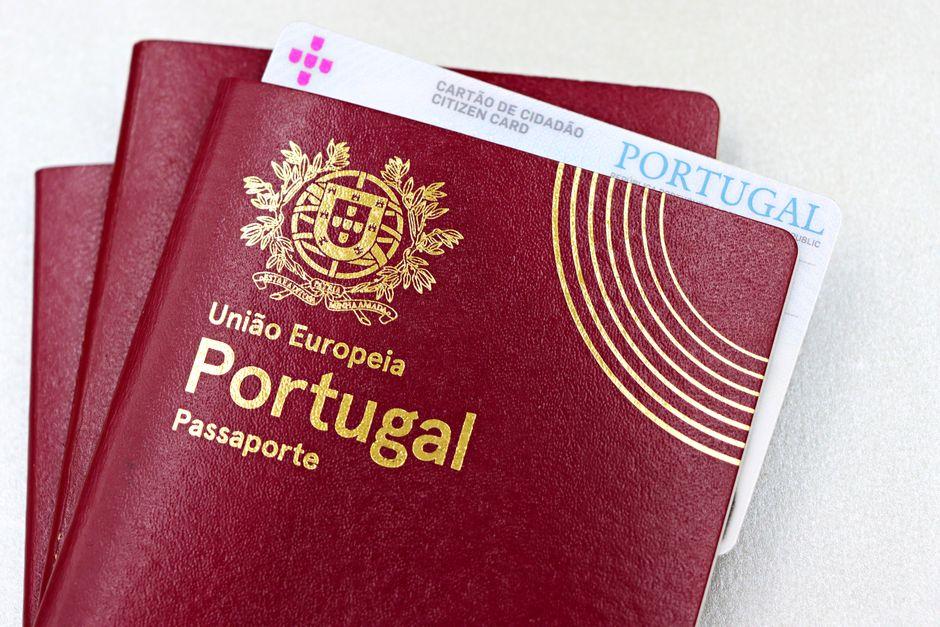
Crossing Thresholds: Personal Stories of Starting Life Anew Abroad
When Anna decided to trade her corporate career in Berlin for a quieter life in Portugal, she didn’t just acquire a second citizenship-she crossed a threshold into an entirely new mindset. Initially drawn by the prospect of sunny afternoons and a simpler pace, she soon encountered the less-visible layers of transformation: learning to navigate bureaucratic systems in a foreign language, forming new social networks while weathering moments of profound solitude, and reconciling the comfort of familiar routines with fresh challenges. What struck her most was the evolving understanding of identity-not as a fixed state but as a fluid narrative shaped by her experiences abroad. In her words, “The passport was just the start. The real change was waking up each day feeling both a stranger and at home.”
Consider Raj’s journey from Mumbai to New Zealand: driven by a desire to secure better educational opportunities for his children, he expected a straightforward path to stability. Instead, he encountered a mosaic of surprises-tight-knit local communities that welcomed yet tested his adaptability, the tension between preserving his cultural heritage and embracing new customs, and the practical lessons in resilience and patience. These experiences reshaped his perspective on what it means to belong. Below is a glimpse into Raj’s initial expectations versus his lived reality:
| Expectation | Reality | |
|---|---|---|
| Community integration | Quick acceptance due to shared values | Slow build-up through active participation and openness |
| Language | Fluency after a few months | Continual learning with occasional frustrations |
| Employment | Seamless transfer of skills and roles | Required retraining and adapting to new norms |
| Identity | Maintaining original cultural identity intact | Developing a blended sense of self |
- Key lesson: Starting life anew abroad is less about erasing the past and more about layering experiences to create a richer worldview.
- Decision moments: Choosing when to adapt and when to hold on to familiar traditions often defines the emotional journey.
- Transformation: Beyond legal status, second citizenship opens doors to profound personal evolution shaped by unexpected challenges and rewards.

The Complexities of Claiming a New National Identity
When Maria decided to pursue citizenship in a European country, she imagined a seamless transition-a new passport, new rights, and an immediate sense of belonging. However, the reality unfolded quite differently. Beyond the paperwork and legal processes lay the intricate emotional and cultural negotiations of adopting a new national identity. Maria found herself caught between the customs of her birth country and the expectations of her new home. Simple things like language nuances, social etiquettes, or even local humor posed daily challenges, reminding her that claiming citizenship was not just a legal milestone but a profound personal transformation. *It wasn’t just about changing her nationality on paper; it was about redefining who she was* in a community that saw her as both an insider and, sometimes, an outsider.
Consider also the case of Jamal, who pursued a second citizenship primarily for the economic and travel benefits. His decision, initially pragmatic, soon confronted the complexities of loyalty and identity. Jamal’s journey highlights common unexpected dilemmas:
- Balancing dual obligations: Political loyalties and tax responsibilities introduced new nuances to his day-to-day life.
- Reevaluating cultural identity: Simple celebrations, once shared effortlessly with family back home, required new contexts and adaptations.
- Experiencing identity fragmentation: Jamal often felt suspended between two worlds, never fully belonging to either.
| Expectation | Reality |
|---|---|
| Instant belonging and acceptance | A gradual and often challenging integration process |
| Simple administrative freedom | Complex legal responsibilities and dual compliance |
| Clear identity shift | Blurred lines and evolving senses of self |
Both Maria’s and Jamal’s experiences demonstrate that acquiring a second citizenship is much more than a strategic move. It’s a journey rich with personal growth, cultural entanglement, and the sometimes uncomfortable but profoundly human complexity of reconciling multiple identities.
Moments That Shift Perceptions and Open Unexpected Doors
When Javier, a software engineer from Argentina, first considered applying for a second citizenship in Portugal, he viewed it primarily as a practical passport to better professional opportunities within the European Union. Yet, what surprised him most was how that decision impacted his worldview. Initially, his expectations were narrowly focused on career mobility and visa-free travel, but the real shift happened during his first extended stay abroad. Navigating a new cultural landscape, meeting people who viewed life through different societal lenses, and even simple daily experiences-from grocery shopping to government bureaucracy-challenged his assumptions about identity and belonging. Javier recalls a moment when a local neighbor helped him decode a confusing form, a small act that showed him citizenship wasn’t just a legal status but a gateway to genuine community and mutual trust. These moments, often unplanned, highlight that the most profound changes don’t come from acquiring a passport itself, but from the doors it opens and the perspectives it shifts.
Similarly, for Amina, a medical professional from Kenya, the decision to pursue a second citizenship in Canada initially stemmed from a desire to access advanced training and a more stable healthcare system. However, she soon realized that the transformation went beyond professional gains. The process of integration introduced her to new networks and opportunities she hadn’t even imagined-like participating in policymaking forums on immigrant health or mentoring newcomers using her combined experiences. These experiences contrasted sharply with her initial expectations. The table below summarizes some of these contrasts, illustrating how the benefits of a second citizenship extend beyond tangible assets:
| Initial Expectation | Unexpected Outcome |
|---|---|
| Only improved travel and work options | Deepened sense of inclusion and civic responsibility |
| Isolated career advancement | New community roles and leadership opportunities |
| Simple legal status upgrade | Personal growth through cultural adaptation and empathy |
These narratives illuminate a key lesson for anyone contemplating a second citizenship: it isn’t merely a destination but a journey with unpredictable turns that expand horizons in ways paperwork alone cannot capture.
Learning from Challenges: Cultural Nuances and Legal Labyrinths
When Maria, an entrepreneur from Brazil, decided to obtain Italian citizenship through her ancestry, she anticipated a straightforward process guided by clear lineage proofs. However, the reality was a tangle of cultural expectations and legal hurdles she hadn’t fully prepared for. Her Italian relatives were proud yet informal in sharing records, while the bureaucracy demanded rigid official documentation, sometimes only accessible through regional archives with archaic procedures. These nuances highlighted a crucial lesson: navigating second citizenship often means more than just paperwork-it’s about understanding and adapting to different cultural mindsets around authority, time, and trust. Maria found herself balancing persistence with patience, learning to ask the right questions without offense and gradually piecing together a mosaic of intangible cultural cues and tangible documents. This journey reshaped her approach to problem-solving, enhancing her empathy toward bureaucratic rigidity that she once dismissed as mere inefficiency.
Contrast this with Ahmed, who pursued a Caribbean citizenship-by-investment program expecting a fast track to residency and business opportunities. Instead, he encountered a different labyrinth: legal ambiguity about residency requirements and evolving tax policies that weren’t clearly communicated upfront. Unlike Maria’s gradual cultural immersion, Ahmed’s challenge was managing shifting legal landscapes that directly impacted his plans. His story underscores the importance of vetting not just the initial promises but the long-term legal implications before committing. Here’s a quick comparison of their challenges:
| Aspect | Maria (Ancestry Route) | Ahmed (Investment Route) |
|---|---|---|
| Main Challenge | Cultural nuances in documentation and communication | Legal uncertainties and evolving tax policies |
| Decision Moment | Learning to navigate informal family dynamics to gather proof | Reevaluating investment after consulting multiple legal experts |
| Key Lesson | Adaptability to cultural context is as vital as legal readiness | Continuous legal due diligence is essential for long-term planning |
- Recognize that legal processes vary widely and are often intertwined with cultural attitudes toward governance and documentation.
- Seek local expertise early to interpret not just laws, but the unspoken rules and expectations that influence outcomes.
- Prepare for unexpected delays or changes by maintaining flexible timelines and contingency plans.
Both journeys emphasize that pursuing a second citizenship is an education in patience, cultural sensitivity, and strategic foresight-skills that often ripple far beyond the borders of paperwork and into the reshaping of one’s worldview.
What Gaining Dual Citizenship Teaches About Belonging and Adaptation
When Maria decided to pursue dual citizenship between her native Colombia and Spain, she expected a straightforward legal process and a clear-cut identity: two passports, double the opportunity. What she found instead was a nuanced journey of belonging and adaptation. At first, Maria struggled with the subtle cultural shifts-what felt familiar in Bogotá suddenly felt foreign in Madrid, despite the shared language. She navigated the challenge of feeling “not quite local” in either place, realizing that citizenship was more than paperwork; it was an evolving sense of community and acceptance. This realization came during moments as small as celebrating local festivals or handling bureaucracies, where integration required patience and openness rather than just documentation.
Dual citizenship often teaches profound lessons about flexibility and identity. Take, for example, Ravi, who holds both Indian and Canadian citizenship. Initially, he expected to blend the best of his two worlds effortlessly. However, adapting to Canada’s social norms-such as informal communication styles or the emphasis on individualism-pushed him to reconsider what “belonging” truly meant. His experience highlighted key themes that many face:
- Negotiating personal and cultural values between contexts rather than choosing one over the other.
- Responding to contrasting societal expectations, which encourages personal growth through empathy and adaptability.
- Discovering that legal status opens doors, but emotional and social integration require a deeper, ongoing commitment.
Below is a snapshot illustrating how expectations often meet the reality of dual citizenship:
| Expectation | Reality | Lesson Learned |
|---|---|---|
| Easy acceptance as a local | Initial outsider status and cultural misunderstandings | Belonging is built over time through relationships and cultural participation |
| Legal rights seamlessly translate to social comfort | Emotional and social acclimation require conscious effort | Adaptation involves embracing ambiguity and change |
| Identity becomes neatly compartmentalized | Identity remains fluid and multifaceted | Dual citizenship enriches self-understanding beyond binary labels |
Final Thoughts
In the tapestry of human experience, pursuing a second citizenship weaves new threads of identity, opportunity, and understanding. It transcends mere paperwork or legal status, inviting individuals to reimagine their place in the world and embrace a broader horizon. As borders shift from lines of division to gateways of connection, the journey toward dual belonging becomes not just a personal transformation but a testament to the enduring human spirit-curious, adaptable, and forever reaching beyond itself.




