
In an era where borders blur beneath the surge of globalization, passports-once simple symbols of national identity-have transformed into potent instruments in the contested arena of sovereignty. Far from being mere gateways to freedom of movement, these small booklets now encapsulate complex power dynamics, reflecting the tug-of-war between states striving to assert control and individuals seeking mobility. This evolving landscape challenges traditional notions of sovereignty, not as a guardian of liberty, but as a battleground where control, influence, and geopolitical interests collide. Exploring the paradox of global passports reveals how they have become less about enabling freedom and more about asserting the enduring primacy of the state in a connected world.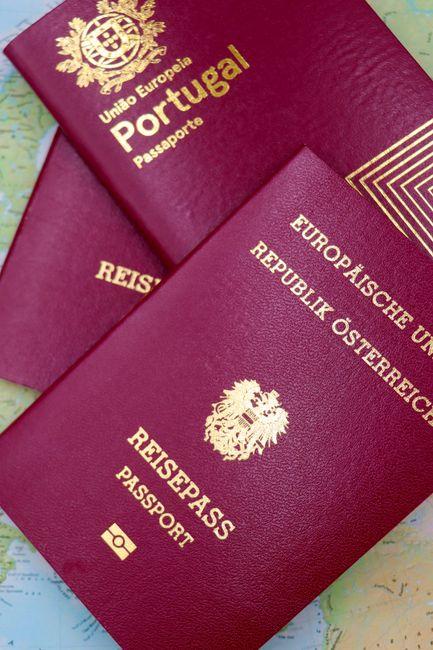
The Illusion of Global Freedom Concealing a Surge in Sovereign Control
The common narrative surrounding global passports often gravitates towards the celebration of unfettered mobility and the breaking down of national barriers. However, this façade of global freedom masks a more complex reality: an intensifying assertion of sovereign control. Far from being tools of liberation, passports have become sophisticated instruments through which states reinforce dominion, selectively granting and restricting access based on evolving political, economic, and security imperatives. The illusion of global freedom thus serves as a smokescreen, distracting from a geopolitical chess game where states meticulously calibrate their thresholds of openness, often prioritizing sovereignty over genuine international fluidity.
This paradox forces us to confront uncomfortable trade-offs. While loosening travel restrictions can stimulate cultural exchange and economic growth, it simultaneously challenges a state’s ability to regulate who enters and exits its borders, raising concerns about security, labor market impacts, and social cohesion. A nuanced approach recognizes that passports embody these tensions-they are neither purely oppressive nor liberating, but instruments of measured sovereignty. Policymakers should hence embrace a transparent framework that clearly delineates conditions under which mobility is expanded or curtailed, rather than perpetuating a misleading veneer of borderless global citizenship. In practice, this means:
- Strategic reciprocity: Negotiating travel privileges based on mutually beneficial terms rather than idealistic freedom.
- Contextual flexibility: Adapting entry policies dynamically in response to geopolitical shifts and domestic priorities.
- Public clarity: Communicating the rationale behind travel restrictions to build informed citizen consent.
| Aspect | Global Freedom Myth | Sovereign Control Reality |
|---|---|---|
| Mobility | Unrestricted crossing, universal access | Selective, conditional, and political barriers |
| Power | Erosion of borders | Reinforcement of state sovereignty |
| Purpose | Freedom of movement for all | Security, economic interests, diplomatic leverage |

When Passports Become Political Pawns in the Struggle Over National Identity
Passports, traditionally seen as mere travel documents, have morphed into potent symbols wielded in the intense theater of national identity politics. Governments increasingly use passport policies not simply to regulate borders but to assert culturally and politically loaded definitions of belonging. This politicization often forces a paradoxical choice between inclusivity and identity preservation, where the expansion of passport privileges can be framed as a dilution of national essence, even as exclusionary policies risk delegitimizing marginalized populations. Such dynamics reveal that passports have become tactical instruments in the struggle over who is recognized as “authentically” part of a nation, rather than neutral enablers of mobility.
Understanding this phenomenon demands more than surface critiques of xenophobia or nationalism; it requires acknowledging the trade-offs embedded in state sovereignty and citizenship. For instance, states face pressures to broaden passport access to diasporas for economic and diplomatic leverage, while simultaneously enforcing restrictive parameters to maintain a coherent national narrative. This tension creates a complex policy landscape where:
- Inclusive approaches foster transnational networks and economic integration but risk internal political backlash and identity fragmentation.
- Exclusionary regimes reinforce nationalist cohesion but may alienate key demographic groups and erode international goodwill.
| Passport Policy Approach | Potential Gains | Possible Pitfalls |
|---|---|---|
| Broad diaspora citizenship | Economic capital, soft power projection | Questions of loyalty, diluted cultural narrative |
| Exclusive, identity-based controls | Strengthened national cohesion, clearer identity | International criticism, demographic loss |
In navigating this fraught terrain, policymakers should move beyond zero-sum narratives and instead consider dynamic, context-sensitive frameworks that integrate both the need for sovereign identity and the realities of globalization. Embracing passports as instruments of strategic identity diplomacy, rather than mere sovereignty markers, could unlock nuanced policies that respect cultural integrity while facilitating inclusion and mobility. Such an approach demands candid recognition of identity’s fluidity and a willingness to recalibrate traditional nationalist paradigms in a hyper-connected world.
Unpacking the Power Shift From Borders to Biometric Governance
The prevailing narrative often casts biometric governance as a straightforward technological upgrade in border security, but this perspective oversimplifies a profound shift in sovereignty itself. Borders, traditionally physical and visible markers of state control, are increasingly supplanted by biometric regimes – invisible yet intrusive layers of identity validation. This transition does not merely enhance state control; it transforms it into a continuous, algorithmic process where the individual’s biometric signals become the currency of permission and exclusion. Unlike static borders, biometric governance operates in real-time, often beyond conscious scrutiny, raising critical questions about agency: who controls the data, who defines the criteria for acceptance, and how transparent or contestable these systems truly are. The assumption that biometrics unequivocally increase security fails to account for how these systems might entrench new forms of digital discrimination, surveillance capitalism, and even geopolitical leverage.
Key distinctions and trade-offs emerge when comparing traditional border controls to biometric governance:
- Visibility vs. Invisibility: Borders are tangible and negotiable; biometrics are embedded and continuous, making resistance less visible but more pervasive.
- Fixed Geography vs. Fluid Identity: Borders rely on location; biometrics rely on personal data, extending state control beyond territory and into personal sovereignty.
- One-off Checks vs. Persistent Monitoring: Borders scan passport stamps; biometric systems enable ongoing recognition and profiling long after entry.
These shifts necessitate new frameworks for accountability that go beyond physical checkpoints to include data stewardship, algorithmic fairness, and cross-border regulatory cooperation. Countries and global institutions must balance security demands with the risk of normalizing a world where mobility is predicated on biometric conformity rather than political freedom. This may require scaling back the myth of seamless travel as an unmitigated good, demanding instead a more critical lens on who truly benefits from “smart borders” – potentially privileging corporate interests and authoritarian regimes over the individual’s right to privacy and movement.
Rethinking Mobility Rights Beyond the Passport Paradigm
At its core, the passport system is a relic of the Westphalian model of sovereignty-an inherently territorial and exclusionary framework that assumes mobility as a privilege granted by the state, not an inherent human right. This paradigm demands scrutiny because it conflates citizenship with mobility rights, effectively weaponizing freedom of movement as a tool of geopolitical leverage rather than a universal entitlement. The blunt reality is that the passport acts less as a facilitator of freedom and more as a gatekeeper of privilege. While many advocate for open borders or universal passports, these solutions often overlook the intricate power dynamics and security concerns states wield over their perimeters. It’s not simply a question of more or less freedom but a question of which freedoms are prioritized and who controls their distribution. Treating mobility as a state-issued commodity instead of a democratic right inherently privileges certain populations and enshrines inequality on a global scale.
Rethinking mobility rights demands going beyond the passport as both symbol and instrument. We must carefully navigate the trade-offs between sovereignty, security, and individual liberty, recognizing that any evolution will challenge entrenched interests and bureaucratic inertia. Pragmatically, this could include:
- Decoupling residency and nationality to allow more fluid, rights-based movement tied to personal circumstances rather than geopolitical identity.
- Creating multi-tiered, transparent frameworks in which mobility rights are disaggregated-distinguishing economic, humanitarian, and cultural movement privileges-thus avoiding one-size-fits-all policies.
- Leveraging technology to foster verifiable, portable identities that reduce dependency on state-issued passports without eroding security.
| Current Passport Paradigm | Potential Post-Passport Mobility Framework |
|---|---|
| Mobility as a controlled privilege via nationality | Mobility as an de-commodified, rights-based entitlement |
| Opaque and inconsistent criteria subject to political whims | Clear, tiered mobility rights based on transparent standards |
| State-monopolized identity and border control | Distributed, technology-enabled identities with cooperative governance |
Ultimately, progress is neither unidimensional nor universally welcomed. It is a delicate balancing act that demands we question conventional wisdom about freedom and sovereignty, acknowledging that evolving beyond the passport paradigm is less about abolishing borders and more about reimagining authority, legitimacy, and the social contract underpinning global movement.
Strategic Compromises Behind the Push for Universal Travel Credentials
Advocates of universal travel credentials often frame their adoption as an unmitigated leap toward seamless global mobility. Yet, the strategic compromises underpinning this push reveal a far more complex calculus. Governments and private entities eyeing such standardized systems must reconcile the paradox of increased interoperability vs. dilution of sovereignty. By ceding control over national identity validation processes, states effectively outsource critical aspects of border security to multinational frameworks, which may prioritize efficiency or commercial interests over nuanced geopolitical realities. In practice, this signals a trade-off where sovereign discretion yields to centralized data protocols and algorithmic adjudication, potentially marginalizing unique legal and cultural safeguards embedded in current passport regimes.
Moreover, assumptions that universal credentials guarantee freedom risk oversimplifying geopolitical dynamics. Rather than an unequivocal step toward liberation, they represent a battleground where power is reallocated through technological standards. Stakeholders should critically assess how such credentials embed biases and create gatekeeping through opaque validation mechanisms shaped by dominant powers. To navigate these trade-offs, decision-makers should:
- Enforce transparent, multilateral governance models that maintain accountability to national legislatures rather than technocratic intermediaries;
- Preserve modularity in system design, allowing states to retain distinct identity assertions and exceptions based on socio-political contexts;
- Champion privacy-by-design approaches balancing efficiency in cross-border flows with robust citizen oversight of personal data.
Only through such calibrated strategies can the international community guard against the subtle erosion of sovereignty masked as progress, redefining passports not as mere documents of freedom but as contested tools of control.
To Wrap It Up
As the world grows more interconnected, the passport-a once simple gateway to exploration-has morphed into a symbol of contested power rather than unbridled freedom. The battle over global passports reveals a deeper struggle over sovereignty, identity, and control in an age that promises unity but often delivers division. In unpacking this complex terrain, it becomes clear that passports are less about the open road and more about who holds the map. Ultimately, understanding this shift invites us to rethink not just borders, but the very meaning of freedom in a world where sovereignty is anything but settled.




