
In an increasingly interconnected world, the concept of belonging has grown more complex, weaving together threads from multiple cultures, histories, and borders. For dual nationals, this intricate tapestry of identity is not just a backdrop but a daily reality-one that offers both exhilarating opportunities and profound challenges. Caught between two worlds, these individuals navigate the delicate balance of allegiance and self-understanding, forging paths that reflect the richness of multiple heritage yet often defy singular categorization. This article explores the nuanced journey of dual nationals, delving into how they embrace the dualities of their existence while striving to unlock the unique possibilities that arise from living between identities.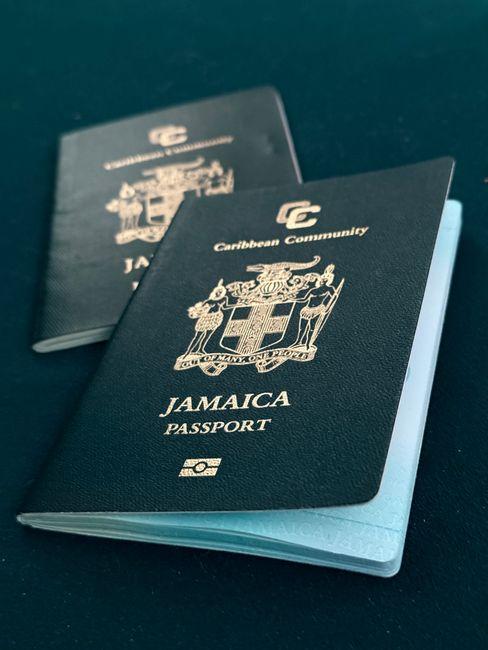
Crossroads of Heritage and Ambition
Imagine Sara, born to immigrant parents but raised in a bustling European city, holding both her family’s homeland and her current country close to heart. At university, she grappled with where to focus her ambitions-should she pursue a traditional career path favored by her family’s culture, such as medicine or engineering, or follow the creative calling she discovered through local art communities? This crossroads was more than a career choice; it was a tension between deeply rooted heritage and the individual freedom promised by her current environment. Like many dual nationals, Sara found that expectations from family and her own evolving identity often clashed, creating moments of profound uncertainty. Yet in these moments, she learned that identity isn’t a fixed destination but a living negotiation, where embracing both worlds often yields unexpected resilience and creativity.
These experiences highlight a shared lesson among dual nationals navigating similar intersections. The traditional narrative-where heritage dictates career and lifestyle-doesn’t always hold, especially when new opportunities beckon from elsewhere. Key decision points often look like this:
- Stay close to cultural roots: Prioritize family expectations and community norms.
- Embrace new ambitions: Follow personal passions, even if they diverge sharply from heritage paths.
- Forge a hybrid identity: Blend values and opportunities into a uniquely personal roadmap.
Consider the following contrast in expectations versus outcomes faced by dual nationals early in their careers:
| Expectation | Outcome |
|---|---|
| Pursuing a “safe” profession as defined by family tradition | Discovering passion in a less conventional but fulfilling field |
| Maintaining strong ties through frequent visits and cultural observances | Needing to set boundaries to nurture personal growth abroad |
| Feeling pressure to prioritize one nationality over the other | Learning to integrate both identities fluidly depending on context |
Navigating these crossroads requires more than simple choices-it calls for ongoing dialogue between self and society, tradition and innovation. The dual-national journey is rarely straightforward, but it teaches the invaluable skill of adaptation, ultimately shaping individuals who can bridge worlds with empathy and insight.
Moments of Belonging and Displacement
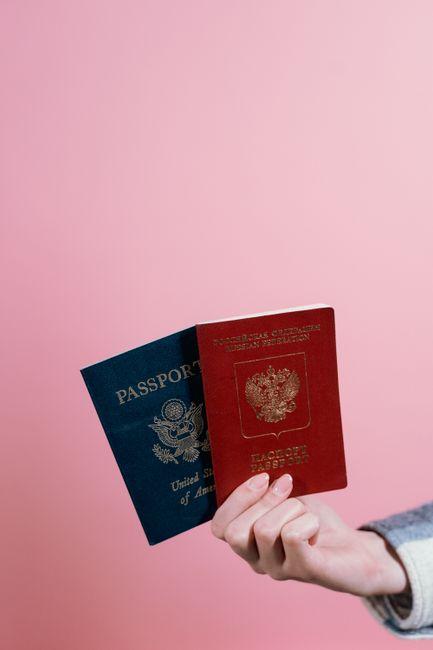
For many dual nationals, moments of belonging are often woven into the everyday – a shared meal steeped in tradition, a language instinctively understood, or a neighborhood where the familiar and foreign blend seamlessly. Take Sara, a software engineer born in Canada to Egyptian parents, who felt fully herself whenever she visited her grandparents in Cairo. Yet, this sense of home often collided with sudden displacement. The first time she returned after years abroad, a simple conversation about local politics revealed the cultural and generational divides she hadn’t anticipated. The warmth of home was tinged with distance, reminding Sara that belonging is not just about geography but also about shared experiences and shifting identities. These moments highlight an ongoing negotiation rather than a static feeling.
The tension between belonging and displacement becomes especially palpable in decision-making scenarios – like when Arjun, raised in the UK with Indian roots, faced choosing a university. Expectations from family leaned toward returning to India to “reconnect,” but the reality was more complex. Those initial months in Mumbai, despite its vibrancy, brought waves of alienation, from the academic culture to the subtle social cues he missed. Arjun’s story illustrates a common dual-national challenge: the stark contrast between imagined belonging and lived experience. What often emerges is a hybrid identity, pieced together through both comfort and challenge, a fluid space where opportunity and self-understanding coexist in tension.
- Belonging often arises from shared cultural practices and personal history.
- Displacement can come unexpectedly through language barriers, social norms, or unspoken expectations.
- Decision moments like education, career, and relationships often force dual nationals to confront and reconcile these tensions.
| Aspect | Expectation | Reality |
|---|---|---|
| Returning “Home” | Instant acceptance and connection | Cultural and generational gaps felt acutely |
| Family Expectations | Following clear cultural or career paths | Negotiating hybrid identities and mixed opportunities |
| Language | Fluency and ease | Dialects and slang create unexpected barriers |
Bridging Cultures Through Everyday Choices
For dual nationals, daily life often unfolds at the intersection of two cultures, where simple choices can resonate deeply with identity and belonging. Take the example of Sara, who grew up in Canada with Syrian heritage. At family dinners, she navigates the flavors of her roots-aromatic spices, shared laughter over traditional recipes-while at work lunches, she sometimes opts for the familiar sandwiches and salads of her Canadian colleagues. These decisions might seem small, but they reflect a subtle balancing act between honoring heritage and assimilating into a new cultural context. Moments like deciding which holiday traditions to uphold or how to dress for a community event reveal the ongoing negotiation between expectation and authenticity. Sometimes, embracing one culture’s norms can feel like drifting away from another, but over time, many dual nationals discover that blending these elements crafts a personalized narrative rather than forcing a choice between them.
Practical scenarios highlight this dynamic further. Consider a professional networking event where Juan, holding both Mexican and U.S. citizenship, chooses to introduce himself with the Spanish version of his name, even as his American professional circle expects English. The decision sparks curiosity and connection, yet also occasional misunderstandings. These interactions teach adaptability and the value of cultural literacy, as Juan learns not only to translate his words but also his cultural cues. Such experiences illuminate a few key lessons:
- Language as a bridge, not a barrier: Switching languages or mixing phrases can open doors and deepen relationships.
- Cultural cues are flexible: Understanding when to lean into one culture’s norms and when to adapt can ease social navigation.
- Identity is evolving: Instead of fixed labels, identity can be fluid, shaped by contexts and choices.
| Situation | Dual National Approach | Outcome |
|---|---|---|
| Family holiday celebration | Combining traditional dishes with local holiday customs | Enhanced family bonds and a unique holiday experience |
| Introducing oneself in professional settings | Using native language name and cultural storytelling | Broader connections and enriched networking opportunities |
Lessons Learned from Living Between Worlds
Maria, born in Brazil to Italian parents, often wrestled with the dual pull of her heritage. When she first moved to Italy, she expected to be embraced instantly due to her ancestry. However, Italian locals sometimes reminded her she wasn’t “fully Italian,” highlighting a subtle but real boundary she hadn’t anticipated. This moment was a turning point for her: instead of feeling alienated, she chose to delve deeper into Italy’s culture, language nuances, and history-not as an outsider, but as a learner eager to add layers to her identity. Her journey illuminates a key lesson for many dual nationals: acceptance often begins internally; embracing your whole story allows you to bridge divides more meaningfully. Life between worlds can be less about fitting neatly into one box and more about weaving together strands to create something unique.
Consider Ahmed, whose parents emigrated from Egypt to Canada before he was born. When faced with career choices, he wrestled with expectations from both sides-his family urged him toward traditional professions like engineering, while his Canadian peers valued entrepreneurial risk-taking. The tension was palpable during his decision-making phase, a classic clash between cultural values and personal ambition. Ahmed’s experience teaches another vital lesson: dual identity often means navigating contrasting expectations and redefining success on your own terms. Instead of succumbing to either side’s pressure, he blended the best of both, choosing a path that honored his family’s emphasis on education while exploiting Canada’s supportive environment for innovation. This balance isn’t always straightforward but offers a powerful framework for thriving amidst complexity.
- Internal acceptance fuels external connection – building your identity from the inside out
- Success is subjective – negotiating cultural values and personal goals is part of the process
- Flexibility is strength – adapting and synthesizing contrasting elements enriches life’s experience
| Situation | Expectation | Reality | Lesson Learned |
|---|---|---|---|
| Maria’s move to Italy | Immediate acceptance as “native” | Recognition of outsider status, subtle exclusion | Self-acceptance is key to belonging |
| Ahmed’s career decision | Follow family’s traditional path | Desire to innovate and take risks | Creating a personal definition of success |
Stories of Resilience and Opportunity Unfolded
Take Sara, for example, who was born in the United States to Colombian parents. For years, she grappled with a quiet tension-her American upbringing encouraged independence and ambition, while her family’s cultural expectations emphasized community and tradition. When Sara took her first job offer abroad, the excitement was tinged with uncertainty. Would she be perceived as “too American” in Colombia’s more relationship-driven professional culture? Armed with dual citizenship, she decided to lean into her bicultural insight rather than shy away from it. Her bilingualism and understanding of both cultural nuances soon positioned her as a bridge within her multinational company, enabling smoother communication and collaboration. The unexpected lesson: embracing dual identity can transform perceived cultural clashes into unmatched professional assets.
Contrast this with Alex, who inherited his dual nationality from his Canadian mother and British father. Initially, Alex saw his dual citizenship primarily as a convenience for travel-something practical but peripheral to his identity. That changed during a career crossroads when he faced scrutiny in a highly competitive industry that prizes “local knowledge.” Choosing to confront rather than avoid this challenge, Alex invested time in local professional associations and customs in both countries. This deliberate cultivation of dual networks challenged his own assumptions and revealed an opportunity many overlook: the richness of belonging to multiple communities. His story underscores that dual nationality is not just a status but a living experience shaped by how one navigates moments of tension and choice.
- Lesson: Dual nationals often find themselves at the intersection of expectations; embracing this positioning can unlock unique career and personal development paths.
- Decision Point: Choosing to engage fully with both cultural frameworks rather than favoring one can deepen connection and opportunity.
- Unexpected Outcome: Perceived cultural friction may become the very fuel for innovation and bridging social or professional gaps.
| Case | Challenge | Strategy | Outcome |
|---|---|---|---|
| Sara | Balancing cultural expectations in a new work environment | Leveraged bilingual skills and cultural insights as a communication bridge | Strengthened team cohesion and earned leadership trust |
| Alex | Gaining credibility in two distinct professional cultures | Engaged actively with local networks and cultural practices | Built diverse connections enhancing career flexibility |
Concluding Remarks
In the delicate dance of belonging to two places at once, dual nationals embody a living paradox – simultaneously rooted and unanchored, familiar and foreign. Their journeys reveal the complexities of identity woven through the threads of culture, opportunity, and choice. Navigating these intertwined worlds demands resilience, self-reflection, and adaptability. Yet within this challenge lies a unique strength: the power to bridge divides, foster understanding, and redefine what it means to belong. As the tides of globalization continue to rise, the stories of dual nationals will remain an enduring testament to the multifaceted nature of identity in a connected world.




