
In a world increasingly shaped by migration and interconnectedness, the experience of holding dual nationality offers a unique vantage point-one foot planted firmly in each of two distinct cultures, histories, and legal landscapes. This dual existence is more than a matter of passports or paperwork; it is a complex journey of identity and belonging that challenges simple definitions of who we are and where we belong. Between two worlds lies a nuanced reality, where individuals navigate the hopes, tensions, and privileges of living at the crossroads of nationality. This article explores the intricate path of dual nationality, unraveling the emotional, social, and political dimensions that shape a life lived in two places at once.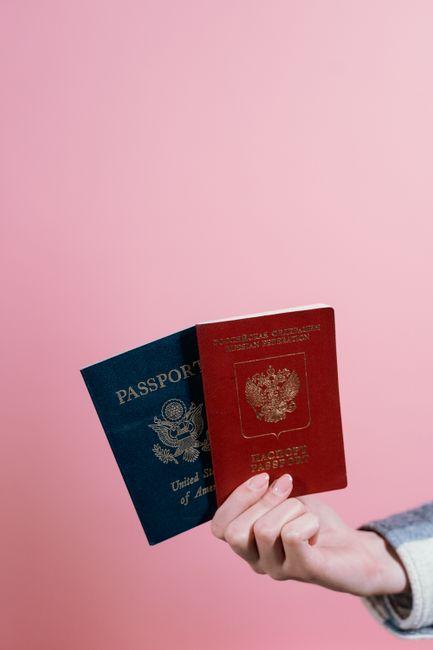
Caught Between Homecomings and Departures Finding Comfort in Unseen Borders
Having grown up splitting time between two countries, Ana’s experience captures the quiet tension many dual nationals face when returning “home.” On one visit, she expected the familiar warmth of her mother’s language and childhood haunts to envelop her. Instead, she found herself grappling with a subtle dissonance-local slang slipping past her, cultural references feeling outdated, and a sense of being an outsider in the very place she called home. This moment of awkwardness, often described as “invisible borders,” reveals how belonging is not always geographically tangible. It’s where past memories collide with present realities, forcing many like Ana to navigate the ebb and flow of acceptance and estrangement in familiar spaces.
Decisions around where to settle, which traditions to uphold, or even when to speak one language over another become complex acts of self-definition rather than mere practicality. It’s common to hear dual nationals recount moments where expectations confront unexpected results, like Omar, who anticipated seamless integration into his father’s homeland but instead found his dual identity both a bridge and a barrier. These experiences underscore an essential lesson: comfort is often crafted not by the borders on a map, but through the invisible threads of connection we forge-with language, with family, and with ourselves.
Encountering the Unexpected Challenges of Straddling Two Cultures
For many navigating dual nationality, the clash between two cultural identities is not just theoretical-it’s a daily, sometimes jarring experience. Take Sara, who grew up celebrating Thanksgiving meals at her American grandmother’s house while observing Nowruz with her Iranian parents. At family gatherings, she felt the weight of expectation to “choose” her cultural allegiance, a decision that never felt genuine because her identity was rooted in both worlds. These moments often came with unexpected challenges, like when a casual remark about “fitting in” triggered her anxiety at work. The friction between cultural norms often forces dual nationals into a mental balancing act-expressing enough heritage to feel authentic, yet adapting enough to avoid social isolation. These moments reveal how dual nationality can complicate something as simple as social belonging, turning everyday interactions into a negotiation of identity.
Decision-making also takes on a nuanced complexity. There’s the practical, such as when Amir had to decide which passport to use for an international job offer. The choice wasn’t merely bureaucratic; it encapsulated concerns about safety, visa ease, and perceived loyalty. Similarly, subtle cultural expectations-like how emotions are exhibited, career paths chosen, or even conflict is handled-create internal friction. Consider the contrast between expectation and reality: Amir’s parents hoped he’d pursue a stable career revered in their home culture, yet the flexible, individualistic mindset of his host country encouraged entrepreneurial risk-taking. This dual pressure shaped his career path in unexpected ways, teaching him that managing dual nationality means embracing contradictions rather than resolving them. In essence, the challenge lies not in picking one identity over the other but learning to live in the tension between them.
| Challenge | Expectation | Reality |
|---|---|---|
| Cultural Expression | Seamless blending of traditions without conflict | Frequent identity conflicts in different environments |
| Career Choices | Alignment with cultural family expectations | Negotiating between parental desires and personal ambitions |
| Social Belonging | Full acceptance in both cultural communities | Feeling “in-between” or misunderstood in both |
Moments of Clarity When Heritage Shapes New Perspectives
Take Amina’s story, for example. Born in Canada to Ethiopian parents, she often felt caught between two cultural narratives. At university, she joined a cultural organization dedicated to Ethiopian traditions, hoping to reconnect with her roots. Yet, she was surprised to find that the elders in the group expected her to hold fixed notions of tradition that didn’t always fit her more fluid, hybrid experience. It was during a holiday gathering when Amina hesitantly shared her perspective as someone who navigated Western values and Ethiopian customs simultaneously, challenging the rigid molds others held. In that defining moment, the elders listened-not to correct her, but to understand. This exchange shifted perceptions on both sides, illustrating how heritage can act as a lens not only to honor the past but to adapt and broaden cultural identity in new contexts.
It’s in experiences like these where heritage becomes a powerful catalyst for fresh insights. Consider the tension between expectation and reality when dual nationals face the pressure to choose a singular identity. The lived experience often reveals identity as layered and evolving rather than fixed. For instance, during conversations about citizenship, many expect a straightforward allegiance. However, the reality is more nuanced, as individuals often draw strength from an interwoven sense of belonging. This is reflected in the table below, which contrasts common assumptions with real outcomes among dual nationals:
| Common Expectations | Real Outcomes |
|---|---|
| Must fully identify with one homeland | Often embrace a hybrid identity, blending traditions |
| Heritage restricts modern expression | Heritage inspires innovation and reimagined cultural roles |
| Bicultural communities remain separate | They increasingly intersect, creating new hybrid spaces |
- Lesson: Heritage isn’t a prison but a lens that can reveal uncharted perspectives.
- Decision moment: Choosing when to honor tradition and when to adapt it
Stories of Connection That Build Bridges Across Divides
Consider Amina, a second-generation immigrant born in France to Tunisian parents. Growing up, she often felt torn between two worlds: the expectations of her family to adhere to Tunisian traditions, and the desire to fully embrace French culture. In her early 20s, Amina faced a pivotal decision-whether to speak up about her identity at a university event focused on multiculturalism. Despite initial fears of being misunderstood or judged, her honest storytelling about navigating her dual nationality unexpectedly sparked dialogue among peers who had similar yet unspoken challenges. This moment revealed how vulnerability and openness could transform invisible divides into shared understanding. It was less about bridging gaps through grand gestures and more about everyday conversations that honored complexity without reducing anyone to a single label.
Similarly, Javier’s experience as a Mexican-American educator in Texas exemplifies how connection across cultural lines often involves navigating unexpected tensions. When he introduced a curriculum highlighting both Mexican and American histories, he encountered resistance from both communities-some saw it as dilution, others as challenging established narratives. Yet over months, through open forums and patient listening, Javier witnessed gradual shifts: students started valuing the nuances behind dual identities and parents appreciated the validation of their children’s diverse backgrounds. These stories confirm that the journey isn’t about erasing differences but rather finding resonance in shared human experiences. In the end, small acts of inclusion-whether a classroom discussion or a family dinner conversation-become the bricks that build enduring bridges.
- Key lessons: Authentic storytelling fosters empathy
- Crucial moments: Decisions to engage vs. retreat in cultural discourse
- Unexpected outcomes: Resistance can evolve into dialogue and understanding
| Individual | Context | Challenge | Bridge Built |
|---|---|---|---|
| Amina | University in France | Expressing hybrid identity | Open dialogue among diverse peers |
| Javier | Texas classroom | Curricular resistance from communities | Inclusive historical understanding |
Embracing Complexity as Identity Evolves Beyond National Labels
When Lina moved from Mexico to Canada as a teenager, she initially clung tightly to the neat, comforting identity of “Mexican.” At family gatherings and her local community center, this label provided a clear sense of belonging. But as years passed, her experiences expanded beyond that singular identity – she found herself blending spicy tamales with poutine, celebrating Día de los Muertos alongside Thanksgiving. The moment she began introducing herself simply as “Lina,” without a nationality attached, it was both liberating and unnerving. She had to navigate a mosaic of how others perceived her and how she perceived herself, realizing that identity-especially for those living between cultures-refuses to fit into tidy boxes. It’s in these messy, beautiful intersections that complexity isn’t a burden, but a defining strength.
Embracing this complexity means moving past the expectation of a linear identity journey and welcoming the contradictions, conflicts, and shifts as part of one’s evolving self. Take Raman, born in the UK to Indian parents, who noticed his workplace conversations often boiled down to simplified cultural assumptions. His decision to share more nuanced stories about his diverse interests, values, and experiences challenged colleagues’ perceptions and, more importantly, allowed him to own his multifaceted identity. The lesson here: navigating dual nationality is less about choosing one side and more about weaving multiple narratives into a coherent, authentic whole. The resulting identity might feel like a patchwork, but, in truth, it reflects the layered richness of modern belonging.
- Key insight: Identity evolves as a dynamic interplay of culture, personal history, and environment.
- Challenge: Overcoming societal pressure to conform to a singular national identity.
- Opportunity: Leveraging complexity to create a deeper, more flexible sense of self.
| Expectation | Reality | Insight |
|---|---|---|
| Identity is fixed and tied to one nation | Identity is fluid and multifaceted | Flexibility in identity enhances personal growth |
| Fitting into one cultural community | Belonging across multiple, overlapping communities | Belonging can be redefined through relationships and experiences |
| Clear labels ease social interactions | Labels can obscure the full complexity of a person | Transparency about complexity can foster deeper understanding |
In Retrospect
In the delicate dance between two worlds, those who carry dual nationality often find themselves weaving a tapestry rich with contrasts and connections. Navigating identity and belonging in such liminal spaces is neither simple nor static; it is an ongoing journey of discovery, negotiation, and adaptation. As borders blur and cultures intertwine, the stories of dual nationals remind us that identity is less a fixed destination and more a dynamic voyage-one that invites us all to embrace complexity and redefine what it truly means to belong.




