
In a world increasingly woven together by migration, technology, and global exchanges, the notion of identity has grown ever more intricate. For those who find themselves holding dual citizenship, life often unfolds between two worlds-distinct cultures, laws, and senses of belonging converge and collide. This delicate balance offers rich opportunities and unique challenges, prompting questions about loyalty, self-definition, and community. In exploring the nuances of navigating identity and belonging within the framework of dual citizenship, we uncover stories that reflect the complexities of modern life and the evolving meaning of home.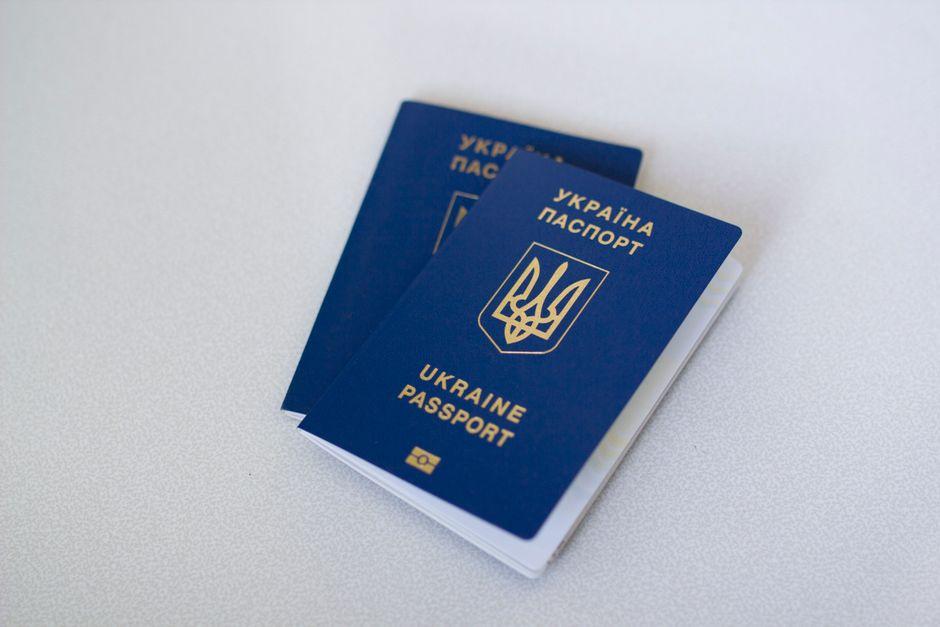
Crossing Borders of Self Understanding in a Dual Citizenship Journey
When Maria received her second passport, the excitement of legally belonging to two nations quickly tangled with deeper questions of identity. It wasn’t just a document; it was a catalyst for self-reflection. She found herself shifting perspectives-experiencing the same events through two cultural lenses. At a family gathering back in her birth country, she longed for the casual warmth that felt natural before relocating abroad. Yet, during a recent holiday in her adopted homeland, she occasionally felt like an outsider despite years spent there. These moments stripped down the idea of nationality to more than a legal status-they revealed how identity is an ongoing negotiation, shaped by memories, social circles, language, and even bureaucratic encounters. Maria’s journey is a common one among dual citizens: expectations of seamless belonging often give way to the nuanced reality that self-understanding expands not by merging, but by holding multiple, sometimes conflicting, truths at once.
Decision points in dual citizenship often go well beyond choosing where to vote or pay taxes; they become moments of self-definition. Take Amir, who faced a professional crossroads when offered a job in his country of origin after years abroad. While the position promised career advancement, it also meant reprioritizing family ties and his sense of place. His reflection revealed unexpected insights: that his identity was less about geographic allegiance and more about values, community, and future aspirations. In navigating these crossroads, dual citizens often learn key lessons that can be summarized into three central realizations:
- Identity Is Fluid: It evolves with lifestyle, relationships, and inner dialogue, rather than being fixed by geography or paperwork.
- Belonging Is Multifaceted: Feeling “at home” is influenced by culture, language, legal status, and emotional ties, which don’t always align smoothly.
- Decision-Making Involves Trade-Offs: Personal and professional choices often require prioritizing one version of “self” over another, without negating either.
| Expectation | Result | Lesson |
|---|---|---|
| Dual citizenship = double security | Sometimes it delays decision-making or creates conflicting obligations | Security is nuanced; more options require more deliberate choices |
| Belonging means feeling fully accepted everywhere | Belonging fluctuates and can feel partial depending on context | Belonging is layered and situational, not absolute |
| More identities equal clearer self-definition | Multiple identities often lead to complexity and ambiguity | Complexity enriches identity rather than dilutes it |
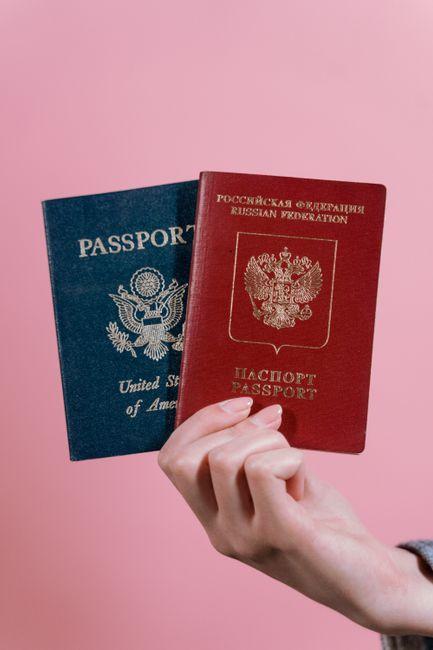
Moments of Disconnection and the Quest for Belonging
Take Aisha’s story, for example. Born in Germany to Moroccan parents, she grew up fluent in two languages yet often felt neither culture fully embraced her. At family gatherings, her cousins teased her softly for mixing up Arabic phrases with German syntax, while at school, some classmates viewed her as “too foreign” despite her German birthright. These moments of disconnection-being seen as a perpetual outsider-were more than just awkward social encounters; they became internal crossroads where Aisha questioned her own identity. Was she Moroccan, German, or something in between? The honest answer wasn’t simple, and the yearning for a clear sense of belonging often outweighed the pride of dual citizenship, highlighting the emotional complexities behind legal status.
Such experiences are common among dual citizens who often navigate contrasting expectations from family, friends, and society. Consider the decision to participate in cultural or national events: attending a Moroccan festival might feel like reclaiming heritage but simultaneously underscore a feeling of alienation when the nuances of local customs remain elusive. Conversely, embracing German traditions can provoke questions about loyalty or cultural dilution. These moments emphasize a broader reality:
- Belonging is not guaranteed by passport stamps or bloodlines.
- Identity is frequently a negotiation, crafted through lived experiences rather than inherited labels.
- Acceptance-from within and from others-is often gradual and conditional.
| Expectation | Reality |
|---|---|
| Seamless blending into both cultures | Periodic feelings of being an outsider in each |
| Clear, static identity tied to nationality | Fluid, evolving identity influenced by context and time |
| Unconditional belonging wherever one goes | Belonging earned slowly, often through vulnerability and connection |
In essence, moments of disconnection serve as pivotal pauses, inviting reflection and growth rather than defeat. For many, the quest for belonging becomes an ongoing journey-one marked by resilience, self-acceptance, and the forging of new hybrid identities that challenge traditional definitions of nationality and community.
The Unseen Challenges Behind Legal Rights and National Ties
Consider Ana, born in Mexico but raised in Canada since childhood, who recently learned she holds dual citizenship. The legal rights this status grants-such as the ability to work and vote in both countries-initially felt empowering, a tangible bridge between her two homes. However, the reality soon revealed complications she hadn’t anticipated. When renewing her passport, she discovered conflicting obligations: tax filings in both nations required careful coordination to avoid penalties. Ana’s experience underscores a common but often hidden challenge of dual citizenship-the administrative maze behind the scenes. The pride of belonging to two countries can be clouded by legal nuances, deadlines, and sometimes contradictory regulations, making identity not just a matter of heart, but also of paperwork and compliance.
Then there is David, whose father’s European lineage granted him citizenship in a country he’d never visited. The link transformed into unexpected national ties fraught with difficult choices. When called for mandatory military service abroad, David faced an agonizing decision to delay his career or risk legal consequences. His story highlights how dual citizenship can tether individuals to responsibilities they may be unprepared for or unaware of. These stories often collide with expectations-where dual citizenship might seem a passport to freedom, it can also mean wrestling with legal bindings and national duties that complicate daily life in very tangible ways.
| Challenge | Real World Example | Impact |
|---|---|---|
| Double Taxation | Ana’s tax filings in Mexico & Canada | Financial stress and legal consultations |
| Mandatory Service | David’s conscription obligation in Europe | Career disruption and emotional conflict |
| Documentation Complexities | Passport renewals and visas | Delays and travel restrictions |
- Lesson: Understanding the full spectrum of dual citizenship’s responsibilities prevents surprises and frustration.
- Reality Check: Legal rights often come hand-in-hand with duties and bureaucratic challenges.
- Advice: Early consultation with legal or immigration experts can clarify obligations across jurisdictions.
Shared Stories from Those Living Between Two Nations
Maria grew up in a small town straddling the border between Mexico and the U.S., embodying two worlds from an early age. At family gatherings, she switched seamlessly between Spanish and English, yet felt an undercurrent of restlessness-that neither side fully embraced her. When she applied for college in the U.S., she encountered unexpected bureaucracy despite holding dual citizenship. The university required proof of residency that didn’t reflect her transnational lifestyle. Maria’s story highlights a common gap between identity and institutional recognition: legal status may grant rights, but everyday experiences often reveal the nuances of belonging.
Then there’s Kamal, whose parents emigrated from India to Canada before he was born. Holding passports from both countries, he often juggles contrasting cultural expectations. For instance, his Indian relatives expect him to uphold traditional values during visits, while his Canadian friends encourage a more individualistic approach. Kamal’s dual citizenship opened doors-like fewer visa hurdles and access to social services-but it also brought complex decisions about where to build his career and family life. Balancing these realities means Kamal sometimes weighs practical benefits against emotional ties, illustrating how:
- Dual citizenship intertwines national identity with daily choice, not just paperwork.
- Expectations don’t always align with lived experiences in either country.
- Negotiating between norms can foster resilience but also moments of cultural dissonance.
| Aspect | Maria’s Experience | Kamal’s Experience |
|---|---|---|
| Cultural Expectation | Fluency in two languages; community traditions | Traditional family values vs. Western individualism |
| Institutional Challenge | Proof of residency discrepancies | Deciding where to establish career & family |
| Emotional Impact | Feeling caught between communities | Balancing dual identities amid differing social norms |
Finding Harmony in the Balance of Multiple Identities
Maria grew up celebrating two sets of holidays, speaking two languages at home, and navigating the subtle but persistent question of “Where are you really from?” At school, her American peers saw her as different-a label that sometimes isolated her. Meanwhile, relatives from her European birthplace expected her to maintain traditions that felt foreign during her adolescence. This tug-of-war between cultures often left her at a crossroads, realizing that identity isn’t a fixed point but a fluid negotiation. In moments like deciding whether to pursue a career abroad or stay close to family, Maria learned that embracing the duality within her didn’t require choosing one identity over the other; it was about honoring both in their own time and space.
Finding harmony in multiple identities often means balancing expectations and personal realities. Take Amir, a dual citizen juggling cultural norms from his Middle Eastern heritage and Western lifestyle. He once found himself hesitant to correct colleagues who misunderstood his customs, fearing he’d be labeled “too different.” Yet, through these interactions, Amir discovered that openness and sometimes gentle education could bridge gaps rather than deepen divides. The following table outlines some strategies individuals like Maria and Amir have found effective in negotiating identity tensions:
| Challenge | Common Expectation | Adaptive Approach |
|---|---|---|
| Cultural belonging pressure | Choose one identity to align with | Integrate traditions selectively based on personal meaning |
| Fear of being misunderstood | Suppress cultural expressions to fit in | Educate and assert boundaries when comfortable |
| Pressure from family expectations | Conform fully to family norms | Negotiate roles and redefine traditions collectively |
To Conclude
In the delicate dance between two nations, dual citizens live a continuous balancing act-embracing the richness of intertwined cultures while navigating the unseen challenges of divided loyalties. Their identities are not fixed points but fluid landscapes, shaped by personal histories, legal frameworks, and ever-evolving social connections. As the world grows increasingly interconnected, understanding these complexities becomes more than an academic exercise; it invites us to rethink what it means to belong, to belong everywhere and nowhere at once. Between two worlds, the journey of dual citizenship is less about choosing sides and more about embracing the fullness of a multifaceted existence-a testament to humanity’s enduring capacity to adapt, blend, and redefine itself beyond borders.




