
In a world that grows ever smaller through connection and migration, the experience of living between two countries has become increasingly common. Dual nationality-holding citizenship in two distinct nations-is more than just a legal status; it is a profound journey between cultures, identities, and loyalties. This unique position offers a tapestry woven from diverse traditions, languages, and histories, yet it also presents intricate challenges that test the boundaries of belonging and self-understanding. “Between Two Worlds: Navigating the Complexities and Richness of Dual Nationality” delves into this multifaceted reality, exploring how individuals embrace and reconcile the privileges, responsibilities, and emotional landscapes that come with inhabiting more than one national identity.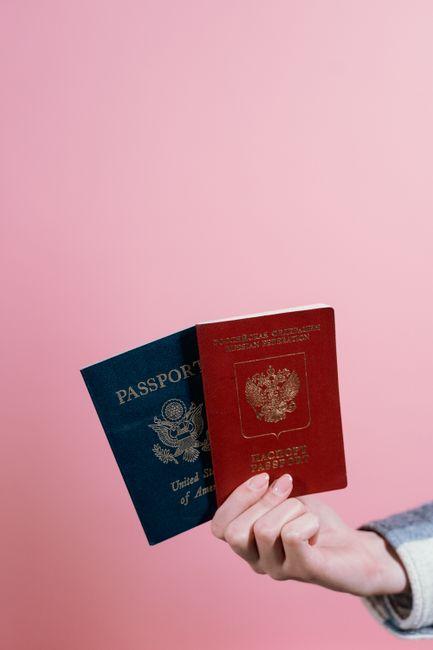
Embracing the Everyday: Living at the Crossroads of Two Homelands
Maria wakes each morning with the hum of two worlds folding into her day: the espresso aroma from her Italian grandmother’s recipe, and the spicy warmth of the Mexican salsa simmering in her kitchen by evening. Her weekdays are a mosaic of language shifts-chatting casually in Spanish with her coworkers, then calling her mother in Rome, where Italian phrases fill the line as naturally as breaths. For Maria, embracing dual nationality means navigating those small yet powerful moments of cultural layering that don’t always sync neatly. It’s not just about celebrating two traditions-it’s about facing the unexpected tension when a festival reminds her of the family she’s distanced from, or when the local customs pressure her into choosing one identity to highlight over the other.
Consider the decision she faced last summer: which heritage to honor for her daughter’s name? The long, lyrical Italian name her husband cherished, or the strong, vibrant Mexican name her mother-in-law suggested? That moment crystallized the daily balance of dual nationality. It’s a negotiation where identity is less about clear definitions and more about coexistence. What emerges-often surprisingly-is a hybrid strength. A few lessons stand out from Maria’s journey:
- Flexibility trumps rigidity: Rather than feeling forced to pick “one or the other,” she learned to weave elements of both cultures fluidly.
- Setting personal traditions: Creating new rituals that honor both backgrounds, such as blending holiday customs, adds meaning beyond inherited expectations.
- Communicating nuances: Explaining cultural differences to friends and colleagues helps shift their assumptions and deepens Maria’s own understanding.
| Expectation | Reality |
|---|---|
| Clear cultural identity aligned with one homeland | Fluid, evolving sense of belonging across both cultures |
| Seamless integration of traditions without conflict | Occasional cultural friction that sparks reflection and growth |
| Simple answers to “Where are you really from?” | Complex stories that often require context and patience |
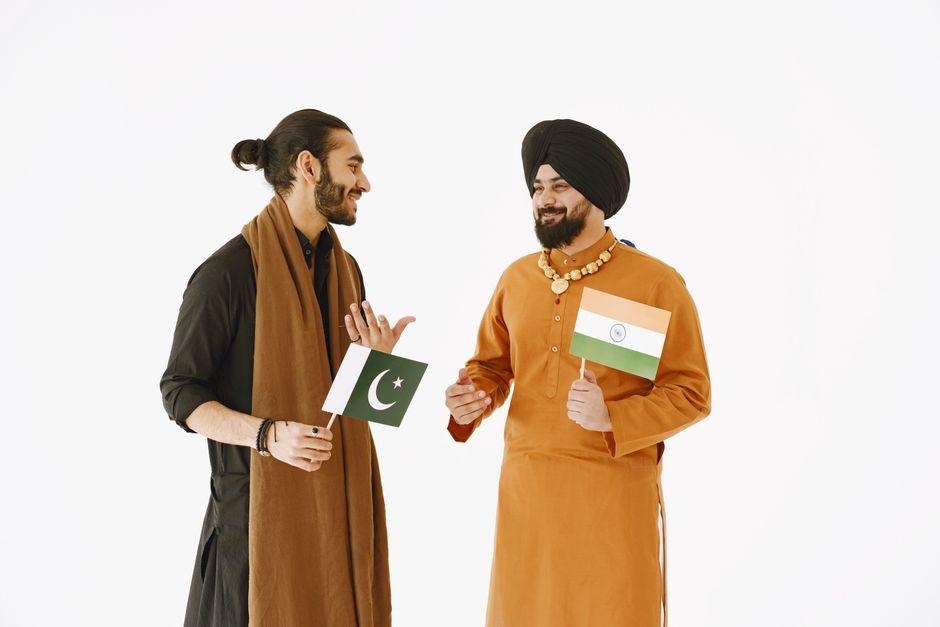
When Borders Blur The Push and Pull of Cultural Identity
Imagine Sofia, a young woman born to Mexican parents but raised in Canada. At family gatherings, she savors homemade tamales while chatting in English with her Canadian friends. Yet, at school, she’s often the only one who spontaneously mixes Spanish into her sentences, a habit that sometimes draws curious glances or questions about “where she really belongs.” This daily balancing act reflects a deeper tension-the push and pull of cultural identity that many with dual nationality experience. It’s not merely about language or food preferences; it’s an emotional navigation between two worlds, where moments of pride can swiftly turn into feelings of alienation.
Consider moments like deciding which holidays to celebrate or how to respond when asked, “Where are you from?” For Sofia, every choice becomes a small yet significant statement. Choosing to celebrate Día de los Muertos with her family grounds her in her Mexican heritage, while embracing Canada Day with friends reinforces her sense of belonging in her adoptive country. These decisions often reveal unexpected lessons:
- Identity isn’t static: It evolves as you interact with different cultures and communities.
- Expectations versus reality: The internal desire to fit fully in one culture can clash with the external perception of being an “outsider” in both.
- Strength in hybridity: Instead of choosing one identity over the other, many learn to craft a unique blend that enriches their worldview.
| Expectation | Reality |
|---|---|
| Feeling fully accepted in one culture | Often feeling like an outsider in both worlds |
| Straightforward sense of belonging | A blended identity that requires ongoing negotiation |
Through these experiences, individuals like Sofia learn that cultural identity is less about borders and more about bridges-interconnected pathways that allow them to draw strength, flexibility, and insight from the complexity of their dual heritage.
Moments of Choice Weighing Loyalty and Belonging in Dual Allegiance
Imagine Elena, who holds both French and Moroccan citizenship, standing at a dinner table filled with friends from her two worlds. It’s a seemingly simple question-“Which country do you support in the World Cup?”-but for her, it manifests a deeper tension between loyalty and belonging. She wants to cheer for France, where she’s lived most of her life, yet part of her heart beats for Morocco, her parents’ homeland. This moment, shifting between pride and guilt, showcases how dual nationals often navigate competing emotions, where every choice feels like affirming one identity at the expense of another. Such decisions aren’t just about sports or symbols; they echo through everyday experiences: choosing languages to speak at home, where to spend holidays, or whose history to teach children. The tug between expectation and genuine feeling reveals that allegiance isn’t a fixed point but a dynamic balance.
These instances underscore a vital lesson: dual nationality is less about dividing oneself and more about appreciating layered belonging. Consider a corporate example-Julian, with U.S. and German passports, faces a career crossroad when offered two jobs, one in each country. His initial instinct pulls him towards America, envisioning the cultural comfort and professional networks he built there. Yet, reflecting on his German heritage and family ties, he opts for the opportunity in Berlin. The reality shocks him: the integration is challenging, and he grapples with feelings of estrangement and the pressure to prove his “Germanness.” This contrast between expectation and experience highlights that choosing one allegiance often involves sacrifice but also offers growth. Navigating these moments means embracing complexity, recognizing that loyalty in dual nationality is a spectrum-not a verdict. Below is a brief overview of typical dilemmas and their nuanced impacts:
| Situation | Initial Expectation | Reality/Challenge | Lesson |
|---|---|---|---|
| Supporting one national team | Clear allegiance defines identity | Feelings of guilt, divided pride | Identity is fluid and multi-dimensional |
| Career choice in one country | Familiar environment equals comfort | New country brings cultural dissonance | Growth comes from navigating discomfort |
| Speaking heritage language at home | Maintaining tradition strengthens bonds | Kids resist, mixing languages | Belonging evolves through communication |
- Decision moments often highlight tensions but are also opportunities for self-reflection.
- Balancing dual allegiance requires empathy toward oneself and others in both communities.
- Recognition that loyalty need not be exclusive but layered and enriched by both cultures.
Paths Diverged Stories of Conflict and Connection Between Nations
When two nations intersect in one person’s identity, the story often unfolds in a landscape marked by both friction and harmony. Take the case of Maria, born in Argentina to a Spanish father and a local mother, holding passports from both countries. Her visits to Spain were initially colored by a yearning to connect with her father’s homeland, yet she encountered unexpected challenges-bureaucratic hurdles, language nuances, and cultural expectations that clashed with her Argentine upbringing. During a festival in Madrid, Maria found herself torn between two sets of customs, her dual nationality pulling her in opposite directions. This moment-where the warmth of shared heritage met the coldness of official procedure-highlighted a common tension for many dual nationals: belonging does not always equal seamless acceptance. Yet, it was through navigating these difficulties she discovered the resilience and rich layering of her identity, ultimately embracing the complexities without erasing the contradictions.
Contrast this with Jamal, whose dual nationality between Canada and Kenya opened doors in unexpected ways. His decision to leverage his multicultural background in his career felt like a natural progression, yet it also invited questions about loyalty and representation, both in his personal circles and at work. For Jamal, the real moment of reckoning wasn’t a dramatic event but a series of small choices-whether to attend a cultural event hosted by only one side of his heritage or to voice perspectives that sometimes felt at odds with mainstream narratives of either nation. These experiences taught him invaluable lessons about adaptability and the power of bridging divides. His story reveals that dual nationality is not just a passport issue but a daily negotiation of connection: where conflict can fuel empathy, and divergence might well forge stronger, more nuanced ties.
- Conflict arises in cultural expectations and institutional frameworks.
- Connection emerges through embracing layered identities and choosing inclusion over exclusion.
- Decision moments often revolve around everyday interactions rather than grand gestures.
| Scenario | Expectation | Reality | Lesson |
|---|---|---|---|
| Maria’s Festival Experience | Seamless cultural integration | Bureaucratic and cultural disconnects | Identity is complex, not always harmonious |
| Jamal’s Career Choices | Clear dual-national advantage | Questioned loyalties, nuanced identity challenges | Duality can be a bridge, not a barrier |
The Quiet Gains How Dual Nationality Enriches Personal and Collective Horizons
Consider Ana, who grew up celebrating both Diwali and Christmas, her life a patchwork of rituals, flavors, and stories borrowed from two nations. When she moved for work, the foundation of dual nationality offered more than practical benefits-it gave her a lens to understand nuances others overlooked. In boardrooms where cultural subtleties influence every handshake and hesitation, Ana’s ability to fluidly navigate different expectations became an asset, broadening not just her career but her worldview. Rather than feeling fragmented, she became a bridge, translating values and ideas between communities that often see each other as “other.” This quiet gain – a deepened empathy and flexibility – reshapes how individuals like Ana perceive identity not as a fixed label but as a dynamic interplay of histories and hopes.
The enrichment of dual nationality extends beyond personal victories into collective gains. Imagine a community meeting where diverse voices converge: those who identify as dual nationals often bring stories that challenge monolithic narratives about belonging. For instance, in discussions about national policy or cultural education, their insights can introduce subtleties, such as:
- Hybrid traditions that fuse seemingly different customs into new celebrations
- Complex family histories that resist simplifications into a single “origin” or allegiance
- Practical knowledge of multiple legal or social systems, fostering creative problem-solving
These contributions defy the expectation that dual nationality causes confusion or divided loyalties. Instead, they demonstrate how living between worlds can cultivate a more inclusive understanding of identity. The quiet gains-often invisible in headlines-are the subtle but profound expansions of collective horizons, where diversity and unity are no longer opposing forces but complementary strands of a richer social fabric.
In Retrospect
In the delicate dance of dual nationality, individuals find themselves woven between two distinct tapestries-each rich with history, culture, and identity. Navigating this liminal space is neither simple nor linear; it is a continual negotiation of belonging and self-understanding. Yet, within this complexity lies a profound richness: the ability to bridge worlds, to embody multiple perspectives, and to craft a narrative uniquely one’s own. As borders blur and global connections deepen, the experience of living between two worlds invites us all to reconsider the meaning of home and heritage in an increasingly interconnected age.




