
In a world increasingly defined by movement, the story of migration extends far beyond headlines of hardship and discord. “Beyond Borders: Rethinking Global Migration as a Catalyst, Not a Crisis” invites us to explore a fresh perspective-one that views human migration not as a looming threat, but as a dynamic force of opportunity and transformation. As nations grapple with shifting populations and complex challenges, it becomes essential to move past fear-driven narratives and recognize migration’s profound potential to spark innovation, cultural enrichment, and economic renewal. This article embarks on a journey to unravel the rich tapestry of migration, urging us to see it as a vital thread weaving together the future of our interconnected world.
Rethinking Migration Narratives: Unpacking the Myth of Unrestricted Benefits
- Myth vs. Reality: The pervasive narrative that migrants flood welfare systems and drain public resources not only oversimplifies complex socio-economic dynamics but fundamentally misguides policy. Empirical evidence consistently shows that most migrants contribute more in taxes than they consume in benefits, especially over the long term. However, blanket assertions of “unrestricted benefits” ignore the critical nuances-eligibility restrictions, integration pathways, and national policy variation-that mediate access and impact. Ignoring these distinctions risks fueling xenophobic anxieties rather than fostering informed dialogue on equitable social support frameworks.
- Trade-offs and Strategic Priorities: Policymakers face a delicate balancing act: ensuring that social safety nets remain robust and financially sustainable while avoiding exclusionary backlash against newcomers. The key is moving beyond zero-sum assumptions.
Policy Dimension Overly Restrictive Approach Inclusive, Managed Access Economic Integration Limits workforce participation and human capital development Encourages contribution and reduces long-term reliance Social Cohesion Fuels resentment, social fragmentation Builds trust and shared community investment Public Perception Stokes fear, increases misinformation Promotes balanced understanding, reduces stigma Adopting nuanced eligibility criteria tied to demonstrated need and integration metrics, combined with transparent communication on the real impacts, offers a pathway to dismantle myths while safeguarding societal welfare. This approach necessitates rigorous data collection and adaptive policy frameworks that respond to shifting demographics and economic conditions, rather than entrenched ideological positions.
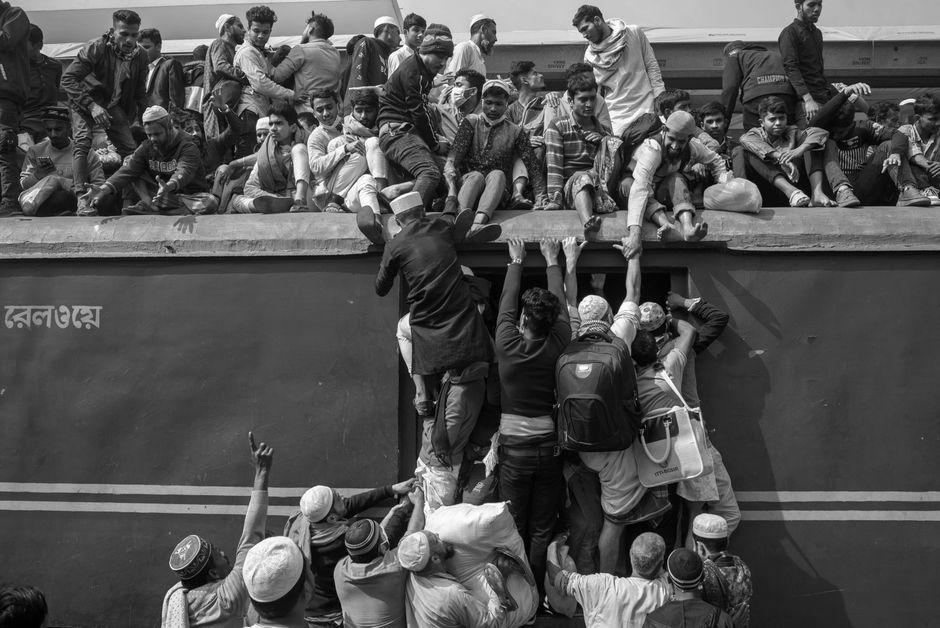
Hidden Costs and Overlooked Challenges in Global Movement
- Hidden costs are not merely economic but also sociopolitical. While typical analyses emphasize financial burdens such as integration expenses or welfare support, the subtler impacts-strain on public services, cultural friction, and political backlash-are often underestimated. These costs, though intangible, can swiftly catalyze divisions that impede the very societal cohesion migration seeks to bolster. Ignoring these dynamics risks oversimplifying migration as a net benefit without safeguarding the societal fabric, which must be resilient enough to absorb and adapt over time.
- Overlooked challenges often stem from policy myopia rather than migration itself. Assumptions that more migration inevitably equals more problems miss the nuance of how destination countries manage inflows. For example, lack of targeted language programs or insufficient recognition of foreign qualifications severely limits migrants’ upward mobility, inflating perceived social and economic costs. This points to a critical trade-off: investing in robust integration infrastructures might seem costly upfront but yields greater returns by accelerating migrants’ contributions and reducing social tensions.
| Aspect | Common Assumption | Nuanced Reality | Implication |
|---|---|---|---|
| Economic Impact | Migration drains resources and depresses wages. | Migrants often fill labor gaps and contribute innovation; short-term strains can lead to long-term growth. | Policy should focus on dynamic labor market integration rather than static cost containment. |
| Social Cohesion | Increased diversity threatens national identity. | Identity evolves with inclusion; conflict arises mainly from exclusion and marginalization. | Efforts must prioritize inclusive narratives and cross-cultural communication. |
| Public Services | Migrants overload healthcare and education systems. | Demand rises, but strategic scaling and migrant engagement can improve system resilience. | Investments in adaptive capacity are vital to avoid reactive cutbacks and scapegoating. |
Balancing Opportunity and Security in a Connected World
- Opportunity and security are often portrayed as mutually exclusive in migration debates, yet this dichotomy oversimplifies a complex reality. Migration intrinsically offers economic revitalization, cultural enrichment, and demographic balance, but unchecked flows can strain infrastructure and social cohesion. The challenge lies not in rejecting opportunity to preserve security or vice versa, but in designing adaptive frameworks that integrate both. Instead of securitizing migration as an existential threat, policymakers must differentiate between genuine risks-such as undocumented crossings linked to exploitation-and manageable transnational movements that facilitate shared growth.
- Trade-offs are unavoidable but can be strategically navigated through calibrated openness paired with robust governance. For instance, selective mobility schemes, such as skills-based visas, harness economic benefits while mitigating security risks without resorting to blanket restrictions that stifle human capital development. Additionally, technology-driven monitoring and international data-sharing protocols can enhance border integrity without eroding migrants’ dignity or privacy. This nuanced balancing act requires rejecting zero-sum logic; embracing a model where opportunity-driven migration becomes a stabilizing force rather than a destabilizing one depends on dismantling fear-fueled narratives and anchoring policies in empirical evidence and human rights.
| Dimension | Opportunity-Forward Approach | Security-First Approach |
|---|---|---|
| Mobility Policy | Targeted, skill-oriented visas; partnerships with origin countries | Restrictive quotas; heightened border enforcement |
| Risk Management | Data-driven threat assessment; integration supports | Broad surveillance; detentions and deportations |
| Social Impact | Community engagement and inclusion programs | Isolationist rhetoric; stigmatization |
Migration as Strategy: When Borders Define Smart Policy Choices
- Migration as a deliberate strategy reframes national borders from rigid barricades to dynamic frameworks that both enable and regulate human mobility. The traditional dichotomy of ‘open vs. closed’ borders oversimplifies a far more complex policy landscape where strategic selectivity enhances economic competitiveness, social cohesion, and international standing. Countries that excel at leveraging migration do not merely react to push-pull factors; they proactively design pipelines aligned with demographic forecasts, sectoral labor demands, and geopolitical alliances.
- However, this approach demands confronting uncomfortable trade-offs. Maximizing economic gains through high-skilled immigration may exacerbate inequalities if poorly complemented by inclusive social policies. Conversely, overly restrictive policies aimed at cultural preservation risk stagnation and brain drain. The key is calibrated openness underpinned by transparent criteria and agile adjustment mechanisms. This view challenges the default narrative of migration as crisis management, presenting it instead as a nuanced toolkit for sovereignty that balances national interests with global realities.
| Policy Focus | Potential Benefit | Critical Trade-off |
|---|---|---|
| Targeted Skill-Based Visas | Boosts innovation and economic dynamism | May widen domestic inequality and talent poaching |
| Regional Integration & Mobility Agreements | Enhances labor market flexibility and crisis resilience | Challenges national regulatory autonomy and social cohesion |
| Temporary Migration with Pathways to Residency | Balances immediate labor needs with long-term community building | Requires careful system design to avoid exploitation and instability |
Beyond Simple Solutions: Navigating the Complex Realities of Human Mobility
- Human mobility defies simplistic categorizations: Reducing migration to either economic opportunity or security threat overlooks its multifaceted drivers. Migration is inherently intertwined with social networks, climate change, geopolitical shifts, and personal aspirations, rendering any one-dimensional policy inadequate. Policymakers must transcend binary frameworks-such as “legal vs. illegal” or “skilled vs. unskilled”-and recognize overlapping identities and motivations that evolve over time. This awareness demands adaptive governance that acknowledges migrants as agents of change rather than static subjects of control.
- Trade-offs are inevitable but manageable: Balancing sovereign interests with human rights and economic realities requires calibrated approaches, not blanket solutions. For example, stringent border enforcement may reduce certain unauthorized crossings but often drives migration underground, exacerbating vulnerability and eroding trust in institutions. Conversely, overly permissive regimes risk political backlash and social friction. Expertise-supported, context-specific policies that incorporate community input and international cooperation offer a pragmatic path forward-tailoring responses to local conditions without sacrificing ethical imperatives.
| Dimension | Common Assumption | More Nuanced Reality |
|---|---|---|
| Motivation | Economic gain or asylum only | Complex interplay of safety, family, identity, climate, aspiration |
| Impact | Economic drain or burden on host countries | Dynamic contributions to innovation, demographics, social cohesion |
| Policy | Enforcement-focused or fully open borders | Hybrid models balancing control, integration, and human dignity |
In Conclusion
As we navigate the complexities of an increasingly interconnected world, it becomes clear that migration is less a problem to be contained and more a powerful force shaping our shared future. By moving beyond borders-both physical and ideological-we can reframe migration not as a crisis, but as a catalyst for innovation, cultural enrichment, and collective progress. Embracing this perspective invites us to craft policies and narratives that honor dignity and opportunity, transforming movement across borders into a journey toward mutual growth and understanding. In rethinking migration, we unlock the potential to turn division into connection, uncertainty into possibility, and displacement into new beginnings.




