In a world increasingly connected yet distinctly divided by invisible lines, the movement of people across borders tells a story of hope, challenge, and change. Migration and immigration are not just statistics or policies—they are the lifeblood of cultures shifting, economies evolving, and identities being reshaped. As families embark on journeys seeking new beginnings, and societies grapple with integration and diversity, the trends in migration reveal much about the pulse of our global community. This article delves into the complex tapestry of crossing borders, exploring the forces that drive human movement and the multifaceted impacts that follow.
Crossing Borders: Understanding the Driving Forces Behind Global Migration
Global migration is propelled by a myriad of dynamic forces, each weaving together complex narratives of aspiration, survival, and transformation. Economic factors stand out prominently, as individuals seek improved job opportunities and financial stability beyond their national borders. Political instability and conflict serve as powerful catalysts, compelling millions to flee their homelands in search of safety and peace. Environmental changes, from natural disasters to climate shifts, increasingly influence migration patterns, forcing communities to adapt in radical ways.
Understanding these driving forces requires us to consider a spectrum of realities that shape human movement. Below are some predominant factors that influence migratory decisions:
- Economic prospects: Seeking employment and better living standards
- Political conditions: Escaping conflict, persecution, or oppressive regimes
- Environmental pressures: Responding to disasters, droughts, and climate change
- Social networks: Joining family or community already abroad
- Educational opportunities: Pursuing advanced learning in foreign institutions
| Migration Driver | Primary Impact | Regions Most Affected |
|---|---|---|
| Economic | Urbanization, labor shifts | South Asia, Latin America |
| Political | Conflict-driven displacement | Middle East, Africa |
| Environmental | Forced relocations | Pacific Islands, Sub-Saharan Africa |
| Social | Family reunification | Global diaspora communities |
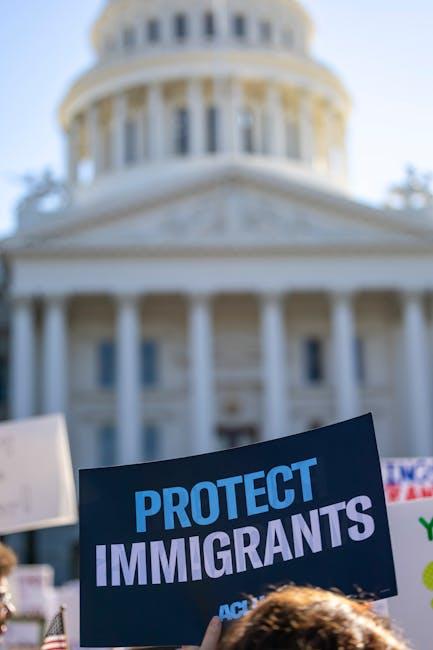
Shifting Patterns and Emerging Destinations in Modern Immigration
Migration patterns are no longer defined solely by traditional routes to established countries like the United States or Western Europe. Instead, a rich tapestry of emerging destinations is reshaping the global landscape. Nations in Asia, Africa, and Latin America are witnessing a surge in immigrant inflows, driven by newly established economic opportunities, political stability, and evolving visa policies. Countries such as Malaysia, Mexico, and Kenya are becoming hubs for skilled immigrants and entrepreneurs, creating vibrant multicultural communities that were once unimaginable in these regions.
Several key factors contribute to these shifting trends:
- Economic diversification: Emerging markets are expanding, attracting workers and investors.
- Policy-driven migration: Progressive immigration reforms open doors to new demographics.
- Global connectivity: Advances in transportation and communication ease transitions.
| Destination | Main Attraction | Immigrant Profile |
|---|---|---|
| Malaysia | Technology startups | Young professionals, entrepreneurs |
| Mexico | Manufacturing & trade | Skilled labor, families |
| Kenya | Innovation hubs | Tech experts, creatives |
The Socioeconomic Impacts of Migration on Host and Origin Countries
Migration reshapes societies in profound ways, weaving new economic and social fabrics for both host and origin countries. For host nations, migrants often bring vital skills and entrepreneurial energy that stimulate economic growth and cultural vibrancy. These contributions can lead to job creation, innovation, and the revitalization of aging workforces. However, this influx may also strain public services and infrastructure, prompting debates about resource allocation. The balance between opportunities and challenges is nuanced, with impacts varying by country and context.
Meanwhile, origin countries experience a complex mix of outcomes. While the departure of young, skilled workers might cause a brain drain, remittances sent back home form a lifeline that sustains families and funds development projects. The social fabric evolves as communities adapt to changing demographics and new economic realities. Consider this snapshot of economic flows and impacts:
| Impact Area | Host Country | Origin Country |
|---|---|---|
| Economic Growth | New labor & entrepreneurship | Remittance inflow boosts families |
| Demographics | Increased diversity & youth | Population aging & skill gaps |
| Social Services | Higher demand & integration needs | Reduced public service burden |
- Positive Impact: Cultural exchange and innovation in host countries
- Challenge: Potential social tensions and policy pressures
- Opportunity: Development through diaspora networks
Navigating Policy Challenges and Enhancing International Cooperation
Effective management of migration requires a balance between sovereign policy interests and the imperative for collaborative international frameworks. Countries are increasingly confronted with the challenge of harmonizing border security while respecting human rights and providing avenues for lawful migration. A multifaceted approach includes adopting technology-driven solutions for tracking migrant flows, enhancing legal pathways, and investing in integration programs that facilitate cultural exchange and economic participation. The evolving geopolitical landscape demands adaptive policies that can respond quickly to humanitarian crises and economic shifts.
Forging international cooperation means transcending bilateral agreements and embracing regional dialogues that involve governments, NGOs, and private sectors. Key focal points include:
- Shared intelligence and data exchange to preempt irregular migration and human trafficking.
- Joint training programs for border officials to streamline migration procedures and protect migrant rights.
- Development aid coordination to address root causes of forced migration, such as conflict and environmental degradation.
| Policy Area | International Collaboration Example | Expected Outcome |
|---|---|---|
| Border Management | EU Frontex Operation | Enhanced border security and rescue operations |
| Legal Migration Channels | Global Compact for Migration | Safer and more orderly migration routes |
| Integration Policies | Nordic Integration Initiatives | Improved social cohesion and labor market inclusion |
Fostering Inclusive Communities Through Education and Cultural Integration
At the heart of thriving multicultural societies lies a commitment to education that embraces diversity and promotes intercultural understanding. By integrating curricula that highlight global histories, languages, and traditions, schools serve as gateways to empathy and mutual respect. This approach not only equips individuals with knowledge but also fosters an environment where differences are celebrated rather than merely tolerated. Community programs, language exchanges, and inclusive storytelling initiatives become vital tools in bridging cultural divides, enabling newcomers and long-term residents alike to connect on a meaningful level.
Creating a cohesive social fabric involves more than just awareness; it requires active participation from all community members. Tailored workshops, cultural festivals, and collaborative art projects provide platforms for sharing experiences, breaking down stereotypes, and building trust. These efforts can be organized through partnerships between educational institutions, local governments, and non-profits, ensuring sustainability and wider reach. The benefits are tangible and multifaceted, including enhanced social cohesion, reduction in prejudices, and the empowerment of marginalized voices—all critical for nurturing inclusive communities where everyone feels valued and heard.
- Multilingual Education Programs: Encourages language diversity and communication skills.
- Community Storytelling Events: Share personal migration experiences to foster empathy.
- Cultural Exchange Workshops: Promote active cultural learning and interaction.
- Collaborative Art Installations: Visual expressions of shared identity and heritage.
| Initiative | Purpose | Impact |
|---|---|---|
| Language Cafés | Informal language practice | Boosts communication and confidence |
| Cultural Mentorship | Guidance for newcomers | Facilitates smoother integration |
| Interfaith Forums | Dialogue among diverse beliefs | Encourages mutual respect |
Closing Remarks
As the currents of migration continue to reshape the landscapes of nations and identities, the stories of those who cross borders remind us that movement is as much about hope and opportunity as it is about challenge and change. Exploring these trends invites us not only to understand the statistics but to recognize the shared human experience woven through every journey. In crossing borders—literal and metaphorical—we encounter a world in flux, where new connections are forged and the definition of home is continually reimagined. The conversation about migration and immigration is far from over; it is, in fact, an ever-evolving narrative that calls for empathy, insight, and a willingness to see beyond lines on a map.