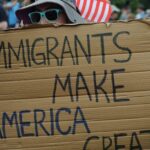
In a world woven together by invisible threads of connection, the movement of people across borders is both an age-old journey and a modern phenomenon. “Crossing Borders: Navigating the Tides of Global Migration” invites readers to explore the complex currents shaping human mobility today. From the hopeful footsteps of those seeking new beginnings to the intricate policies and cultural exchanges that frame their paths, migration is a story of challenge, opportunity, and transformation. As millions traverse landscapes and seas, understanding these tides offers a window into the changing faces of our global community.
The Changing Landscape of Global Migration Patterns
Migration today is no longer a linear journey confined by geography or politics; it has evolved into a complex web shaped by economic shifts, climate change, and social dynamics. Increasingly, migrants are moving across multiple borders, creating dynamic diaspora networks that transcend traditional boundaries. These movements challenge conventional views on nationality and citizenship, revealing a mosaic of identities instantly connected through technology and shared experiences. Urban centers in both developing and developed countries are becoming melting pots, where diverse cultures coalesce in real-time, driving innovation and cultural exchange.
Several forces are driving this transformation:
- Climate-induced displacement disrupts livelihoods and prompts both short-term relocations and permanent resettlements.
- Economic instability pushes workers to seek opportunities across continents, often navigating informal networks.
- Political unrest continues to generate waves of refugees and asylum seekers whose routes are increasingly unpredictable.
These factors intermingle, creating migration flows that are fluid and multi-directional rather than unidirectional. Below is a snapshot illustrating recent trends in major migration corridors worldwide:
| Region | Primary Drivers | Key Destinations | Trend |
|---|---|---|---|
| Sub-Saharan Africa | Economic hardship, Climate change | Europe, Middle East | Increasing intra-regional moves |
| Latin America | Violence, Economic opportunities | North America, Spain | Rising asylum applications |
| South Asia | Labor migration, Political conflict | Gulf States, Europe | Steady labor flows |
| Europe | Refugee influx, Aging populations | Internal migration | Growth in skilled migration |
Understanding the Socioeconomic Impacts on Host and Home Countries
Migration shapes the economic and social fabric of both departing and receiving nations in unique ways. For host countries, the influx of new residents often brings an energized labor force that can fuel industries and contribute to cultural diversity. However, it can also strain public services, housing, and infrastructure if growth outpaces planning. The balance between opportunity and challenge hinges on strategic integration policies that harness newcomers’ potential while ensuring equitable access to resources for all citizens.
On the flip side, home countries experience shifts that ripple through communities and economies. Remittances sent by migrants become vital lifelines, supporting families and local development projects. Yet, this outflow of talent—often referred to as “brain drain”—can hamper innovation and long-term growth. Addressing these dynamics requires nuanced approaches that consider not just economic indicators but also social cohesion and human capital sustainability.
- Host countries gain: Workforce diversity, economic growth, cultural innovation
- Host countries face: Resource allocation challenges, social integration hurdles
- Home countries benefit: Financial remittances, global networks
- Home countries risk: Loss of skilled professionals, demographic imbalance
| Impact Area | Host Countries | Home Countries |
|---|---|---|
| Economy | Boost in labor supply, consumer markets | Inflow of remittances, potential labor shortages |
| Culture | Enriched diversity, intercultural exchange | Shift in traditional societal roles |
| Social Services | Increased demand for education, healthcare | Reduced strain but also fewer resources |
Navigating Legal Frameworks and Policy Challenges
In the complex arena of global migration, legal frameworks act as both gates and guides, defining who crosses borders, how, and under what circumstances. These constructs are ever-evolving, shaped by national interests, international obligations, and humanitarian concerns. The challenge lies not only in their diversity but also in their dynamic nature—laws that are progressive in one region may be restrictive or ambiguous in another. Migrants, advocates, and policymakers must constantly adapt to shifting policies that may affect visa eligibility, asylum claims, or labor rights. This fluidity demands an intricate understanding of overlapping jurisdictions and a creative approach to advocacy and compliance.
Key challenges include:
- Fragmented international agreements leading to inconsistent protections.
- Policy gaps that leave vulnerable populations unprotected.
- Balancing national security with human rights concerns.
- Rapid changes in legislation due to political or social pressures.
| Legal Aspect | Common Challenge | Impact on Migrants |
|---|---|---|
| Asylum Procedures | Lengthy adjudication times | Prolonged uncertainty and vulnerability |
| Work Permits | Restrictive quotas | Limited economic opportunities |
| Detention Practices | Inconsistent standards | Erosion of dignity and rights |
Building Inclusive Communities Through Cultural Integration
In the rich mosaic of our modern world, communities thrive not by erasing differences but by celebrating the vibrant hues each culture brings. To nurture such an environment, it’s essential to foster spaces where traditions intersect, allowing for mutual respect and shared growth. Initiatives like community storytelling nights, intercultural cooking classes, and language exchange meet-ups serve as dynamic bridges, weaving diverse narratives into a cohesive social fabric. These efforts do not merely welcome newcomers—they invite everyone to co-create a collective identity that is both fluid and resilient.
To cultivate true inclusivity, emphasis must be placed on understanding underlying values rather than superficially acknowledging customs. This means encouraging dialogue around:
- Common goals that transcend cultural origins
- Shared challenges that call for collaborative solutions
- Unique contributions that enrich community life
By prioritizing connection over assimilation, communities empower individuals to flourish while weaving their distinct cultural threads into a vibrant tapestry. Below is a snapshot of effective cultural integration strategies and their impact:
| Strategy | Community Impact | Example |
|---|---|---|
| Intercultural Festivals | Increased social cohesion | Annual cultural fairs with food and art |
| Inclusive Policy-Making | Enhanced representation | Multilingual city council meetings |
| Collaborative Public Spaces | Shared community ownership | Community gardens with diverse plantings |
Strategies for Supporting Migrants in Transition and Resettlement
Effective support for migrants requires a holistic approach that addresses both immediate needs and long-term integration goals. Communities and organizations can build trust by offering multilingual resources, culturally sensitive counseling, and legal assistance tailored to individual circumstances. Creating safe spaces where migrants feel heard and valued fosters resilience, while partnerships with local businesses and educational institutions open doors to employment and skill development. Empathy, patience, and persistence are crucial in helping newcomers transform challenges into opportunities.
Far from a one-size-fits-all solution, tailored strategies recognize the diversity of migrant experiences. Consider the following cornerstones for a successful transition:
- Community Engagement: Encourage participatory activities that connect migrants with locals through art, sports, and dialogue.
- Language Access: Provide accessible language courses and translation services to break down communication barriers.
- Healthcare and Wellness: Facilitate culturally competent health services addressing physical and mental well-being.
- Legal Guidance: Offer clear, accessible information on rights, responsibilities, and pathways to citizenship.
| Support Area | Key Action | Impact |
|---|---|---|
| Employment | Job fairs with migrant-friendly employers | Faster financial independence |
| Education | Bridge programs for credential recognition | Enhanced career prospects |
| Social Integration | Community mentorship programs | Reduced social isolation |
The Way Forward
As the tides of global migration continue to shift and swell, the stories of those who cross borders remind us of the complex tapestry that defines our shared humanity. Navigating these movements requires not only policies and protocols but also empathy and understanding—bridges built not just of laws, but of compassion. In a world increasingly connected yet divided by lines on maps, the journey of migration challenges us to rethink identity, belonging, and the very meaning of home. Crossing borders is more than a passage from one place to another; it is an ongoing dialogue between cultures, hopes, and futures—one that asks us all to listen, learn, and embrace the currents of change.