
In a world woven ever tighter by technology, trade, and tales from distant lands, the act of crossing borders has become both a journey of hope and a flashpoint of challenge. “Crossing Borders: The Complex Tides of Global Immigration” invites us to navigate the intricate currents shaping human movement today. Beyond the headlines and statistics lie stories of aspiration, resilience, and the delicate balance between identity and integration. This exploration seeks to illuminate the multifaceted nature of immigration—a phenomenon that transcends geography, stirring debates, shaping societies, and redefining what it means to belong.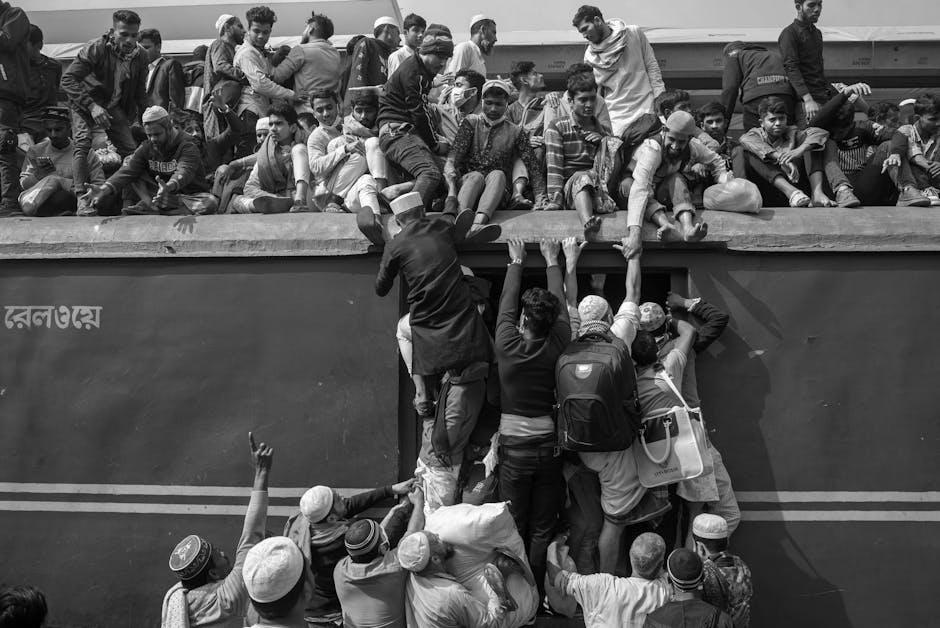
The Human Stories Behind Migration Patterns

Economic Impacts and Opportunities in Host Nations
Immigration undeniably reshapes the economic landscape of host nations, creating a dynamic interplay of challenges and prospects. On one hand, the influx of diverse talents and skills often fills critical gaps in labor markets, fueling innovation and driving growth in emerging sectors. This phenomenon can lead to heightened productivity and increased consumer demand, sparking a cycle of economic vitality. However, it also requires careful management to ensure infrastructure, housing, and public services are not overwhelmed, demanding strategic investment and policy foresight.
Opportunities born from immigration extend beyond mere labor contributions and penetrate the entrepreneurial sphere. Immigrants frequently launch new businesses that stimulate job creation, diversify local economies, and invite fresh perspectives into traditional industries. Some notable economic impacts include:
- Enhancement of global trade networks through transnational connections
- Revitalization of declining regions by fostering community renewal
- Enrichment of the talent pool across multiple professional fields
| Key Economic Element | Effect | Example |
|---|---|---|
| Labor Market | Fills shortages in skilled & unskilled jobs | Healthcare personnel in aging societies |
| Entrepreneurship | Generates new companies and jobs | Tech startups in urban centers |
| Consumer Demand | Increases spending in local markets | Housing and retail growth |
Navigating Legal Frameworks and Policy Challenges
Understanding the labyrinth of immigration laws across different nations can feel like decoding an ancient script. Each country crafts its policies influenced by history, economic needs, and geopolitical pressures, making uniformity a rare gem. Policies often clash on issues such as asylum rights, work visas, and border enforcement, leading to a patchwork of rules that migrants must navigate. For instance, some nations favor highly skilled immigrants, while others prioritize family reunification or humanitarian protection, creating a complex matrix that requires constant adaptation.
- Visa regulations differ not just by country but sometimes regionally, with varying eligibility and processing times.
- Detention and deportation practices raise ethical questions about human rights and due process.
- International agreements like the Global Compact for Migration attempt to foster cooperation, yet implementation remains inconsistent.
- Policy shifts frequently influenced by political climate can abruptly alter the landscape for immigrants and host countries alike.
| Country | Preferred Immigrant Type | Key Challenge |
|---|---|---|
| Canada | Skilled Workers | Lengthy Processing |
| Germany | Asylum Seekers | Integration Programs |
| Australia | Family Reunification | Strict Border Control |
| USA | Diverse Categories | Policy Fluctuations |
Cultural Integration and the Shaping of New Identities
As waves of migration ripple across continents, the melding of cultures becomes a dynamic dance that continuously redefines personal and collective identities. Migrants often find themselves at the crossroads of tradition and transformation, where ancestral customs interplay with new societal norms, sparking a unique blend of heritage and innovation. This cultural synthesis not only fosters diversity but also cultivates resilience and adaptability, enabling individuals to navigate complex social landscapes while preserving elements of their origin. The resulting identities are vibrant mosaics, infused with the flavors, languages, and values of multiple worlds, which enrich the global narrative.
In spotlighting how these evolving identities manifest, several key dimensions emerge:
- Language Fusion: The mixing of tongues creates hybrid dialects and revitalizes linguistic expression.
- Ritual Reinvention: Traditional celebrations are adapted, preserving meaning yet embracing new contexts.
- Social Networks: Cross-cultural connections forge novel communities that transcend geographic roots.
| Identity Aspect | Example | Impact |
|---|---|---|
| Language | Spanglish in urban centers | Creates sense of belonging and innovation |
| Food | Fusion cuisine blending homeland flavors with local ingredients | Enhances cultural exchange and entrepreneurship |
| Dress | Hybrid traditional attire and contemporary fashion | Expresses identity and challenges stereotypes |
Strategies for Balanced and Compassionate Immigration Reform
Creating immigration policies that delicately balance economic needs with human rights requires deliberate, empathetic approaches. Governments can implement pathways to citizenship that accommodate the diverse realities of migrants by prioritizing family reunification and employment-based visas. Offering temporary visas with clear routes for permanent residency helps reduce uncertainty and exploitation, while community-based integration programs foster mutual understanding between newcomers and longstanding residents. Furthermore, investing in localized support systems for language acquisition, legal assistance, and cultural exchange builds the foundation of compassionate inclusion.
Equally important is fostering transparency and cross-border collaboration to address the root causes of migration. Bilateral agreements can ensure secure labor mobility and safer migration channels while reducing the strain on asylum systems. The following table outlines core strategies alongside their intended humanitarian and economic outcomes:
| Strategy | Humanitarian Impact | Economic Benefit |
|---|---|---|
| Temporary Work Visas with Path to Residency | Reduces vulnerability and illegal crossings | Fills labor market gaps sustainably |
| Community Integration Initiatives | Fosters social cohesion and reduces xenophobia | Boosts local economies through newcomer participation |
| International Migration Dialogues | Enhances migrant protections internationally | Coordinates workforce mobility and planning |
The Way Forward
As the tides of global migration continue to ebb and flow, the story of crossing borders remains a mosaic of challenge and opportunity, loss and hope. In this intricate dance of humanity, the lines drawn on maps fade in significance before the shared dreams and struggles that define us all. Understanding the complex currents of immigration invites us to look beyond borders — to see not just differences, but the interconnected threads that bind our world together. In navigating this evolving landscape, perhaps the greatest journey lies not only in crossing physical frontiers, but in bridging the divides within our own perceptions.




