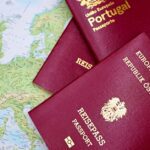
In a world woven together by invisible threads of connection, the story of human movement is as ancient as time itself. “Crossing Borders: The Ever-Changing Journey of Global Immigration” invites us to explore the evolving landscapes of migration—where hopes, challenges, and identities intersect. As waves of people traverse continents and cultures, they reshape not only the places they enter but also the very notion of belonging. This journey, marked by both continuity and change, reflects the complex tapestry of our global society, revealing how crossing borders is more than a physical act—it is a profound human experience in perpetual motion.
The Shifting Landscape of Global Migration Patterns
In today’s interconnected world, migration is no longer a simple story of moving from rural to urban areas or from developing to developed countries. Instead, it’s a complex web influenced by economic opportunities, climate change, political instability, and social networks. *New corridors* of migration are emerging, shifting traditional flows and creating dynamic patterns of movement across continents. For instance, an increasing number of migrants are choosing intra-regional routes, staying within their cultural and linguistic zones, while others seek out unconventional destinations driven by new job markets and safety considerations.
Several factors are reshaping the global migration landscape:
- Climate change: Rising sea levels and natural disasters force displacement in vulnerable regions.
- Technology: Digital connectivity facilitates transnational communities and remote work.
- Geopolitical shifts: Conflicts and diplomatic ties open new passageways or close old ones.
| Region | Top Destination | Major Migration Driver |
|---|---|---|
| Sub-Saharan Africa | South Africa | Economic Opportunity |
| South Asia | Gulf Countries | Labor Demand |
| Central America | United States | Safety & Stability |
| Eastern Europe | Western Europe | Political Freedom |
Navigating Legal Complexities in a Connected World
In today’s digital age, the legal landscape governing global migration is more intricate than ever. Immigrants, legal advisors, and policymakers must continuously adapt to a web of ever-evolving statutes, bilateral agreements, and regional regulations. From visa requirements to employment laws, understanding the nuances isn’t merely a necessity—it’s a survival mechanism. Legal jurisdictions no longer operate in isolation; they intermingle in complex patterns where one decision in a faraway court can ripple across continents, reshaping pathways or erecting new barriers.
Key challenges often include:
- Jurisdictional overlaps: Conflicting laws between countries creating uncertainty.
- Security protocols: Heightened scrutiny affecting documentation timelines.
- Human rights considerations: Balancing sovereignty with compassionate policies.
- Technological integration: Navigating digital identity verification and data privacy.
| Legal Aspect | Impact on Immigrants | Adaptation Strategy |
|---|---|---|
| Visa Policy Shifts | Uncertainty in travel plans | Regular legal consultation |
| Work Authorization Variance | Employment gaps | Diversified skill development |
| Data Protection Rules | Complex application processes | Secure digital documentation |
Cultural Integration and the Challenges of Inclusion
In the dynamic mosaic of global migration, the weaving together of diverse cultural threads is as intricate as it is essential. Newcomers often bring rich traditions, languages, and perspectives that, while enriching, also spark moments of friction with established norms. Successful inclusion demands more than tolerance; it requires a conscious effort to build bridges—celebrating differences while fostering a shared sense of belonging. This delicate balance challenges communities to evolve continuously, redefining identity through openness and empathy.
Yet, the path to true integration is rarely linear. Immigrants may face barriers such as language obstacles, social isolation, and systemic inequalities, which hinder their full participation. Meanwhile, host societies grapple with their own fears and biases, occasionally resisting change. To navigate this complex terrain, consider these key areas demanding attention:
- Language Access: Developing inclusive communication channels.
- Education Systems: Supporting multicultural curricula and resources.
- Employment Opportunities: Breaking down credential recognition barriers.
- Community Engagement: Encouraging intercultural dialogue and activities.
| Challenge | Impact | Potential Solution |
|---|---|---|
| Language Barriers | Social Isolation | Community Language Programs |
| Cultural Misunderstandings | Distrust and Division | Intercultural Workshops |
| Discrimination | Reduced Opportunity | Policy Reform and Awareness |
Economic Impacts and Opportunities for Host Nations
Global immigration serves as a potent catalyst for economic transformation in host nations, bringing both challenges and groundbreaking opportunities. Immigrants contribute to the labor force, often filling crucial gaps in sectors like agriculture, technology, and healthcare, where native labor shortages exist. This infusion of human capital not only propels productivity but also fosters innovation and entrepreneurship, as newcomers bring diverse skills, experiences, and fresh perspectives that invigorate local economies. Economies welcoming immigrants frequently witness a dynamic increase in consumption and demand, which stimulates business growth and job creation across multiple industries.
However, the economic impact is nuanced, requiring strategic policies and inclusive frameworks to maximize potential benefits. Consider the following key economic effects:
- Increased GDP Growth: Immigrants can augment the size and diversity of the workforce, leading to higher overall economic output.
- Entrepreneurial Drive: Many immigrants start new businesses, creating employment opportunities and invigorating regional markets.
- Fiscal Contributions: Through taxes and social security, immigrants support public services, balancing initial integration costs over time.
| Sector | Impact | Example |
|---|---|---|
| Technology | Boost in innovation and startups | Silicon Valley’s immigrant founders |
| Agriculture | Essential labor force support | Seasonal crop harvesting |
| Healthcare | Alleviation of staffing shortages | Immigrant nurses and doctors |
Policy Innovations for a Fair and Responsive Immigration System
In an era where migration patterns shift with dizzying rapidity, innovation in policy-making is the linchpin for creating a system that is both just and adaptable. Governments and organizations worldwide are pioneering approaches that prioritize human dignity and economic pragmatism. By integrating technology-driven solutions like AI-powered visa processing and real-time labor market analytics, immigration frameworks can anticipate trends and respond swiftly to changing needs. These innovations also focus on dismantling bureaucratic barriers through streamlined application processes that empower migrants to contribute their skills and talents without unnecessary delay.
Central to these advancements is a commitment to fairness, ensuring that the rights of migrants are safeguarded amidst evolving legal landscapes. Progressive policies emphasize:
- Community-based integration programs that foster mutual understanding and facilitate smoother cultural transitions.
- Transparent eligibility criteria designed to minimize discrimination and promote equal opportunity.
- Responsive mechanisms for humanitarian protection that adapt quickly to crises, offering sanctuary with dignity.
| Innovation | Impact | Example |
|---|---|---|
| AI-Powered Processing | Faster, error-free visa approvals | Canada’s Express Entry |
| Community Hubs | Enhanced social cohesion | Germany’s Integration Centers |
| Dynamic Eligibility | Reduced bias in selection | Australia’s Skills Priority List |
Closing Remarks
As the tides of global migration continue to ebb and flow, the story of crossing borders remains a mosaic of human resilience, hope, and transformation. Each journey, no matter how far or near, weaves into the ever-evolving narrative of our shared world—reminding us that while borders may delineate geography, the spirit of movement transcends them. In embracing the complexities of this dynamic journey, we inch closer to understanding not just the maps on a page, but the lives and dreams that redraw them every day.