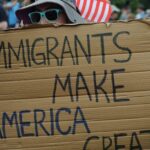
In an era defined by connectivity and change, the movement of people across borders writes a story as old as humanity itself—yet one continually renewed. “Crossing Borders: The Ever-Shifting Landscape of Global Migration” embarks on a journey through the complex tapestry of human migration, exploring the forces that propel individuals from place to place and the intricate ways their paths reshape societies worldwide. Beyond mere statistics, this exploration delves into the hopes, challenges, and evolving realities that characterize migration today, revealing a dynamic landscape where borders are both lines on a map and symbols of deeper cultural and economic interplay.
The Historical Tides Shaping Migration Patterns
Throughout history, human migration has ebbed and flowed in response to a tapestry of forces, weaving stories of displacement, opportunity, and survival. Ancient trade routes gave rise to bustling cultural exchanges, while waves of conquest reshaped demographics across continents. Major events such as the Industrial Revolution and global conflicts propelled millions to traverse continents in search of work, safety, and a new beginning. This historical choreography reveals a pattern: migration is less a static journey and more a dynamic dance influenced by economic shifts, political upheavals, and environmental changes.
At the heart of these movements lie several persistent drivers, many of which echo into modern times:
- Economic Necessity: From rural farmers migrating to industrial cities to the current surge in urbanization across continents.
- Conflict and Persecution: Wars and oppressive regimes have consistently pushed people beyond borders seeking refuge.
- Environmental Changes: Natural disasters and climate shifts have historically redirected populations, laying groundwork for future migrations.
- Cultural and Social Networks: Diaspora communities often act as anchors, encouraging chain migration and preserving identities.
| Era | Primary Migration Driver | Notable Impact |
|---|---|---|
| 15th-17th Century | Colonial Expansion | Global exchange of peoples and cultures |
| 19th Century | Industrialization | Urban migration and factory labor growth |
| 20th Century | World Wars & Decolonization | Massive displacement and new nation-building |
| 21st Century | Globalization & Climate Change | Cross-border economic migration and climate refugees |

Economic Forces Driving Modern-Day Movement
At the heart of contemporary migration trends lie powerful economic currents shaping individual decisions and national policies alike. Globalization has blurred traditional boundaries, creating complex marketplaces where labor demand fluctuates rapidly. These economic disparities compel millions to seek opportunities beyond their native lands—in search of stable employment, higher wages, or improved living standards. Often, this journey is influenced by:
- Income differentials between regions
- Access to education and skills training
- Economic instability or growth in home and host countries
By understanding the interaction of these forces, we begin to see migration not simply as movement but as a response to global economic rhythms. The table below illustrates the approximate average monthly income differences in USD among select countries, highlighting why many individuals move in search of financial improvement.
| Country | Average Monthly Income (USD) |
|---|---|
| India | $200 |
| Mexico | $600 |
| Poland | $1,200 |
| Germany | $3,500 |
| United States | $4,200 |
Navigating Legal Frameworks and Policy Challenges
As migration flows intensify, policymakers grapple with a maze of regulations that often vary dramatically between countries. This disparity creates a dynamic where migrants must navigate not only physical borders but also a labyrinth of visas, work permits, and asylum procedures. Compounding the challenge, international agreements strive to harmonize protections and obligations, yet the implementation at the national level remains inconsistent. Key barriers include:
- Varying definitions of refugees and asylum seekers
- Conflicting labor and immigration laws
- Political shifts influencing policy direction
Organizations and governments are pressured to balance national security concerns with humanitarian commitments, often under intense public scrutiny. This environment underscores the urgent need to develop adaptable legal frameworks that respect human rights while facilitating orderly migration. The table below highlights how select countries differ in their approach to key migration policies:
| Country | Asylum Processing Time | Work Permit Accessibility | Family Reunification Policy |
|---|---|---|---|
| Country A | 6 months | Restricted | Strict |
| Country B | 12 months | Moderate | Flexible |
| Country C | 3 months | Open | Moderate |
Cultural Integration and Identity in Transit
In the fluid spaces between homelands and new territories, migrants often find themselves weaving together fragments of their past with threads of unfamiliar cultures. This fusion births identities that are neither fixed nor linear but exist in a dynamic continuum where tradition and transformation coexist. The process of cultural integration is less about adopting a monolith and more about a delicate dance of preserving heritage while embracing new rituals, languages, and social norms. It challenges the simplistic ideas of assimilation and encourages a view of identity as a living mosaic, shaped by continuous interaction and negotiation.
Communities navigating these transitions share several common experiences:
- Negotiation of Belonging – Balancing feelings of attachment and alienation in multiple cultural spaces.
- Language as Identity – Maintaining native tongues while acquiring new ones, resulting in hybrid dialects and expressions.
- Celebration of Dual Heritage – Crafting new traditions that honor both origin and destination.
| Aspect | Challenges | Opportunities |
|---|---|---|
| Language | Communication barriers, loss of mother tongue | Bilingualism, enriched cognitive skills |
| Customs | Social exclusion, cultural misunderstanding | Intercultural dialogue, acceptance of diversity |
| Identity | Identity confusion, discrimination | Resilience, hybrid cultural identities |
Strategies for Sustainable and Inclusive Migration Management
Effectively addressing the complexities of migration requires a multi-layered approach that emphasizes sustainability and inclusivity. Central to this is the fostering of partnerships across governments, civil societies, and the private sector, enabling the creation of a supportive ecosystem for migrants. Policies should be designed to not only protect the rights of migrants but also actively promote their integration — from language education programs to access to healthcare and employment opportunities. Embracing technology and data-driven solutions can streamline processes, improve border management, and provide real-time support for migrant needs without compromising human dignity.
Initiatives aimed at sustainable migration management must also acknowledge and address the root causes driving displacement. This means investing in development projects that enhance economic resilience in origin communities, while creating legal pathways for migration that minimize risks associated with irregular movement. The following table outlines key pillars that contribute to an inclusive migration strategy:
| Key Pillar | Focus Area | Impact |
|---|---|---|
| Legal Framework | Protect rights & ensure fair treatment | Equal opportunities & security |
| Social Inclusion | Language & cultural integration programs | Community cohesion & reduced xenophobia |
| Economic Empowerment | Job access & vocational training | Self-sufficiency & economic growth |
| Technology Utilization | Data systems & real-time monitoring | Efficient management & responsiveness |
In Conclusion
As borders continue to blur and redraw themselves in response to economic tides, political winds, and human aspirations, the story of migration remains a dynamic canvas—painted with countless individual journeys and collective transformations. In embracing the complexity of this ever-shifting landscape, we gain not only insight into the movements that shape our world but also a deeper understanding of the enduring human impulse to seek connection, opportunity, and belonging beyond any boundary. The crossing of borders, then, is not merely a passage of geography, but a reflection of an evolving global narrative—one that will continue to unfold with each new step taken across the lines that divide and unite us all.