
In an increasingly interconnected world, the concept of citizenship is evolving beyond the boundaries of a single nation. For many, the pursuit of a second citizenship has become more than a legal formality-it is a complex journey marked by hope, strategy, and sometimes unexpected challenges. Crossing borders once signifies a physical relocation; crossing borders twice, in the quest for dual belonging, intertwines identity, opportunity, and resilience. This article explores the intricate path toward acquiring a second citizenship, unraveling the legal labyrinth, personal motivations, and global implications that shape this multifaceted endeavor.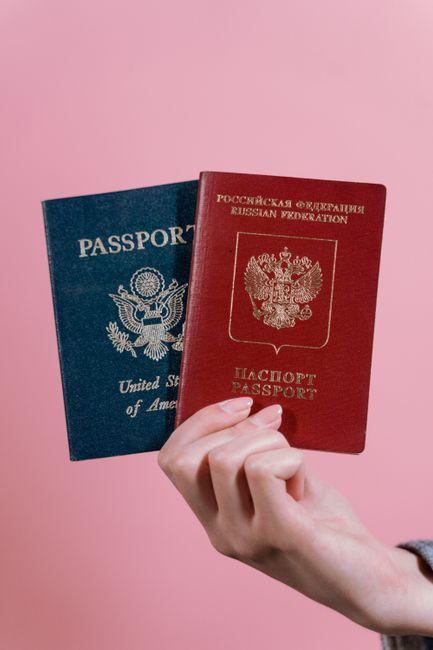
From Homeland to New Horizons A Tale of Dual Allegiances
When Ana left her homeland of Argentina to start a new life in Canada, she envisioned a straightforward path-embracing her new surroundings while keeping her roots alive. Yet, the reality of juggling dual allegiances soon proved more complex. Ana’s first moments abroad were filled with excitement and hope, but as she navigated citizenship applications, family expectations, and her evolving identity, she faced unexpected dilemmas. For instance, should she fully commit to Canadian civic duties, like jury service or potential military reserves, despite the deep-seated patriotism toward her birth country? These were more than administrative tasks; they were symbolic acts that tested her emotional bandwidth. Ana’s story echoes many who find themselves balancing heartfelt loyalty with practical integration, revealing that dual citizenship is not just a legal status but a continuous negotiation of belonging.
Consider also the case of Michael, who, after years of living in Germany, obtained his second citizenship yet struggled with the cultural and political contrasts between the two nations at times of national crisis. Expecting seamless acceptance from both countries, he was met instead with moments of skepticism and identity friction. The lessons learned from these experiences underscore a few essential truths:
- Dual citizenship demands active engagement in both communities to maintain authentic ties.
- Expect emotional complexity, not absolutes; loyalty isn’t always divided equally but fluctuates with circumstances.
- The legal advantages-from travel freedom to economic opportunities-must be weighed against the personal nuances of belonging.
| Key Decision Moment | Expectation | Reality |
|---|---|---|
| Applying for Second Citizenship | Smooth process, full acceptance | Delayed paperwork, complex identity questions |
| Participating in National Events | Equal enthusiasm and belonging | Conflicted feelings, divided loyalties |
| Travel & Legal Rights | Unrestricted access and privileges | Beneficial but with complicated regulations |

Unseen Hurdles in the Pursuit of a Second Passport
When Anna, a software engineer from Brazil, first set out to obtain a second passport, she anticipated a straightforward process: pick a country, meet some paperwork requirements, and voilà-a new identity for travel and career opportunities. But the reality was far more tangled. Legal jargon morphed into a maze, where deadlines shifted unexpectedly and background checks seemed endless. What she hadn’t counted on was the invisible layer of bureaucratic patience and cultural nuance. In one case, an unexpected request for proof of residency forced her to delay her application by months. This hurdle wasn’t flagged in forums or official guides, but it became a defining moment in her journey-a reminder that the path to a second passport is rarely linear and demands resilience beyond just ticking boxes.
Consider Raj, who sought citizenship through investment. His initial excitement turned to frustration when a sudden change in policy introduced new minimum investment thresholds just weeks before he was to finalize his application. The anticipated quick turnaround shifted into an ongoing negotiation between financial planning, legal advisement, and regulatory updates. These unseen hurdles-policy volatility, hidden financial commitments, and even the emotional toll of uncertain timing-serve as common lessons for those navigating dual citizenship. It’s not just about financial capacity or eligibility; it’s about adapting, managing expectations, and sometimes recalculating plans. To make this tangible, here’s a brief comparison of expected versus actual timelines for applicants in similar scenarios:
| Applicant | Expected Processing Time | Actual Processing Time | Key Delay Factor |
|---|---|---|---|
| Anna | 8 months | 14 months | Residency proof request |
| Raj | 6 months | 12 months | Policy changes on investment |
- Lesson One: Patience is not just a virtue but a necessity.
- Lesson Two: Staying updated on policy changes can save significant headaches.
- Lesson Three: Anticipating cultural and legal nuances reduces surprises.
When Culture Meets Bureaucracy The Reality Behind Dual Citizenship
Maria, a Brazilian living in Germany, pursued dual citizenship hoping to enjoy seamless access to both worlds-family visits in São Paulo and career prospects in Berlin. However, her journey quickly revealed the tangled interplay between culture and bureaucracy. While Germany’s meticulous paperwork demanded exhaustive documentation, including proof of descent and language proficiency, Maria found that unspoken cultural nuances-like approaching officials with patience and a hint of formality-often made or broke the process. For instance, when an official asked for additional evidence, Maria initially felt frustrated, expecting straightforward answers. Instead, she learned that building rapport, understanding indirect communication, and timing requests respectfully were just as crucial as meeting legal requirements. It was a subtle dance between rules and relationships, forcing her to recalibrate expectations and strategies.
Contrast this with Ahmed, who sought citizenship in Canada while retaining his Egyptian passport. His experience highlighted another dimension: the differing bureaucratic cultures and how they shape one’s journey through dual nationality. Unlike Maria’s experience, Ahmed found Canadian immigration officials exceptionally transparent but also bound by rigid timelines, leaving little room for negotiation or human error. This contrast created challenging moments, where the warmth and flexibility he expected gave way to firm deadlines and automated systems. Through their stories, we see common themes emerge:
- Understanding unwritten cultural norms can be as vital as fulfilling official forms.
- Patience and adaptability often outweigh sheer efficiency in complex citizenship processes.
- Comparing bureaucracies reveals how procedural rigidity or flexibility shapes experiences.
| Aspect | Maria’s Experience (Germany) | Ahmed’s Experience (Canada) |
|---|---|---|
| Communication Style | Indirect, formal, relationship-driven | Direct, rule-based, system-driven |
| Flexibility | Moderate: documents plus rapport matter | Low: strict deadlines, less personal discretion |
| Decision Timeline | Extended, sometimes unclear | Defined, relatively quick |
The reality behind dual citizenship often diverges from the smooth narratives portrayed online. Both Maria and Ahmed’s journeys teach a crucial lesson: navigating the intersection of culture and bureaucracy demands not only legal know-how but emotional intelligence and a willingness to embrace uncertainty. What begins as a paperwork challenge is ultimately a learning curve in cross-cultural resilience.
Stories from the Edge How Journeys Between Nations Shape Identity
When Alejandra left her childhood home in Argentina for a fresh start in Canada, she imagined a linear path: graduate, work, settle, and build a life anchored in her new citizenship. But the reality was more nuanced. Somewhere between her thesis deadlines and first winter flu, she grappled with a growing sense of in-betweenness, a feeling that her identity was neither fully Argentinian nor fully Canadian. This duality became clearer when she later pursued a second citizenship in Portugal, reconnecting with her great-grandparents’ roots. The process was more than paperwork-it was a journey through family stories, forgotten languages, and cultural codes. Each border crossed didn’t just change her legal status; it reshaped her sense of self, highlighting that identity is rarely a fixed point but an evolving mosaic shaped by personal history and geographical shifts.
Decision moments often come sharply into focus in these journeys. Consider Rashid, born in the UAE but raised mostly in the UK, who sought citizenship in a third country to secure broader mobility for his family’s future. The expectations were straightforward: obtain the passport, gain access to new opportunities, live without borders. Yet, the reality unfolded differently. Rashid found that the process involved nuanced negotiations-between local customs, bureaucratic labyrinths, and deeply personal questions of belonging. Here’s a glimpse into his experience:
| Aspect | Expectation | Reality |
|---|---|---|
| Legal Process | Efficient and transparent | Complex and time-consuming, with unexpected requests for documentation |
| Cultural Integration | Instant sense of belonging | Gradual and sometimes challenging adaptation to new social norms |
| Identity Impact | Clearer national identity | Layered identity with ongoing negotiation between multiple cultures |
- Lesson: Citizenship is as much emotional and cultural as it is legal.
- Lesson: Navigating multiple identities requires embracing ambiguity rather than resolving it.
These stories, from the edge of nations and norms, reveal that second citizenship journeys are deeply personal and often redefine what “home” truly means. They underscore that crossing borders twice isn’t just about documentation-it’s about making peace with complexity and crafting new narratives of self.
Turning Points and Lessons Learned Navigating Cross-Border Transitions
When Ana decided to pursue a second citizenship through investment, she expected a straightforward process-submit the documentation, wait for approval, and move on. Instead, she found herself entangled in unexpected bureaucratic delays and shifting legal requirements. One critical turning point came when a sudden change in the applicant criteria meant her initial paperwork became invalid, forcing her to restart parts of the process from scratch. This moment underscored a vital lesson: flexibility and staying updated on evolving policies are indispensable in cross-border transitions. Ana’s experience also highlighted the emotional weight these setbacks carry, as the dream of a new citizenship can hang on the fine print of regulations and timing. Knowing when to pause, seek expert advice, or adjust strategies can save months of frustration and substantial resources.
Contrast this with Roberto’s journey, who sought citizenship through naturalization after years of residency in a foreign country. Expecting a seamless path due to his long-term presence, he was caught off guard by the discrepancy between local assumptions and federal-level requirements, such as language proficiency and integration tests. His turning point was the decision to enroll in an intensive preparatory course, rather than relying solely on his everyday conversations. This proactive step made all the difference, transforming anxiety into confidence. Here’s what emerges from these distinct stories:
- Expectation vs Reality: Anticipate procedural shifts and cultural nuances that affect documentation and eligibility.
- Strategic Flexibility: Being prepared to pivot based on new information or legal changes can keep your plan on track.
- Emotional Resilience: Patience and mental readiness are as crucial as legal preparedness during inevitable hurdles.
| Challenge | Ana’s Approach | Roberto’s Approach |
|---|---|---|
| Regulatory Changes | Restarted process with updated documents | Focused on language and cultural prep strategies |
| Unexpected Requirements | Sought expert legal guidance promptly | Invested time in integration courses |
| Emotional Toll | Practiced patience and stress management | Built confidence through education |
In Retrospect
As the sun sets on the intricate path toward a second citizenship, the journey reveals itself as much more than a series of legal steps-it is a transformative voyage across cultures, identities, and aspirations. Crossing borders twice is a testament to resilience, patience, and the human drive to belong beyond familiar horizons. While the road may be fraught with complexities, it also opens doors to new possibilities, broadening the definition of home in a world endlessly connected yet uniquely divided. For those ready to navigate this delicate balance, the promise of a second citizenship is not just a status on paper, but a bridge to a richer, more expansive life story.




