In a world where borders are both gateways and barriers, the concept of identity stretches beyond a single nationality. Dual national passports symbolize this complex dance between belonging and bureaucracy, offering holders the unique privilege—and puzzling complication—of straddling two worlds at once. As globalization deepens and migration patterns evolve, these dual documents reveal stories not only of personal heritage but also of geopolitical nuance. Navigating identity and borders through the lens of dual nationality invites us to rethink what it means to belong, to travel, and to reconcile the multiplicity within ourselves amid the lines drawn on maps.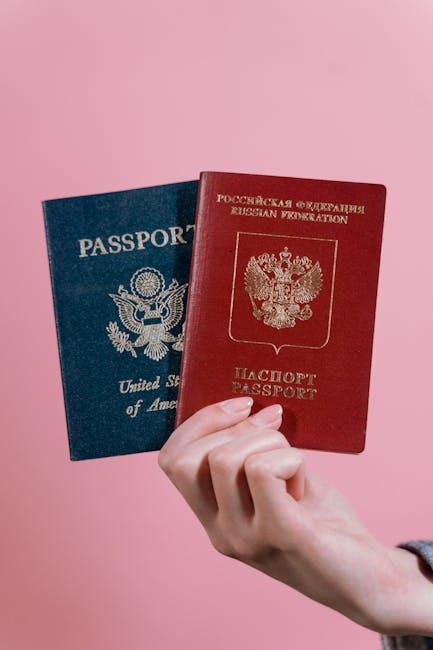
Understanding Dual National Passports and Their Global Significance
Navigating a world increasingly defined by globalization, holding dual national passports offers a unique blend of freedom and complexity. These documents not only signify official recognition by two sovereign countries but also embody a rich tapestry of cultural identities and legal obligations. Individuals with dual national passports can cross borders with greater ease, fostering international mobility for business, education, and personal growth. However, this privilege comes with the need to reconcile varying laws—ranging from taxation to military service—that may apply simultaneously. Understanding these dynamics is essential for leveraging the full potential of dual nationality without inadvertently encountering legal pitfalls.
The global significance of dual national passports extends beyond the individual, influencing diplomatic relations and international policy. Countries often view dual nationals as bridges to strengthen bilateral ties, trade partnerships, and cultural exchanges. At the same time, governments must balance national security and immigration concerns, adapting policies to address the complexities of split citizenship. An overview of common advantages and challenges highlights this duality:
- Advantages: Enhanced travel freedom, expanded career opportunities, access to social benefits in two countries.
- Challenges: Conflicting legal duties, travel restrictions to certain nations, possible taxation by both countries.
| Aspect | Implications for Dual Nationals | Global Impact |
|---|---|---|
| Mobility | Visa-free travel to more countries | Facilitates international collaboration |
| Legal | Conflicting citizenship laws | Challenges sovereign jurisdiction |
| Identity | Multifaceted cultural belonging | Promotes multicultural engagement |
Legal Complexities and Rights Associated with Holding Multiple Passports
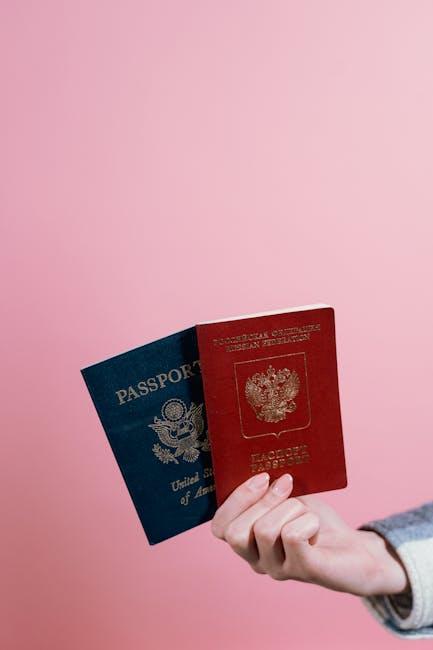
Holding multiple passports offers a powerful symbol of global identity but also ushers in a labyrinth of legal nuances. Dual nationals must grapple with the fact that laws in one country might not recognize the validity of their other passport, creating potential conflicts of jurisdiction and legal responsibilities. For instance, some governments may require you to enter and exit using their passport exclusively, which can complicate travel plans and even expose you to penalties if mishandled. Furthermore, dual citizenship sometimes triggers compulsory military service obligations or taxation in both countries, which calls for an informed strategy to navigate these legal entanglements effectively.
Key rights and challenges of dual passport holders include:
- Access to social services and property ownership rights in multiple countries
- Possibility of diplomatic protection from more than one government
- Complex tax filing requirements to avoid double taxation
- Potential restrictions on political participation, such as voting or holding public office
- Obligations toward military service or national duties in either country
| Country 1 | Country 2 | Key Legal Implication |
|---|---|---|
| United States | Italy | Tax obligations in both; US requires worldwide income reporting |
| India | Canada | India does not allow dual citizenship; PIO/OCI cards instead |
| Australia | United Kingdom | Travel flexibility; voting rights differ |
Challenges in Travel and Border Control for Dual Citizens
For dual citizens, crossing borders is often a bewildering dance of documents and decisions. Armed with two passports, they must carefully select the one that best aligns with their travel route, visa requirements, or even political climates. However, this choice isn’t always straightforward. Authorities may question travelers holding multiple passports, sometimes perceiving dual nationality as a security risk or causing suspicion about the traveler’s true allegiance. The challenge escalates when immigration officers request explanations for holding two passports, or if the traveler inadvertently presents the “wrong” passport, which might lack necessary visas or stamps from previous entries.
Key travel complications dual citizens face include:
- Conflicting entry or exit stamps on passports causing confusion.
- Varying country-specific legalities concerning dual nationality.
- Limitations on use of certain nationalities for visa-free access.
- Potential for extended questioning or detention at border control points.
| Situation | Potential Impact |
|---|---|
| Using Passport A for Entry and Passport B for Exit | Immigration flags travel inconsistencies, causing delays. |
| Country Does Not Recognize Dual Citizenship | Traveler may be treated solely as a citizen of that country, limiting rights. |
| Traveling to a Country with Tense Diplomatic Relations | Risk of extra scrutiny or denied entry on secondary nationality. |
Strategies for Managing Dual Nationality in Personal and Professional Life
Balancing dual nationality often requires a delicate dance between personal identity and practical realities. One effective approach is to establish clear boundaries and priorities in both spheres. This can involve scheduling travel plans to optimize visa-free access, keeping vital documents organized and updated, and actively participating in communities related to each nationality. Embracing cultural celebrations from both backgrounds fosters a sense of belonging that goes beyond legal documentation, enriching personal life with diverse traditions and perspectives.
On a professional front, leveraging dual nationality can open doors, yet it demands thoughtful navigation of differing regulations and workplace expectations. Transparent communication about your citizenship status can prevent misunderstandings and enhance trust with employers or clients. Consider the following strategies to streamline your professional interactions:
- Research employment laws in both countries to ensure compliance.
- Maintain dual tax filings to avoid legal complications.
- Utilize networking opportunities across borders for career growth.
| Challenge | Strategy |
|---|---|
| Conflicting legal obligations | Consult legal experts in both countries |
| Identity confusion | Engage in cultural practice regularly |
| Tax complexities | Hire a cross-border accountant |
Policy Recommendations for Harmonizing Dual Passport Regulations Worldwide
To foster a seamless experience for holders of dual national passports, global policymakers must first prioritize the establishment of unified standards that address visa policies, security protocols, and citizenship rights across borders. Such standardization would reduce administrative conflicts and prevent situations where dual citizens face contradictory obligations or legal uncertainties. Collaborative international forums could serve as platforms to continually update these frameworks, ensuring they adapt to the evolving nature of global migration and security concerns.
Furthermore, it is essential to implement transparent information-sharing mechanisms between nations. This means creating secure, interoperable databases that protect individual privacy while enabling swift verification of dual passport authenticity. Governments could also benefit from harmonizing their definitions and recognition processes through a consensual set of criteria, as illustrated below:
| Policy Aspect | Current Variance | Recommended Standard |
|---|---|---|
| Visa Restrictions | Country-specific, often contradictory | Mutual reciprocity framework |
| Citizenship Obligations | Divergent military/service duties | Clear dual citizenship exemptions |
| Passport Validity | Varied renewal and expiration rules | Standardized validity periods |
Concluding Remarks
As the world grows ever more interconnected, the concept of holding dual national passports stands as a powerful symbol of our complex identities and evolving notions of belonging. Navigating the delicate balance between multiple homes, laws, and cultures, dual nationals embody the fluidity of modern borders—both tangible and intangible. Whether seen as bridges or barriers, these passports invite us to rethink nationality not as a fixed point, but as a spectrum shaped by choice, heritage, and circumstance. In the end, embracing this multiplicity may be less about dividing lines on a map, and more about expanding the horizons of who we are—and where we can truly call home.