In a world increasingly connected yet deeply divided by borders, living between two nations has become both a privilege and a puzzle. Dual nationality offers the unique experience of belonging simultaneously to multiple cultures, languages, and histories, weaving a rich tapestry of identity that transcends geography. Yet beneath this vibrant blend lies a landscape marked by legal intricacies, emotional tensions, and questions of loyalty. Navigating the complexities of dual nationality means embracing a life where two worlds coexist, sometimes harmoniously, sometimes in conflict—revealing the nuanced realities of what it truly means to belong.
Navigating Cultural Identity in a Dual Nationality Landscape
Living with dual nationality often means walking a delicate tightrope between disparate cultural landscapes. The journey involves embracing traditions, languages, and social norms that may sometimes complement each other and at other times conflict. This balancing act can create a rich tapestry of identity—but also a sense of fragmentation. Individuals frequently find themselves oscillating between belonging and alienation, crafting a personal narrative that defies a singular definition. The internal dialogue that unfolds often challenges the simplistic labels of nationality, pushing one to appreciate the fluidity of self within an interconnected world.
Navigating this complex identity entails resilience and adaptability, as well as moments of reflection on what truly defines ‘home.’ Dual nationals often develop unique coping strategies, such as:
- Celebrating holidays from both cultures to maintain deep-rooted connections
- Blending languages in everyday conversation to bridge cultural gaps
- Creating personalized rituals that honor their multifaceted heritage
Consider how cultural identity manifests in daily decisions, whether it’s choosing the cuisine that best comforts or the stories passed down to the next generation. The table below highlights common experiences faced by those who straddle two cultural worlds:
| Aspect | Experience | Potential Challenge |
|---|---|---|
| Language | Mixing dialects | Feeling misunderstood |
| Family Expectations | Honoring traditions | Conflicting priorities |
| Social Circles | Bridging diverse groups | Stereotyping or exclusion |
Legal Rights and Responsibilities Across Borders
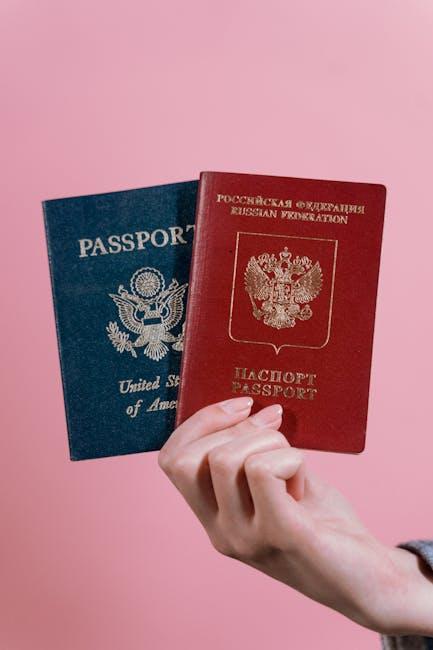
Navigating the legal landscape when holding citizenship in two countries can often feel like walking a tightrope. Rights such as voting, property ownership, and access to social services may vary widely, depending on where you stand—literally and figuratively. It’s crucial to understand that while dual nationality offers a bridge between cultures, it also introduces a complex matrix of responsibilities. For example, tax obligations do not simply vanish with a change of residence; in many cases, dual nationals must file returns in both countries, adhering to different fiscal calendars and regulations.
Moreover, legal protections and duties such as military service, conscription, or jury duty might apply differently or simultaneously. This duality can lead to conflicts or confusion if not carefully managed. The table below highlights some common legal considerations and how they can differ from one nation to another:
| Legal Aspect | Country A | Country B |
|---|---|---|
| Voting Rights | Allowed in national elections | Restricted to local elections |
| Taxation | Taxed on worldwide income | Taxed only on domestic income |
| Military Service | Mandatory for males 18-25 | Voluntary enlistment only |
| Social Security | Full benefits after 10 years | Partial benefits regardless of years |
- Stay informed: Laws evolve, so keep updated with both countries’ regulations.
- Consult experts: Dual nationality demands nuanced legal advice.
- Plan ahead: Anticipate potential conflicts in legal obligations and plan accordingly.
The Emotional Impact of Belonging to Two Nations
Navigating life with a foot in two cultures often stirs a profound emotional cocktail. Feelings can range from pride and connection to moments of confusion and exile. On one hand, there’s the warmth of doubled traditions, languages, and festivities that enrich daily existence; on the other, an undercurrent of divided loyalty may surface, challenging one’s sense of identity. This emotional duality can spur a unique resilience, yet also create an internal tug-of-war that many dual nationals grapple with quietly.
The intangible emotional landscape of belonging to two nations is punctuated by moments that can both uplift and unsettle. Here are some common sentiments experienced:
- Simultaneous belonging and alienation—feeling at home in two places and yet sometimes nowhere entirely.
- Language as an emotional bridge—the comfort of speaking a mother tongue frozen in time versus adapting to a new linguistic rhythm.
- Festivals as emotional markers—immersing in the colors and sounds of both cultures offers joy but can also amplify longing when separated from family or homeland.
| Emotion | Experience | Outcome |
|---|---|---|
| Conflict | Choosing which culture to prioritize during key life moments | Heightened self-awareness |
| Empowerment | Ability to navigate multiple cultural contexts with ease | Expanded worldview |
| Nostalgia | Longing for childhood environments or familial roots | Emotional complexity |
Challenges and Opportunities in Mobility and Opportunity
Dual nationality opens doors to a world of possibilities, yet it also introduces unique hurdles that require careful navigation. Individuals often find themselves balancing legal systems, cultural expectations, and social norms that may not seamlessly align. This balancing act fosters adaptability and resilience, but it also demands a nuanced understanding of the rights and responsibilities that come with holding citizenship in two countries. The freedom of mobility afforded by dual nationality empowers people to explore educational, professional, and personal opportunities across borders; however, it may also bring challenges such as visa complexities, taxation dilemmas, and conflicting legal obligations.
Understanding the opportunities and obstacles requires dissecting key factors:
- Work and Residency Flexibility: Access to a broader job market and the ease of living in either country without constant visa renewals.
- Cultural Enrichment: Immersing oneself in diverse environments, enhancing creativity and global perspectives.
- Legal and Bureaucratic Challenges: Potential for dual taxation, mandatory military service, or conflicting legal obligations.
- Identity and Belonging: Navigating feelings of attachment that may fluctuate amid differing cultural expectations.
| Aspect | Opportunity | Challenge |
|---|---|---|
| Travel | Visa-free access to multiple countries | Confusing documentation requirements |
| Professional Growth | Ability to work in diverse markets | Income reporting complications |
| Civic Engagement | Participation in multiple political systems | Potential conflicts in national loyalties |
Practical Advice for Embracing a Dual National Life
Balancing two national identities often means navigating a world where cultural norms, legal obligations, and personal connections fluctuate between borders. To thrive in this unique lifestyle, cultivate a daily routine that honors both cultures through language, cuisine, and traditions. Build a support network that reflects your duality—friends, mentors, or community groups from both national backgrounds—to maintain a strong sense of belonging. Keeping documents well organized and understanding the legal nuances of each country will save you from bureaucratic headaches and keep transitions smooth.
Practical tools can also simplify your experience. Consider using digital planners to track visa deadlines or tax obligations and create a personalized calendar partitioned by country-specific tasks. Here’s a quick guide to help you manage key areas of your dual national life effectively:
| Area | Tip | Resource |
|---|---|---|
| Legal | Regularly consult immigration and tax professionals. | Local consulate websites |
| Language | Set daily language practice goals. | Language apps like Duolingo |
| Culture | Celebrate holidays from both nations. | Cultural festivals |
| Finances | Maintain international-friendly bank accounts. | Global banking platforms |
Final Thoughts
Living between two worlds is an intricate dance of identity, belonging, and perspective. Those who navigate the complexities of dual nationality carry with them stories woven from contrasting cultures, laws, and histories—an experience both enriching and challenging. As borders blur in an increasingly connected world, the dual national finds themselves not confined by a single narrative but enriched by many. Ultimately, embracing this duality means accepting the fluid nature of identity itself—a mosaic constantly reshaped by the interplay of two homelands, two sets of traditions, and two ways of seeing the world. In this balancing act, the true beauty lies not in choosing one world over the other, but in finding harmony between them.