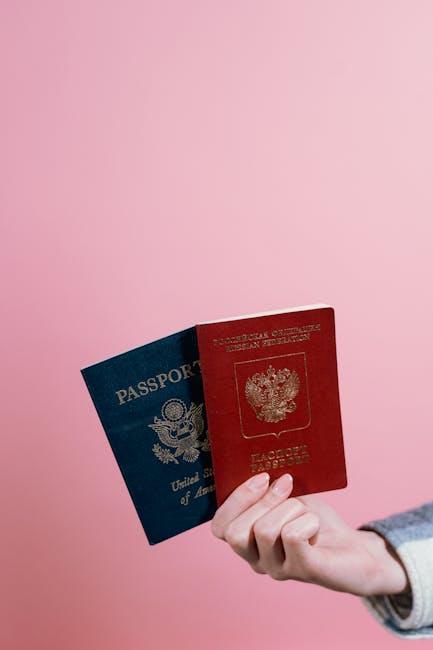
In a world where identity weaves through culture, geography, and policy, dual nationality passports stand as gateways to a blend of possibilities—and complexities. More than mere travel documents, these passports unlock borders not only on maps but within systems of law, opportunity, and belonging. Yet, behind the allure of holding two nationalities lies a nuanced reality that challenges assumptions and reveals the intricate balance between privilege and responsibility. This article peels back the layers of dual nationality passports to uncover their true impact—exploring what it really means to navigate life with more than one legal identity in an interconnected world.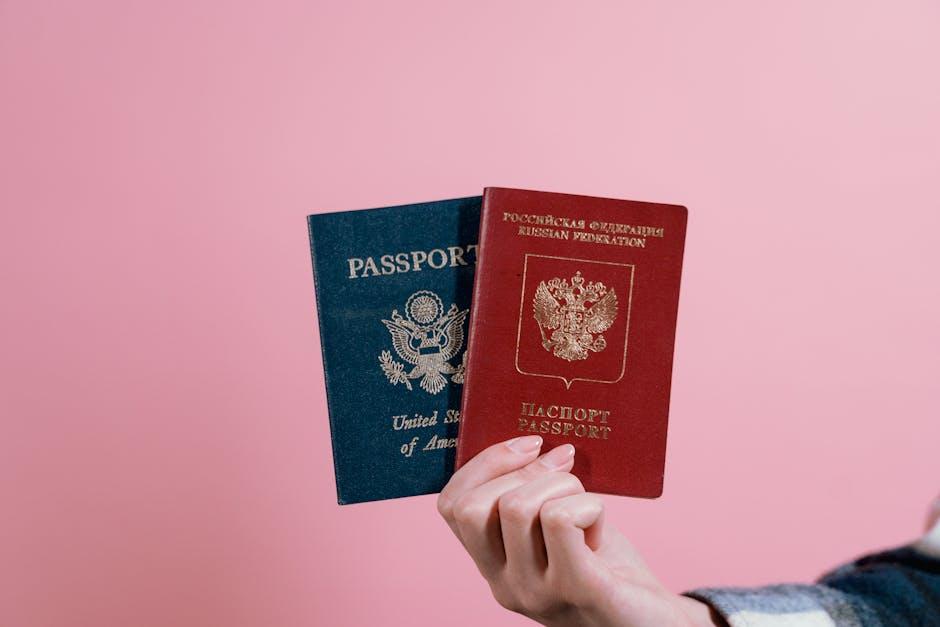
The Growing Trend of Dual Nationality Passports
In today’s globalized world, holding multiple passports is no longer a rarity but a practical solution embraced by millions. Dual nationality offers more than just travel convenience; it fosters a unique blend of cultural identity and expanded opportunities. From students seeking education abroad to entrepreneurs eyeing international markets, the appeal of dual citizenship lies in its ability to unlock doors that were once firmly closed. This trend reflects a broader shift towards interconnectedness, encouraging individuals to live and work across borders with greater ease.
The benefits of managing two nationalities extend well beyond personal freedom, touching upon financial, legal, and social realms. Here’s why many consider obtaining dual citizenship a wise move:
- Access to multiple job markets and reduced work visa restrictions
- Eligibility for social services and education in both countries
- Investment advantages through favorable tax treaties
- Enhanced political and legal protections, especially during geopolitical unrest
| Country | Dual Citizenship Allowed? | Notable Perk |
|---|---|---|
| Canada | Yes | Universal healthcare access |
| Germany | Limited | Strong social security network |
| Australia | Yes | Work rights and education benefits |
| Japan | No | Single nationality policy |
Legal Complexities and International Implications
Navigating the labyrinth of dual nationality requires more than just possessing two passports; it involves understanding a web of legal nuances that vary widely from country to country. Some nations freely embrace dual citizenship, encouraging their citizens to benefit from multiple allegiances, while others impose strict limitations or outright prohibitions. This diversity shapes international mobility, affecting everything from voting rights and property ownership to taxation and military service obligations. The real complexity emerges when dual nationals encounter conflicting legal duties, such as double taxation or mandatory conscription, that can place them at the intersection of competing national interests.
On the international stage, dual nationality challenges traditional notions of sovereignty and allegiance, prompting governments to carefully balance diplomatic relations and security concerns. The globalized world blurs lines, and with dual passports, individuals often become bridges between cultures, economies, and political systems. Yet this can also provoke diplomatic friction, especially when protection or consular assistance is requested from one nation while the other views the individual primarily as its subject. Consider these critical factors:
- Taxation Policies: Varying rules on income declaration can lead to complex compliance requirements.
- Consular Protection: Conflicts may arise over which country can provide assistance abroad.
- Military Obligations: Dual citizens might face compulsory service demands from both countries.
| Country | Dual Citizenship Status | Key Legal Caveat |
|---|---|---|
| Canada | Permitted | No loss of citizenship on acquiring another |
| Japan | Restricted | Requires choice of one nationality by age 22 |
| Germany | Selective | Dual nationality allowed mainly for EU countries |
Economic and Social Advantages Explored
Holding dual nationality passports often transforms everyday experiences into a realm of exciting possibilities by granting unparalleled access to diverse markets and cultures. Economically, this can mean a broader spectrum of job opportunities, seamless investment options, and tax advantages that are not available to single passport holders. Entrepreneurs can tap into international business networks with greater ease, while families benefit from heightened financial security through diversified assets across borders.
Beyond economics, the social advantages ripple through education, healthcare, and cultural immersion. Dual nationals may attend universities without the burden of international tuition fees, access top-tier medical systems regardless of physical location, and embrace multicultural identities that foster global empathy. Consider this simple breakdown of key perks:
- Work & Residency Flexibility: Choose employment and living arrangements without visa restrictions.
- Educational Opportunities: Access scholarships and in-state tuition options.
- Healthcare Access: Utilize healthcare services from both countries.
- Cultural Integration: Participate authentically in cultural traditions and civic life.
| Benefit | Primary Advantage | Who Benefits Most |
|---|---|---|
| Economic Mobility | Investment across borders | Entrepreneurs, Investors |
| Educational Access | Lower tuition fees | Students, Families |
| Healthcare | Dual access to services | All dual citizens |
| Social Integration | Multicultural identity | Immigrants, Expatriates |
Navigating the Application Process with Confidence
Embarking on the journey to obtain a dual nationality passport can feel like decoding a complex puzzle, but with the right approach, it becomes an empowering experience rather than a bureaucratic nightmare. The first step is gathering all the necessary documentation often required to prove heritage, residency, or citizenship eligibility. Staying organized with this paperwork is crucial, so consider creating a checklist:
- Birth certificates and marriage licenses to establish family ties
- Proof of residency or naturalization if applicable
- Valid identification documents such as current passports or driver’s licenses
- Application forms and related fees carefully filled and submitted on time
Understanding the timeline and potential hurdles gives you the upper hand. While some applications are processed within months, others might take years, depending on the countries involved and the complexity of your case. Having a realistic timeline and maintaining open communication with government agencies can prevent frustrations. Here’s a quick reference to typical processing durations:
| Country Pair | Average Processing Time | Common Challenges |
|---|---|---|
| USA & Ireland | 6 – 12 months | Genealogy proof |
| Germany & Brazil | 12 – 18 months | Translation of documents |
| Canada & Italy | 8 – 14 months | Consular appointments |
Key Considerations for Safeguarding Your Dual Status
Holding passports from two nations empowers you with remarkable freedom—but it’s not without its complexities. One of the first things to keep in mind is legal obligations. Dual nationality often means navigating two sets of laws simultaneously, including tax requirements, military service duties, and civic responsibilities. Overlooking these can lead to unexpected penalties or even loss of your dual status. Staying informed about each country’s rules and maintaining clear communication with relevant authorities is crucial for seamless travel and residence.
Additionally, practical considerations are just as important. Carrying two passports requires vigilant organization: be aware of visa requirements, entry and exit procedures, and how each country recognizes your identity. Also, privacy concerns and security implications should never be underestimated, especially when crossing borders with sensitive documentation. To help you manage, here’s a quick checklist:
- Verify passport validity regularly to avoid expired documents during travel
- Understand taxation norms for residents and citizens in both countries
- Keep emergency contact info from both nations accessible
- Stay updated on travel advisories that might affect either citizenship
To Conclude
As the world continues to shrink and borders become more fluid, dual nationality passports stand as powerful keys—unlocking opportunities, bridging cultures, and challenging traditional notions of identity and belonging. Yet, beneath their glossy surface lies a complex web of legal, social, and political realities that demand thoughtful navigation. Whether viewed as tools of freedom or sources of controversy, these passports remind us that in an increasingly interconnected world, the story of nationality is rarely black and white—and often, it’s the boldest chapters that are still being written.