In an era defined by unprecedented connectivity and shifting landscapes, human migration flows like a vast, uncharted ocean—relentless, intricate, and boundary-defying. “Waves Without Borders: Navigating the Global Migration Flow” delves into this fluid movement of people across continents and cultures, exploring the forces that propel them and the tides that shape their journeys. As waves reshape shorelines, so too does migration transform societies, economies, and identities worldwide. This exploration invites readers to consider migration not as a challenge to be contained, but as a dynamic phenomenon demanding understanding, navigation, and, ultimately, cooperation beyond borders.
The Invisible Currents Shaping Global Migration Patterns
Beneath the surface of visible migration lies a complex web of forces—economic disparities, climate change, and shifting geopolitical landscapes—that silently guide the footsteps of millions across continents. These unseen currents often manifest as subtle pressures: a drought pushing rural families toward urban centers, or new trade agreements opening unexpected pathways for workers. Far from being random or isolated, these invisible influencers align like orchestrated tides, shaping flows that redefine cultural and demographic maps worldwide.
Key factors molding contemporary migration waves include:
- Technological advances: Accelerating communication and transport, shrinking physical distances.
- Environmental triggers: Climate volatility prompting relocation and survival-driven moves.
- Policy shifts: Borders flexing under political currents, inviting or restricting movement.
| Factor | Impact | Example |
|---|---|---|
| Economic Opportunity | Encourages labor migration | Urban migration in Southeast Asia |
| Climate Shocks | Forces displacement | Floods in Sub-Saharan Africa |
| Political Stability | Affects asylum flows | Refugees from conflict zones |
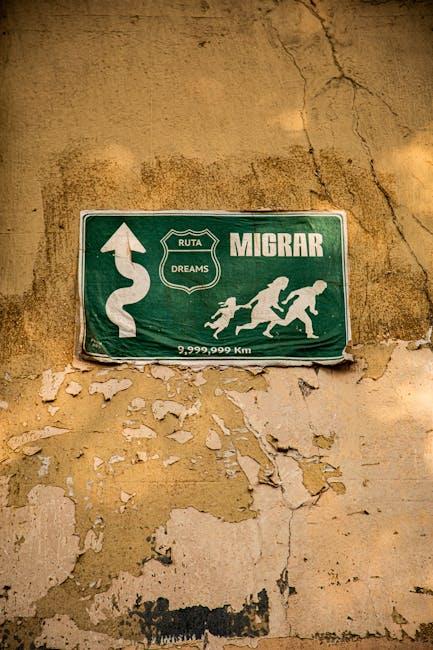
Challenges at the Crossroads of Culture and Policy
At the heart of global migration lies an intricate dance between cultural identity and national policy. Immigrants often find themselves at the cusp of preserving their heritage while adapting to new social norms. This cultural negotiation is further complicated by policy frameworks that may not always accommodate fluid identities. Rigid immigration laws sometimes clash with the evolving realities of cultural integration, leading to challenges such as social exclusion, misrepresentation, and increased tensions. Without nuanced approaches, these policies risk becoming barriers instead of bridges, fracturing the delicate interplay between belonging and governance.
Policymakers face a multidimensional puzzle where every decision impacts the cultural landscape in profound ways. Consider this simplified overview of key challenges encountered at cultural-policy crossroads:
| Challenge | Policy Impact | Societal Effect |
|---|---|---|
| Language Barriers | Limited multilingual services | Isolation within communities |
| Religious Practices | Restrictions in public spaces | Cultural tensions and misunderstandings |
| Work Authorization | Lengthy processing times | Economic disenfranchisement |
Ultimately, bringing cultural empathy into policymaking encourages inclusive frameworks that respect diversity while ensuring social cohesion. Rethinking migration policies with cultural sensitivity in mind can transform the migrant experience from one of friction to one of fluidity and opportunity.
Harnessing Technology to Better Track Migration Waves
Modern technology is revolutionizing the way we understand and respond to migration patterns. Advanced satellite imagery combined with AI-driven data analytics now allow researchers to monitor migration waves in real-time with unprecedented accuracy. This evolution not only enhances the precision of tracking routes but also helps predict future movements based on environmental and socio-political indicators. The integration of mobile data and social media analytics has further deepened insights, offering a granular understanding of migrant experiences and decision-making processes.
Key innovations shaping migration tracking include:
- Geo-spatial mapping tools that visualize migration corridors
- Machine learning algorithms identifying emergent trends
- Blockchain networks ensuring secure and transparent data sharing
- Wearable technology providing real-time health and location updates
| Technology | Function | Impact |
|---|---|---|
| AI Analytics | Predicts movement patterns | Enhances preventive assistance |
| Satellite Imaging | Monitors large-scale migration | Improves situational awareness |
| Mobile Data | Tracks individual mobility | Enables targeted support |
Creating Inclusive Frameworks for Migrant Integration
Building a society where every migrant feels valued requires more than just policies—it demands frameworks that embrace diversity, accessibility, and participation. At the core, these frameworks must foster environments where cultural differences are not merely tolerated but celebrated as essential threads of the social fabric. This means designing systems that go beyond language support and legal aid to include community mentorship programs, intercultural dialogue platforms, and inclusive civic engagement opportunities that empower migrants to become active contributors in their new homes.
Effective inclusion hinges on collaboration between government agencies, local communities, and migrants themselves. A successful integration strategy often includes:
- Holistic support services encompassing education, healthcare, and employment tailored to the needs of migrants.
- Participatory policymaking that involves migrants in decision-making processes, ensuring their voices shape the systems designed to serve them.
- Cultural competence training for institutions and communities to dismantle prejudices and build mutual understanding.
| Aspect | Key Feature | Impact |
|---|---|---|
| Education Access | Bilingual Curriculum | Boosts academic achievement and confidence |
| Healthcare | Language-inclusive Services | Improves patient outcomes and trust |
| Employment | Credential Recognition | Allows skilled migrants to contribute fully |
Fostering International Cooperation for Sustainable Solutions
Global migration is a complex tide that no nation can fully manage alone. Collaborative frameworks between countries are essential to create resilient policies that respect human dignity while addressing economic and environmental challenges. By pooling resources and sharing best practices, countries can develop adaptive strategies that anticipate migration trends rather than merely reacting to them. Key areas of cooperation include:
- Joint research on climate-induced displacement
- Coordinated humanitarian aid initiatives
- Unified legal standards for migrant protection
- Technological exchange for real-time migration monitoring
Effective cooperation requires a balance of sovereignty and shared responsibility, grounded in mutual respect and trust. The evolving dynamics of migration warrant regular dialogue forums where all stakeholders—governments, NGOs, and international bodies—work toward actionable, sustainable solutions. Below is a snapshot of successful cooperative models that underline the power of unity in addressing migration flows:
| Region | Cooperation Model | Impact |
|---|---|---|
| Europe | EU Migration Partnerships | Streamlined asylum processes, improved border management |
| Africa | Intergovernmental Task Forces | Reduced trafficking, enhanced cross-border security |
| Asia-Pacific | Regional Migration Dialogues | Shared labor standards, crisis response coordination |
In Summary
As the tides of human movement continue to reshape our world, the story of migration unfolds not as a series of borders crossed, but as a shared human narrative—one of resilience, adaptation, and the relentless pursuit of new horizons. In navigating this vast and complex flow, we are reminded that waves may crash against unfamiliar shores, but they also carry with them the seeds of connection, understanding, and transformation. “Waves Without Borders” invites us to look beyond lines on a map and embrace the currents that bind us all in the ever-evolving journey of our global community.