
In an age where passports multiply and borders blur, the concept of identity takes on new hues and complexities. Wearing many hats-each symbolizing a different nationality, culture, or legal status-becomes an intricate dance of belonging and self-understanding. Multiple citizenship is no longer a rare anomaly but a growing reality that challenges traditional notions of allegiance, community, and home. This article delves into the nuanced landscape of holding multiple citizenships, exploring how individuals navigate the often overlapping, sometimes conflicting, identities that come with belonging to more than one nation. Through personal stories, legal perspectives, and cultural reflections, we uncover what it truly means to belong when loyalty stretches beyond a single flag.
When Roots Stretch Across Borders Exploring the Everyday Life of a Global Citizen
Take Amina, a software engineer with dual citizenship in Canada and Morocco. She starts her week in Toronto, navigating the brisk autumn mornings while juggling meetings with teams scattered across time zones. By Friday afternoon, she’s hopping on a flight to Casablanca, where the weekends bring family gatherings filled with familiar smells of tagine and mint tea. Her experience reflects the subtle everyday realities of global citizenship-always balancing varying cultural expectations and logistical nuances, such as healthcare eligibility in each country or tax obligations she must untangle annually. Amina often faces moments where decisions aren’t as straightforward as choosing which passport to carry; instead, they encompass a deeply personal weighing of which community roots she nurtures that week, and how that choice impacts her sense of belonging.
Contrast Amina’s experience with Javier, who holds three citizenships but lives most of the year in a country where he has no official nationality. While his multiple passports offer travel freedoms, his identity remains fluid, constantly challenged by cultural gaps and social perceptions. For instance, Javier’s workplace expects a different communication style than his home environment, leading him to consciously switch between cultural ‘hats’ to blend in. Through their stories emerge key lessons about everyday global citizenship:
- Identity is multifaceted: It’s not just about legal status but about embracing and negotiating cultural, social, and emotional ties.
- Practical choices matter: From managing paperwork to navigating local customs, small daily decisions accumulate into the larger experience of belonging.
- Expectations versus reality: Multi-citizenship promises freedom and connection, but it also brings challenges of fragmentation and constant adjustment.
| Challenge | Amina’s Approach | Javier’s Approach |
|---|---|---|
| Healthcare Access | Uses each country’s system based on location and urgency | Relies on private insurance and international clinics |
| Cultural Integration | Maintains language fluency and cultural practices in both countries | Adapts behavior fluidly depending on social context |
| Tax Obligations | Works with accountants specializing in cross-border finance | Faces complex filings and occasional legal ambiguities |
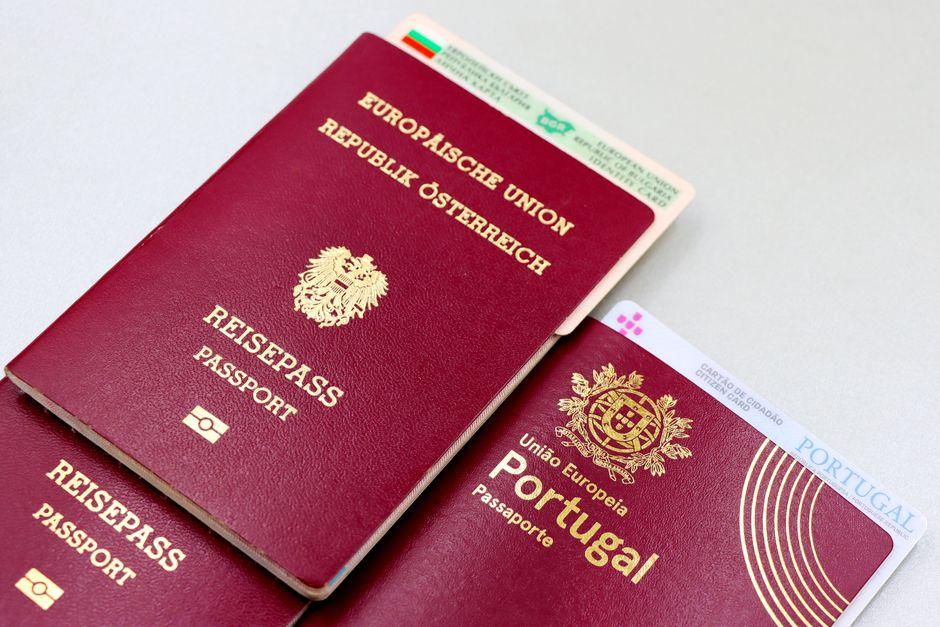
The Silent Balancing Act Between Legal Complexities and Personal Identity
Imagine Sarah, born in Canada to Indian parents, who acquired citizenship in three countries by the time she was in her late twenties. For Sarah, the pride in her layered identity was palpable-festivals in Toronto, family gatherings steeped in Indian traditions, and professional ties in the UK. Yet beneath these joyful reunions and career moves was a quieter tension: the legal maze she had to navigate. Each citizenship came with its own set of obligations and nuances. When Sarah faced the decision to renew her passports, she encountered unexpected restrictions-some countries demanded military service declarations, others required tax filings regardless of residence. The complexity wasn’t just paperwork; it was a balancing act where personal identity and official regulations often diverged. She learned that feeling truly “at home” sometimes meant reconciling her cultural loyalties with government mandates that had little room for emotion or history.
Consider these common challenges faced by multiple citizens:
- Conflicting tax requirements leading to unexpected liabilities.
- Military service or other civic duties imposed selectively by one country.
- Restrictions on dual nationality in certain political or legal circumstances.
| Citizenship Country | Key Legal Complexity | Impact on Personal Identity |
|---|---|---|
| India | No dual citizenship allowed; requires renunciation to hold another nationality. | Emotional difficulty in formally shedding legal ties despite cultural attachment. |
| Canada | Permits multiple citizenship but taxes global income. | Financial decisions directly influenced by tax laws, complicating lifestyle choices. |
| United Kingdom | Freedom to hold multiple citizenships but with complex residency rules. | Pressures on where to establish “home” for legal benefits versus emotional connection. |
Sarah’s story underscores a broader lesson: while multiple citizenships offer rich cultural benefits and pragmatic advantages, the silent negotiation between legal frameworks and personal identity demands ongoing attention. It’s not merely about holding passports but interpreting what those documents mean in everyday life-how they shape loyalties, obligations, and a sense of belonging that is never fully captured by official decrees.
Moments That Redefine Home How Dual Allegiances Shape Emotional Landscapes
Imagine Sofia, a young woman born in Italy to Filipino parents, who finds herself caught between two distinct emotional worlds every time the holidays roll around. In the Philippines, family gatherings brim with loud, colorful celebrations that last late into the night, while in Italy, holiday traditions are quieter and more subdued, centered around intimate dinners and heartfelt conversations. For Sofia, these moments are not just about choosing where to be but about navigating the emotional currents shaped by her dual allegiances. She wrestles with an unspoken pressure to feel “more” connected to one culture during each visit, only to realize that her sense of home is fluid, redefined by the love and familiarity found across continents. This personal negotiation highlights how multiple citizenships often compel individuals to reimagine the meaning of belonging beyond geography – it’s about the feelings and memories tied to people, rituals, and values that transcend borders.
In many ways, the emotional landscape of dual citizenship is a patchwork quilt of contrasts and compromises. For instance, consider Jamal, who holds both Canadian and Nigerian citizenship. When political unrest erupted in Nigeria, he found himself caught between loyalty to his heritage and the practicality of his Canadian upbringing. Deciding whether to visit family during turbulent times forced him to confront his split identity head-on. Jamal’s experience underscores a crucial lesson for many navigating multiple allegiances: expectations often clash with reality. The anticipated warmth of reconnecting can be shadowed by logistical challenges, societal judgments, or internal conflicts. Yet, these moments also become pivotal points of growth, helping individuals embrace the complexity of their identities rather than forcing them into singular categories. Rather than diluting their emotional attachments, dual citizenship often enriches the texture of what home really means.
| Situation | Expectation | Reality | Lesson Learned |
|---|---|---|---|
| Returning to ancestral homeland for holidays | Feeling fully integrated and embraced | Encountering cultural disconnects and feelings of otherness | Home can be multi-layered, and love transcends perfect belonging |
| Balancing career opportunities in two countries | Seamless navigation between professional landscapes | Compromises on job choices and identity at the workplace | Adaptability is key; identity evolves with experience |
Learning to Embrace Contrasts Drawing Strength from Multiple Cultural Perspectives
When Mateo moved from Spain to Canada as a dual citizen, he initially struggled with the conflicting cultural cues around social interaction. In Spain, meals are long, laughter-filled events with family and friends, often stretching late into the evening. In contrast, Canadian dining etiquette tends to be more reserved, with clearly defined mealtime boundaries and a focus on punctuality. At first, Mateo found himself caught between these rhythms-arriving late to dinners felt disrespectful to new Canadian friends, yet adhering strictly to schedules felt alien to his Spanish roots. Over time, he learned to embrace these contrasts not as contradictions but as complementary frameworks. This blend allowed him to enjoy the warmth and spontaneity of his Spanish heritage while appreciating the structure and clarity preferred in Canada. Mateo’s journey reveals a valuable lesson: navigating multiple cultural norms requires more than adaptation-it calls for a creative merging that honors each identity’s strengths.
Similarly, Amina, a Nigerian-American, faced dilemmas rooted in expectations around individualism and community. Growing up in the U.S., her accomplishments were framed by personal initiative and self-expression. Yet, her Nigerian upbringing emphasized collective success and family responsibility. These differing perspectives came to a head when deciding whether to pursue a high-risk startup or join the family business. While her American side yearned for bold independence, the Nigerian influence reminded her of the impact her choices would have on her wider family. After contemplative discussions and weighing these cultural lenses, Amina crafted a path that balanced innovation with inclusivity-she launched a community-driven social enterprise that involved her family. Her decision highlights how embracing contrasting cultural imperatives can lead to more enriched and purpose-driven outcomes.
| Culture | Common Values | Challenge | Outcome with Embracing Contrast |
|---|---|---|---|
| Spanish | Social warmth, spontaneity | Adjusting to punctuality norms | Balanced social fluidity with respect for time |
| Canadian | Structure, punctuality | Perceived rigidity by newcomer | Found warmth within organized settings |
| American | Individualism, innovation | Balancing personal ambition with family | Created community-focused entrepreneurship |
| Nigerian | Collectivism, family focus | Pressure to conform to tradition | Incorporated family values into new ventures |
- Key takeaway: Rather than erasing differences, finding strength lies in integrating contrasting cultural values.
- Decision moments often spark deeper understanding of one’s multifaceted identity.
- Successful navigation often means crafting personalized cultural syntheses that enrich both personal and social dimensions.
Shared Belonging and Legal Patchwork Crafting a Cohesive Self in a Fragmented World
Consider Amal, who holds citizenship in both Egypt and Canada. At family gatherings in Cairo, she feels the pull of her Egyptian roots-flavors, stories, and traditions steeped in centuries of history. Yet, when she returns to Toronto, those same traditions sometimes feel distant, as friends and colleagues expect her to embody a more Westernized identity. Amal’s dual citizenship offers her a unique advantage-a “shared belonging” that allows her to cross cultural borders with ease, accessing communities and opportunities on multiple continents. However, this shared belonging requires continuous negotiation, both emotionally and legally, as she balances the privileges and expectations tied to each country’s citizenship laws.
The legal reality behind this shared identity is often a patchwork of rules that don’t always align neatly. For example, dual citizens like Amal may face contrasting responsibilities such as differing tax obligations or military service requirements, complicating what it means to be “fully” part of either nation. A simple comparison illustrates this cross-jurisdictional complexity:
| Country | Tax Filing Requirement | Military Service | Voting Rights |
|---|---|---|---|
| Egypt | Income tax applies only to income earned in Egypt | Compulsory for males aged 18-30 | Allowed if physically present |
| Canada | Global income must be reported and taxed accordingly | No military conscription | Allowed regardless of residence |
- Decision moments: Amal must decide when and where to file taxes or whether to defer military duties, a process often involving legal counsel and personal reflection.
- Lessons learned: Holding multiple citizenships means living with overlapping and sometimes conflicting identities that shape daily life beyond mere paperwork.
This legal patchwork reinforces the idea that being a citizen of multiple countries is more than a status-it’s an ongoing practice of crafting a cohesive self amid fragmentation. The challenges faced are tangible, but so are the opportunities for creating a personalized sense of belonging beyond borders.
In Retrospect
In a world where borders blur and identities intertwine, wearing many hats becomes both a challenge and a gift. Navigating the complex tapestry of multiple citizenship is an ongoing journey-a delicate balance of belonging and self-discovery. As we embrace the many threads that weave our stories, we find that identity is not fixed but fluid, shaped by the places we call home and the communities we cherish. Ultimately, it is in this dynamic interplay that the true essence of belonging unfolds, inviting us to redefine what it means to belong-beyond boundaries, beyond labels, and into a shared human experience.




