
In a world increasingly defined by fluid movement and interconnected lives, the concept of citizenship is evolving beyond the boundaries of a single nation. “Between Borders: Navigating the Complex Realities and Rewards of Multiple Citizenship” invites readers to explore the multifaceted experience of holding allegiance to more than one country. This intricate identity weaves together distinct cultural, legal, and social threads, offering unique opportunities and presenting complex challenges. As more individuals embrace multiple citizenships, understanding the nuanced landscape they inhabit becomes essential—not only to grasp the personal dimensions of belonging and identity but also to appreciate the broader implications for global mobility, rights, and responsibilities.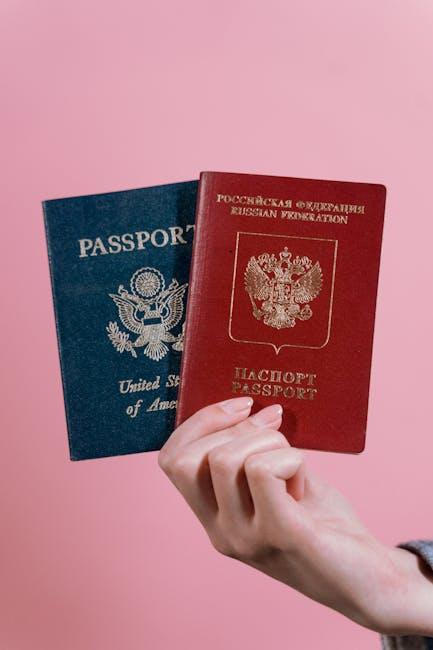
Crossing Lines and Claiming Ties Exploring Identity in Dual National Lives
Maria was born in Brazil but grew up in Canada, her life a constant dance between two distinct worlds. At family gatherings, she often found herself caught between languages, switching effortlessly from Portuguese to English, each representing more than just words—they carried stories, values, and a deep sense of belonging. Yet, her identity wasn’t simply split; it was layered and fluid, shaped by the cultural norms and personal experiences from both countries. When applying for her multiple citizenships, Maria expected a clear-cut, dual sense of self, but what she found was a more nuanced reality. Holding two passports allowed her remarkable mobility and opportunities, yet it also sparked questions: *Where do I feel most at home?* and *How do I balance expectations from each community?* This internal navigation—crossing invisible lines of tradition and law—was an ongoing journey, reflecting the complexities of belonging to multiple nations simultaneously.
Consider Ahmed, an engineer with roots in Egypt and the United States, who faced a delicate choice when deciding where to settle professionally. Holding dual citizenship opened doors internationally, but it also came with cultural challenges that weren’t obvious on paper. Unlike the straightforward benefits of multiple citizenship like ease of travel, Ahmed encountered unexpected moments needing deep emotional negotiation:
- At work: striving to fit into corporate cultures that valued different social norms.
- With family: managing differing expectations around loyalty and identity.
- In personal life: confronting assumptions from friends who expected a singular national identity.
These experiences revealed that multiple citizenship, while legally empowering, requires continuous personal reflection and redefinition. It’s a dynamic process — much like blending two colors to create a new shade, the final identity is original and can’t be fully predicted by its components.
| Aspect | Expectation | Reality |
|---|---|---|
| Sense of Belonging | Clear attachment to one “home” | Fluid, situation-dependent identification |
| Cultural Integration | Seamless adaptation to both cultures | Ongoing negotiation of values and norms |
| Community Perception | Acceptance by both national groups | Occasional questioning of “authenticity” |
The Hidden Red Tape Behind Multiple Passports When Bureaucracy Meets Belonging
When Ana decided to pursue her second citizenship through descent, she envisioned a smooth process: trace lineage, submit papers, and soon hold a second passport. But reality unveiled a maze of bureaucracy that tested her patience and resolve. From inconsistent document requirements across consulates to waiting months for approval, the journey was less about heritage and more a lesson in red tape. Unlike the neat narratives often shared by passport brokers, Ana confronted a patchwork of rules that varied not just by country, but by region and changing political climates. This confusion often leads applicants to feel less like global citizens and more like paper chasers trapped in an administrative limbo.
Take, for example, the subtleties in proving continuous lineage, where a missing birth certificate or a minor discrepancy on a marriage record could stall the entire application. Such technicalities starkly contrast with the heartfelt connection applicants feel towards their ancestral homeland. The bureaucratic hurdles don’t just slow the process—they challenge the very notion of belonging. In navigating these labyrinthine systems, applicants learn critical lessons:
- Patience is paramount: Timelines can stretch unpredictably, requiring mental endurance.
- Documentation nuances matter: Small errors or omissions have outsized consequences.
- Flexibility is essential: Rules and processes can change with little notice.
| Country | Common Bureaucratic Challenge | Typical Delay |
|---|---|---|
| Italy | Verification of ancestral records and translation certification | 6-12 months |
| Ireland | Proof of continuous residency and marriage certificates | 4-8 months |
| Portugal | Language proficiency and police clearance | 3-6 months |
Ultimately, the process reveals a delicate dance between identity and institution. While citizenship is a powerful symbol of belonging, it is the often invisible bureaucratic hurdles that quietly shape the lived reality of holding multiple passports.
Journeys of Belonging Case Studies of Citizens Living Between Nations
Take Maya, for instance, who was born in Canada to Indian parents but spent her formative years living in the UK. When she turned 18, her dual citizenship opened doors to opportunities in three different countries, but it also forced difficult choices. Should she pursue a career in technology in Toronto, where the industry is booming but she feels culturally disconnected, or accept a leadership role in London, closer to extended family but with a higher cost of living and more intense competition? The reality of multiple citizenship revealed itself not just in passport stamps but in moments of profound identity negotiation. Maya’s story underscores a common tension: the allure of belonging to several places contrasted with the reality of feeling fully at home in none. Her journey showed that citizenship is more than legal status—it’s about weaving together fragments of culture, community, and personal aspiration.
Another example is Carlos, a Colombian-Spanish dual citizen navigating the complexities of healthcare access during the COVID-19 pandemic. Initially, he assumed his Spanish citizenship would automatically grant him seamless healthcare benefits, but the intricacies of residency requirements and varying national policies complicated access when he returned to Colombia for family reasons. This experience shattered his expectation that multiple citizenships always simplify life. Instead, Carlos had to adapt rapidly, leveraging local networks and engaging with consular services to manage his care. His story highlights a crucial lesson for those living between nations: legal rights are only one part of the equation. The lived experience often depends on local regulations, timing, and the ability to navigate bureaucracies that do not always align with one’s layered identity.
- Maya’s Dilemma: Career choices shaped by cultural ties and economic realities across three countries.
- Carlos’s Challenge: Unexpected barriers in healthcare despite dual citizenship.
| Aspect | Maya (Canada/India/UK) | Carlos (Colombia/Spain) |
|---|---|---|
| Primary Conflict | Identity & career trade-offs | Access to healthcare services |
| Expectation | Multiple options equal freedom | Seamless benefits through citizenship |
| Reality | Feeling split, not fully rooted anywhere | Complex local laws and bureaucracy |
| Lesson | Belonging is as much emotional as legal | Rights on paper don’t guarantee ease |
Moments of Choice When Loyalty and Opportunity Collide Across Borders
Consider Ana, a dual citizen of Brazil and Italy, navigating a pivotal moment when a promising job in Milan clashed with family expectations back home in São Paulo. While the opportunity in Italy meant career growth and a chance to fully utilize her multilingual skills, her elderly parents relied on her presence in Brazil for emotional and practical support. This tension highlights a common crossroads in the experience of multiple citizenship: the pull between personal ambition and ingrained loyalty. What initially seemed like a clear-cut decision became layered with cultural nuances—loyalty was not just about geography, but about identity, tradition, and unspoken family ties. Ana’s choice revealed a broader lesson: holding multiple citizenships often means grappling with deeply personal decisions shaped by both tangible and intangible factors.
Similarly, consider the story of Hassan, who holds citizenship in Canada and Egypt. When offered a government role in Cairo that promised influence and a chance to help reform public policy, he faced conflicting expectations. Canada’s relative political stability and social services clashed with Egypt’s urgent need for reform and his personal drive to give back—a decision further complicated by perceptions of allegiance on both sides. In weighing these options, Hassan learned that multiple citizenship is less about legal convenience and more about navigating complex emotional landscapes caught between opportunity and loyalty. These moments often defy straightforward logic, carried instead by individual values and the unpredictable weight of belonging. The following table captures the essence of these competing dimensions:
| Dimension | Opportunity | Loyalty |
|---|---|---|
| Career | International advancement, financial gain | Supporting family, cultural responsibilities |
| Identity | Personal growth, new experiences | Preservation of heritage, community ties |
| Risk | Uncertainty in new environments | Potential loss of relationships |
- Key insight: These choices challenge the notion that multiple citizenships are simply logistical advantages—they are deeply human stories.
- Balancing act: Every decision weighs opportunity against emotional roots, and the results often reshape one’s sense of self.
Beyond Paper and Policy The Subtle Rewards and Real Costs of Holding Many Flags
When Maria received her second passport, she envisioned seamless travel to family reunions in Europe and hassle-free access to job markets on two continents. Yet, the reality of holding multiple citizenships often reveals itself in subtler ways. Take, for instance, the occasional confusion at border controls where agents ask which nationality to honor, prompting stressful moments rather than straightforward welcomes. Additionally, dual citizens like Raj face unexpected tax obligations in countries they barely visit, learning the hard lesson that citizenship entails financial duties, not just privileges. These moments underscore how the layered web of rights and responsibilities tied to each flag requires vigilance and nuanced understanding.
On the upside, multiple citizenships often open doors to diverse educational and professional opportunities, offering flexibility few single-nationality individuals experience. However, this “freedom” sometimes means juggling conflicting obligations or legal systems. Consider the case of Amina, balancing electoral participation in two countries — each with different deadlines and rules — a process that demanded she educate herself deeply on both political landscapes. Here lies a paradox: while the flags confer identity and chance, they also come with complex personal choices and unexpected constraints. Ultimately, holding more than one citizenship is less about stacking privileges and more about navigating a dynamic set of benefits and costs with intention and clarity.
Future Outlook
In the intricate tapestry of global identity, multiple citizenships weave both threads of opportunity and knots of complexity. Navigating these overlapping sovereignties demands more than just paperwork—it calls for a nuanced understanding of allegiance, rights, and responsibilities across borders. Yet, for those willing to embrace the challenge, the rewards can be rich: expanded horizons, diverse cultural connections, and a profound reimagining of belonging. Ultimately, the journey between borders is less about lines on a map and more about the evolving stories we carry within ourselves.




