
In a world where borders blur and identities intertwine, the experience of holding dual nationality unfolds like a rich tapestry woven from diverse cultures, histories, and loyalties. Between two worlds lies a complex journey—one that challenges straightforward definitions of belonging and invites a nuanced understanding of what it means to call more than one place home. This article explores the layered realities faced by those navigating the delicate balance of dual nationality, delving into the opportunities, obstacles, and unique perspectives that shape their lives in an ever-globalizing society.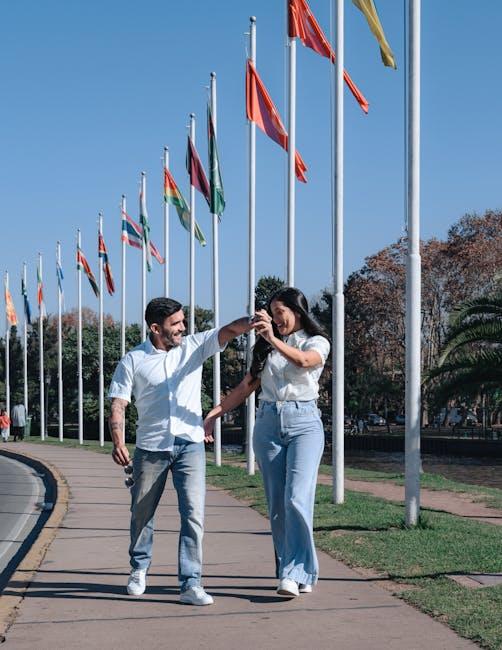
Rooted but Untethered A Day in the Life of a Dual National
Imagine waking up on a crisp spring morning with a cup of coffee brewed from beans sourced halfway across the globe—your two worlds blending seamlessly in the quiet moments of daily routine. For someone like Lina, born to a Mexican mother and a German father, this blend isn’t just symbolic; it’s practical. When she navigates local supermarkets, she compares the spices to those her abuela used, savoring a familiar warmth, yet also reaches for imported cheeses she grew up loving. But the day quickly becomes a balancing act when a client asks her to attend a meeting in Spanish, then English, then German—all in one afternoon. Each language carries its own baggage of expectations and subtleties. Lina’s experience illustrates how dual nationals often live in a space of constant adjustment, fluidly switching cultural frameworks yet sometimes feeling untethered, as if never fully “home” in either domain.
These moments pose real decisions beyond language: should you register your child’s dual citizenship or choose one cultural identity for simplicity? For Ayush, an Indian-Canadian, the choice was immediate when applying for university—declaring Indian residency unlocked different financial aid and admission opportunities, but felt like leaving his Canadian self behind on paper. He shares the lesson many dual nationals learn the hard way: paperwork and personal identity don’t always align. Consider the following recurring challenges:
- Navigating complex legal systems for travel and taxation
- Handling moments of cultural misconception or stereotyping
- Deciding which traditions to sustain, adapt, or leave behind
| Expectation | Reality |
|---|---|
| “Having two passports equals double ease.” | Managing conflicting laws and bureaucracies can multiply hurdles. |
| “You feel at home everywhere.” | Many feel only semi-rooted, always sensing elements of outsiderhood. |
| “Identity is simple and clear.” | Identity is layered and often fluid, depending on context and life stage. |
Each day for dual nationals is a subtle negotiation, a quiet lesson in embracing complexity with grace instead of clarity. It’s about holding the deep roots of heritage without letting them define or restrict the freedom to grow beyond borders—becoming, in essence, both anchored and untethered.
When Borders Blur Personal and Legal Dilemmas in Dual Citizenship
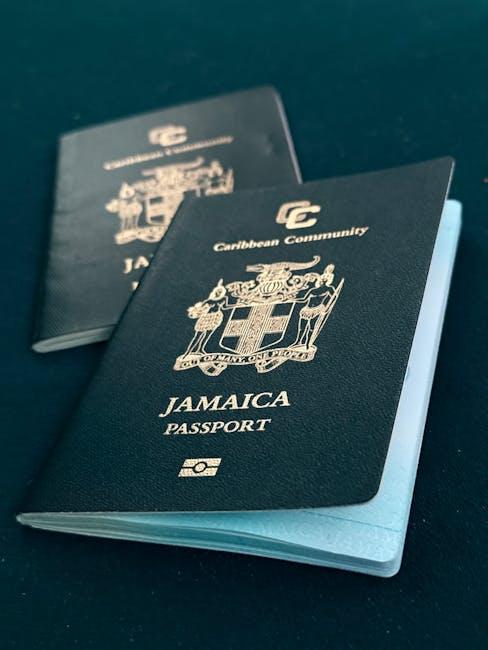
Maria, born in Brazil but raised in Germany, found herself tangled in the complex web of dual citizenship when she decided to move back to Brazil for work. Her initial expectation was simple: maintain the freedom to live and work in either country without hassle. However, the reality was more nuanced. Upon applying for a local senior position, Maria encountered challenges related to her tax obligations, where her income earned in Germany was scrutinized by Brazilian authorities, highlighting the tangled overlap of legal systems. Such situations expose a common dilemma: dual citizenship can blur the neat lines between countries, complicating everything from taxation to military service and even legal protections.
- Example: Ahmed, holding both Egyptian and Canadian passports, faced conflicting obligations when Egypt required compulsory military service, whereas in Canada, he was expected to fulfill civic duties laden with different legal parameters.
- Decision Moment: Should he renounce one citizenship to avoid potential legal consequences, or attempt to navigate both, risking penalties?
- Lesson: Dual nationality often demands proactive engagement with diverse legal systems — ignorance isn’t just unfortunate; it can be costly and stressful.
| Expectation | Reality |
|---|---|
| Freedom to work and reside freely | Complex tax filings and military obligations complicate movement |
| Uncomplicated legal protections | Conflicting jurisdictional claims can delay or complicate justice |
| Simple diplomatic assistance | Sometimes no clear advocate if both countries have competing interests |
Crossroads of Identity Navigating Cultural Expectations and Self Definition
Growing up with dual nationality often means living in a space where cultural expectations pull you in contrasting directions. Take Amira, for example: her Lebanese heritage placed a strong emphasis on family loyalty and community honor, while her Canadian upbringing celebrated individual freedom and self-expression. At family gatherings, she was expected to respect traditional roles and clearly defined career paths, yet her own dreams leaned towards creative independence and exploration. Such moments become defining crossroads—should she conform to one identity to fit in, or forge a unique path that blends both? These decisions are rarely clear-cut, and the outcomes often challenge initial expectations. Amira found that embracing the tension instead of resolving it immediately opened doors to innovative ways of self-definition, allowing her to honor her roots without sacrificing her personal evolution.
In practice, negotiating these cultural landscapes requires constant recalibration. Common challenges include:
- Balancing respect for family traditions with personal ambitions
- Navigating language preferences that shape social belonging
- Managing external perceptions shaped by stereotypes or assumptions
Consider the example of Javier, who holds Mexican and German citizenship. His professional network in Germany expected punctuality and directness, whereas his Mexican background thrived on relational warmth and flexible schedules. This contrast made Javier initially worry about fitting in at his German workplace. Over time, he discovered that adapting communication styles—being direct during formal meetings but engaging in informal, relational conversations afterward—strengthened his position. Below is a brief snapshot of how he balances these cultural expectations:
| Context | Mexican Culture | German Culture | Javier’s Approach |
|---|---|---|---|
| Work Meetings | Flexible timing, relationship-focused | Punctuality, task-oriented | Arrives early, sticks to agenda |
| Informal Interactions | Warm, conversational, personal | Reserved, minimal small talk | Shares personal stories, builds rapport |
These ongoing negotiations highlight that dual nationality is less about choosing one culture over another and more about fluidly crafting a hybrid identity—one where lessons from both worlds enrich rather than compete with each other.
Lessons from the In Between Building Bridges Across Divergent Worlds
Take the example of Maria, who grew up celebrating both Diwali with her Indian grandparents and Thanksgiving with her American family. While these occasions are rich with tradition, Maria often found herself navigating nuanced expectations — her Indian relatives expecting her to speak Hindi fluently and adhere to certain customs, while her American friends valued casual informality and direct communication. This balancing act illuminated a core lesson: building bridges across divergent worlds requires patience and a deep sense of curiosity. It’s not about perfectly blending two cultures into a seamless whole, but rather cultivating respect for the contrasts and finding joy in their coexistence. Maria learned that openly sharing her experiences, even when they felt awkward, invited understanding rather than judgment.
Decision moments often crystallize the challenge — like when Jacob, a dual German-American citizen, chose whether to participate in a local festival in Berlin that celebrated values seemingly at odds with his American upbringing of individualism. Choosing to engage, Jacob initially wrestled with discomfort but ultimately recognized the value in embracing traditions foreign to him. Expectations of alienation gave way to surprising connections with neighbors and a richer sense of belonging. These experiences highlight key lessons for anyone bridging worlds:
- Embrace vulnerability: Sharing uncertainties fosters genuine connection.
- Resist assumptions: Neither cultural identity is monolithic; nuances abound.
- Be present in each moment: Authentic engagement beats superficial adaptation.
| Challenge | Expectation | Reality | Lesson |
|---|---|---|---|
| Language barriers in family conversations | Fluency is necessary to connect deeply | Non-fluent efforts are appreciated and spark warmth | Effort matters more than perfection |
| Conflicting holiday traditions | Must fully adopt one or the other | Creating hybrid or alternating customs is fulfilling | Flexibility enriches identity |
| Social norms clash | Immediate belonging requires full conformity | Gradual acceptance often occurs through openness | Patience builds bridges |
Tales of Adaptation and Belonging Embracing Complexity in Dual National Journeys
Consider Amira, who was born in France to Moroccan parents. From a young age, she navigated the spaces between two cultures—French school by day, Moroccan family traditions by night. Her journey toward embracing dual nationality wasn’t seamless; she vividly recalls a pivotal moment during university when she had to choose which country’s internship program to commit to. The Moroccan opportunity was rich with cultural resonance but offered less career exposure, while the French position was prestigious but felt somewhat detached from her heritage. This decision was more than professional—it was deeply personal. Amira’s experience underscores a common tension in dual-national lives: the expectation that duality should simplify experiences often gives way to the reality of wrestling with choice and identity. Through this, she learned a crucial lesson: belonging isn’t about choosing one path over the other but about creating space where both can coexist.
Similarly, take Johan, a second-generation American with Swedish roots, who moved between Minnesota and Stockholm throughout his childhood. Johan’s story highlights how cultural belonging can evolve through unexpected channels, often diverging from initial assumptions. Despite his fluency in Swedish, he initially felt like an outsider in Sweden’s social circles, where cultural nuances went beyond language. Contrastingly, his American friends, unaware of his Nordic background, often boxed him into a monolithic “foreign” category. His journey through this complexity taught him to value adaptability over assimilation, and authenticity over forced belonging. Key insights from Johan’s experience include:
- Belonging is contextual: One may feel fully integrated in one setting yet marginal in another, even within the same dual identity.
- Identity is fluid: It shifts with environment, relationships, and personal growth rather than remaining static.
- Complexity enriches: Embracing multiple heritages adds layers rather than dilutes identity.
| Expectation | Reality | Lesson Learned |
|---|---|---|
| Dual nationality means clear cultural alignment | Often results in feeling fragmented or caught between worlds | Identity is multifaceted and evolving, not fixed |
| Choosing one nationality feels like ‘betrayal’ | It can be a practical, situational decision without emotional compromise | Decisions are contextual and don’t diminish one’s full identity |
In Summary
In the delicate dance between borders and belonging, the stories of those with dual nationality unfold as vibrant tapestries woven from threads of culture, identity, and experience. Navigating these complex journeys is neither linear nor simple; it is a continuous process of adaptation and self-discovery. As the world grows ever more interconnected, the space between two worlds becomes not a place of conflict, but one rich with possibility—where multiple identities converge to create something uniquely whole. Ultimately, the voyage of dual nationality invites us all to reconsider the meaning of home, belonging, and the ties that bind us beyond any single boundary.




