
In an increasingly interconnected world, the power to cross borders freely has quietly transformed into one of the most tangible symbols of privilege. Global passports, once mere documents of identification, have evolved into prized keys that unlock opportunities, influence, and access on an international scale. Yet, not all passports are created equal. While some grant their bearers effortless passage and near-limitless mobility, others carry the weight of restrictions, barriers, and uncertainties. This disparity reveals a new currency of power—mobility itself—shaping who can navigate the world with ease and who remains anchored by political, economic, or social constraints. Exploring this dynamic exposes the intricate link between identity, freedom, and inequality in the 21st century.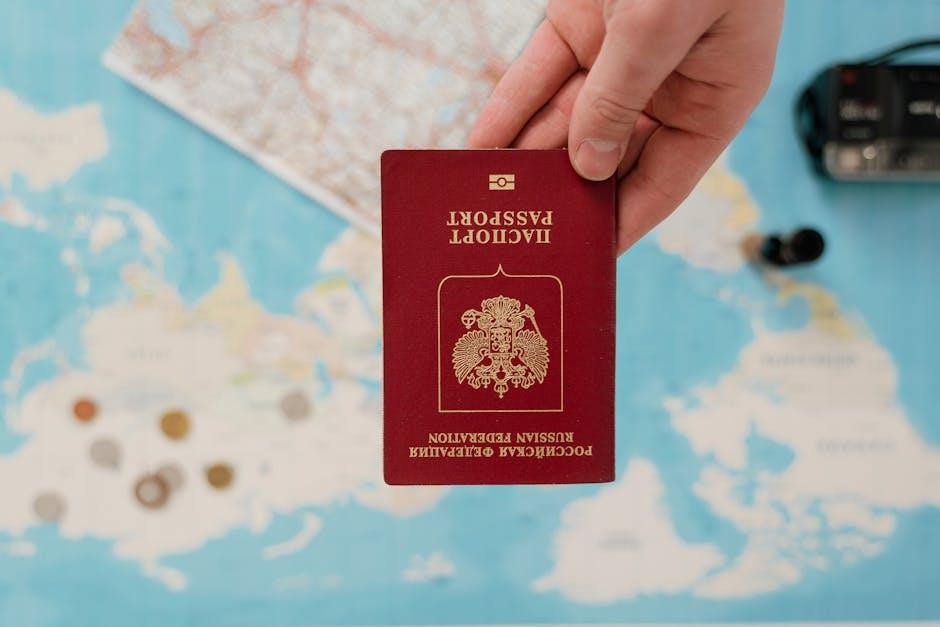
The Unequal Cost of Freedom How Passports Shape Opportunities Beyond Borders
Passports are often perceived simply as travel documents, but they are, in truth, intricate passports to global opportunity—or the lack thereof. The unequal cost of freedom is starkly visible in the visas and entry permissions stamped within. While some passports grant near-unrestricted global access, others require meticulous planning, expensive visas, or acceptance of travel restrictions that limit professional, educational, and personal growth. This disparity isn’t just about convenience; it structurally shapes who can capitalize on economic prospects, foster international collaborations, or claim refuge in times of crisis. The assumption that mobility is an equal playing field ignores the deeply embedded geopolitical hierarchies coded into these tiny booklets, turning what should be a universal right into a form of selective privilege.
Understanding these hierarchies demands a clear-eyed evaluation of the trade-offs at play. For instance, holders of highly ranked passports benefit from visa-free access to over 180 countries, enabling spontaneous business expansions or cultural exchanges. Conversely, citizens of lower-ranked passports often face lengthy, costly, and uncertain visa processes—a gatekeeping mechanism that implicitly values certain lives and talents over others. Rather than romanticizing the freedom of movement as a global norm, policymakers and global agencies must acknowledge the uneven barriers and adopt nuanced strategies such as:
- Streamlining visa application processes with reduced fees and faster turnarounds targeted at underrepresented passport holders.
- Expanding reciprocal agreements that dismantle entrenched geopolitical biases rather than reinforcing them.
- Investing in digital identity and mobility frameworks that democratize access beyond traditional national affiliations.
By recognizing passports as currencies of power—not merely IDs—societies can begin to dismantle the invisible architecture of exclusion that persists in global mobility. This requires ongoing vigilance against complacency with the status quo and an unwavering commitment to equitable access to opportunities beyond borders.
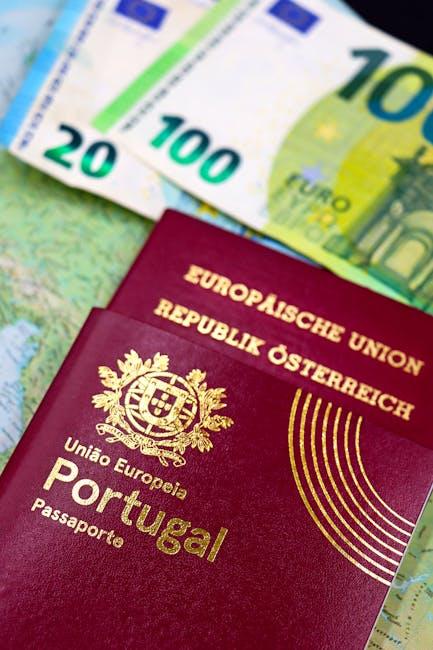
Rethinking Travel Privilege When Mobility Masks Global Inequalities
Travel privilege is often romanticized as a mere convenience or an extension of personal freedom, yet it fundamentally operates as a stark emblem of global inequality. When a passport allows you seamless traversal across continents, it signals embedded geopolitical hierarchies—clear delineations of who is deemed worthy of mobility and who is not. This selective permeability reinforces structural injustices, where wealthier nations safeguard their borders not just physically but economically, perpetuating a cycle where mobility becomes the ultimate symbol of power, not opportunity. Addressing this necessitates acknowledging that the lament of “visa restrictions” is not a neutral grievance but a symptom of deeper imbalances in wealth, diplomacy, and historical privilege. Simplistic calls for more open travel ignore the fact that border permeability itself is a politically charged tool, wielded inconsistently to protect entrenched advantages rather than to promote equitable exchange.
Reconceptualizing travel privilege demands more than advocating for universal visa-free access—it requires grappling with challenging trade-offs between sovereign security interests, economic disparities, and human rights. Efforts to democratize mobility must pair visa reforms with equitable investment in development, education, and infrastructure within lower-mobility nations, lest we reduce freedom of movement to a superficial credential rather than an accessible right. Moreover, fixing the inequality embedded in mobility demands international cooperation that transcends transactional visa agreements and tackles root causes like global poverty and political disenfranchisement. To this end, policymakers should:
- Incentivize bilateral and multilateral frameworks that balance security with inclusivity, recognizing that blanket restrictions harm more than just frustrated travelers—they perpetuate global stratification.
- Invest in capacity-building initiatives that empower less mobile populations with the means to travel safely and confidently, including streamlined documentation processes and traveler support systems.
- Challenge the narrative framing visa barriers as mere administrative hurdles, instead exposing them as deliberate instruments of exclusion tied to economic and political hierarchies.
| Aspect | Common Assumption | Nuanced Interpretation |
|---|---|---|
| Visa-Free Access | Unqualified good; more access equals more freedom. | Symbolizes geopolitical privilege; needs pairing with structural reforms. |
| Border Control | Primarily about national security. | Also enforces economic and social hierarchies. |
| Mobility Equality | Achieved by eliminating visa restrictions. | Requires multi-dimensional approaches addressing systemic inequities. |
Behind the Visa Waiver Curtain The Overlooked Power Dynamics in Global Movement
Visa waiver programs are often framed as unequivocal symbols of mutual trust and global integration, but beneath this polished narrative lies a labyrinth of calculated power dynamics that disproportionately privilege certain nationalities. These agreements are not merely bureaucratic conveniences; they are geopolitical tools wielded by dominant states to reinforce hierarchies of mobility and control the permeability of borders. While conventional wisdom celebrates visa-free travel as a mark of diplomatic goodwill, the reality is more strategic: visa waivers frequently serve as currency for strategic alliances, intelligence sharing, and economic leverage, rather than purely humanitarian or egalitarian motivations. This transactional nature means that many nations become invisible in this global mobility ledger—a subtle yet potent form of exclusion that shapes patterns of who moves freely and who remains confined.
Understanding the visa waiver curtain demands a nuanced recognition of the trade-offs inherent in global mobility policies. Countries that enjoy visa-free access often face public scrutiny over security and immigration risks; yet the benefits—accelerated business travel, cultural exchange, and soft power—typically outweigh these concerns in the eyes of policymakers. Conversely, nations excluded from such privileges endure compounded difficulties that reinforce cycles of economic and social marginalization. Instead of romanticizing visa waivers as an unalloyed good, stakeholders must push for more transparent frameworks that balance legitimate security imperatives with equitable access. This means advocating for:
- International standards grounded in human rights, rather than geopolitical convenience, as the baseline for visa policies.
- Regular, data-driven reassessments of waiver programs to minimize biases and arbitrary exclusions.
- Enhanced multilateral dialogue that includes voices from underrepresented nations, preventing visa regimes from becoming echo chambers of the powerful.
Only by confronting the underlying asymmetries and politicized nature of visa waivers can global mobility policies evolve from instruments of division into tools for genuine interconnectedness.
Navigating the Maze Strategic Choices in Pursuit of Passport Prestige
In the pursuit of a prestigious passport, it’s essential to recognize that this arena is far more than a simple tally of visa-free countries. The strategic calculus involves weighing qualitative factors often overlooked by casual observers: geopolitical stability, reciprocal diplomatic relations, and underlying socio-economic conditions that can either amplify or erode the passport’s practical utility. Merely chasing the highest ranking on mobility indices risks missing the nuanced trade-offs—such as how a passport might facilitate access to pivotal economic hubs versus its potential restrictions during times of global crises. For example, a passport enabling visa-free access to many Commonwealth nations may lack leverage in key emerging markets, while one tied to a politically volatile state, despite offering seemingly broad access, can be subject to abrupt travel suspensions.
To navigate this maze, aspirants and policy advocates alike must adopt a multi-dimensional lens focused on strategic value rather than superficial prestige. Consider adopting a tiered approach prioritizing:
- Regional integration and alliance-building: Passports tied to groups like the EU or ASEAN offer dynamic, adaptable mobility crucial for business and cultural exchange.
- Resilience under duress: The ability of a passport to maintain its power amid geopolitical upheavals or health crises can decisively impact global mobility.
- Dual citizenship pragmatism: Not all dual passports yield equal advantage—discerning which combinations unlock complementary access while minimizing bureaucratic friction is key.
Such an approach recognizes that passport prestige is a form of soft power, fluctuating with shifting global tides and requiring constant recalibration rather than blind allegiance to rankings. Ultimately, the real currency lies in strategic foresight, balancing immediate conveniences with durable access to international opportunity spheres.
| Factor | High-Prestige Passport | Mid-Tier Passport | Trade-Offs |
|---|---|---|---|
| Visa-Free Access | 180+ countries | 100–130 countries | Broader access vs. depth of strategic partnerships |
| Geopolitical Stability | Generally strong (e.g., EU, Japan) | Variable (emerging economies) | Mobility may be disrupted in crises |
| Dual Citizenship Ease | Selective (stringent laws) | More flexible in some regions | Trade-off between exclusivity and practical freedom |
Mobility as Currency The Quiet Divide Between Accessible and Restricted Worlds
Mobility today operates less as a right and more as a form of currency, dictating one’s access to opportunities, resources, and global networks. This “quiet divide” between accessible and restricted worlds is not just about visa-free travel but signifies entrenched geopolitical hierarchies where passports serve as gatekeepers of privilege. The reductive notion that all passports simply differentiate by the number of countries they unlock misses the profound societal implications: a passport from a high-ranking country is a passport into power, safety, and economic advantage, whereas a lower-ranked one often consigns its holder to vulnerability, extensive scrutiny, or outright exclusion. The fallout isn’t merely inconvenience; it shapes career trajectories, educational pathways, and even personal security. Thus, mobility manifests as a covert mechanism reinforcing global inequities under the guise of bureaucratic convenience.
Yet, challenging conventional wisdom means rejecting the assumption that more accessible passports are inherently “better” in all contexts. There exists a trade-off between expansive mobility and other forms of sovereignty or identity preservation. For instance, smaller nations with restrictive travel agreements may prioritize national cohesion or protection from external economic shocks over greater passport freedom. In practice, this requires a nuanced appreciation of what mobility commodification means for global citizens. Moving forward, policies should balance facilitating travel with safeguarding national interests and individual dignity. Practically, this suggests fostering multilayered mobility rights—such as regional agreements, digital nomad visas, or flexible residency options—that do not solely depend on the binary privilege of one’s nationality but democratize movement in sustainable and empowering ways.
In Conclusion
In a world where borders define more than just geography, the passport you carry has become a silent testament to privilege and power. Mobility is no longer just about travel—it’s a currency that shapes opportunities, connections, and freedom. As we navigate this increasingly interconnected yet unequal landscape, understanding the disparities behind global passports invites us to rethink notions of access and equity. After all, true globalization cannot be measured by how far we can roam, but by how fairly that freedom is shared.




