
In a world increasingly defined by borders both physical and digital, the significance of a foreign passport often remains overshadowed by broader geopolitical narratives. Yet, these seemingly simple documents hold an understated power—a passport is more than just a travel permit; it is a key to new opportunities, a facilitator of mobility, and a subtle instrument of economic influence. This article delves into the nuanced role foreign passports play in shaping global mobility and economic power, exploring how they quietly steer the movements of people, capital, and ideas across the world, and why they deserve greater recognition as strategic assets in our interconnected age.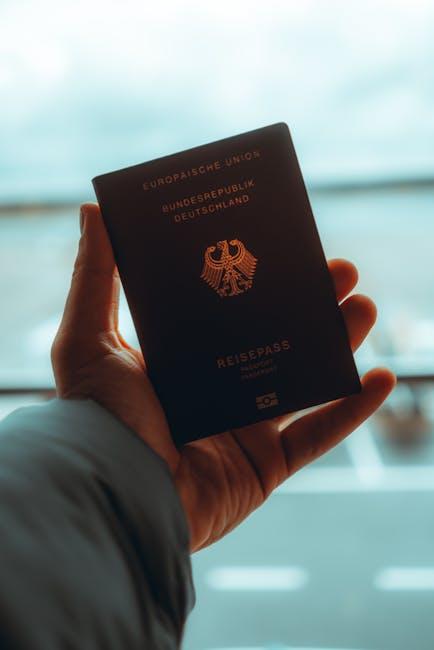
Passport Privilege Unpacked How Travel Freedom Masks Unequal Global Power
Passport privilege is often simplistically equated with travel freedom, yet this framing dangerously obscures the entrenched disparities in global power. The luxury of visa-free access is not merely a convenience but a stark emblem of geopolitical influence and fiscal clout. From the wealthy corridors of OECD countries to those with limited diplomatic leverage, passports serve as barometers of international hierarchy, revealing a world where mobility is rationed rather than a universally attainable right. This selective permeability reinforces existing inequalities, with border policies acting as invisible walls that protect some while confining others. Crucially, travel freedom masks the structural conditions that permit such disparities to flourish—economic dominance, strategic alliances, and historical legacies that continue to skew the global playing field.
Understanding passport privilege demands a critical shift away from viewing visa waivers as benign perks and toward recognizing them as strategic tools wielded by states to sculpt global flows of people and capital. While advocates urge for broader visa liberalization under the banner of globalization, the reality is that unfettered mobility could paradoxically exacerbate socio-economic divides if not paired with robust policies addressing root inequalities. For instance, easy access to global markets via a strong passport can lead to brain drain and capital flight from lower-ranked nations, deepening their developmental challenges. Instead, nuanced reforms should emphasize reciprocal arrangements that foster equitable mobility paired with international cooperation on economic parity. Only by unpacking the politics behind passport rankings can we recalibrate travel freedom from a symbol of exclusive privilege to a lever for inclusive global engagement.
| Aspect | Common Perception | More Nuanced Interpretation |
|---|---|---|
| Visa-Free Travel | Simple convenience for tourists and business travelers | A marker of global power imbalances and diplomatic leverage |
| Passport Strength | Equally valuable currency for mobility | Uneven currency reflecting economic and political clout |
| Calls for Visa Liberalization | Universally beneficial for globalization | Potentially harmful if unaccompanied by structural economic reforms |
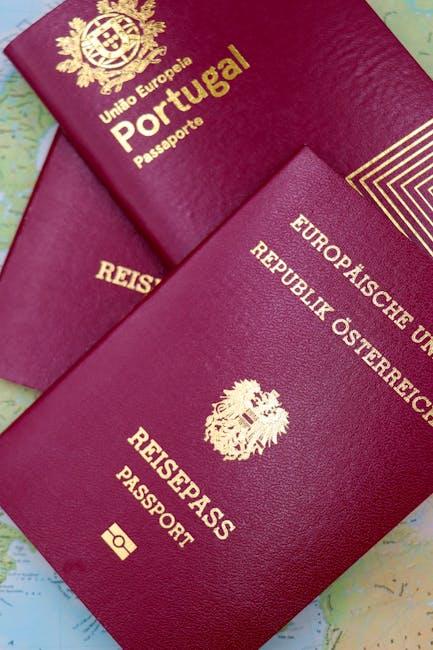
Beyond the Stamp The Subtle Economic Forces Behind Cross-Border Identity
Passports often serve as symbolic tokens of national identity, yet their economic implications run far deeper than mere travel convenience. The subtle forces at play behind cross-border identity highlight the strategic calculus individuals and states undertake in leveraging citizenship for economic gain. Not all passports are created equal, and the divergence in value stems from embedded rights—such as work permits, social welfare access, and business opportunities—that transcend the physical document. This challenges the simplistic narrative that passports are primarily about freedom of movement; rather, they are intricate socio-economic levers facilitating access to disparate systems of opportunity or protection. For instance, a passport from a geopolitically stable country can act as a form of economic insurance, providing holders with alternative markets, diversified investment borders, and escape routes during political or financial upheavals. This transcends convenience, positioning citizenship as a currency of resilience and strategic advantage in an unpredictable global landscape.
However, embracing the economic potential of foreign passports comes with multifaceted trade-offs. The pursuit of cross-border identity often requires navigating complex ethical terrains, where the commodification of citizenship risks exacerbating global inequalities and identity dilution. Governments face the dilemma of balancing open mobility policies—attractive to global talent and capital—with national security and social cohesion concerns. For individuals, acquiring multiple citizenships can stimulate economic growth and personal security but may introduce legal complications and allegiance conflicts. Policymakers and applicants alike must therefore adopt nuanced approaches:
- Evaluating passports not only by visa-free counts but by embedded socio-economic entitlements
- Considering the long-term stability and governance quality of the issuing countries
- Being mindful of global equity implications and the unintended reinforcement of privilege through cross-border identity strategies
Only through such discerning analysis can the true leverage of foreign passports move beyond symbolic status and become a sophisticated tool for economic empowerment and mobility in an increasingly interconnected world.
When Value Meets Vulnerability The Hidden Costs of Chasing Multiple Nationalities
Chasing multiple nationalities often promises a prosperous cocktail of global freedom, tax optimization, and heightened security—but beneath this allure lurks a suite of nuanced vulnerabilities and costs rarely foregrounded in mainstream discourse. The assumption that more passports unconditionally enhance mobility ignores the legal and emotional baggage that accrues with each new citizenship. Dual or multiple nationality can complicate tax obligations, leading to double taxation or complex disclosure requirements that demand specialized, often costly, financial advisory services. Furthermore, this pursuit can erode the clarity of one’s allegiance, creating diplomatic and social friction, especially in geopolitically tense environments. In other words, the value of having multiple passports must be weighed against these latent disadvantages rather than seen as an unmitigated boon.
Decision-makers should also recognize that citizenship is not a static asset; it represents a dynamic contract with varying degrees of risk and reward depending on the issuing country’s political stability and governance quality. Choosing a second or third nationality is less about amassing passports indiscriminately and more about strategic alignment with nations that provide calculable returns—such as reliable consular protection, access to target markets, and predictable legal frameworks. This entails embracing a more selective approach, asking critical questions like:
- Does the new nationality create tax exposure or conflict with existing fiscal residency?
- What are the implications for personal identity, and could multiple allegiances provoke scrutiny under changing geopolitical climates?
- Is the issuing country’s political landscape stable enough to safeguard my rights long-term?
| Factor | Benefit | Hidden Cost/Risk |
|---|---|---|
| Legal Obligations | Broader legal protections and rights | Complex compliance, potential double taxation |
| Geopolitical Flexibility | Improved access to travel and work | Risk of scrutiny or revocation amid shifting alliances |
| Cultural Identity | Enhanced global identity and networks | Emotional strain, identity dilution |
In essence, the pursuit of multiple nationalities should evolve from a checklist mentality into a rigorous evaluation of trade-offs where value meets vulnerability—a calculated, not casual, dance with sovereignty that demands foresight, legal savvy, and a clear-eyed appraisal of what “freedom” truly entails in a globally interconnected, yet politically fractious, world.
Rethinking Mobility Strategies The Case for Quality over Quantity in Passport Acquisition
When evaluating passport acquisition strategies, the prevailing narrative often champions accumulation—securing multiple passports for the sake of volume, equating quantity with mobility freedom. However, this approach overlooks the intricate trade-offs between the quality of a passport and the practical advantages it confers. Not all passports are created equal: a single high-ranking passport from a country with robust diplomatic reach, visa-free access, political stability, and favorable tax treaties can outperform a portfolio of lesser-valued documents. Prioritizing quality means dissecting beyond headline rankings to consider factors such as global perception, bilateral relations, and the strategic industries a country engages with. A “passport assembly line” risks squandered opportunities if it leads to a dispersed, diluted mobility profile, where administrative burdens, residency requirements, and the threat of political volatility undermine the intended benefits.
Smart mobility strategies demand a selective, calibrated approach, balancing aspirations with tangible outcomes. Here, discerning investors and global professionals should weigh:
- Visa-free access breadth versus economic and geopolitical stability: Is the passport’s reach sustainable amid shifting global alliances?
- Dual citizenship policies and tax obligations: Do benefits come at the cost of complex compliance and unexpected fiscal exposure?
- Resilience to political disruption: Could sudden policy reversals compromise the passport’s value?
| Quality Factor | Passport Value Impact |
|---|---|
| Visa-Free Access & Diplomatic Reach | Maximizes global entry points; reduces travel friction |
| Political & Economic Stability | Ensures long-term reliability and citizenship security |
| Tax Regime & Compliance Complexity | Influences financial efficiency and legal obligations |
In a world where global mobility increasingly translates to economic power, the mantra should pivot from amassing as many passports as possible to mastering a portfolio of strategically complementary citizenships, emphasizing quality over quantity. This reorients the conversation to pragmatic sovereignty—leveraging passports as functional tools rather than mere status symbols.
The Complex Trade Offs Between Convenience and Sovereignty in International Travel Choices
At the core of decisions around foreign passports lies a paradox rarely addressed: the simultaneous pursuit of convenience—defined by visa-free access, rapid border crossings, and international trust—and the preservation of sovereignty, which grants individuals control over legal identity, political rights, and fiscal obligations. Countries increasingly leverage their passport strength as a diplomatic and economic tool, but this often comes at the individual’s expense of autonomy. For instance, a high-ranking passport from an EU country affords expansive travel freedom but also subjects residents to supranational regulations and tax regimes that may limit personal financial maneuverability. Conversely, passports from sovereign states with fewer global accords may restrict mobility yet provide a stronger sense of personal jurisdiction over assets and civic engagement. The trade-off is not linear; it demands discerning which aspects of sovereignty one values most—mobility, legal protections at home, or control over one’s economic footprint.
Pragmatically, the choice to hold or pursue a foreign passport should be framed less as a binary between convenience and sovereignty and more as a strategic portfolio balancing act. Consider this simplified breakdown:
| Passport Characteristic | Pro-Convenience | Pro-Sovereignty |
|---|---|---|
| Visa-Free Access | Extensive globalization, easier travel for business and leisure | Potential external policy influence, less domestic control |
| Tax & Regulatory Jurisdiction | Integration into global markets, fewer legal hurdles | Greater ability to manage assets and privacy, but more complexity in travel |
| Political & Civil Rights | Stronger international standing, diplomatic protections abroad | Closer ties to a specific national community, enhanced sense of belonging |
- Recommendation: Rather than chase passport prestige solely for travel convenience, individuals should map their global mobility desires against their willingness to cede certain confidential or fiscal freedoms.
- Challenge to the common narrative: Not all “powerful” passports guarantee true sovereignty; some represent subtle forms of dependence on larger geostrategic frameworks, which can constrain personal freedoms in less obvious but potent ways.
In Summary
In the intricate dance of geopolitics and personal freedom, foreign passports emerge not merely as travel documents, but as subtle instruments of influence and opportunity. They quietly reshape the contours of global mobility, redefining who can cross borders and who can access new economic horizons. As nations continue to vie for soft power and individuals seek expanded possibilities, recognizing the strategic weight of foreign passports becomes essential. In this evolving landscape, these seemingly simple booklets stand as underrated levers—powerful catalysts that bridge worlds, open doors, and ultimately, reshape the balance of economic and social power on the global stage.




