
In a world increasingly connected yet still divided by borders, the experience of holding dual citizenship offers a unique vantage point-a life lived in the tension and harmony of two homelands. For American dual citizens, this duality is not simply a legal status but a complex journey of identity, belonging, and responsibility. Navigating the privileges and challenges that come with citizenship in two nations, they find themselves charting a course through cultural intersections, legal intricacies, and personal reflections. This article delves into the layered realities of being an American dual citizen, exploring what it means to bridge worlds in an era defined by both globalization and national pride.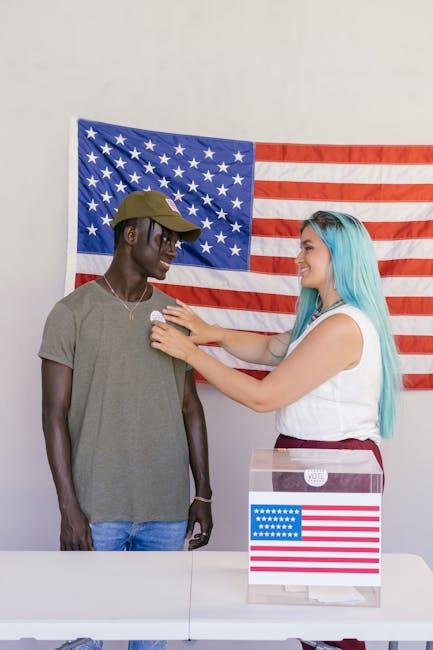
Balancing Cultural Heritage and Civic Responsibility in Everyday Life
For many American dual citizens, balancing cultural heritage with civic responsibility isn’t a theoretical dilemma-it’s a daily reality. Take Ana, for example, who grew up celebrating Dia de los Muertos with her family, carrying forward the rich traditions of her Mexican heritage. When she moved to the U.S. and obtained citizenship, she felt a profound sense of duty to participate in local elections, a responsibility her parents discussed often but never exercised. One November, Ana found herself juggling the excitement of organizing a community altar with the more mundane but critical task of voting in a municipal election. What she learned through this was nuanced: cultural identity and civic participation aren’t mutually exclusive but interconnected, enriching one another.
These small, personal acts reveal a deeper truth-dual citizens often confront unexpected tensions. For instance, when Raj, proudly Indian-American and a newly registered voter, encountered a local law combining strict civic duties with an unfamiliar cultural approach to governance, he initially felt conflicted. He was accustomed to a more consensus-driven civic culture in his parents’ homeland, yet the American system’s emphasis on individual responsibility demanded swift decisions and clear stances. This moment became a turning point for him, highlighting three key lessons about balancing these dual worlds:
- Authentic participation: Civic involvement isn’t about abandoning one’s origins but adapting those values into a new framework.
- Pragmatic engagement: Knowing local laws and systems deeply helps turn cultural empathy into effective action.
- Resilience in complexity: Dual citizens often learn patience, navigating between competing expectations without losing their sense of self.
To illustrate these contrasts more clearly, consider the table below showing a comparison of cultural expectations versus civic realities from the perspectives of dual citizens:
| Aspect | Cultural Heritage Expectation | American Civic Reality |
|---|---|---|
| Community Decision-Making | Consensus and collective voice | Individual voting and direct accountability |
| Legal Obligations | Often guided by tradition or informal codes | Strict enforcement and legal clarity |
| Political Expression | Indirect through elders or community leaders | Direct through elections and public forums |
This balancing act shapes the everyday experience of dual citizens-not as a source of frustration but as a dynamic way to meld two identities into a more informed, enriched civic life.

When Laws Collide The Legal Maze of Dual Citizenship
When Alex discovered he was eligible for citizenship through his grandparents in Italy, the excitement of embracing his heritage quickly collided with a complex web of laws he hadn’t anticipated. At first, it seemed straightforward-dual citizenship would mean the freedom to live, work, and travel in two countries. But soon, Alex found himself navigating a maze of legal obligations that layered on top of the usual bureaucratic procedures. For instance, while the U.S. allows dual citizenship, Italy mandates military service registration for males, irrespective of their residency. Alex, in his late twenties, never expected to be confronted with such an obligation. The reality was a sobering lesson: laws don’t just facilitate identity; they enforce responsibilities that may differ drastically from one country to another.
Maria’s journey was different yet equally illustrative. As a dual citizen of the U.S. and Mexico, she faced challenges when attempting to renew her passport. While she expected a simple form and fee, she encountered contrasting requirements-Mexico demanded proof of residency, which she no longer had, while the U.S. side emphasized tax compliance, scrutinizing her foreign income reports. This scenario highlights some common legal conflicts in dual citizenship:
- Taxation: U.S. citizens must report worldwide income, yet the other country may have non-taxation agreements or differing fiscal years.
- Military Service: Certain countries impose mandatory service obligations that can disrupt lives unexpectedly.
- Legal Allegiance: Dual citizenship sometimes raises questions about which country’s laws take precedence in disputes or criminal proceedings.
| Legal Aspect | Typical U.S. Expectation | Common Counterpoint in Other Citizenship |
|---|---|---|
| Tax Obligations | Annual IRS filings, global income reporting | Varies: may require local taxes or offer exemptions |
| Military Service | No mandatory service | May require compulsory registration or service |
| Passport Validity | Generally 10 years, straightforward renewal | May require proof of residency or additional documentation |
These contrasts often force dual citizens to make critical decisions, balancing pride and practicality. Understanding the legal maze behind dual citizenship is less about theoretical rights and more about grappling with everyday consequences, where the laws of two nations can diverge, clash, or overlap unexpectedly-demanding constant awareness, preparedness, and sometimes, legal counsel.
Stories from the Borderlines Personal Reflections on Identity and Belonging
Maria grew up in Texas, fluent in English but carrying the warmth of her Mexican heritage in both heart and home. On family holidays, she speaks Spanish with her grandparents, while at school, she navigates the fast-paced rhythm of American youth culture. Yet, it wasn’t until she had to choose where to attend university that the complexity of dual citizenship truly hit her. Did she apply to programs in the U.S., where she felt more academically prepared, or in Mexico, where her roots and extended family awaited? The decision wasn’t just about logistics or prestige-it was about defining where she belonged and what “home” meant. Her choice to study in Mexico initially surprised her friends back home, but it became a profound journey of reconnecting with an identity that wasn’t always visible on her passport but was deeply felt in everyday moments, like sharing tamales or celebrating Día de los Muertos.
Similarly, when James accepted a job offer in the U.S. after growing up between Australia and the States, he expected a seamless adaptation. Instead, he found himself acting as a cultural bridge in conversations, constantly adjusting expressions or references for colleagues unfamiliar with his second nationality. His dual citizenship was an asset professionally, yes, but personally it often felt like a balancing act: maintaining allegiance without losing the nuances of either culture. Here’s a snapshot of what that balancing looks like in real life:
| Identity Aspect | Expectation | Reality |
|---|---|---|
| Language | Fluency means belonging | Fluency doesn’t guarantee acceptance; accents and slang mark difference |
| Cultural References | Shared experiences are automatic | Often required explanation or adaptation in social settings |
| Legal & Civic Duties | Dual citizenship as trouble-free dual rights | Complex civic responsibilities and emotional ties pull both ways |
- Lesson 1: Belonging isn’t fixed-it’s something we build over time.
- Lesson 2: Dual citizens often carry an invisible weight of representation for both countries.
- Lesson 3: The journey is unique; no two stories mirror each other perfectly.
Unexpected Challenges and Alliances: Navigating Bureaucracy Across Nations
When Sarah first decided to embrace her American dual citizenship, she pictured a straightforward process-submit forms, verify documents, and wait for approval. Instead, she found herself entangled in a web of red tape that spanned two distinct bureaucratic cultures. For example, while the U.S. demanded extensive documentation like tax records and FBI background checks, her second country required a personal interview and even proof of heritage through old family certificates. The contrasting expectations were confusing: American efficiency clashed with the slower, more personal but unpredictable bureaucratic pace overseas. Sarah’s breakthrough came when a kind clerk, frustrated with her paperwork’s back-and-forth delays, advised her to seek coaching from local expat groups who had tackled the system. This lesson in human connections turned out invaluable, revealing that navigating dual citizenship isn’t just about legal requirements, but also understanding the unwritten rules of each country’s administrative mindset.
Unexpected alliances, in fact, became a recurrent theme throughout Sarah’s journey. One of the most striking moments was when she connected with another dual citizen facing a similar dilemma-paying taxes in both countries without double taxation treaties in place. Together, they pooled their knowledge and pushed for consultations with tax advisors specializing in cross-border law, which saved them significant sums and spared them from potential fines. Their experience highlighted two critical lessons for anyone navigating bureaucracies across nations:
- Patience is parameter one; rigid timelines rarely apply when dealing with multiple governments.
- Community clues matter; connecting with others who have “been there” can open doors conventional advice won’t.
| Challenge | Expectation | Reality/Lesson |
|---|---|---|
| Documentation Submission | Uniform document sets accepted by both countries | Countries require unique, often incompatible evidence; tailor preparation |
| Interview Process | Paperwork-only process | Mandatory in-person interviews add complexity but also personal clarity |
| Taxation | Separate, straightforward tax filing | Need for expert advice and alliances to avoid double taxation |
Gaining Perspective How Dual Citizenship Shapes Views on Freedom and Belonging
For many Americans holding dual citizenship, the abstract concepts of freedom and belonging take on deeply personal meanings shaped by lived experience. Take Maria, for example, who grew up in the U.S. with roots in Italy. Initially, she associated freedom with the American ideals of personal liberties and economic opportunity. However, after spending extended time with her Italian family, she observed a contrasting, community-focused sense of freedom – one deeply tied to collective welfare and cultural traditions. This dual lens encouraged her to rethink what freedom truly entails: not just individual rights, but also the responsibilities and emotional bonds that sustain a society. Such moments often occur when navigating systems that reflect different societal values, where the expectation of seamless identity blending clashes with the reality of nuanced cultural contradictions.
Deciding where to cast one’s loyalties or where to feel “at home” can be an internal negotiation peppered with moments of doubt and discovery. Consider Ahmed, who holds U.S. and Egyptian citizenships. When faced with voting in simultaneous elections in both countries, he confronted the complex emotions of civic duty versus attachment. The expected clarity of belonging-a straightforward allegiance to one nation-became a layered experience of belonging in multiple places, yet fully in none. This tension is common among dual citizens, who often develop a hybrid identity that resists simple classification. The key lesson here is that dual citizenship transforms one’s relationship to freedom and belonging into a flexible, evolving journey influenced by context, emotional intelligence, and an understanding that identity isn’t a zero-sum game.
- Freedom: Shifts from individual autonomy to include communal responsibilities.
- Belonging: Becomes multi-faceted, often spanning distinct cultural and geographic spaces.
- Identity: Adapts fluidly, blending and reconciling contrasting societal expectations.
Closing Remarks
In the delicate dance of dual citizenship, the journey is neither simple nor singular. To navigate two worlds is to embrace a mosaic of identity-where loyalty, belonging, and heritage intertwine in ever-shifting patterns. It is a path marked by challenges and opportunities, by the weight of responsibilities and the gift of broadened horizons. For American dual citizens, this complex voyage is not just a legal status but a lived experience-one that continuously shapes who they are, and how they see the world. As borders blur and cultures converge, their stories remind us that identity is a landscape rich with nuance, deserving of thoughtful understanding and respect.




