
In an era where borders blur and opportunities stretch across continents, the value of a passport transcends mere travel-it becomes a key to unlocking a world of possibilities. Amidst the sea of traditional citizenship options, Dominica’s citizenship stands out not just as a document, but as a strategic advantage in a globalized landscape. Offering more than just a stamp in your passport, it embodies flexibility, security, and economic opportunity that align perfectly with the demands of today’s interconnected world. This article explores why Dominica citizenship outshines traditional passports, revealing how it empowers individuals to navigate the complexities of modern life with greater freedom and foresight.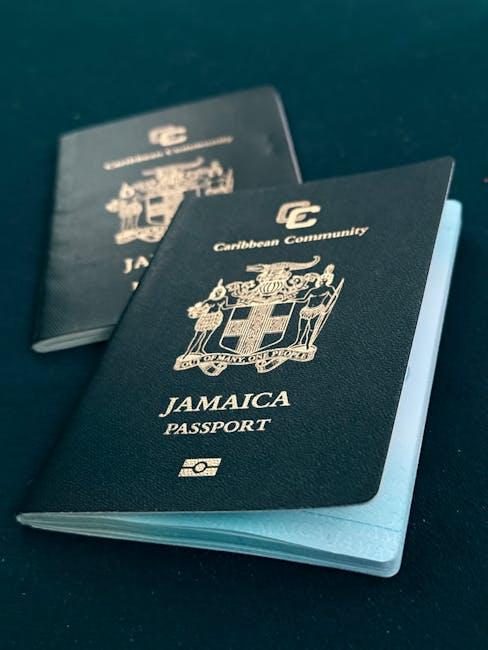
The Strategic Edge of Dominica Citizenship Beyond Conventional Travel Documents
Dominica citizenship transcends the simplistic allure of a travel document by embedding a strategic edge that traditional passports rarely offer. Unlike many standard passports tethered solely to mobility, a Dominican passport acts as a versatile asset, blending financial pragmatism, lifestyle flexibility, and geopolitical neutrality. While European Union passports boast wide visa-free access, they come with mounting regulatory scrutiny and tax obligations that can complicate global residency or investment plans. In contrast, Dominica’s citizenship enables access to over 140 countries without entailing extensive fiscal responsibilities-making it a refined choice for high-net-worth individuals who value discrete wealth preservation and diversified international footprints.
- Investment leverage: Citizenship-by-investment routes in Dominica facilitate substantive global business opportunities without the bureaucratic inertia common in traditional residency programs.
- Political neutrality: The country’s low-profile geopolitical stance offers a unique sanctuary for those wary of international sanctions or diplomatic entanglements impacting their existing passports.
- Tax considerations: Dominica imposes no wealth, gift, inheritance, or foreign income taxes, a marked advantage over many conventional passports burdened by multifaceted tax regimes.
| Feature | Dominica Citizenship | Traditional Passports |
|---|---|---|
| Visa-Free Countries | 140+ | Varies: 150-190 |
| Tax on Foreign Income | None | Often required |
| Investment Threshold | Starting at $100,000 | Typically none (natural citizen) |
| Political Risk Exposure | Low | Varies widely |
Nevertheless, the strategic value of Dominica citizenship comes with its nuanced trade-offs. For those whose primary consideration is maximum global mobility, passports from powerhouse nations like Germany or Japan may still edge out Dominica’s in sheer visa-free reach. However, what the Dominican passport lacks in global prestige it compensates for in privacy, cost-efficiency, and strategic diversification. It’s a choice that merits discerning individuals who understand that citizenship is no longer a simple ticket but a multifaceted instrument for hedging against geopolitical flux and financial opacity. In other words, Dominica citizenship is not a mere substitute for traditional passports; it is a calculated complement within a sophisticated global strategy-best suited for those who do not accept one-dimensional assumptions about mobility or allegiance.

Unpacking the Lesser-Known Limitations of Traditional Passports in a Connected Era
Traditional passports, long regarded as the ultimate symbol of national identity and access, increasingly fall short in addressing the demands of a hyperconnected global landscape. Beyond the ubiquitous frustrations with visa restrictions, they inherently embody a rigidity that fails to accommodate the dynamic realities of international mobility. While the intrinsic value of a traditional passport is often equated with the geopolitical stature of its issuing country, this overlooks critical nuances such as digital identity integration, reciprocal consular support, and the rise of remote economic participation. Notably, many passports remain tethered to outdated bilateral agreements, rendering their holders disadvantaged when agility and seamless cross-border navigation become paramount. In this light, the conventional passport is less a universal key and more a patchwork instrument, effective only within strictly defined geopolitical privileges that may not align with individual aspirations for fluid global citizenship.
Furthermore, the trade-offs embedded in maintaining allegiance to traditional citizenship models come into sharper focus when juxtaposed with modern alternatives like Dominica citizenship. Here, the conversation shifts beyond mere travel convenience to strategic empowerment through economic citizenship programs that couple robust mobility with financial flexibility and digital inclusiveness. Consider a comparative glance:
| Aspect | Traditional Passports | Dominica Citizenship |
|---|---|---|
| Visa-Free Access | Often limited by geopolitical factors; access varies widely | Offers increased access to 140+ countries, including Europe and Asia |
| Digital Integration | Minimal integration with emerging e-residency and fintech ecosystems | Supports innovative financial services and digital ID frameworks |
| Consular Support | Variable effectiveness based on country’s global outreach | Streamlined support with a strong emphasis on investor relations |
Ultimately, the critical insight lies in recognizing that the value of any passport-or citizenship-is no longer a static cultural artifact but a strategic asset that demands a holistic evaluation of mobility, economic opportunity, and global integration. Limiting oneself to traditional passports, without considering these deeper dimensions, may inadvertently impose constraints that the modern citizen cannot afford. A nuanced approach involves evaluating citizenship through the prism of adaptability and future-proof access rather than conventional prestige alone.
Navigating Global Mobility Through Dominica’s Citizenship Lens Versus Established Nationalities
When assessing global mobility, Dominica’s citizenship cuts through traditional paradigms often dominated by long-established nationalities. Unlike passports tethered to economic or political superpowers but marred by stringent visa restrictions and complex renewal protocols, Dominica offers a refreshingly pragmatic balance: ease of access combined with strategic geopolitical neutrality. This isn’t just about adding another passport-it’s about redefining what freedom of movement means in practice. Where traditional powers like the EU or U.S. offer extensive access, their passports come with heavy compliance burdens, unpredictable policy shifts, and residency prerequisites. In contrast, Dominica’s citizenship, while not granting the world’s most expansive visa-free options, provides hassle-free application processes and a reliable gateway to over 140 countries without the usual diplomatic overhead.
However, context matters critically, avoiding the simplistic belief that Dominica’s passport is a universal upgrade over conventional nationalities. For business titans tied to specific economic hubs, the granular benefits of established passports-such as social services, political influence, or business infrastructure-cannot be dismissed in favor of Dominica’s mobility perks alone. Yet, for entrepreneurs, digital nomads, and globally minded individuals prioritizing agile travel and tax efficiency, Dominica’s citizenship proves an astute alternative. Consider this nuanced comparison:
| Criterion | Dominica Citizenship | Established Nationalities (e.g., U.S., UK, Germany) |
|---|---|---|
| Visa-Free Access | 140+ countries, including EU Schengen visa-free stays | 180+ countries with some travel restrictions and variable duration |
| Application Complexity | Streamlined, investment-based citizenship programs | Often depends on birthright, residency, or prolonged naturalization |
| Tax and Compliance Burdens | Favorable tax regime with minimal reporting | Complex tax obligations, global income reporting |
| Sociopolitical Influence | Limited global political leverage | Strong global influence and diplomatic support |
- Recommendation: Use Dominica citizenship as a mobility-enhancing complement rather than a replacement when social-political integration or economic clout is essential.
- Caveat: Due diligence is necessary regarding dual citizenship acceptance and personal long-term relocation plans.
In a globalized world where mobility and flexibility define opportunity, Dominica’s citizenship challenges the assumption that only traditional passports matter. It urges a smarter, scenario-driven approach-where global citizens optimize their international footprint by combining conventional citizenship advantages with Dominica’s unique, mobility-centered benefits.
When Convenience Meets Sovereignty Exploring the Smart Alternatives to Legacy Passport Systems
In an era dominated by digital fluidity, legacy passport systems increasingly reveal their limitations-rigid issuance protocols, outdated biometric technologies, and geopolitical entanglements that often streamline access for few while marginalizing many. Dominica’s citizenship model, framed as a smart sovereign alternative, transcends these outdated frameworks by marrying convenience with genuine state autonomy. Unlike the conventional labyrinthine renewals and visa dependencies, Dominica’s approach leverages a sovereignty-driven citizenship-by-investment program that not only expedites global mobility but does so while maintaining robust national controls. This disrupts the false dichotomy that convenience must come at the expense of sovereignty. Instead, Dominica exemplifies how innovative governance can reconcile ease of access with meticulous regulatory oversight, offering holders a passport that is both a practical document and a potent symbol of controlled freedom in a globalized context.
However, this sophistication involves nuanced trade-offs that merit scrutiny. While Dominica’s digital-friendly and expedited citizenship process stands in stark contrast to Europe’s bureaucratic inertia or other legacy passport constraints, its value proposition is predominantly skewed towards those with substantial economic resources. This raises important questions about inclusivity and the societal ramifications of commodified nationality. Noteworthy is the fact that Dominica navigates these issues differently than many counterparts by instituting rigorous due diligence and transparent governance, contrasting sharply with opaque practices blamed on some alternative citizenship programs. For the discerning global citizen, it’s crucial to balance the allure of a streamlined passport acquisition against ethical considerations and the genuine strength of diplomatic relationships the passport affords. Ultimately, Dominica’s system represents a pioneering middle ground-not a panacea but a forward-thinking case study where convenience and sovereignty are not adversaries but co-authors of the next chapter in global mobility.
Reevaluating Global Identity Choices Through the Nuanced Benefits of Dominica Citizenship
When reconsidering global identity options, Dominica citizenship demands a selective lens that appreciates its unique strategic advantages beyond surface-level benefits. Unlike traditional passports tied heavily to geopolitical clout and economic superpowers, Dominica offers an identity that prioritizes agility and access in emerging global contexts. This means weighing trade-offs: while it doesn’t guarantee unrestricted access to every G20 nation, it grants visa-free or visa-on-arrival access to over 140 countries-a range often underestimated by conventional comparisons. This breadth facilitates not only leisure travel but also business and cultural exchange in regions pivotal to future economic shifts, such as parts of Asia, the Caribbean, and Africa. To investors and global nomads, Dominica represents a deliberate choice for an identity that aligns more with flexibility and strategic positioning than with old-school prestige.
However, the real insight lies in appreciating how Dominica’s citizenship interplays with evolving global realities. It challenges the assumption that the “power” of a passport is solely dictated by diplomatic weight. Instead, it foregrounds a more nuanced calculus involving tax neutrality, ease of acquisition, and dual citizenship acceptance. Consider the following table to compare key dimensions that shape the practical utility of Dominica citizenship versus a typical traditional passport:
| Dimension | Dominica Citizenship | Traditional Passport (Example: UK) |
|---|---|---|
| Visa-Free Countries | ~140 | ~190 |
| Tax Benefits | No global income tax, no inheritance tax | Subject to global tax rules |
| Citizenship Acquisition Time | 3-4 months (investment-based) | Naturalization often >5 years |
| Acceptance of Dual Citizenship | Permitted without restrictions | Varies; often restrictive |
Dominica citizenship’s value proposition hence resides in a selective repositioning of priorities: it is less about maximum travel reach and more about strategic freedom embedded in taxation and dual identity acceptance, with a speed and certainty rarely matched by traditional nationality routes. For those who can disentangle prestige from utility, Dominica offers a compelling alternative that challenges entrenched passport hierarchies in a globalized world.
To Wrap It Up
In a world where borders blur and opportunities unfold beyond familiar horizons, Dominica citizenship emerges not just as a document, but as a passport to possibility. It transcends the limitations of traditional passports, offering a gateway to global mobility, investment prospects, and a lifestyle enriched by both security and freedom. As the world continues to shrink and interconnect, choosing Dominica citizenship is less about leaving one place behind and more about embracing a future without boundaries-one where your identity is as expansive as your ambitions. In this era of globalization, perhaps the true power lies not in where you come from, but in where your citizenship can take you.




