
In a world increasingly defined by fluid borders and interconnected lives, the experience of living between two flags has become a poignant symbol of identity and belonging. To hold dual nationality is to dwell in a space where cultures, histories, and expectations converge-sometimes harmoniously, other times in tension. This intricate balancing act invites us to explore not just questions of citizenship and legal status, but the deeper, often personal negotiations of selfhood and community. Between Two Flags delves into the nuanced realities faced by those who navigate multiple allegiances, unveiling the complexities and contradictions woven into the fabric of dual nationality in today’s global landscape.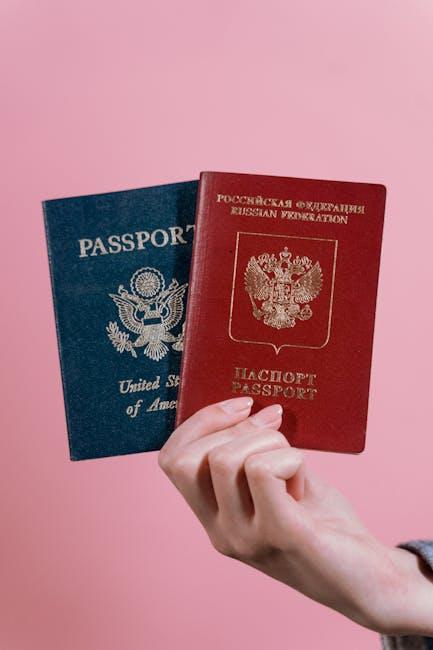
Crossroads of Culture where Heritage Meets Everyday Life
For many people living between two cultures, everyday moments become the negotiation rooms where heritage and current life intersect. Take Sara, who was born in Canada but raised in a Moroccan household. At family gatherings, the aroma of spiced tagines evokes vivid memories of her grandparents’ stories; yet, when she meets with friends for brunch, the conversation effortlessly shifts to the latest Netflix series. This interplay isn’t always seamless. Sara has learned that embracing both isn’t about balancing two equal halves but understanding when one takes precedence. On holidays, she finds joy in wearing traditional attire, while during work meetings, she adapts to a more global corporate culture. These scenarios reveal how dual nationality is not just a legal status-it’s a daily practice of cultural code-switching, a delicate art filled with moments of pride, challenge, and sometimes quiet compromise.
Decision points frequently arise where expectations clash with lived realities. Consider Amir, who studied law in the UK but holds citizenship in Pakistan. His family’s hope was he’d return home and contribute to the local legal system, grounded in traditional values. Yet, upon earning his degree, Amir was drawn to the progressive legal frameworks abroad, where debates are more open and inclusive. The contrast forced him to confront what “belonging” truly meant-was it tied to geography, cultural outlook, or personal values? What seemed like conflicting loyalties instead became lessons in flexibility and perspective. His story illustrates key truths about dual nationality:
- Heritage informs values, but does not always dictate choices.
- Belonging can be fluid, evolving beyond birthright or passport.
- Everyday life often requires blending traditions with new norms.
| Expectation | Reality | Lesson |
|---|---|---|
| Return to country of nationality after studies | Found career alignment and lifestyle preferences abroad | Belonging is personal; it transcends place |
| Preserve heritage rigidly | Adapt traditions to fit contemporary contexts | Heritage is living, not static |
| One fixed cultural identity | Multiple, overlapping identities experienced dynamically | Cultural identity is layered and negotiable |
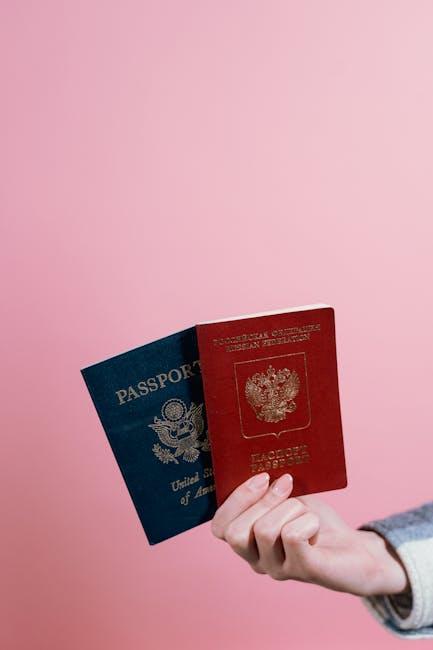
Unearthing the Silent Struggles of Dual National Belonging
Take the story of Ana, born to a Brazilian mother and a German father, who spent her childhood moving between São Paulo and Berlin. At school in Brazil, she was often the “German girl” – meticulous, reserved, sometimes distant. Yet, in Germany, she was frequently seen as “that Brazilian kid” – lively, informal, often misunderstood. This constant shift in how others perceived her seeped deeply into Ana’s sense of self. She learned early on that identity isn’t always about fitting neatly into one box, but wrestling silently with the ambiguity. When applying for university scholarships or even casual friendships, Ana faced an underlying question: *Where do you truly belong?* This wasn’t a question offered by curiosity but by systemic expectations – nationality tied directly to culture, language, and loyalty.
Such subtle challenges highlight an often overlooked reality of dual nationals-the internal tug-of-war between legal belonging and emotional identity. Consider a simple decision like choosing which passport to present at the airport or which national anthem to stand for at a ceremony. These moments, seemingly minor to outsiders, carry weighty implications. They can spark doubts, conversations, or decisions that ripple through relationships and career paths. Dual nationality unfolds differently for each person, but three recurring themes emerge:
- Fluid Identity: The struggle to reconcile multiple cultural narratives without losing authenticity.
- Invisible Labor: Constantly explaining, justifying, or even defending one’s place in both societies.
- Selective Belonging: The inevitable feeling that full acceptance in either country is often elusive.
| Expectation | Reality |
|---|---|
| Dual nationality means freedom of choice | Often feels like freedom with invisible strings tied |
| Being raised in two cultures leads to multilingual ease | Language preference and emotional connection can vary widely |
| Both countries fully accept your identity | Sometimes met with questions about loyalty or “true” belonging |
When Two Flags Shape One Story Moments of Conflict and Connection
Imagine Amina, born to a Moroccan mother and a French father, navigating a family gathering where two flags-Moroccan and French-linger in the air like unspoken histories. During a holiday dinner, a casual remark about patriotism slowly unfolds into a deeper conversation about identity. Amina feels pulled between the pride of her mother’s homeland and the expectations tied to her father’s nationality. In moments like these, the clash isn’t just about flags or countries; it’s a surge of emotional complexity that shapes how dual nationals perceive themselves and how they are perceived by others. These encounters reveal the silent negotiation between embracing overlapping identities and the pressure to lean into just one.
Consider Jamal’s experience as another window into these lived realities. When offered a job in his mother’s country, he faces an unexpected conflict: can he fully commit financially and emotionally to a place where part of his heritage lives but where systemic hurdles pose real challenges? His initial expectation that heritage alone would smooth the path sharply contrasts with the reality of navigating bureaucracy, cultural nuances, and at times, conflicting loyalties from colleagues. Here, the dual nationality is a bridge but also a space where contradictions linger:
| Expectation | Reality |
|---|---|
| Cultural connection means full acceptance. | Frequent questions about “Which country do you really belong to?” |
| Heritage simplifies professional opportunities. | Navigating different sets of regulations and social norms complicates integration. |
| Identity as a dual national is straightforward. | Identity is fluid and often redefined through these moments of conflict and connection. |
- Small decisions, like language choice in daily life, often signal deeper negotiation of belonging.
- Family expectations and societal perceptions can conflict, creating internal tension.
- Moments of connection and exclusion equally contribute to evolving self-understanding.
Ultimately, these stories underscore how the dual nationality experience is not static but continuously shaped through moments of conflict and connection. Recognizing this fluidity can foster empathy and open dialogue, moving beyond simplistic notions of identity into a richer, more nuanced understanding of what it means to live between two flags.
Bridging Borders through Stories Lessons from Lived Experience
Maria always thought her dual nationality would make life simpler – a seamless blend of cultures, legal rights, and a rich sense of belonging. Yet, her lived experience tells a different story. When she moved between Spain and Mexico for work, she encountered unexpected legal hurdles, from tax complexities to healthcare access that forced tough choices about where to settle. More than paperwork, these moments highlighted the emotional toll of navigating two sets of traditions, social expectations, and even subtle cultural biases. It’s in these crossroads that the real lessons emerge-not from theory but from the daily negotiations of identity that dual nationals often undertake without a clear roadmap.
Stories like Maria’s aren’t isolated. Take Ahmed and Lina, siblings born in Canada to Lebanese parents. Ahmed embraced a Canadian identity fully, finding comfort in assimilation, while Lina sought to reconnect with her Lebanese roots during college, sometimes feeling caught between pride and alienation. Their experiences underscore how dual nationality can be less about fixed definitions and more about ongoing personal journeys. From these narratives, several key themes arise:
- Flexibility: Dual nationality demands adaptability in shifting social and legal terrains.
- Complexity in Belonging: Identity is layered, often resisting neat categorization.
- Resilience: The emotional swings of acceptance and rejection require strength and self-awareness.
| Expectation | Reality |
|---|---|
| Dual nationality equals double belonging | Can lead to feelings of partial belonging in both nations |
| Legal advantages will simplify life | Often results in complex bureaucratic navigation |
| Heritage ties are constant and clear | Heritage may feel fluid and evolve over time |
By sharing these real-life perspectives, the hope is to illuminate the nuanced reality behind dual nationality-an evolving story shaped by both personal choice and systemic forces. It’s a reminder that bridging borders isn’t just a matter of papers or passports, but of lived experience, continuous learning, and, ultimately, finding meaning in the in-between.
Weaving Identity in the Fabric of Divergent Loyalties
Imagine Amina, born to Moroccan parents in France, grappling with her identity during her university years. At family gatherings, she revels in the music, food, and stories of her parents’ homeland, feeling a profound connection to Morocco. Yet, stepping onto the Parisian metro, she’s just as French-adept, integrated, and fluent in the culture around her. This duality isn’t simply about background; it’s a continuous weaving of loyalties, often requiring conscious negotiations. For Amina, moments like choosing which national team to support in a major soccer championship become surprisingly impactful, revealing how divergent loyalties manifest in everyday decisions. These choices are not trivial but reflect deeper questions of belonging, acceptance, and self-definition.
In practical terms, navigating these layered identities involves managing expectations from both communities-often contrasting, sometimes conflicting. Consider a table that breaks down common spheres where dual nationality influences identity:
| Aspect | Expectation | Reality |
|---|---|---|
| Language Use | Fluency and cultural idioms maintained equally | Dominance of one language over time, with occasional feelings of inadequacy in the other |
| Allegiances during Holidays | Equally celebrating traditions from both countries | One tradition prioritized due to work or family pressures |
| Political Identity | Balanced engagement in civic duties of both nations | Sometimes feeling politically alienated or pressured to “choose sides” |
Through stories like Amina’s and real-world reflections, we see that weaving identity across divergent loyalties is not a fixed tapestry but a living, evolving fabric-colored by internal choices, external expectations, and the fluid nature of belonging itself.
Wrapping Up
In the delicate dance between two flags, the journey of dual nationality unfolds as a story not merely of legal status, but of identity woven from diverse threads. It is here, in the spaces between borders and allegiances, that individuals craft a sense of belonging that defies simple definition. Navigating this complex terrain invites us to reconsider what it means to belong-not to one place or the other, but to both, or perhaps to something entirely new. As the world grows ever more interconnected, the experience of living between two nations becomes a powerful lens through which we can explore the evolving nature of identity itself. Ultimately, embracing the tension and potential within dual nationality encourages a deeper understanding of the human heart’s capacity to hold multitudes-and to belong, wherever the flags may fly.




