
In a world where borders often define opportunity, the Dominica passport quietly stands out as an unexpected key unlocking global freedom. Often overshadowed by the more flamboyant travel documents of economic superpowers, Dominica’s passport offers a blend of accessibility, mobility, and strategic advantage that few know to appreciate. As conversations about citizenship and identity evolve in an increasingly interconnected era, this understated gem challenges traditional notions of nationality and opens new horizons for individuals seeking not just a travel document, but a gateway to future possibilities. This article delves into why the Dominica passport remains one of the best-kept secrets in global mobility-and explores what its rising prominence could mean for the very concept of citizenship in tomorrow’s world.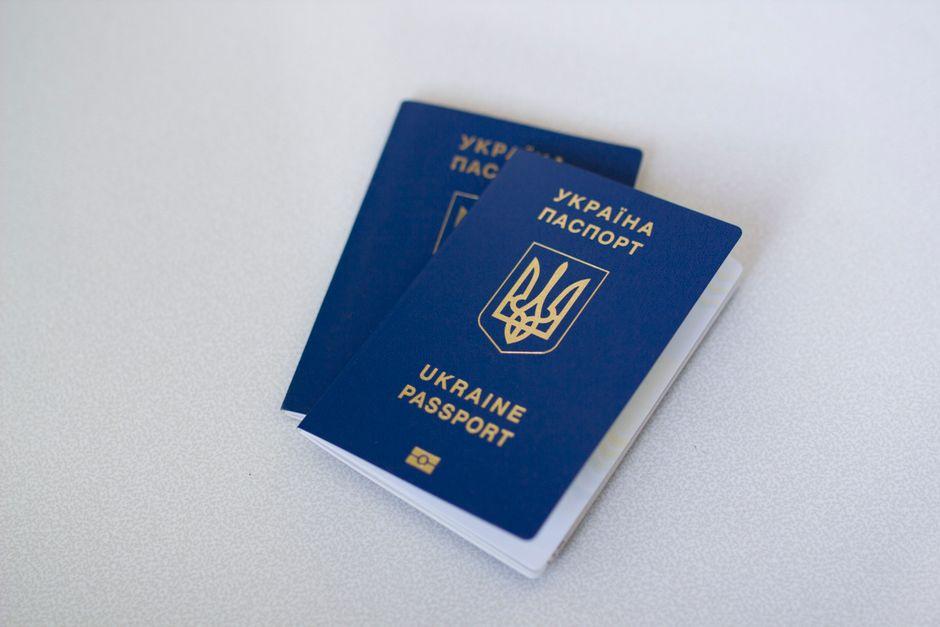
Unlocking Global Mobility’s Understated Power Play with Dominica’s Passport
Dominica’s passport operates in a sphere often overshadowed by flashier alternatives from more hyped Caribbean or European countries, yet it wields a formidable edge precisely because of its understated versatility. Rather than boasting sheer volume in visa-free travel, Dominica makes a compelling case through strategic geopolitical ties and efficient government processing, creating a blend that appeals to discerning global citizens who prioritize ease, reliability, and cost-effectiveness over ostentatious branding. In this light, Dominica challenges the established narrative that a passport’s value is measured solely by its rankings or the number of accessible countries-it underscores that strategic access and a streamlined application process often translate into far more practical global mobility.
However, prospective applicants must parse the subtleties involved. Dominica’s passport excels in offering visa-free or visa-on-arrival access to 140+ countries, including crucial economic hubs in the EU and Asia, but it doesn’t automatically confer luxury in travel experience or instant residency rights abroad-as some competitors might promise. Thus, the choice to pursue Dominica citizenship should be a measured decision: ideal for those who value a pure “mobility passport” that balances cost, processing speed (as swift as 3-4 months), and legitimacy without convoluted residency requirements or exorbitant fees. For investors and families eyeing flexibility without overpaying for prestige, this is a nuanced trade-off worth embracing-one that reframes global mobility less as a status symbol and more as a practical passport to opportunity.
| Aspect | Dominica Passport | Common Alternatives |
|---|---|---|
| Visa-Free Access | 140+ countries, including Schengen & UK | 150+ countries, often with stricter scrutiny |
| Application Processing | 3-4 months, straightforward | 6-12 months, often complex |
| Cost | Relatively low investment threshold | High fees, often $200K+ |
| Residency Requirement | None | Often mandatory physical residency |
- Key takeaway: Dominica’s passport stakes a claim not through volume or flash but through savvy alignment of ease, legitimacy, and broad travel utility.
- Caveat: It’s best suited for global movers who prioritize practical freedom over status-driven citizenship perks.

Beyond the Hype Evaluating the Real Limits of Dominica’s Citizenship Advantages
Dominica’s citizenship-by-investment program often dazzles with promises of unparalleled global mobility and financial flexibility, but beneath the surface lie nuanced realities that demand careful scrutiny. While the passport unquestionably opens doors-visa-free travel to over 140 countries and an attractive tax regime-the true value hinges on individual goals and risk tolerance. For instance, Dominica’s lack of automatic EU or US residency rights contrasts sharply with Caribbean counterparts like St. Kitts or Antigua, which offer more integrated access through robust visa-waiver agreements. Moreover, geopolitical fluctuations and shifting immigration policies can quickly recalibrate the passport’s practical utility, a factor rarely addressed in promotional narratives. Therefore, those chasing pure travel freedom without considering long-term versatility might find the Dominica passport’s advantages somewhat constrained.
Additionally, the trade-offs between cost, speed, and exclusivity require a discerning eye. Dominica’s program is widely praised for its affordability and swift processing times, but these benefits come with implicit compromises. The relative ease of acquisition may dilute exclusivity, potentially impacting the passport’s perceived prestige or secondary market value. A pragmatic evaluation must weigh:
- Cost efficiency versus the scope of diplomatic leverage
- Processing speed against the depth of due diligence and global recognition
- Tax incentives relative to one’s home jurisdiction financial compliance and reporting requirements
| Aspect | Dominica Passport | Typical Caribbean Alternative |
|---|---|---|
| Visa-Free Countries | ~140+ | 150+ |
| EU Access | No | Limited (e.g., Malta, Cyprus) |
| Cost | Lowest | Varies, often higher |
| Due Diligence | Robust but fast | Often more stringent |
In sum, the Dominica passport excels as a practical, cost-effective tool for many seeking expanded horizons, but it is no panacea for global citizenship. Clear-eyed investors benefit from pairing its strengths with parallel strategies-such as maintaining a multi-tier residency portfolio or aligning with jurisdictions that grant direct access to key economic hubs. Rejecting simplistic ‘passport as a golden ticket’ clichés, the savvy approach embraces both the potency and the inherent limitations embedded in Dominica’s citizenship advantages.
Dominica Passport as a Strategic Hedge in an Evolving Geopolitical Landscape
In an era increasingly defined by geopolitical volatility, where alliances shift and economies oscillate, the Dominica passport emerges not merely as a travel document but as a strategic asset. Unlike passports tethered to politically entangled superpowers, Dominica offers a subtle form of geopolitical neutrality-a low-profile yet highly effective hedge. This passport allows holders to sidestep the heavy baggage of global power struggles, providing stable access to over 140 countries without attracting unwanted attention or political scrutiny. While it does not offer the diplomatic clout of a G7 passport, the trade-off is clear: more consistent, less conditional access unburdened by major geopolitical frictions, which is an increasingly valuable currency for mobile individuals in a fractured world order.
However, the true insight lies beyond simple travel convenience. In practice, Dominica’s citizenship functions as a form of “geo-financial diversification,” offering tangible protection against sudden policy shifts such as sanctions, visa revocations, or nationalistic travel restrictions. Prospective citizens and investors should thus weigh the Dominica passport not as a silver bullet for global citizenship but as a calculated portfolio addition-ideal for those looking to balance their global footprints with resilience and flexibility. Critically, it is less about maximum reach and more about consistent, reliable access to strategically significant jurisdictions, including the EU’s Schengen Area and the UK. This nuanced positioning challenges the often sensationalized narrative that more passports equal better mobility, underscoring instead the need for contextual, purpose-driven citizenship planning.
| Feature | Dominica Passport | Typical G7 Passport |
|---|---|---|
| Visa-Free Countries | 140+ | 180+ |
| Geopolitical Exposure | Low | High |
| Renewal & Maintenance Complexity | Low | Moderate to High |
| Strategic Utility | Versatile hedging asset | Political influence & soft power |
Balancing Convenience Against Oversights The Complex Trade-Offs of Caribbean Citizenship
The allure of Caribbean citizenship, particularly through programs like Dominica’s, is often distilled to its promise of convenience: swift processing, relatively low investment thresholds, and broad visa-free access. However, this convenience is not without pitfalls. The balancing act here is subtle yet significant. Governments and applicants alike must navigate the tension between streamlined procedures and the imperative of rigorous due diligence. Where some Caribbean islands have been criticized for lax scrutiny, Dominica distinguishes itself by continuously refining its vetting processes to mitigate reputational risks-yet it stops short of the ultra-stringent due diligence regimes seen in more traditional passports. This calibrated approach recognizes that excessive barriers could stifle demand and accessibility, while insufficient oversight risks international non-compliance and potential exploitation.
Understanding this trade-off reframes one’s judgment of Caribbean citizenship as a layered value proposition rather than a mere commodity. For discerning applicants, Dominica’s passport offers an attractive equilibrium: efficiency coupled with credibility, without veering into the cumbersome bureaucracy of conventional systems. Still, it is crucial to resist the oversimplification that convenience equals compromise. Instead, prospective citizens should prioritize programs that are transparent about their vetting frameworks and adaptive to emerging compliance standards. Below is a comparative snapshot highlighting these trade-offs:
| Aspect | Dominica CBI Program | Common Caribbean Oversights |
|---|---|---|
| Processing Time | Approximately 3-4 months, striking a balance between speed and scrutiny | Some programs boast faster turnaround but risk superficial vetting |
| Due Diligence Rigor | Comprehensive background checks and ongoing compliance updates | Variable; occasionally criticized for inadequate verification and transparency |
| Investment Threshold | Relatively modest, promoting accessibility without diluting program integrity | Lower thresholds that may attract volume over quality applicants |
- Recommendation: Applicants should prioritize programs with demonstrable commitment to integrity rather than the lowest cost or fastest approval.
- Governance Insight: Caribbean states must continue evolving oversight standards to prevent reputational damage without sacrificing global competitiveness.
Rethinking Global Citizenship Paradigms Lessons from Dominica’s Quiet Revolution
Dominica’s approach to global citizenship disrupts the prevailing narrative that citizenship is a static national identity, rooted solely in birthplace or lineage. Instead, Dominica offers a model that redefines citizenship as a dynamic asset-one that can be accessed, leveraged, and optimized for mobility and opportunity. This “quiet revolution” underscores a paradigm shift: rather than citizenship being a unilateral grant, it becomes a strategic resource negotiated between state and individual. However, this model demands critical scrutiny-while the Dominica passport opens exceptional doors, it also raises questions about the commodification of identity and the ethical boundaries of nationality as a tradable good.
The lesson here isn’t that citizenship should be universalized or entirely transactional, but rather that states can innovate within sovereign parameters to produce citizenship models with measurable benefits. Key trade-offs surface: efficient processing and relatively low investment thresholds increase accessibility but risk simplifying complex ties of loyalty and belonging. For those considering Dominica’s passport, the choice hinges on prioritizing strategic flexibility over sentimental nationalism. Ultimately, this case prompts a recalibration of what citizenship means in the 21st century-blending tradition with pragmatic globalism, and challenging us to conceive citizenship not just as a right, but as a modular tool for navigating an interconnected world.
- Traditional Citizenship Paradigm: Fixed, birthright-based, limited global mobility
- Dominica’s Citizenship Model: Investment-enabled, efficient, prioritizes global access
- Trade-offs: Speed and accessibility versus depth of political and social integration
| Dimension | Traditional View | Dominica’s Approach |
|---|---|---|
| Access to Mobility | Limited, often regional | Global reach, visa-free to 140+ countries |
| Acquisition Process | Lengthy, lineage-based | Investment-driven, streamlined |
| Citizenship Meaning | Identity, heritage | Strategic asset, global passport |
Final Thoughts
In a world where borders are both gateways and barriers, the Dominica passport quietly reshapes the narrative of global mobility. Its blend of accessibility, strength, and forward-thinking citizenship policies doesn’t just offer travel freedom-it hints at a future where identity transcends geography. As nations grapple with the evolving meaning of belonging, this best-kept secret invites us to reconsider what citizenship truly means in an interconnected era. Whether a practical advantage or a visionary step forward, Dominica’s passport stands as a subtle but powerful symbol of change on the horizon.




