
In an era where borders blur and identities intertwine, the experience of holding dual citizenship invites a unique journey-one that straddles two nations, two legal systems, and often, two sets of cultural expectations. “Between Two Worlds: Navigating the Complex Realities of Dual Citizenship” seeks to unravel the intricate tapestry of benefits, responsibilities, and challenges that come with belonging to more than one country. This exploration delves beyond the surface of dual nationality, offering a thoughtful look at what it truly means to live in the space where two worlds collide and coexist.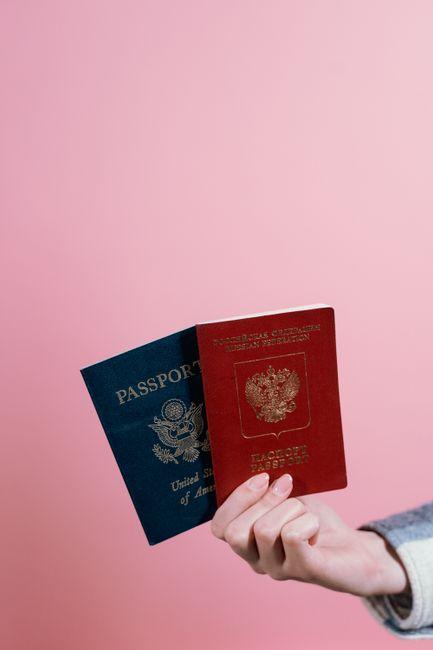
Crossroads of Identity Where Heritage Meets Everyday Life
Imagine Ana, born in Brazil to Italian parents, growing up with the aroma of espresso at home and the samba beats just outside. Her dual citizenship granted privileges-ease of travel, economic opportunities, a richer sense of belonging-but also constant negotiation between two worlds. At family gatherings, the vibrant, close-knit Italian traditions clashed pleasantly yet unevenly with Brazilian spontaneity. Yet, navigating these cultural nuances wasn’t always seamless; Ana recalls a moment at an Italian embassy where her accent sparked a quiet question of authenticity. It was a subtle reminder that identity isn’t just legal status; it’s a daily balancing act of heritage and lived reality, where expectations often meet unexpected personal growth.
This intersection becomes even more complex when it reaches the workplace, schooling, or even healthcare systems. Take John, a dual citizen of Canada and Japan, who faced practical challenges aligning his medical records and insurance plans across two vastly different bureaucracies. His experience highlights key lessons:
- Documentation is more than paperwork: It reflects how each country perceives and integrates your identity.
- Expect administrative surprises: Dual citizenship can complicate rather than simplify interactions with institutions.
- Flexibility and cultural competence are essential: Understanding subtle social expectations can bridge gaps in communication and service.
Below is a simplified look at how John’s dual identities impacted daily processes:
| Aspect | Canadian Side | Japanese Side |
|---|---|---|
| Healthcare Registration | Single national health card; simple reactivation after absence | Complex registration requiring resident status proof and local language fluency |
| Insurance Coverage | Universal, government-backed | Private and company-dependent; navigating can be corporate-culture specific |
| Cultural Expectations | Informal, flexible | Formality and hierarchy valued |
John’s story emphasizes that while dual citizenship can be a powerful bridge, it also places individuals at a crossroads of identity where heritage and day-to-day realities intertwine, each shaping the other in profound and unexpected ways.
The Balancing Act of Legal Rights and Personal Loyalties
Consider the story of Maria, a dual citizen of Canada and Italy, who found herself at a crossroads when her property rights clashed with differing legal expectations. In Canada, property inheritance follows a fairly straightforward process. Yet, in Italy, complex regional laws and familial claims can introduce layers of intricacy. Maria had anticipated a seamless transition, assuming her Canadian legal understanding would suffice. Instead, she faced a delicate balancing act-respecting Italian laws that favored extended family members while honoring her personal loyalty to her immediate relatives in Canada. This tension between legal frameworks and heartfelt bonds underscores a unique struggle of dual citizenship: the law often demands rigid adherence, yet personal loyalties navigate fluid, emotional terrain.
Such situations often lead to moments of difficult decision-making and reflection. Take another example: Ahmed, holding both Egyptian and Swedish citizenships, who during a political protest in Egypt was suddenly reminded that his actions fell under Egyptian jurisdiction despite his Swedish ties. The expectation that his Swedish citizenship would offer protection was challenged by the reality that Egypt’s legal system required him to operate under its laws while on its soil. These contrasting realities highlight the need for awareness, vigilance, and sometimes compromise. Dual citizens must grapple with a complex spectrum of rights and duties-including:
- Legal obligations in each country, which might differ drastically
- Potential conflicts between national laws and personal values or family expectations
- Strategic decisions about when to assert or withhold certain rights
| Scenario | Expectation | Reality | Lesson |
|---|---|---|---|
| Inheritance dispute | Uniform property inheritance process | Varied regional laws and family claims | Understand and plan for local legal nuances |
| Civic protest participation | Protection by second citizenship | Jurisdiction of the country of residence applies | Know legal responsibilities in every jurisdiction |
Stories from Borders Between Two Homelands
Take Amina’s story: born in Germany to Moroccan parents, she spent her childhood perfectly balancing two worlds. At school, her identity was shaped by German customs and language, while evenings were filled with Moroccan cuisine, music, and family stories about a homeland she had never seen. When the time came to apply for citizenship, Amina expected a seamless blend of her two identities. Instead, she found herself navigating intricate legal frameworks and societal expectations on both sides-each demanding a type of loyalty that often felt at odds. Deciding to keep both citizenships was more than a legal choice; it was a negotiation of her belonging and future. For Amina, dual citizenship meant embracing complexity rather than seeking simplicity-learning that the borders between two homelands can be less a barrier and more a bridge if you know where to walk carefully.
Contrast this with Daniel, an American born in Chile to an immigrant family. He initially thought dual citizenship would be the ultimate freedom-easy travel, multiple cultural connections, and broader work opportunities. Yet, the realities of tax obligations, military service requirements, and conflicting property laws soon surfaced as unexpected hurdles. One pivotal moment came when Daniel had to choose which passport to use at a job interview in London, realizing how dual nationality stirred assumptions rather than opened doors. His experience highlights a key lesson: dual citizenship often involves navigating not just legal systems but also the perceptions of others, and it demands proactive decision-making at crossroads where identity and practicality converge.
- Amina’s Lesson: Dual citizenship is a personal journey of identity, as much as it is a legal status.
- Daniel’s Insight: Practical challenges and societal perceptions can complicate the freedoms dual citizenship promises.
| Aspect | Amina | Daniel |
|---|---|---|
| Context | Born in Germany to Moroccan parents | Born in Chile to American parents |
| Initial Expectation | Seamless cultural integration | Complete freedom and opportunity |
| Reality | Complex identity negotiations | Legal and social complications |
| Key Challenge | Balancing cultural loyalties | Managing conflicting obligations |
Lessons in Adaptation from Crossing Cultural Boundaries
When Ana first moved between her Mexican and Canadian homes, she assumed the transition would be seamless-after all, she spoke both languages and had family ties in each country. Yet, her initial enthusiasm quickly encountered moments of cultural friction, like the simple act of greeting neighbors. In Mexico, hugs and long conversations are the norm; in Canada, a brief wave or nod often suffices. Ana’s early missteps opened her eyes to the subtle yet profound expectations embedded in daily interactions. This experience taught her the vital lesson that adaptation isn’t about abandoning one identity for another but learning to navigate *both* with empathy and patience. Each culture carries its own rhythm, and recognizing when to slow down, when to be formal or casual, can transform uncomfortable moments into sincere connections.
Contrast this with Michael’s experience as an American-German dual citizen trying to integrate into German workplace culture. In the U.S., his directness was valued and seen as a sign of confidence; however, in Germany, he found his blunt approach often perceived as rude. Michael’s decision to observe-and ask questions-rather than immediately adapt, led to misunderstandings. But through small adjustments, like adopting indirect phrasing or embracing more formal etiquette, he began gaining colleagues’ trust. His story underlines a critical lesson for anyone crossing cultural boundaries: successful adaptation is a dynamic process involving constant learning and humility. Below is a quick summary of some key adaptation areas that often challenge dual citizens:
| Aspect | Common Expectation | Typical Challenge |
|---|---|---|
| Communication Style | Directness or indirectness | Risk of offense or misunderstanding |
| Social Interactions | Formality and gestures | Feeling out of place or awkward |
| Workplace Norms | Hierarchy and decision-making | Clashes in expectations for autonomy |
| Time Perception | Punctuality versus flexibility | Frustration or perceived disrespect |
When Belonging Becomes a Choice Shaped by Dual Realities
Imagine Sofia, a dual citizen of Brazil and Italy, standing at a café in Rome. She grows nostalgic as she hears the clinking of espresso cups and the soft hum of Italian conversations, yet her heart tugs towards the warmth of Brazilian samba festivals and family barbecues back home. For Sofia, belonging isn’t just geographic; it’s a daily negotiation between two cultures, each pulling her identity in distinct directions. Moments like choosing where to celebrate holidays or deciding which language to speak at family gatherings become micro-decisions loaded with meaning. Sometimes, she finds herself intentionally leaning into one culture to preserve a connection that feels more fragile or neglected, a reminder that belonging isn’t always automatic-it’s often a choice shaped by emotional ties, societal expectations, and lived experience.
Consider the contrast between expectation and reality for many dual citizens: the ideal of seamlessly blending two identities often meets the practical challenge of feeling partly “of” and partly “outside” each culture. Take James, who holds Canadian and Nigerian citizenships. Despite legal rights on both sides, he’s faced unexpected hurdles, like subtle bias in professional settings or a sense of rootlessness when community traditions don’t fully resonate. These experiences highlight how dual citizenship is less about a fixed identity and more about navigating dual realities-sometimes balancing pride and alienation simultaneously. In navigating this terrain, dual citizens consistently balance:
- Legal rights versus social acceptance-where official status does not guarantee cultural feeling of belonging
- Personal identity versus community expectations-deciding which cultural norms to embrace or challenge
- Emotional connection versus practical considerations-choosing where to live, work, or raise a family based on more than just passport power
| Dual Citizenship Aspect | Expectation | Reality |
|---|---|---|
| Sense of Belonging | Feeling equally at home in both countries | Often feeling partially connected or caught between cultures |
| Cultural Identity | Simple blending of traditions | Frequent negotiation and sometimes prioritizing one culture over the other |
| Social Integration | Easy community acceptance | Facing subtle exclusion or misunderstanding |
Ultimately, the choice of where to belong is less about passports and more about the moments and decisions that define daily life. It’s in these small, meaningful negotiations of identity that dual citizens like Sofia and James carve out a sense of home-sometimes reaffirming one world, sometimes bridging both, and often creating a unique space all their own.
In Retrospect
In the intricate dance between borders, laws, and identities, dual citizenship emerges as both a bridge and a balancing act-offering unprecedented opportunities while posing unique challenges. As the world grows ever more interconnected, the experience of living between two worlds invites us to reconsider notions of belonging and allegiance in a globalized age. Navigating this complex reality requires not only legal understanding but also a thoughtful embrace of the multifaceted identities we carry. Ultimately, dual citizenship is more than a status; it’s a journey through the rich, sometimes conflicting, tapestry of cultural, social, and political landscapes that define who we are.




