
In an age where a single document can open doors across continents, the global passport has long been hailed as a symbol of freedom-an emblem of mobility and opportunity in an interconnected world. Yet, beneath its polished laminates and colorful stamps lies a more complex narrative. What was once a straightforward ticket to exploration and exchange has gradually morphed into an instrument of surveillance, regulation, and exclusion. This article delves into the paradox of the modern passport, exploring how its evolution reflects not just the promise of liberty, but also the expanding reach of control in an increasingly monitored global society.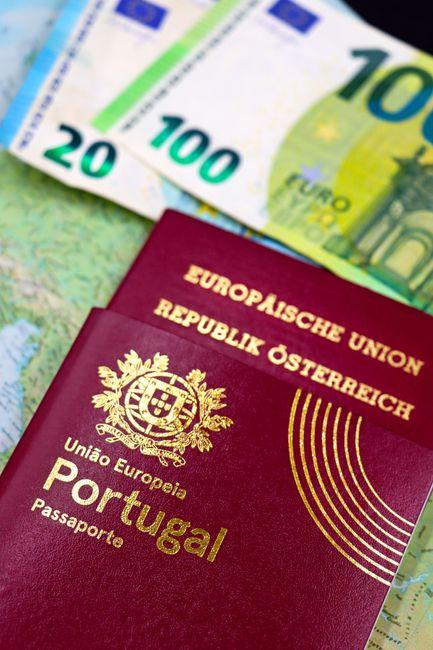
Global Passports as Tools of Surveillance Rather Than Gateways to Liberty
Global passports today are less emblematic of personal freedom and more reflective of an expanding matrix of state and corporate surveillance. While traditionally heralded as symbols of mobility and opportunity, these documents increasingly function as sophisticated tracking tools, embedding biometric data and digital footprints into secure chips that governments can monitor continuously. The promise of seamless cross-border travel is often exchanged for unprecedented visibility into individuals’ movements, affiliations, and even health status. Rather than gateways to liberty, global passports reinforce systems of control, raising urgent questions about privacy, consent, and the balance of power. This transformation neither renders passports inherently nefarious nor suggests abandoning international travel altogether; rather, it demands a keen awareness of the mechanisms of oversight embedded in these supposedly liberating documents.
Crucially, not all surveillance within passport systems is created equal. Distinguishing between surveillance aimed at enhancing security and that which intrudes upon civil liberties is pivotal. While stringent identity verification can curb illicit activities, unchecked data harvesting risks normalizing mass surveillance that disproportionately impacts marginalized groups. Policymakers and travelers alike must negotiate the delicate trade-offs between convenience, security, and individual rights. As a practical step, global passport frameworks should incorporate transparent data governance models:
- Data Minimization: Only essential information should be collected and retained, avoiding overreach.
- Purpose Limitation: Data use should be strictly confined to travel-related verification, with explicit legal safeguards.
- User Control: Individuals must have clearer rights to access, correct, and contest their personal data.
- Independent Oversight: Emerging passport technologies require robust third-party audits to prevent mission creep.
Without these nuanced protections, the global passport risks evolving less as a tool of empowerment and more as an instrument of pervasive control-one that subtly redefines freedom in terms of compliance rather than genuine mobility.
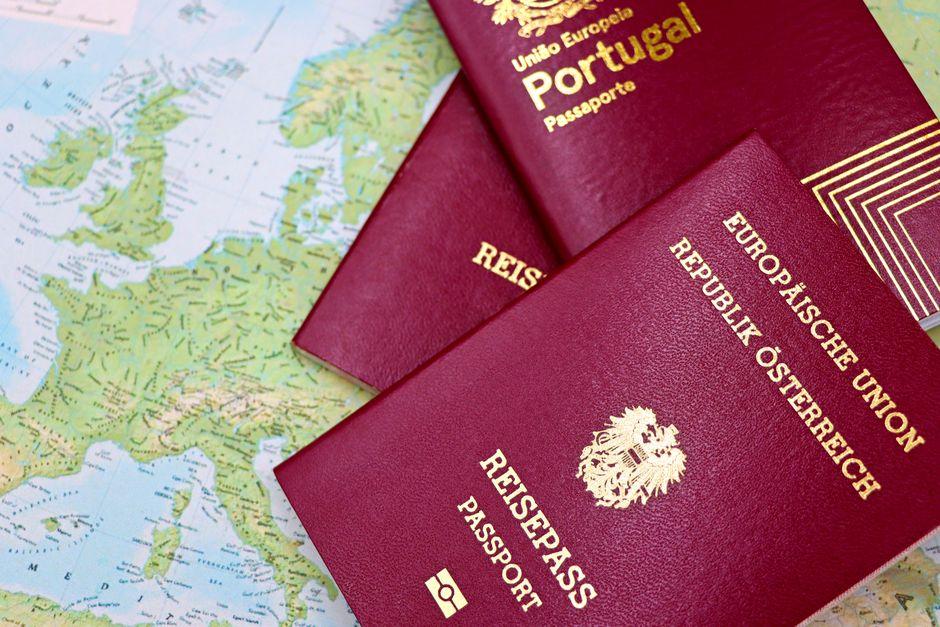
The Illusion of Seamless Travel Concealing New Mechanisms of Compliance
At first glance, the push toward global passports appears to champion frictionless mobility-a seamless gateway bypassing bureaucratic barriers and simplifying international travel. However, this veneer of convenience masks a paradigm shift wherein ease of movement is increasingly tethered to sophisticated surveillance architectures. Rather than pure freedom, travelers are funneled into digitalized corridors embedded with biometric data capture, real-time tracking, and algorithmically driven risk assessments. The global passport becomes less a symbol of unfettered access and more a tool for granular behavioral control, turning mobility into a privilege contingent on compliance with opaque regulatory frameworks. This recalibration of freedom into conditional convenience challenges the assumption that technological innovation in travel equates to empowerment; in reality, it often deepens dependence on state and private actors regulating the flows of people under the guise of security and efficiency.
Recognizing this dual-edged dynamic demands a nuanced approach: embracing the benefits of streamlined travel must be weighed against the erosion of individual autonomy and privacy. Rather than dismissing mobility restrictions outright or celebrating global passports as unalloyed progress, stakeholders should insist on transparent governance models that clarify who wields control and on what legal basis. For instance, implementing rigorous oversight on data usage and advocating for interoperable standards that favor user consent over coerced participation can create healthier trade-offs. Below is a table summarizing the trade-offs involved:
| Aspect | Benefit of Global Passports | Mechanisms of Control | Recommended Safeguards |
|---|---|---|---|
| Mobility | Reduced border delays, simplified procedures | Real-time tracking, biometric gatekeeping | User data ownership, periodic audits |
| Security | Enhanced identification, risk mitigation | Algorithmic profiling, data sharing across jurisdictions | Transparency in algorithms, anti-discrimination policies |
| Privacy | Potential for anonymized data use | Mass data aggregation, potential abuses | Strict data minimization, enforceable redress mechanisms |
This strategic balance requires rejecting the naïve conflation of seamless travel with unfettered freedom and instead advocating for frameworks that empower travelers not only to move efficiently but also to retain meaningful control over their identities and rights.
Reevaluating the Promise of Global Citizenship in an Era of Digital Control
Global citizenship has long been championed as the antidote to parochialism-an emancipatory ideal promising unprecedented liberty, inclusivity, and borderless opportunity. Yet, in practice, this notion is increasingly entangled with pervasive digital oversight that quietly recalibrates freedom toward conditional compliance. The global passport, emblematic of this ideal, no longer functions simply as a travel document but as a node within complex surveillance networks. Ironically, while it extends mobility, it simultaneously intensifies constraints through embedded biometric databases, real-time tracking, and algorithmic gatekeeping. This duality compels a reconsideration: can global citizenship truly symbolize freedom if it hinges on a digital identity perpetually monitored and scored? The social contract has shifted from trust-based exchange to one of preemptive control, where *permission* often masquerades as *privilege*.
Recognizing these trade-offs doesn’t undermine the potential benefits of transnational belonging but demands a sharper, more critical approach. Rather than accepting global citizenship as unconditionally positive, stakeholders must insist on robust governance frameworks that prioritize data sovereignty, transparent algorithms, and equitable access. Policymakers and advocates should distinguish between:
- Enabling tools that facilitate genuine agency and cross-cultural connection;
- Restrictive infrastructures that exert top-down control under the guise of security or convenience.
Ultimately, the path forward requires a dialectic balance-a global citizenship that harnesses technology to empower rather than surveil. This necessitates:
- Embedding privacy by design as a non-negotiable baseline;
- Investing in decentralized identity models that diminish single points of digital authority;
- Fostering public literacy around digital rights to shift power dynamics from institutions to individuals.
| Aspect | Global Citizenship Ideal | Digital Control Reality |
|---|---|---|
| Mobility | Unrestricted movement fostering inclusivity | Conditional access mediated by biometric and AI systems |
| Identity | Self-determined cultural and civic affiliation | Data-driven profiles that can enforce conformity |
| Security | Shared responsibility under mutual trust | Top-down surveillance justified by safety concerns |
Why Enhanced Mobility Comes at the Expense of Privacy and Sovereignty
The allure of enhanced mobility through global passports often obscures a fundamental trade-off: every gain in seamless cross-border movement invariably chips away at individual privacy and national sovereignty. This is not merely a benign exchange but a strategic reshaping of control mechanisms. When passports become repositories of biometric data, continuous travel histories, and even integrated financial and health information, they transcend their traditional role. Instead of solely facilitating movement, they become comprehensive surveillance tools enabling states and multinational entities to monitor, profile, and sometimes preemptively restrict individuals under the guise of security and efficiency. The assumption that mobility equates to freedom overlooks how these data-rich instruments consolidate power in centralized authorities-eroding privacy with minimal public scrutiny.
Moreover, this erosion of sovereignty is less about voluntary state cooperation and more about the coercive dynamics embedded in global mobility frameworks. Countries eager to attract tourism, business, or diplomatic capital often find themselves ceding regulatory autonomy to international standards and private tech platforms that govern passport ecosystems. Balancing these competing interests demands nuanced strategies, such as:
- Demanding transparent data governance frameworks that empower travelers with control over what is shared and stored;
- Negotiating limits on data interoperability between states to prevent unwarranted surveillance;
- Advocating for multinational oversight bodies with balanced representation to ensure no single power dictates mobility terms.
In this complex interplay, enhanced mobility is neither an unequivocal good nor an inherently invasive practice-but a spectrum of outcomes contingent on who wields the digital levers. Recognizing this empowers citizens and policymakers alike to interrogate the convenience-freedom dichotomy with sharper skepticism and craft travel infrastructures that honor both movement and meaningful privacy.
Exploring Pragmatic Alternatives to Universal Passports for Genuine Freedom
- Decentralized Identity Systems: Rather than gravitating toward a monolithic global passport, investing in decentralized digital identity frameworks offers a compelling alternative. These systems empower individuals with sovereign control over their personal data, allowing selective disclosure tailored to context-travel, employment, or healthcare-without a single entity wielding unilateral control. This approach mitigates the inherent risks of centralized surveillance endemic in universal passport models while promoting genuine privacy. However, the trade-off lies in ensuring robust interoperability standards and widespread acceptance, without which decentralized IDs may fragment rather than unify global mobility.
- Conditional Mobility Agreements: Instead of a one-size-fits-all global credential, conditional and reciprocal mobility agreements between nations can embody more nuanced freedom. Such bilateral or multilateral pacts, carefully crafted around shared values like human rights protections and privacy guarantees, respect national sovereignty while enhancing travel freedom. This method acknowledges that freedom cannot be divorced from responsibility and context-respect for local laws and cultural norms remains paramount. The risk, however, is that these agreements may perpetuate exclusivity or geopolitical biases if not transparently negotiated and periodically revisited. True freedom, here, balances flexibility with accountability, rather than assuming borderless access equals autonomy.
| Alternative | Key Advantage | Potential Drawback |
|---|---|---|
| Decentralized Identity | Personal data sovereignty and privacy | Requires global interoperability and trust networks |
| Conditional Mobility Agreements | Context-sensitive freedom respecting sovereignty | Risk of perpetuating geopolitical inequalities |
In Conclusion
As the concept of global passports continues to evolve, what once seemed like a bold leap toward universal freedom now reveals itself as a complex dance of authority and oversight. While the promise of seamless movement across borders captivates our imagination, the underlying systems increasingly serve as instruments of control, quietly shaping who we are and where we can go. In this delicate balance between liberty and regulation, it becomes clear that the future of global mobility will depend not just on lines erased on maps, but on the values and vigilance we bring to the gates that stand between us.




