
In a world increasingly stitched together by shifting tides of migration, the story of human movement is anything but simple. Borders, once rigid lines etched on maps and minds, are becoming living narratives-complex tapestries woven from countless journeys, hopes, fears, and transformations. Borders Unbound: Rethinking the True Impact of Global Immigration Beyond Fear and Promise invites us to look past the polarized headlines and conventional wisdom. It challenges us to explore immigration not merely as a problem to be managed or a promise to be seized, but as a dynamic force reshaping societies in profound and unexpected ways. Here, beyond the dichotomy of fear and hope, lies a landscape rich with nuance, where the real impacts of migration unfold in stories, economies, cultures, and identities across the globe.
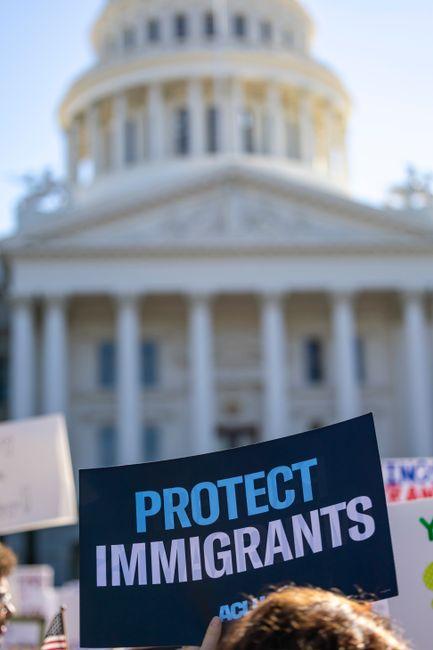
Crossing Lines and Counting Costs Rethinking the Unseen Consequences of Immigration
Immigration’s impact is often pigeonholed into simplistic binaries of economic gain versus cultural threat, yet the true costs and benefits traverse far more complex terrain. Crossing borders is not just a physical act but a pivot point where human aspiration meets systemic constraints, producing both visible and invisible consequences. For instance, while immigrant labor undeniably fuels essential sectors, it simultaneously catalyzes tension over resource allocation and social services. These tensions are not mere side effects but feedback loops that shape policy and public opinion, often skewed by fearmongering narratives. Crucially, we must distinguish between short-term disruptions and long-term societal transformations-where early friction can evolve into enriched diversity and economic innovation. Ignoring these layers simplifies a multifaceted issue into an either/or proposition that neither serves migrants nor host communities well.
To navigate these complexities, policymakers and communities must make deliberate trade-offs instead of clinging to idealistic models that ignore practical limits. A nuanced approach prioritizes creating robust frameworks for integration that go beyond employment to include social cohesion and rights protection. Effective immigration strategy cannot afford to treat undocumented status merely as a legal problem or migrants solely as economic units. Instead, it demands a holistic perspective that acknowledges:
- The cost of delayed integration: Prolonging marginalization increases expenditures on social support and welfare rather than diminishing them.
- The benefits of proactive inclusion: Investing in education and community engagement reduces social friction and elevates productivity.
- The hidden trade-offs of strict border enforcement: Heightened security often displaces migration routes, elevates human risk, and strains diplomatic relations.
Balancing these elements requires policy agility and realism-a recognition that the “unseen costs” of turning away or excluding may well outweigh the upfront financial or political gains presumed by short-term restrictionist measures.
| Factor | Immediate Impact | Long-Term Consequence |
|---|---|---|
| Border Enforcement | Reduced entry points, increased enforcement costs | Shift to riskier migration, elevated humanitarian crises |
| Integration Programs | Initial budget strain, community pushback | Enhanced social inclusion, higher workforce participation |
| Labor Market Flexibility | Potential wage competition, job displacement concerns | Economic dynamism, innovation, and demographic revitalization |

Beyond Hope and Hysteria Navigating the Complex Realities of Global Migration
- Rejecting binary narratives: The discourse on global migration often oscillates between two extremes-unfounded fears of cultural erosion and utopian promises of economic salvation. This dichotomy oversimplifies a fundamentally complex phenomenon. Realistically, migration produces both dynamic opportunities and tangible challenges, which resist easy categorization. For example, while multicultural influx can invigorate innovation and labor markets, it simultaneously strains social infrastructure and necessitates deliberate integration policies. Acknowledging this tension rather than glossing over it is essential for grasping the nuanced realities at stake.
- Trade-offs demand context-specific strategies: Policymakers and societies must navigate competing priorities, balancing humanitarian obligations against national stability, and economic needs against social cohesion. Effective frameworks are rarely plug-and-play; they require granular, localized knowledge and flexibility. For instance, migrant labor can compensate for demographic decline in aging economies but may provoke backlash where public services are overstretched. This calls for calibrated policies combining robust orientation programs, targeted investment in public goods, and transparent communication. Embracing the messiness of this balancing act-rather than fleeing to simplistic platitudes-marks a mature approach to migration governance.
| Common Assumption | Nuanced Reality | Implication |
|---|---|---|
| Migration either threatens or enriches culture. | Cultural change is ongoing and multifaceted, with migration accelerating integration and hybridization processes. | Policies should focus on fostering intercultural dialogue rather than seeking to ‘preserve’ static identities. |
| Immigration invariably overburdens public services. | Service strain depends on investment levels, migration patterns, and existing capacity. | Strategic resource allocation and long-term planning can mitigate pressures effectively. |
| Migration always boosts economic growth. | Economic impact varies-while immigration can fill labor shortages, it may suppress wages in low-skill sectors. | Balanced labor policies should protect vulnerable workers while leveraging immigrant contributions. |
When Open Doors Present Tough Choices Balancing Opportunity with Strategic Control
- Opportunity without Strategy Risks Dilution: The allure of open borders often hinges on the promise of unfettered opportunity-economic growth, cultural exchange, and innovation. However, this enthusiasm can obscure the equally critical need for strategic control. When the gates swing wide without calibrated policies, the resulting influx may overwhelm infrastructure, depress wages in certain sectors, or strain social cohesion. The crux is not whether borders should open, but how they open and under what conditions. Effective immigration frameworks must distinguish between transient labor needs versus permanent population growth, prioritizing long-term societal benefit over short-term gain. Unchecked access risks transforming a strategic advantage into a vulnerability, underscoring the imperative for nuanced gatekeeping rather than binary open-or-closed mindsets.
- Trade-offs Demand Dynamic, Contextual Governance: The binary debate over immigration often masks underlying trade-offs that require granular assessment. For instance, highly skilled migrants drive innovation hubs and boost competitiveness but may exacerbate brain drain in their origin countries. Conversely, low-skilled migration can fulfill labor shortages in essential sectors but might fuel political backlash and social fragmentation if integration is poorly managed. This balance demands governance strategies that are not only adaptive but also transparent about their priorities. Policymakers should consider:
Dimension Opportunity Strategic Control Economic Growth Access to diversified labor pools Preventing market saturation and wage suppression Social Integration Enhancement through cultural plurality Safeguarding cohesion and minimizing polarization Security and Governance Facilitation of global collaboration Risk mitigation against unregulated flows Ultimately, discretion and foresight-not mere openness-shape the benefits of immigration. The challenge lies in transcending overused narratives that pitch immigration as a panacea or a peril, and instead embracing complex, data-driven policies that respect the indivisible link between opportunity and control.
The Mirage of Migration Myths Versus Grounded Perspectives on Border Benefits
- Dispelling Myth #1: Migration drains host economies. Common rhetoric paints migrants as an economic burden, overshadowing their role as critical contributors to innovation, entrepreneurship, and labor market flexibility. While short-term public service costs can spike, these are often offset by immigrants’ tax contributions and the dynamism they introduce to stagnant sectors. However, this benefit is not uniform-skilled migrants tend to generate more immediate fiscal gains, whereas lower-skilled migration’s benefits manifest more diffusely, emphasizing the need for tailored integration policies rather than blanket opposition.
- Myth #2: Migration threatens social cohesion and security. This assumption conflates cultural change with societal decline. Empirical evidence suggests migrant communities often foster cross-cultural exchange, economic revitalization of declining areas, and demographic rejuvenation. Yet, the integration challenge is real; failure to invest in language acquisition, social services, and equitable opportunity can fuel marginalization and resentment on all sides. Thus, a balanced approach calls for proactive social frameworks to manage diversity while countering xenophobic narratives that exploit these concerns for political gain.
| Aspect | Common Assumption | Grounded Reality | Policy Trade-Off |
|---|---|---|---|
| Economic Impact | Migrants drain public resources | Net positive fiscal contributions with uneven short-term costs | Investing in targeted integration vs. immediate austerity |
| Social Cohesion | Migrants cause instability | Potential cultural enrichment and revitalization when managed | Balancing cultural integration efforts with respect for diversity |
Instead of rehashing tired narratives of threat or salvation, immigration policy should embrace complex cost-benefit analyses that recognize migration as neither panacea nor poison. Recognizing nuanced realities demands moving beyond fear-based legislation or utopian open-border ideals and towards pragmatic frameworks that allocate resources efficiently and foster societal resilience. Policymakers should prioritize robust labor market integration, community engagement programs, and transparent communication strategies that debunk myths while enhancing mutual understanding. Only then can borders be thoughtfully unbound-not of chaos or complacency, but of enlightened, evidence-driven governance.
Charting Smarter Policies Exploring Alternatives to Conventional Immigration Paradigms
- Rejecting the Binary: Conventional immigration discourse often pits open borders against strict enforcement, creating a false dichotomy. This simplistic framing obstructs pragmatic policy innovation. Instead, smarter strategies recognize immigration as a spectrum of flows and statuses, each demanding distinct, context-sensitive approaches. For example, temporary work visas addressing seasonal labor shortages can coexist with permanent pathways for integration without necessarily triggering the social strain feared in alarmist narratives. Emphasizing flexible legal statuses rather than hard quotas allows for dynamic adjustments informed by real-time economic indicators and community feedback.
- Prioritizing Adaptive Governance Over Static Rules: Traditional immigration paradigms rely heavily on rigid, one-size-fits-all regulations often detached from shifting socioeconomic realities. Charting smarter policies means embracing adaptive governance, where continuous data monitoring guides iterative policy tweaks. This approach accepts trade-offs-such as balancing border security with humanitarian obligations-and moves beyond reactive politics to proactive scenario planning, ensuring resilience against unforeseen migration shocks. Such mechanism designs must:
- Incorporate digital platforms for transparent visa management
- Integrate cross-sectoral intelligence (labor markets, health, education) for holistic impact assessment
- Embed flexible pathways between statuses to reduce irregular migration incentives
| Policy Approach | Key Strength | Key Limitation | Recommended Use Case |
|---|---|---|---|
| Static Quotas | Predictability for planning | Inflexible; poor responsiveness | Low volatility contexts |
| Flexible Pathways | Adapts to migrant intentions | Complex administration | Diverse workforce needs |
| Technological Integration | Efficiency and transparency | Digital divide risks excluding | High-volume migration flows |
Final Thoughts
As the chapters of our shared story unfold beyond the neat lines on maps, it becomes clear that the true impact of global immigration cannot be confined to simple narratives of fear or promise. Instead, it calls for a deeper understanding-one that embraces complexity, honors humanity, and reimagines borders not as barriers, but as meeting points where diverse journeys converge. In rethinking immigration through this expansive lens, we move closer to a world where connection, resilience, and empathy define the borders unbound.




