
In an age where identities intertwine across maps and cultures, holding multiple citizenships is more than a legal status-it is an intimate journey through unseen borders within oneself. This intricate tapestry of belonging weaves together diverse languages, histories, and expectations, crafting a silent dialogue between the places we call home. Navigating these internal frontiers uncovers a landscape of quiet complexities and personal horizons, inviting us to explore how layered identities reshape notions of self and community in a world forever in motion.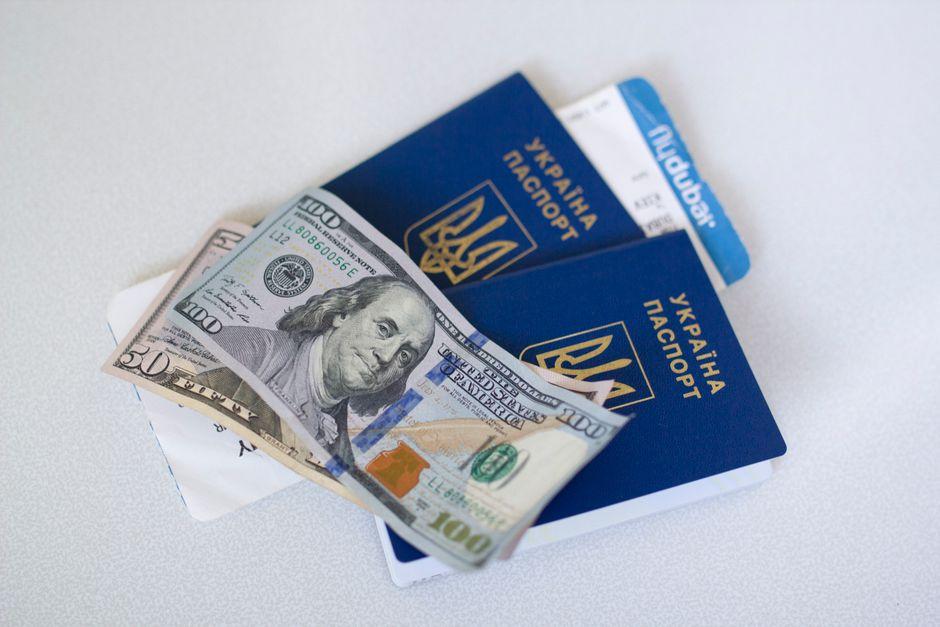
The subtle negotiations between identity and allegiance
For many holding multiple citizenships, the dance between identity and allegiance plays out quietly in the everyday. Take Amal, who grew up in Canada with Egyptian and French passports. Her heart leaned naturally toward the cultural rhythms of Cairo summers and Parisian winters, yet she found herself pausing during national holidays in Vancouver, where the rituals felt more like performances than expressions of belonging. The subtle negotiation wasn’t just about flags or legal documents; it was about where she felt she belonged during moments that demanded loyalty-say, when deciding whether to support a Canadian policy that clashed with values she held from her Egyptian upbringing. These micro-decisions, often overlooked, ask more profound questions: Which part of yourself do you prioritize when worlds collide? Which allegiances feel authentic, and which are bound by obligation? Amal’s story shows us that identity is not a fixed point but a continuously shifting terrain, shaped by context, emotion, and the quiet choices nestled between grand declarations and daily life.
Consider the case of Marco and Lina, siblings born in Italy and raised in Brazil, each holding dual citizenship. When Marco planned to enlist in Italy’s military service, he wrestled with expectations from his extended family steeped in patriotic pride. Lina, on the other hand, found her allegiance tested when Brazil introduced policies that conflicted with her social justice ideals rooted in Italian heritage. Their experiences highlight how allegiance can be multifaceted, sometimes contradictory. Key moments of decision-making often reveal unexpected lessons:
- Identity is fluid: Both Marco and Lina realized that allegiance might shift depending on which community they engaged with at a given time.
- Allegiance involves trade-offs: Choosing to support or oppose state policies can mean risking criticism within at least one cultural circle.
- Personal values sometimes override formal ties: Neither sibling felt their citizenship alone dictated loyalty; rather, their conscience played a crucial role.
| Aspect | Marco | Lina |
|---|---|---|
| Primary Conflict | Military service obligation vs. personal conviction | Policy disagreement with homeland vs. cultural identity |
| Resolution Strategy | Open dialogue with family, choosing service as personal growth | Advocating change while embracing heritage |
| Lesson Learned | Allegiance can incorporate complexity, not all or nothing | Identity enables critical engagement, not blind loyalty |
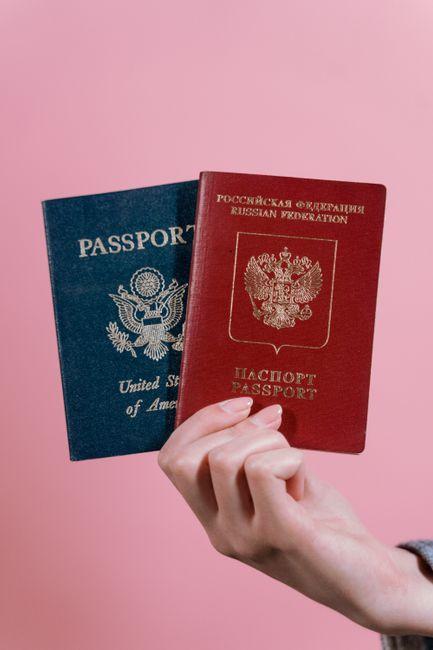
When paperwork meets daily life: nuances in multiple citizenship experiences
Consider Ana, born in Brazil but raised in Germany, who recently faced a paperwork dilemma when renewing her passports. Holding citizenship in both countries seemed straightforward on paper, but when it came time to travel for work, the overlapping renewal timelines caused unexpected stress. Her German passport was expiring just weeks before her Brazilian one, yet each country required proof of residency or tax documents that weren’t automatically transferable between systems. Ana had to navigate a maze of appointments, translations, and bureaucratic hoops, learning that dual citizenship often means double the paperwork and delicate timing. This scenario isn’t unique-many double citizens find their personal calendars synced not just to their lives but also to the varying administrative rhythms of their countries.
Moreover, expectations around the perks of multiple citizenship can blur with reality. Take Tariq, who assumed that holding a Canadian and Lebanese passport would make international travel seamless. Instead, he discovered that Lebanon’s stricter security protocols meant additional visa requirements, offsetting the freedom he had expected. His split identity led him to constantly weigh which passport to use depending on the destination, the nature of his visit, and even political climates, an ongoing decision matrix often invisible to outsiders. Through these experiences, many learn that multiple citizenship isn’t a binary or purely beneficial status-it’s a tapestry woven with both opportunity and constraint, requiring ongoing attention and adaptability.
| Aspect | Expectation | Reality | Lesson Learned |
|---|---|---|---|
| Passport Renewal | Simple, coordinated process | Conflicting document requirements and timing | Allow extra time and understand both administrations’ processes |
| Travel Freedom | Easy global access | Restrictions vary by passport used | Research visa rules carefully before traveling |
| Identity Use | Fluid navigation between countries | Complex decisions on which citizenship to highlight | Adapt identity usage based on context and personal goals |
Crossing internal territories where cultures converge and sometimes collide
Imagine Ana, who holds citizenship in both Brazil and Italy. On paper, her dual nationality opens doors-work opportunities, travel ease, and family connections. Yet, when she moves between her two homes, she often encounters subtle cultural dissonances within herself. At a family gathering in Rome, her casual Brazilian warmth-animated gestures and unfiltered enthusiasm-clashes quietly with the Italian expectation of measured restraint. This isn’t about right or wrong but about navigating the internal territories where these cultures overlap and sometimes friction emerges. Ana’s experience mirrors many who find themselves toggling between identities: one moment, fluent in the warm, collective spirit of Brazil; the next, adjusting to the poised individualism celebrated in Italy. It’s in these personal crossroads that the real complexity of multiple citizenships unfolds, shaping not just external belonging, but internal reconciliation.
Decision points often reveal unexpected lessons. Consider Amir, a dual citizen of Canada and Iran, who faced a dilemma when invited to represent Canada in an international conference on Middle Eastern diplomacy. The honor came with an internal stir-how much of his Iranian heritage should he emphasize or downplay? His initial expectation was clear-cut: champion his Canadian identity proudly. Yet, the experience taught him that his story was richer and more nuanced, and that embracing the tensions between his cultural worlds brought depth rather than division. Over coffee with fellow attendees, he shared anecdotes from both cultures, finding common ground rather than conflict. This moment illustrated the invisible work of balancing multiple citizenships-a quiet negotiation between expectation and reality, belonging and individuality, convergence and respectful difference.
Moments of decision that redraw personal and legal boundaries
Consider Ana, who holds dual citizenship between Spain and Argentina. When a family emergency pulls her to Buenos Aires abruptly, she learns that accessing certain healthcare benefits tied to her Argentinian ID requires more than just holding the passport-it involves navigating local residency laws and documentation that even sometimes conflict with her Spanish health coverage. This moment of decision-to establish residency officially in Argentina or rely solely on Spain’s support systems-forces Ana to recognize the fragile balance between her legal identities and personal needs. The expectations of fluid movement clash with bureaucratic realities, revealing a legal border redrawn not on maps, but within paper trails and personal choices.
Such dilemmas frequently emerge around voting rights as well. Take Kenji, a dual citizen of Canada and Japan, who moved back to Tokyo for work. Expecting to participate in Japanese elections as easily as he does in Canadian municipal votes, he discovers the intricate restrictions around dual nationality and voting eligibility in Japan. The decision to cast ballots, to stay politically active in both homelands or specialize in one, complicates his sense of belonging and civic duty. It’s in these quiet, high-stakes moments-where legal frameworks meet personal identity-that the abstract notion of citizenship transforms into something deeply practical and poignantly personal.
| Scenario | Decision Point | Legal Boundary Affected | Personal Impact |
|---|---|---|---|
| Ana’s healthcare access | Establish residency in Argentina or rely on Spain’s health system | Healthcare entitlement and residency laws | Navigating dual system benefits, emotional stress during crisis |
| Kenji’s voting rights | Choose to participate politically in one or both countries | Voting eligibility under dual citizenship laws | Sense of civic identity, political belonging |
Reflection on belonging beyond passports and official documentation
Maria’s story is one many who hold multiple citizenships quietly understand. Born in Brazil, raised largely in Canada, and holding Italian citizenship through her grandparents, she often found herself caught between what official documents promised and what her lived reality felt like. At times, despite the halls of bureaucracy recognizing her as “officially” belonging to multiple countries, her sense of belonging was tethered more to moments-gathering with family during Brazilian festivals, navigating job interviews in Toronto, or feeling the pull of ancestral roots on a quiet stroll through Rome’s cobblestone streets. These personal intersections of identity revealed that official passports are merely gateways, not the destinations of belonging.
In one particularly revealing moment, Maria had to decide where to settle after completing her education. Expectations from family and society leaned toward a “logical” choice: leveraging her European citizenship to build a career in the EU. Yet, the reality was nuanced. Despite the ease of movement and work that her Italian passport provided, her emotional and social connections in Canada were stronger, shaping her decision ultimately to stay. This contrast between legal convenience and emotional resonance underscores the complexity of dual-or multiple-citizenship:
| Aspect | Expectation | Reality |
|---|---|---|
| Sense of Belonging | Equally split or convenient | Rooted in meaningful experiences and relationships |
| Decision Factors | Legal benefits and opportunities | Emotional comfort and social ties |
| Identity Expression | Clear and definitive | Blended and fluid |
- Belonging is less about the stamp on your passport and more about the continuous tapestry of personal stories, networks, and cultural engagements.
- Navigating multiple citizenships demands acknowledging the internal borders-those quiet moments of choice about where you feel “at home.”
- It highlights a journey of reconciling legal definitions with emotional truths, where belonging is not granted by documents but earned through lived experience.
The Conclusion
As we close this exploration of the intricate landscapes shaped by multiple citizenships, we are reminded that borders are rarely just lines on a map. They trace the contours of identity, belonging, and choice-quiet yet profound markers in the personal geography of those who navigate between worlds. Holding multiple citizenships is less a simple legal status and more a continuous journey, charted not only by external boundaries but by the horizons within. In this subtle interplay of rights and responsibilities, heritage and aspiration, each individual crafts a unique narrative-one that redefines what it means to belong, beyond the borders we see.




