
In a world where lines on maps have long defined identities and allegiances, the concept of borders is increasingly revealing its fluidity. The story of migration-often told through the lens of crisis and emergency-deserves a fresh perspective that moves beyond alarmist headlines and humanitarian flashpoints. As millions traverse, negotiate, and sometimes challenge these shifting boundaries, the reality of global immigration emerges not as a moment of rupture, but as a continuous, complex dialogue between peoples, places, and possibilities. This article invites readers to reconsider immigration through a broader, more nuanced lens-one that embraces change, recognizes interconnectedness, and questions the simplistic narratives that too often dominate the discourse on borders in flux.
Beneath the Headlines Exploring the Unseen Complexities of Border Policies
- The common narrative of border policies as mere reactive measures to crises oversimplifies the multifaceted realities shaping migration management. Border regulations frequently serve competing objectives: security, economic optimization, humanitarian obligations, and diplomatic leverage. For instance, a policy designed to enhance national security can simultaneously hinder labor market fluidity or exacerbate human suffering, illustrating the inherent trade-offs often glossed over in mainstream discourse. Recognizing this intricate balancing act challenges the reductive portrayal of borders as fences between “us” and “them” and invites a more sophisticated appreciation of border governance as a dynamic field of policy negotiation frequently invisible to public scrutiny.
- A critical yet underexplored dimension pertains to how the enforcement mechanisms and legal frameworks interact with broader socio-political conditions. While tightening borders may be perceived as bolstering sovereignty, such measures can inadvertently fuel informal migration routes, empowering exploitative networks and eroding state control in unintended ways. Alternatively, policies emphasizing integration and cross-border cooperation, though politically riskier in the short term, offer pathways for sustainable solutions by addressing root causes and fostering resilience on both sides. This complexity calls for nuanced recommendations that prioritize multi-layered strategies, such as:
- Reframing border security within a human-centric paradigm that equally values legal mobility and protection of vulnerable groups
- Investing in data-driven, context-specific frameworks instead of one-size-fits-all approaches
- Prioritizing regional diplomacy to mitigate forced displacements before crisis points escalate
| Policy Focus | Short-term Impact | Long-term Risks |
|---|---|---|
| Strict Enforcement | Reduced arrivals, perceived national security | Rise in irregular crossings, human rights concerns |
| Open Mobility Initiatives | Increased legal migration, economic dynamism | Political backlash, strain on public services |
| Regional Cooperation | Shared resources, coordinated response | Dependence on multilateral diplomacy, slow implementation |
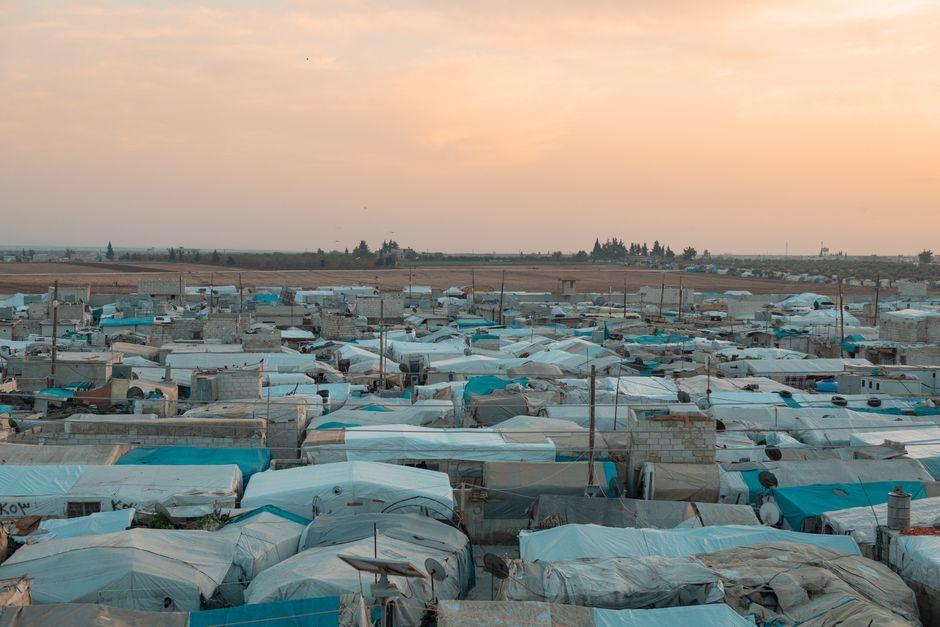
Challenging the Myth of Permanent Crisis in Migration Flows
- Myth of Permanence: The prevalent narrative portrays migration as a relentless “crisis” – a permanent state of overwhelm and emergency. This framing flattens complex demographic trends into a binary of chaos versus control, obscuring the natural fluctuations and structural drivers behind migration flows. Migration is inherently dynamic, shaped by changing economic needs, geopolitical shifts, and evolving social networks rather than a monolithic, ongoing emergency.
- Nuanced Distinctions: While sudden spikes in migration can strain infrastructure, they do not reflect a perpetual state. Instead, most migration flows exhibit patterns of normalization and integration over time. Policymakers must differentiate between transitory surges and long-term systemic movements, recognizing that reactionary crisis policies often exacerbate challenges instead of addressing root causes like inequality, conflict, and climate pressures.
| Aspect | Crisis Narrative | Reality-Informed Perspective |
|---|---|---|
| Flow Nature | Constant, uncontrollable surges | Cyclical and influenced by identifiable triggers |
| Policy Response | Emergency measures, border closures | Adaptive, long-term development and integration strategies |
| Social Impact | Heightened public anxiety and polarization | Potential for mutual benefit through managed inclusion |
Addressing migration through the lens of permanent crisis imposes a false trade-off between national security and humanitarian responsibility, often justifying exclusionary policies that hinder integration and economic contribution. Rather than defaulting to securitization, governments and civil societies should invest in scalable, context-specific frameworks that leverage migration as a resource-prioritizing flexible labor market designs, cross-border cooperation, and pathways to legal status. This shift demands rejecting simplistic, alarmist rhetoric in favor of measured analysis that respects migrants’ agency and the interconnected realities of global change.
Finally, dismantling the crisis myth requires an honest reckoning with data and narratives. Media and policymakers must recalibrate their language to reflect the temporality and predictability of migration flows, encouraging public discourse that is informed rather than inflamed. By embracing migration’s fluidity and complexity, the international community can move beyond reactionary cycles and contemplate border policies that are simultaneously humane, practical, and future-ready-recognizing that stability in migration is less about fortifying walls and more about building bridges.
Balancing Security and Humanity Lessons from Alternative Immigration Frameworks
- Security and humanity are not inherently opposing ends but exist on a continuum where one must not eclipse the other. Alternative immigration frameworks like Canada’s Express Entry or Portugal’s humanitarian visa emphasize precise risk assessments without defaulting to blanket restrictions. These models prioritize integration and long-term stability over short-term securitization, acknowledging that overly securitized borders risk undermining the very social cohesion they intend to protect. The assumption that tightening borders equates to security ignores the paradox where exclusion fosters irregular migration pathways-ultimately less controllable and more perilous.
- However, the trade-offs in relaxing rigid security protocols manifest in increased resource demands for vetting and social support infrastructures. A nuanced balance demands adaptive frameworks that scale resources dynamically in response to migration fluxes, integrating technology with human judgment rather than substituting one for the other. This requires political courage to invest in preventive diplomacy and international cooperation rather than reactionary enforcement. The optimal strategy resists one-size-fits-all security templates and instead deploys culturally attuned, case-specific evaluations that respect asylum seekers’ dignity while robustly addressing legitimate state security concerns.
| Framework Aspect | Traditional Security-First Model | Alternative Approach |
|---|---|---|
| Risk Assessment | Broad profiling, assumptions-based | Individualized, evidence-based analysis |
| Humanitarian Considerations | Often peripheral | Integrated into decision-making |
| Resource Allocation | Focused on enforcement | Balanced between enforcement and integration support |
| Long-Term Outcomes | Short-term deterrence, higher irregular migration | Enhanced integration, reduced irregularity |
Confronting the Hard Truths of Sovereignty and Global Mobility
Global mobility is often framed as an unqualified good or a straightforward human right; however, this perspective oversimplifies the complexity embedded in national sovereignty. Sovereignty is not merely a relic of the past or a tool of exclusion but a dynamic mechanism through which states negotiate identity, security, and economic stability. Crucially, sovereignty demands that we acknowledge the tension between a state’s legitimate interest to control its borders and the ethical imperative to accommodate human mobility. This tension resists a binary framing of “open” versus “closed” borders and instead calls for a dialectical understanding: sovereignty must be flexible enough to adapt to global flows yet firm enough to maintain a polity’s coherence and trust in its institutions. The hard truth is that any attempt to fully disentangle sovereignty from border management risks either undermining national cohesion or perpetuating exclusionary practices under the guise of control.
Confronting this reality requires distinguishing between security, economic, and humanitarian dimensions of immigration policy with greater precision. For instance, policies aimed solely at curbing illegal crossings often conflate threats to security with economic migration, leading to blunt instruments that neither enhance safety nor optimize economic integration. A useful framework to analyze these trade-offs is:
| Dimension | Primary Concern | Policy Risk | Potential Remedy |
|---|---|---|---|
| Security | Preventing threats to public order | Over-policing, racial profiling | Targeted intelligence with judicial oversight |
| Economic | Balancing labor market needs | Exploitation, wage suppression | Dynamic visa quotas tied to sectoral demands |
| Humanitarian | Protecting refugees and asylum seekers | Politicization, resource strain | Multilateral burden-sharing agreements |
- Recommendation: States and international bodies must shift toward adaptive immigration frameworks that treat sovereignty as a negotiation tool-not a zero-sum barrier-to enhance global mobility while safeguarding national interests.
- Challenge: We must discard the overused assumption that border control and human mobility exist in simple opposition, and instead embrace policies founded on strategic flexibility, nuanced categorization, and transparent oversight.
Rethinking Policy Choices Through Nuanced Comparisons and Strategic Trade-offs
- Moving beyond binary policy frameworks: Immigration policy debates often frame choices as either open or closed borders, security versus humanitarianism, or economic benefit versus social strain. Such dichotomies obscure the reality that effective immigration management lies in balancing these seemingly contradictory concerns through nuanced, context-specific strategies. For example, categorical emphasis on border fortification sacrifices potential socio-economic gains from skilled migration pipelines. Conversely, policies favoring broad liberalization without calibrated controls risk fueling societal backlash and undermining integration. The path forward requires acknowledging immigration as a dynamic system where selective openness and robust internal governance coalesce rather than oppose.
- Trade-off analysis as a guiding principle: Policymakers must rigorously assess the costs and benefits of targeted immigration policies within their unique geopolitical and economic landscapes. Until now, many frameworks overlook how measures such as temporary worker programs, asylum processing reforms, and community-based integration initiatives interact and generate downstream effects-both intended and unintended. This calls for deploying multidimensional impact assessments rather than politically expedient, one-dimensional metrics.
Policy Element Potential Benefit Potential Trade-off Selective Skilled Migration Economic growth, innovation Social tension, brain drain in origin countries Strict Border Enforcement Perceived national security Humanitarian concerns, underground economies Expanded Asylum Access International legal compliance Resource allocation strain, political polarization
To Conclude
As the world continues to shift beneath our feet, the story of borders defies the simplicity of crisis and conflict. In reimagining immigration beyond headlines and fear, we uncover narratives of resilience, connection, and transformation that challenge old paradigms. Borders, after all, are not just lines on a map but living spaces shaped by history, hope, and human complexity. Embracing this fluidity invites us to move beyond reaction and towards understanding-a step that could redefine not only who we welcome, but who we choose to become.




