
In an increasingly interconnected world, the very idea of universal mobility-holding a passport that grants seamless access to every corner of the globe-seems like an inevitable milestone on humanity’s journey toward unity. Picture a future where borders blur and travel becomes as effortless as a breath, where the barriers that once defined nations dissolve in the face of shared human experience. Yet, despite advances in technology and diplomacy, the dream of global passports remains elusive-a mirage shimmering on the horizon rather than an approaching reality. This article delves into the complex web of political, economic, and cultural forces that sustain the boundaries of movement, revealing why universal mobility is far from a guaranteed destination in our global narrative.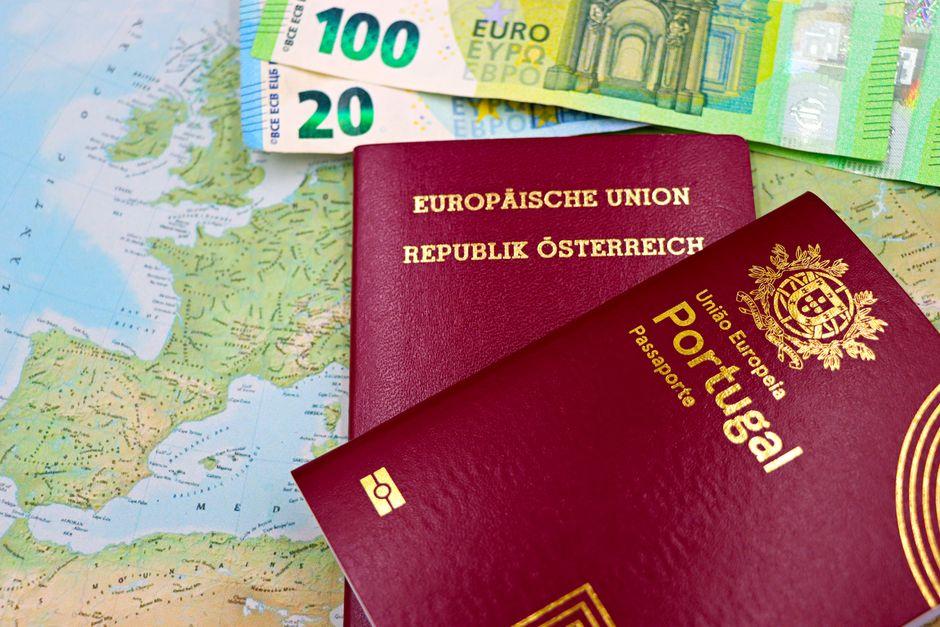
Rethinking Global Passports through the Lens of Geopolitical Realities
At its core, the passport is not merely a travel document; it is a geopolitical symbol, a meticulously engineered contract between the individual and their state that reflects asymmetrical power dynamics on a global scale. The seductive ideal of a universal passport-one that obliterates borders and frictionless mobility-is often heralded as the natural progress of globalization. Yet such a vision neglects the enduring reality that sovereignty is jealously guarded, and borders remain strategically manipulated tools for maintaining economic advantage, security postures, and cultural identity. The very notion of “universal mobility” presupposes a convergence of political will and mutual trust among nation-states that history relentlessly disproves. Rather than viewing passports as cumbersome relics awaiting obsolescence, we should recognize them as active instruments reinforcing global stratification, where freedom of movement is commodified and selectively distributed.
When rethinking passports through geopolitical realities, it’s critical to move beyond binary assumptions of “open” versus “closed” borders and instead examine the trade-offs each system imposes. For example:
- Open mobility risks undermining national security frameworks and inflaming domestic political tensions, especially in regions grappling with mass displacement or ideological conflict.
- Restrictive regimes may stifle economic innovation and cultural exchange but deliver controlled narratives and demographic management favored by some states.
Rather than aspirational universalism, a nuanced interim strategy might embrace regional mobility passports empowered by digital diplomacy-tools harmonizing selective openness with stringent governance. This approach doesn’t erode sovereignty but reimagines cooperation through pragmatic alliances reflecting shared geopolitical interests. A universal passport-if ever achievable-will need to be less about dissolving borders and more about recognizing the differentiated forms of membership in a multiplex world order.
| Passport Model | Geopolitical Trade-offs | Potential Outcomes |
|---|---|---|
| Universal | High trust among states, reduced sovereignty | Unrealistic near-term; risks state pushback |
| Regional | Selective openness, shared governance | Pragmatic, feasible, fosters cooperation |
| Nationalistic | High control, isolationist tendencies | Limits mobility, sustains power asymmetries |

The Illusion of Universal Mobility Amid Security and Sovereignty Concerns
The notion of universal mobility-where passports act as mere formalities rather than gatekeepers-collides head-on with the enduring imperatives of security and sovereignty. While technology might offer frameworks for streamlined identity verification or blockchain-secured travel documents, these advances cannot sidestep the hard reality that nations prioritize control over the flow of people as a matter of existential governance. Security concerns are not transient bureaucratic hurdles but fundamental functions that shape immigration policies. This means no matter how sophisticated or harmonized systems become, states will inevitably retain selective levers to regulate entry, balancing openness with instinctive self-preservation. The trade-off here is stark: enhancing traveler convenience often comes at the cost of diluting national gatekeeping tools, which governments are reluctant to fully cede without clear, quantifiable security assurances.
Moreover, sovereignty is not a negotiable relic but a dynamic assertion of statehood in an increasingly volatile geopolitical landscape. Universal mobility, in this context, risks eroding the nuanced layers of diplomatic leverage embedded in passport power disparities. Rather than pursuing an illusory global passport, policymakers might better focus on targeted multilateral agreements that recognize mutual security needs and shared economic interests. Pragmatism demands recognizing that any push towards universality has to be deliberately uneven, privileging reciprocity over egalitarianism. The real innovation will come from crafting flexible, context-specific frameworks that respect national prerogatives while enabling meaningful corridors of mobility-an intricate dance far removed from the simplistic ideal of universal, frictionless travel.
Balancing Freedom and Control in an Era of Increasing Border Complexity
In an era where borders are simultaneously porous and policed with unprecedented sophistication, the quest to balance individual freedom of movement with national control is more complex than ever. The prevailing narrative envisions a future where mobility is seamless, but such visions often underestimate the evolving geopolitical matrix that governs cross-border movement. States are not merely defensive barriers; they are also active agents managing competing demands: economic vitality relies on the influx of talent and capital, while security concerns push for more rigorous surveillance and selective restrictions. This delicate interplay means any universal mobility framework must reconcile these fundamentally opposing incentives rather than simply dismissing control as an anachronism. The assumption that freedom and control are mutually exclusive is a false binary; instead, their relationship is dynamic and contingent on trust, technological capacity, and geopolitical context.
Crucially, a smart border policy cannot be reduced to a binary scale of open versus closed. To succeed, it demands nuanced, multi-layered governance that differentiates between categories of travelers, purposes, and risk profiles. Consider a strategic trade-off table illustrating this complexity:
| Dimension | Increased Freedom | Increased Control | Trade-Off Implication |
|---|---|---|---|
| Security | Faster, less intrusive entry | Enhanced screening, biometrics, deep background checks | Heightened risk of oversight vs. potential human rights concerns |
| Economic Access | Open talent mobility, fewer visa constraints | Quota systems, economic preference criteria | Boosts innovation but risks xenophobia and labor protectionism |
| Privacy | Minimal data collection | Extensive personal profiling and data sharing | Protects rights at expense of law enforcement efficacy |
- Policy agility: Adapting controls in response to shifting political and economic dynamics is essential, not optional.
- Technological prudence: Deploy automation and AI with care to avoid bias and erosion of civil liberties.
- International collaboration: Trust frameworks and data-sharing protocols must be prioritized over unilateral, opaque practices to prevent fragmenting the global mobility system.
By embracing complexity rather than glossing over it, the discourse on global mobility can move beyond utopian ideals or dystopian warnings toward practical, context-specific strategies that respect both the individual’s aspirations and the state’s legitimate concerns.
Why Technical Solutions Fall Short of Overcoming Deep Structural Barriers
Technical innovations-biometric passports, blockchain registries, AI-powered border controls-often receive disproportionate credit as potential catalysts for universal mobility. Yet, these tools are merely facilitators, not cure-alls. They streamline documentation and enhance security, but they cannot dismantle the underlying socio-political architecture that restricts movement. The assumption that technological sophistication inherently fosters inclusion overlooks entrenched power asymmetries; states control mobility not just through border checks but as an extension of sovereignty, security posturing, and economic protectionism. In other words, passports are not just identity tokens; they are instruments of geopolitical stratification, wielded to shape and preserve unequal global hierarchies. Without addressing these structural prerogatives, tech improves efficiency but leaves the original barriers-fear, distrust, economic nationalism-intact.
Furthermore, an overreliance on technology risks prioritizing technical “fixes” over complex policy dialogues and ethical considerations. For example, enhancing biometric databases can improve fraud detection, but it may simultaneously exacerbate privacy infringements or reinforce systemic biases against marginalized populations. The trade-off between control and freedom becomes sharper in this light: faster, more secure passports do not equate to increased rights for the stateless or economically disenfranchised. To move closer to universal mobility, policymakers must pivot from fetishizing digital innovations toward nuanced reforms that tackle visa regimes, labor market protectionism, and diplomatic inequities-none of which can be automated. A smart, realistic approach accepts technology as a necessary, but insufficient, complement to deep institutional and ideological transformation.
| Aspect | What Tech Solves | What Tech Cannot Solve |
|---|---|---|
| Document Verification | Improves speed and accuracy | Does not challenge visa policies or eligibility criteria |
| Border Security | Enhances fraud detection and biometric matching | Does not reduce political restrictions on migration |
| Data Transparency | Enables better record-keeping and monitoring | Does not guarantee fair access or remove geopolitical hierarchies |
Navigating Global Mobility Strategies Beyond the Promise of One World Credential
Global mobility strategies that lean heavily on the notion of a universal credential-the so-called “One World Credential”-fail to apprehend the complex geopolitical, economic, and social realities shaping migration and travel. The assumption that a single global travel document would effortlessly erase borders underestimates the persistent sovereignty of states over their populations and the increasing stratification of citizenship value itself. Rather than chasing the chimera of one credential to rule them all, corporations and policymakers should focus on dynamic, adaptable mobility frameworks capable of responding to the uneven pace of international cooperation and emerging security imperatives. This means investing in multilayered solutions such as interoperable digital identities, bilateral or plurilateral mobility agreements, and contextual risk-assessment platforms that respect state-specific regulatory ecosystems rather than trying to homogenize them prematurely.
However, embracing such complexity doesn’t preclude the need for simplification; it demands smarter trade-offs. For example:
| Approach | Benefit | Trade-Off |
|---|---|---|
| Bilateral Travel Agreements | Robust, enforceable, and context-sensitive | Limited scalability and potential exclusivity |
| Unified Digital Travel IDs | Streamlines verification and user experience | Requires high tech infrastructure and global trust |
| Global Visa Facilitation Programs | Broadens access and fosters economic growth | Risk of uneven implementation and security gaps |
Practitioners must prioritize context over convenience by selecting mobility tools calibrated to specific markets and institutional realities instead of defaulting to universalist dreams. Companies should contemplate hybrid models combining physical and digital credentials that can pivot depending on geopolitical volatility. Crucially, embracing ambiguity and uncertainty in mobility strategies allows for resilience-building not a monolith but a mosaic of interoperable access points calibrated to local sensitivities and global ambitions alike.
Key Takeaways
As we navigate the complex terrain of global mobility, it becomes clear that the notion of universal passports-symbolizing seamless, borderless movement-is more a hopeful mirage than an approaching reality. While technology and diplomacy may continue to chip away at travel barriers, the interplay of politics, security, and sovereignty ensures that borders will persist in shaping our journeys. In embracing this nuanced landscape, we open ourselves to a deeper understanding of what mobility means-not just as a right or convenience but as a reflection of our diverse, interconnected, and often complicated world. The dream of universal access may inspire progress, but it is the balance between opening doors and safeguarding identities that will define the future of global passports.




