
In an era where passports no longer confine our sense of self, the lines that once defined identity are increasingly blurred. “Between Borders: Navigating Identity, Belonging, and Responsibility in a World of Multiple Citizenship” invites readers to explore the intricate tapestry woven by those who live between nations. This journey goes beyond geography, delving deep into the heart of what it means to belong and the responsibilities that come with holding multiple allegiances. As the world grows smaller and more interconnected, understanding these layered identities becomes essential—not only for individuals charting their paths but for societies striving to embrace the complexities of modern citizenship.
Crossing Lines and Rooting Places Exploring the Emotional Landscape of Dual Belonging
Imagine Sara, born in Brazil but raised in Canada from the age of five. At family gatherings in Toronto, she delights in sharing traditional Brazilian dishes, yet among her cousins in São Paulo, she stumbles over English idioms and feels like the “other.” This tension between two worlds is at the heart of dual belonging—a delicate emotional landscape where boundaries blur and identity is both anchored and adrift. Sara’s story underscores a common challenge: how do we reconcile the deep-rooted customs and values of each place without feeling fragmented? Sometimes, the desire to fit fully in both communities leads to unexpected pressure, as expectations from one side do not always align with experiences or self-perceptions in the other.
Consider the moment when Sara hesitates before openly expressing political opinions in either country. In Canada, her views might be influenced by multicultural ideals and social policies; in Brazil, by local realities and historical context. This dual frame of reference enriches her perspective but also complicates decision-making. Navigating this emotional terrain means embracing contrasts such as:
- Complex loyalties: Feeling pride and responsibility toward two homelands, yet sometimes mistrusting the other.
- Cultural fluidity: Adopting and adapting traditions while negotiating moments of cultural dissonance.
- Identity shifts: Recognizing that belonging is not static but evolves with time, place, and experience.
| Expectation | Reality | Lesson Learned |
|---|---|---|
| Feeling completely “at home” in both countries | Often feeling partially connected, sometimes alienated | Rooting identity in shared values rather than geography alone |
| Seamless integration of cultural identities | Negotiating identity tensions and occasional misunderstandings | Embracing ambiguity as a source of resilience and growth |
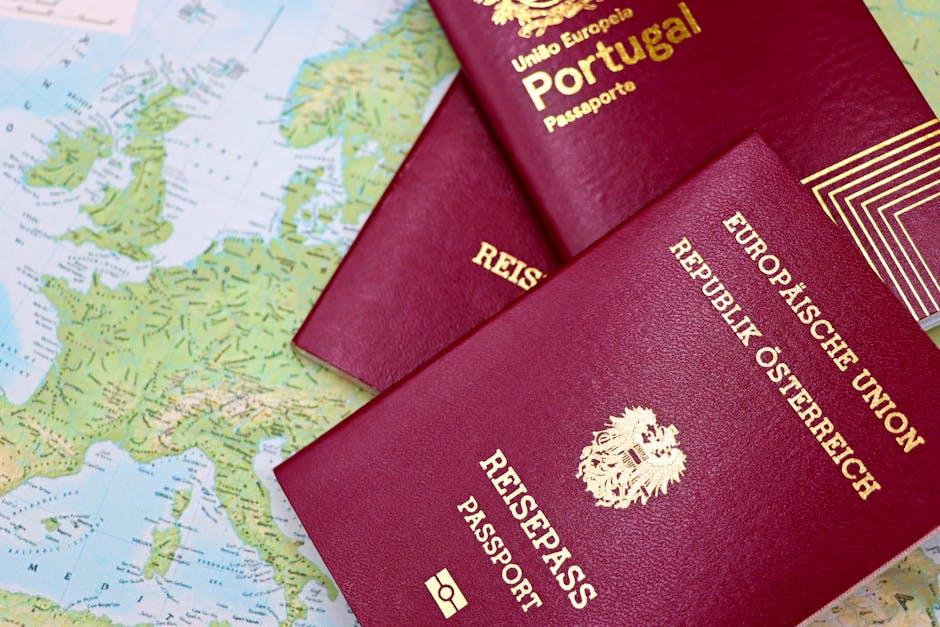
The Complicated Dance of Rights and Duties When Multiple Passports Shape Responsibility
Imagine a dual citizen named Maria, who holds passports from both Brazil and Italy. When she visits family in Rome, she enjoys the privileges of healthcare and voting rights, fully embracing her Italian identity. However, when she returns to São Paulo, she’s reminded that her responsibilities don’t pause there—tax obligations, jury duties, and even military service registration may still apply. This contrast becomes a daily dance, where the rights afforded by each nationality must be carefully weighed against the corresponding duties. The challenge escalates when conflicting laws emerge: a tax deadline coincides with a required legal appearance in another country, forcing Maria to choose which responsibility to prioritize. These moments underscore that multiple citizenship isn’t just about expanding freedom—it’s about balancing competing expectations that can sometimes clash in ways no single nationality does.
Consider the case of Amir, who has passports from both Canada and Jordan. While Canada guarantees certain protections and freedoms abroad, Jordan obligates him to mandatory military service until a specific age. Amir, living in Toronto in his late twenties, initially viewed his Jordanian passport as a mere formality, until he faced a summons for service during a critical career phase. This unexpected duty prompted him to consult legal experts and government officials, revealing how the rights of protection are inseparable from accompanying duties that vary dramatically by country. The experience taught Amir—and many like him—that
- Expectations of what a passport ‘means’ can clash with legal realities.
- Rights such as voting, healthcare access, and protection come paired with legal obligations.
- Failure to meet these duties can sometimes lead to penalties, even incarceration or loss of citizenship.
Balancing these elements requires knowledge, foresight, and sometimes difficult decisions—highlighting why multiple passports shape not only identity but complex tapestries of responsibility.
Stories from the Margins Voices Navigating Loyalty in Overlapping National Worlds
Maria, a second-generation immigrant from Mexico living in the United States, often found herself at the crossroads of conflicting loyalties. When her parents urged her to participate in local cultural festivals celebrating Mexican heritage, she embraced the sense of belonging these events offered. Yet, navigating a dual identity became particularly challenging during election seasons, where political debates stirred questions about allegiance: Was she primarily American, Mexican, or something in between? Moments like these forced Maria to reevaluate her understanding of citizenship—not just as a legal status, but as a tapestry woven from community ties, cultural expectations, and personal convictions. These experiences revealed that loyalty in overlapping national worlds isn’t a fixed point but a continuous negotiation shaped by context.
Consider Ahmed, an Egyptian-American working in a tech firm in Silicon Valley. When his company’s policies clashed with Egypt’s political climate during a major regional crisis, he faced an ethical dilemma: should he publicly support his host country’s stance or defend his country of origin’s perspectives? The decision wasn’t merely political but deeply personal, reflecting how overlapping identities can pull individuals in opposing directions. Ahmed’s story highlights a pattern common among many with multiple citizenships—a delicate balance between external expectations and internal values. His journey underlines key lessons: loyalty is fluid, rarely absolute, and must be continually reinterpreted as global events reshape the landscapes of identity and responsibility.
- Expectation: Multiple citizenships mean divided loyalty and inevitable conflict.
- Reality: Loyalty often manifests as layered commitments, adapting over time and circumstances.
- Lesson: Embracing complexity fosters richer identities and more nuanced responsibilities.
| Scenario | Expectation | Outcome | Reflection |
|---|---|---|---|
| Maria’s cultural participation | Full American assimilation | Strong dual cultural identity | Belonging transcends borders |
| Ahmed’s political stance | Clear national allegiance | Complex ethical negotiation | Multiple loyalties coexist |
Lessons Learned in Cultural Intersection How Identity Evolves Amid Shifting Borders
When Ana, born in Mexico with dual citizenship in the United States, moved to Canada for work, she initially carried a straightforward sense of identity linked closely to her family and cultural traditions. However, as she navigated new social circles and professional expectations, Ana found her sense of self evolving in unexpected ways. For example, in Mexico, she was naturally seen as warm and outgoing, traits celebrated in her community. In contrast, her Canadian colleagues prized individualism and subtlety, which prompted Ana to adjust her communication style without losing her essence. This balancing act revealed a critical lesson: identity is not fixed but a fluid negotiation between personal values and cultural contexts. The complexity of her multi-layered identity became more apparent during family holidays, where she felt joy and tension alternating as she moved between different customs and ways of belonging.
Similarly, Raj’s experience as a British-Indian with a third citizenship in Singapore highlights the often unexpected challenges of shifting borders—both literal and metaphorical. Raj once faced a professional crossroads requiring him to choose between staying in Singapore’s fast-paced, meritocratic environment or relocating to the UK to reconnect with his cultural roots. His choice was less about geography and more about embracing a sense of responsibility toward his evolving identity that included his heritage and future aspirations. Through Raj’s journey, we learn:
- Identity transcends nationality: It’s shaped by a web of experiences, expectations, and responsibilities rather than a single passport or birthplace.
- Adaptation often means reinterpretation: Incorporating new cultural norms doesn’t erase previous identities but layers new meanings atop them.
- Belonging can be multifaceted: Feeling connected to multiple places and cultures simultaneously can create both richness and tension.
| Expectation | Reality |
|---|---|
| Clear, singular cultural identity tied to birthplace | Layered identity integrating elements from multiple countries |
| Belonging means being accepted uniformly in one community | Belonging involves navigating varied social norms and expectations |
| Responsibility is primarily national or familial | Responsibility extends to diverse communities and global citizenship |
Between Integration and Alienation Finding Balance in the Space of Multiple Citizenship
Between integration and alienation lies a delicate space that many with multiple citizenships navigate daily. Consider Sara, who holds citizenship in both Brazil and Italy. When she moved to Milan for work, she expected to seamlessly blend into Italian society thanks to her citizenship. However, despite having all the legal rights, she often felt an outsider at social gatherings, missing the subtle cultural cues and shared histories that her Italian-born colleagues took for granted. This alienation wasn’t born from exclusion but rather from the unseen social fabric that citizenship papers can’t guarantee. Yet, instead of retreating, Sara invested time in local community events, language nuances, and neighborhood traditions, gradually bridging the gap between legal belonging and emotional integration. Her experience highlights a key lesson for multiple citizens: legal status alone doesn’t equal full inclusion; active cultural engagement is essential.
The tension between integration and alienation also presents itself in decision-making moments where responsibilities pull in different directions. Take Joseph, a Canadian-Ghanaian who faced a tough choice when called for jury duty in Canada while his elderly mother required urgent medical care in Ghana. His dual citizenship gave him rights in both countries, yet circumstances forced a painful prioritization. This reflects the complex reality of multiple citizenships—while they offer opportunities and rights, they can also impose conflicting responsibilities without straightforward solutions. The broader truth is that integration is not linear nor uniform; it fluctuates between connection and distance depending on context, community, and personal effort. To visualize this dynamic:
| Aspect | Integration (Bridging) | Alienation (Gap) |
|---|---|---|
| Legal Status | Full citizenship rights | Paper rights without social inclusion |
| Emotional Connection | Shared culture and community bonds | Feeling of being an outsider |
| Responsibilities | Balanced obligations to multiple states | Conflicting demands and tough choices |
This balance is neither static nor easy. Those holding multiple citizenships continuously redefine what belonging means for them, crafting identities that merge diverse worlds yet sometimes face moments of profound disconnect. The key lies in embracing the fluid nature of this experience—with both its challenges and unique strengths.
Future Outlook
As we traverse the intricate landscapes of identity, belonging, and responsibility in a world where multiple citizenships blur traditional boundaries, we come to see that the lines defining us are neither fixed nor purely inherited. Instead, they are fluid paths shaped by choices, histories, and connections that reach beyond any single nation. Navigating these in-between spaces calls for a nuanced understanding—one that embraces complexity without urgency, challenge without fear. In the end, living between borders invites us not merely to ask where we belong, but to reconsider how belonging itself can be reimagined in an ever-intertwined global tapestry.




