
In a world defined by shifting borders and blended cultures, holding a dual passport is more than a convenient travel tool—it is a passage between two distinct worlds. Between Two Homes: Navigating Identity, Opportunity, and Belonging with a Dual Passport explores the intricate journey of those who straddle multiple nations, weaving together the threads of identity, opportunity, and belonging. This duality opens doors to new horizons while posing unique challenges, inviting us to reconsider what it truly means to be “home.” Through the lens of those living in between, we delve into a story of connection, contrast, and the quest for a place to call one’s own.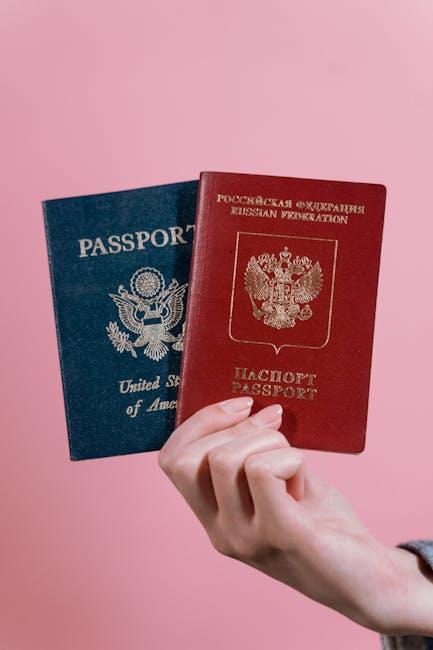
Shifting Ground Between Worlds How Dual Citizenship Shapes Personal and Cultural Identity
Maria grew up speaking two languages at home—Portuguese with her mother and English with her father—and carried two passports into adulthood. When she moved to Portugal for university, she expected to feel immediately rooted, but instead found herself navigating a strange blend of insider and outsider. At family dinners, her relatives would celebrate her “return” to their homeland, yet friends would tease her for her awkward accent and unfamiliar cultural references. This tension between belonging and difference forced Maria to reevaluate how her dual citizenship shaped her sense of self. It wasn’t simply about legal status or travel convenience, but about living between the expectations placed on each identity and the reality of feeling partially connected to both. It sparked moments of reflection: when choosing which customs to uphold, or deciding how much of each culture to bring into her daily life, Maria realized that dual citizenship creates a unique, ongoing negotiation of personal meaning.
Similar challenges surface for others with dual passports, where identity becomes an evolving mosaic rather than a fixed label. For instance, Ahmed, born in Canada to Egyptian parents, initially assumed his cultural identity was clear-cut. However, years spent visiting Egypt during summers revealed disparities between the narrative his family shared and the complexity of the society he encountered. Returning to Canada, he found himself caught between expectations of “cultural purity” from relatives and the multicultural reality of his upbringing. This duality pushed Ahmed to embrace a more fluid sense of self, recognizing that dual citizenship often means holding multiple truths at once. To illustrate this dynamic, consider the following contrasts many dual citizens face:
| Expectation | Reality |
|---|---|
| Immediate belonging in both countries | Feeling like a perpetual outsider or hybrid |
| Clear, unified cultural identity | Multiple, sometimes conflicting cultural allegiances |
| Cultural knowledge passed down seamlessly | Learning and adapting through lived experience and personal choice |
- Lesson 1: Dual citizenship encourages a continuous dialogue with identity rather than a fixed answer.
- Lesson 2: Balancing two worlds fosters adaptability, empathy, and a richer sense of self beyond borders.
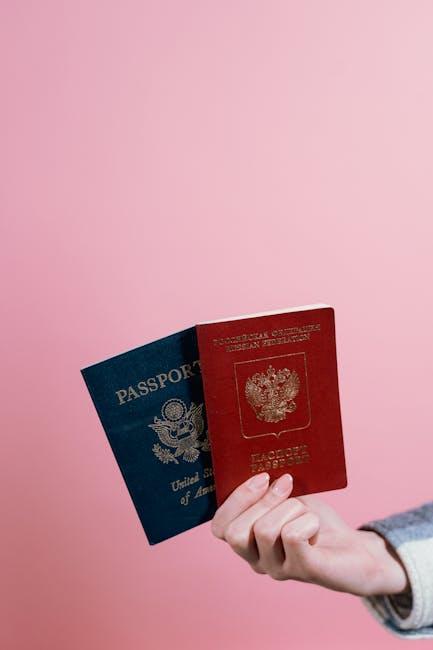
The Unexpected Roadblocks and Doors Opened by Holding Two Passports
When Sara first held her two passports—Canadian and Italian—she imagined a seamless world of endless travel and job opportunities. Yet, reality quickly revealed the unexpected complexities hidden beneath this privilege. On one hand, her dual citizenship opened vibrant doors: she could freely work across the European Union with no visa worries and access healthcare systems in both countries. However, there were moments when holding two passports complicated her sense of belonging and legal responsibilities. For instance, during tax season, balancing filing requirements from both governments became a surprisingly tangled affair, with conflicting deadlines and forms. It was a stark reminder that dual citizenship isn’t just about freedom—it also means juggling two bureaucracies, each with unique financial and legal expectations.
Conversely, dual nationality also unexpectedly limited Sara in certain situations she hadn’t foreseen. When applying for certain government jobs in Canada, her Italian citizenship raised red flags about potential conflicts of interest, casting doubt on her “full allegiance” despite her lifelong Canadian residency. Meanwhile, traveling to some countries where the two passports could be used interchangeably led to confusion at border control—she once had to explain to officials why she chose one passport over the other. This pushed her to become more strategic: weighing the benefits of each passport became a subtle, sometimes stressful negotiation, where the best choice wasn’t always obvious. These roadblocks illuminated an important lesson in dual citizenship: the freedom it promises coexists with unique responsibilities and decisions—each passport a key, but one that occasionally fits awkwardly in certain doors.
| Opportunity | Unexpected Challenge |
|---|---|
| Visa-free EU work and travel with Italian passport | Complex tax filings with dual financial jurisdictions |
| Healthcare access in two countries | Government job restrictions due to dual allegiance concerns |
| Multiple entry points for global travel | Border officials questioning travel document choices |
Moments of Choice When Loyalties and Opportunities Pull in Different Directions
Consider the story of Sara, who holds passports from two countries with deeply different social expectations. When a coveted job offer came from her birth country, she was torn—leaving behind a stable career path she had built with friends and mentors in her adopted home. The pull of family obligations, cultural familiarity, and the promise of contributing to her ancestral community weighed heavily against the benefits of continued growth and independence abroad. Here, moments of choice aren’t simply about geographic moves; they become reflections of where one’s loyalties truly lie and how flexible that loyalty feels when pressed by tangible opportunity. Sara’s experience illustrates how the promise attached to a dual nationality can also become a prism through which personal identity is refracted and sometimes challenged.
In many cases, decisions like Sara’s unravel common assumptions that dual citizenship is a straightforward advantage. For example, a dual passport holder named Jamal found himself navigating the complexity between academic ambitions and family expectations. While studying in Europe, Jamal received an invitation to a prestigious program back in his ancestral homeland—an opportunity tied to specific national affiliations and expected timelines. Yet, accepting it meant postponing his dreams and reorienting his life to unfamiliar conditions. What initially seemed like an obvious door opening was layered with unforeseen nuances: the strain of switching cultural gears, the impact on his future residency options, and the subtle but potent pressure of feeling like he was choosing “one side” over the other. These moments reveal that holding two citizenships is not always a linear path of expanding opportunities but often involves weighing the *intangible*—identity, belonging, and personal sacrifice—against measurable gains.
| Aspect | Expectation | Reality |
|---|---|---|
| Career Mobility | Seamless transitions between countries. | Complex choices involving place, culture, and relationships. |
| Cultural Belonging | Natural sense of fit in both homes. | Feelings of partial belonging and identity negotiation. |
| Family Expectations | Support for cross-border opportunities. | Conflicting desires to maintain traditions versus personal goals. |
Stories from the Borderland Where Belonging Is Both Gift and Challenge
Maria’s story exemplifies the complex dance of belonging that many dual passport holders experience. Born in Brazil but raised in Portugal from the age of ten, she always thought having ties to both countries would be a straightforward advantage. Yet, during her first job interview in Lisbon, Maria faced a subtle skepticism: “You must be fully Portuguese,” her potential employer hinted, questioning her connection despite her fluency and local education. Maria’s dual identity sometimes led to moments where she felt she belonged everywhere and nowhere. One particular turning point was when she chose to celebrate her birthday with two simultaneous gatherings—one with her Brazilian family via video call and another with Portuguese friends in person. It was in these moments, balancing cultural nuances and expectations, that Maria began to appreciate dual belonging as a gift requiring intentional navigation rather than a simple passport stamp.
Contrast this with Ahmed, who holds citizenship in both Canada and Egypt and recently faced a challenging decision: accept a secure managerial role in Cairo or pursue a riskier entrepreneurial opportunity in Toronto. His dual passport unlocked both options but complicated his sense of home. In Egypt, the sense of familiarity and cultural roots pulled him strongly, while Canada offered growth and innovation that sparked his ambitions. Ahmed’s dilemma unfolded in countless conversations with family and mentors, weighing practical benefits against emotional ties. This tension between opportunity and identity often leaves dual citizens in a liminal space where the “best” choice is deeply personal, shaped by more than just visa policies or job offers. For many like him, belonging remains an evolving story—one shaped by daily choices that honor the complexity and richness of living between two worlds.
Finding Home in the Space Between Two Nations and the Lessons It Teaches
Maria’s story illustrates the delicate balance of finding home between two nations. Born in Brazil but raised in Canada, she initially viewed her dual citizenship as a gateway to endless opportunities—easy travel, broader job prospects, and a deeper cultural experience. Yet, when she returned to Brazil to reconnect with family after many years, she was met with unexpected challenges. The informal warmth she remembered felt distant, as if she was an outsider in the very place she thought of as home. Meanwhile, her Canadian friends didn’t quite understand the emotional pull her Brazilian roots held. In both worlds, Maria faced moments of quiet dislocation, where belonging wasn’t about geography or legal status, but about acceptance and identity. This taught her that home isn’t static or singular—it’s a mosaic of experiences, relationships, and self-acceptance that evolves over time.
These realities bring important lessons for anyone navigating dual identity with a passport in hand. It’s not just about leveraging the practical benefits but embracing the complexities that come with inhabiting two cultural spaces. For example, consider the common dilemma of career choices: pursuing a corporate role in a global city versus starting a community-driven project in a hometown abroad. Expectations often lean toward the more lucrative or prestigious path, but the true “home” may lie where personal values and connections thrive. Below is a concise comparison of expected vs. actual experiences many dual citizens encounter:
| Expectation | Reality |
|---|---|
| Seamless cultural integration | Feeling like a perpetual outsider in both cultures at times |
| Dual passport only brings freedom | Additional identity negotiation and emotional complexity |
| Clear sense of belonging in one place | Belonging is fluid and can shift depending on context |
| Career advancement prioritized in global hubs | Personal fulfillment may require balancing across borders |
- Embrace the ambiguity: Accepting that feeling “in-between” is part of the journey helps reduce frustration.
- Build a personal community: Creating a network that spans both cultures provides emotional anchors.
- Reframe home as a concept: Viewing home not as a fixed location, but as where comfort and authenticity coexist.
In Retrospect
In the delicate dance between two homes, a dual passport is more than just a document—it is a symbol of layered identity, a bridge to diverse opportunities, and a mosaic of belonging. Navigating this unique space invites both challenges and rewards, asking us to rethink the borders that define us and to embrace the fluidity of who we are. As we move forward, carrying the weight and freedom of dual citizenship, we are reminded that identity is not fixed, but a journey—one enriched by the many places we call home.




