
In an era where the world feels simultaneously smaller and more divided, the question of borders no longer hinges solely on walls or open gates. Global immigration, a complex tapestry of hopes, challenges, and realities, calls for a reimagined approach-one that transcends the simplistic binary of closed or open borders. As millions traverse continents seeking safety, opportunity, and belonging, nations face the urgent task of crafting policies that reflect the fluidity of human movement without sacrificing security, identity, or dignity. This article explores why embracing a nuanced, thoughtful recalibration of borders is essential to addressing the evolving dynamics of migration in the 21st century.
Rethinking Openness Beyond Idealized Immigration Models
- Openness is often framed in immigration debates as a binary between “open borders” and strict restrictions, a simplification that obscures the complex realities policymakers face. Idealized models envision frictionless movement and universal access as unequivocally beneficial, yet they sidestep critical trade-offs involving social cohesion, economic integration, and public infrastructure. For instance, unlimited entry without calibrated integration frameworks risks exacerbating social stratification rather than promoting inclusivity. Thus, a more sophisticated approach recognizes that openness cannot be an end in itself but a dynamic equilibrium balancing humanitarian, economic, and social imperatives.
- Critically, rethinking openness means rejecting the naïve assumption that all migrants assimilate seamlessly or that host societies can absorb populations indefinitely without structural reforms. Instead, successful immigration strategies must differentiate between degrees of openness tailored to capacity-for example, phased admissions, targeted skill-based entry, and temporary mobility schemes-and robust support systems such as language acquisition, employment training, and community engagement. This nuanced stance reframes openness as a vector calibrated to context-specific outcomes, avoiding ideological standoffs. The trade-offs aren’t simply economic versus cultural but involve long-term sustainability versus short-term populist gains. A balanced model prioritizes adaptive, evidence-based policy mechanisms while remaining vigilant to the risks of either uncontrolled influx or exclusionary nationalism.
| Dimension | Idealized Openness Model | Pragmatic Rethinking |
|---|---|---|
| Flow Control | Unlimited, unconditional | Managed, conditional, phased |
| Integration | Assumed seamless | Active, supported, contextual |
| Social Impact | Unquestioned societal benefit | Balancing cohesion and diversity |
| Policy Focus | Access as primary goal | Access plus sustainable capacity-building |
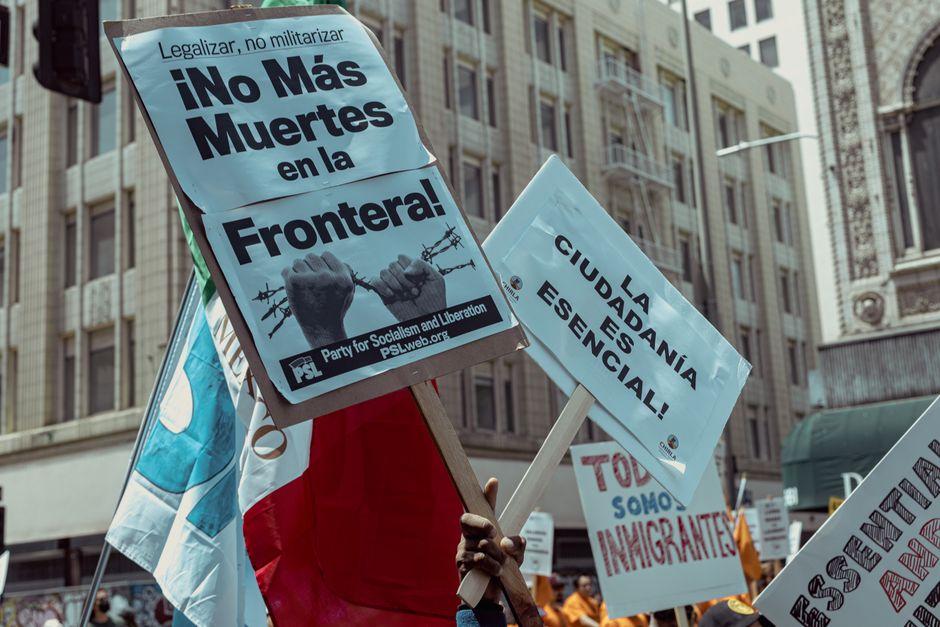
The Complex Trade-Offs Behind Unrestricted Movement
- Unrestricted movement promises a utopia of global equity but risks oversimplifying the complex interplay between national sovereignty, economic capacity, and social cohesion. The ideal of open borders often assumes a frictionless integration of newcomers, yet this neglects infrastructural limits and the social fabric into which migrants weave themselves. Economic benefits from immigration, while significant, are distributed unevenly-benefiting urban and high-skill sectors disproportionately and sometimes straining local services in lower-income regions.
- Moreover, the prevailing narrative that borders inherently restrict human freedom discounts the nuanced roles borders play in protecting cultural identities and securing orderly governance. The core trade-off here lies between a principled commitment to mobility and the pragmatic realities of maintaining societal stability. Any policy aiming to move beyond closed borders must balance inclusivity with strategic selectiveness, ensuring that migration flows are responsive to both labor market needs and the absorptive capacity of host communities.
| Dimension | Benefits of Unrestricted Movement | Potential Drawbacks |
|---|---|---|
| Economic Impact | Enhanced innovation, labor flexibility, and remittance flows. | Wage suppression in vulnerable sectors, infrastructure strain. |
| Social Dynamics | Cultural exchange, demographic revitalization. | Integration challenges, social polarization risks. |
| Governance | Reduced bureaucratic friction, global cooperation potential. | Security concerns, erosion of policy autonomy. |
Why Welcoming Borders Require More Than Goodwill
- Goodwill as a Starting Point, Not a Solution: Welcoming immigrants with open arms signals humanity and global solidarity, yet goodwill devoid of structure often stagnates at symbolism. Genuine openness is not merely about intentions but about creating sustainable systems that address economic integration, cultural accommodation, and social infrastructure. Goodwill can mask the complexity of integration challenges, such as labor market mismatches, competition tensions, and public service capacity. Thus, the assumption that kindness alone ensures successful immigration oversimplifies policy needs and risks unmet expectations on all sides.
- Balancing Inclusivity with Practical Governance: A welcoming border demands calibrated, evidence-based policies that reconcile humanitarian impulses with state capacity. This includes prioritizing investments in education, language acquisition, and workforce development to convert opportunity into mutual benefit. Law enforcement and tracking mechanisms must be transparent and fair, avoiding both xenophobic overreach and laissez-faire vulnerability. The trade-off here is clear: unrestricted entry without planning can strain public services and social cohesion, while overly restrictive regimes betray humanitarian ideals and economic potential. Effective border management is thus a dynamic balance of openness married with institutional rigor.
| Aspect | Goodwill-Only Approach | Structured Welcoming |
|---|---|---|
| Integration Outcomes | Inconsistent, high risk of marginalization | Systematic, improved economic and social participation |
| Social Cohesion | Fragile due to unmet expectations | Resilient, fostered by clear policies and dialogue |
| Policy Sustainability | Short-term goodwill vulnerable to political shifts | Long-term commitment through adaptive frameworks |
Balancing Security and Compassion in a Shifting Global Landscape
- Security and compassion are often cast as opposing forces in immigration debates, yet framing them as mutually exclusive is a reductive mistake. True security involves more than fortified borders and stringent vetting; it requires understanding the humanitarian imperatives that drive migration, such as conflict, climate change, and economic desperation. Policymakers must prioritize intelligent, data-driven screening processes that integrate social services and community support networks, rather than relying solely on exclusionary tactics that risk perpetuating cycles of fear and marginalization. The task is to craft frameworks where safeguarding national interests coexists with upholding human dignity-no easy feat, but essential for any sustainable approach.
- Trade-offs between security and compassion reveal the crux of this balancing act: overemphasizing security risks turning borders into impenetrable barriers that stoke geopolitical tensions and undermine soft power; excessive leniency, on the other hand, can overwhelm infrastructure and erode public trust. Governments should implement tiered-entry systems that distinguish between asylum seekers, economic migrants, and refugees, paired with expedited yet fair adjudications. This requires investment in cross-border intelligence and international collaboration to share responsibility. The challenge lies in designing policies flexible enough to respond to shifting global conditions without sacrificing procedural fairness or national resilience-a nuanced approach that moves beyond simplistic binaries towards pragmatic governance.
Innovative Alternatives to Conventional Immigration Frameworks
- Community-Integrated Residency Models: Beyond the binary of open versus closed borders lies the potential of residency frameworks that prioritize local community engagement over purely national considerations. Instead of granting unrestricted entry, these models allocate residency based on immigrants’ demonstrated capacity to positively integrate into and contribute to specific localities. This approach challenges the assumption that immigration is best managed through national quotas alone, embracing a decentralized system that values place-based integration and social cohesion. While it demands more granular administrative oversight and carries risks of parochial gatekeeping, the payoff can be a more harmonious coexistence where migrants and host communities co-create social capital and economic vitality.
- Dynamic Skills and Contribution Tokens: Traditional immigration systems often fixate on static criteria such as education or occupation, failing to capture the complex, evolving contributions migrants make. An innovative alternative involves a dynamic token-based framework that quantifies the multifaceted value-economic, social, cultural-that immigrants provide over time. Instead of fixed entry points or rigid visa categories, migrants earn and redeem “contribution tokens” which influence their residency status, rights, and eligibility for integration support. This system recognizes the fluidity of human capital and incentivizes continuous engagement with host societies. However, it requires transparent, equitable metrics and safeguards against bureaucratic arbitrariness, highlighting an inherent trade-off between flexibility and governance complexity.
| Framework | Primary Focus | Key Strength | Notable Trade-Off |
|---|---|---|---|
| Community-Integrated Residency | Local integration | Enhanced social cohesion | Potential parochialism |
| Skills & Contribution Tokens | Dynamic valuation of contributions | Adaptive, merit-based mobility | Complex assessment infrastructure |
To Wrap It Up
As the world continues to shrink through technology, trade, and shared challenges, the notion of borders must evolve beyond mere lines on a map or open gates inviting all in. “Borders Reimagined” calls on us to rethink immigration not as a binary choice-open or closed-but as a complex, living framework that balances human dignity, security, and shared prosperity. It demands policies crafted with empathy and pragmatism, where the movement of people becomes a bridge rather than a battleground. In embracing this nuanced vision, we may find that the true strength of borders lies not in their ability to divide, but in their capacity to connect and enrich our collective human story.




