
In a world increasingly interconnected by technology and culture, the humble passport might seem like a simple ticket to freedom-an emblem of global mobility and open borders. Yet, beneath this veneer of liberation lies a more complex reality. Far from being mere symbols of identity or gateways to exploration, global passports often function as powerful tools of economic gatekeeping. They delineate not just who can cross physical borders, but who can access opportunity, wealth, and privilege on an international stage. This article will explore how passports, rather than equalizing freedom, frequently reinforce economic hierarchies and create invisible barriers that shape the lives of millions around the world.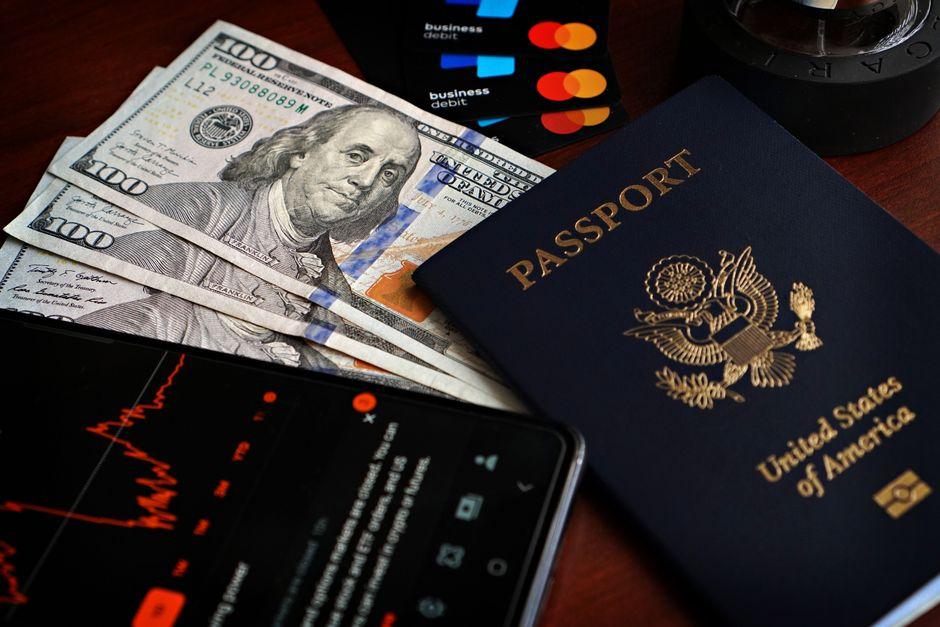
The Illusion of Mobility The Economic Barriers Behind Passport Privileges
The prevailing narrative around passports often equates them with the freedom to explore, work, and live across borders. However, this perception glosses over a critical reality: the illusory nature of mobility for vast swathes of the global population. While a passport technically grants the right to cross borders, the value embedded in that document is profoundly influenced by economic status-both on a personal level and from a nation’s geopolitical standing. For many, the passport acts less like a key and more like a gatekeeper, granting privileges skewed by underlying economic disparities and political influence. It’s not freedom of movement that these documents symbolize but rather the stark economic barriers disguised as administrative protocols.
This economic stratification isn’t just about wealth disparities; it reflects a tangled web of global inequalities that passport rankings expose rather than solve. Countries with robust economies tend to offer passports with extensive visa-free access, while citizens of lower-income nations face layered restrictions requiring costly visas, extensive paperwork, and time-consuming processes. The trade-off embedded here is subtle but profound:
- High-ranking passports: Economically powerful states enjoy mutual trust and diplomatic leverage, enabling their citizens to bypass border frictions.
- Low-ranking passports: Their holders pay both in money and opportunity costs, facing systematic exclusion wherever economic interests aren’t aligned.
| Passport Rank | Average Visa-Free Access | Economic Indicator (GDP per capita) |
|---|---|---|
| Top 10 | 190+ countries | >$40,000 |
| Bottom 10 | 40-60 countries | <$5,000 |
Addressing these economic barriers demands more than incremental visa liberalizations or bilateral agreements-it requires confronting the systemic inequalities baked into international relations and global capitalism itself. Measures like expanding digital nomad visas or travel corridors, while well-intentioned, risk becoming superficial fixes unless paired with deeper economic reforms and equitable development policies. Ultimately, dismantling the illusion of mobility means shifting focus from the passport as a privilege symbol to understanding it as a symptom of entrenched economic gatekeeping that transcends mere documentation.
Beyond Borders The Unseen Role of Passports in Global Inequality
Passports, rather than being mere travel documents, operate as complex instruments of global hierarchy, silently perpetuating economic disparities. The distribution of mobility rights encoded in passport strength reveals a stark reality: freedom to move is, in many ways, a luxury for the economically privileged. This stratification is rarely about nationality alone; it correlates intricately with a nation’s economic power, diplomatic leverage, and geopolitical standing. Consequently, the seemingly neutral passport becomes a gatekeeper of opportunity, reinforcing systemic inequalities under the guise of border control. Governments in economically weaker nations often rely on restricting travel as a means to safeguard scarce domestic resources or maintain geopolitical stature, ironically penalizing their own citizens’ global aspirations. Ignoring this dynamic oversimplifies the passport’s role, obscuring its position as a vehicle that channels global privilege rather than universal freedom.
However, dismantling this layered inequality is fraught with trade-offs that resist easy solutions. Expanding visa-free access indiscriminately could dilute national security and economic safeguards, yet stringent controls exacerbate global inequality and stunt upward mobility. Smart policymaking must therefore embrace nuanced frameworks that balance sovereign interests with mobility justice. For example, targeted bilateral agreements focusing on economic collaboration instead of blanket restrictions could incentivize reciprocity while opening selective channels for underserved populations. A selectively tiered approach might harmonize security with equity, employing technology-enhanced risk assessments rather than blanket nationality-based bans. Ultimately, policymakers, activists, and global institutions must shift from viewing passports as mere travel enablers toward understanding them as instruments of subtle economic gatekeeping-which demands reconceptualizing mobility as a fundamental axis of social justice in an interconnected world.
Challenging the Freedom Narrative How Passports Reinforce Economic Hierarchies
Passports are often romanticized as symbols of freedom-portable keys unlocking doors across borders. Yet, this narrative obscures a more insidious reality: passports function as economic gatekeepers that reinforce global hierarchies. Rather than equalizing mobility, passports stratify it, privileging citizens of affluent nations while constraining those from economically marginalized states. This disparity is not merely incidental; it’s structurally embedded in the system of visa regimes and international relations. The myth of “freedom” through travel fails to acknowledge that a passport’s power is contingent on the geopolitical and economic clout of its issuing country. Consequently, freedom of movement is less a universal right and more a variable commodity, unequally distributed along lines of wealth and political influence.
Understanding this dynamic requires recognizing the trade-offs passports entail, rather than seeing them as unambiguous symbols of liberty. For instance, countries may impose visa restrictions ostensibly for security, but these often disproportionately target citizens from poorer regions with less diplomatic leverage. This selective permeability cements economic stratification and migration hierarchies, as reflected in the stark contrasts below:
| Passport | Visa-Free Access to High-Income Countries | Relative Economic Status of Issuing Country |
|---|---|---|
| Japan | 192 countries | High-income |
| Nigeria | 45 countries | Lower middle-income |
- Policy Recommendation: Rather than fetishizing passport reforms focused solely on simplifying visa procedures, international efforts should prioritize addressing the economic inequalities driving restrictive policies. In other words, true freedom of movement demands dismantling the economic imbalances that passports unwittingly encode.
- Nuanced Approach: Advocates must resist the temptation to idealize passports as mere travel documents and instead push for a discourse that acknowledges their role as instruments of economic stratification and controlled mobility.
Rethinking Citizenship Strategies Toward a More Inclusive Global Mobility
Rethinking citizenship strategies demands an unvarnished acknowledgment that current global mobility is less about universal freedom and more a reflection of economic hierarchies embedded within passport power. Traditional models prioritize national allegiance and economic leverage over personal agency, perpetuating systemic inequalities. Instead of merely expanding passport options for the elite through investment programs, policymakers should consider frameworks that decouple citizenship from wealth accumulation and acknowledge multifaceted identities shaped by migration, cultural integration, and transnational contributions. This requires a deliberate shift from static, territorially bound definitions of citizenship toward more fluid, rights-based paradigms that value social participation and human capital beyond GDP metrics.
However, inclusivity in global mobility confronts unavoidable trade-offs. Easing border entry without sufficient border security or economic integration mechanisms risks social fragmentation and strains on social services. A nuanced approach should balance facilitation and regulation by implementing tiered mobility rights-where short-term access, work permits, and pathways to gradual inclusion coexist with long-term residency and naturalization options. Consider the following distinctions:
| Mobility Aspect | Traditional Approach | Inclusive Strategy |
|---|---|---|
| Basis for Citizenship | Birthright or wealth investment | Multi-factor contributions (social, economic, cultural) |
| Access to Mobility | Binary (citizen vs. non-citizen) | Gradual, tiered access tailored by purpose and duration |
| Gatekeeping Mechanism | Economic barriers (investment thresholds, income levels) | Balanced criteria incorporating skills, community ties, and integration potential |
- Recommendation: Embrace policy experiments that allow conditional, rights-based mobility rather than transactional citizenship sales.
- Insight: Citizenship should be reimagined as a dynamic social contract, not a static commodity.
- Caution: Avoid romanticizing open borders without pragmatic governance frameworks to ensure social cohesion and economic sustainability.
When Travel Rights Become Trade Rights The Complex Economics of Passport Access
Passport access frequently masquerades as a symbol of unbridled freedom, but in reality, it functions as a sophisticated economic instrument that delineates the boundaries of global commerce and labor mobility. Behind every visa requirement or entry restriction lies an implicit calculus aimed at preserving economic advantage or managing competition. Rather than a uniform right to travel, passport power becomes a currency of selective inclusion, granting mobility to those whose economic activity is perceived as valuable or low-risk by host countries. This transforms travel documents into a form of trade regulation, where crossing a border is contingent not just on identity, but on the perceived economic ripple effects of that movement. Such dynamics reveal that “freedom to travel” is often a curated privilege tailored to bolster national economies rather than an unalienable human right.
To navigate these intertwined travel and trade interests, policymakers and travelers alike must make deliberate trade-offs. For nations, loosening visa restrictions can stimulate economic growth through tourism, talent inflow, and foreign investment, but risks diluting labor market protections and social cohesion if applied indiscriminately. Conversely, stringent border controls preserve economic gatekeeping but can stifle innovation, cultural exchange, and global cooperation. Rather than defaulting to either extreme, a nuanced approach could involve tiered access models, prioritizing visas by sectoral needs or reciprocal economic benefits, supported by robust monitoring mechanisms. This would acknowledge the multiplicity of passport functions-not just as travel tools but as levers of economic strategy-while challenging the simplistic narrative that greater passport openness straightforwardly signals more global freedom or equality.
To Wrap It Up
In unraveling the layers behind global passports, we find that these seemingly simple documents are far more than symbols of freedom or identity. They act as intricate tools of economic gatekeeping, shaping opportunities and access in ways that often go unnoticed. As we navigate an interconnected world, recognizing the power dynamics embedded within these passports challenges us to rethink mobility-not just as a right, but as a reflection of global inequalities. Ultimately, understanding this complex reality invites deeper conversations about how to create a world where movement is truly about connection, not control.




