
In an era where a passport is often hailed as the ultimate symbol of freedom—granting its bearer the promise of seamless travel and boundless opportunity—the notion of universal mobility appears both aspirational and achievable. Yet, beneath the glossy veneer of global passports lies a more complex, less visible reality: the uneven terrain of access and privilege that continues to redraw borders in subtle, insidious ways. While the world becomes increasingly interconnected on paper, these documents mask the persistent inequalities that define who truly moves freely and who remains tethered. This article explores how global passports, far from erasing divisions, reveal new lines of exclusion cloaked in the language of universal mobility.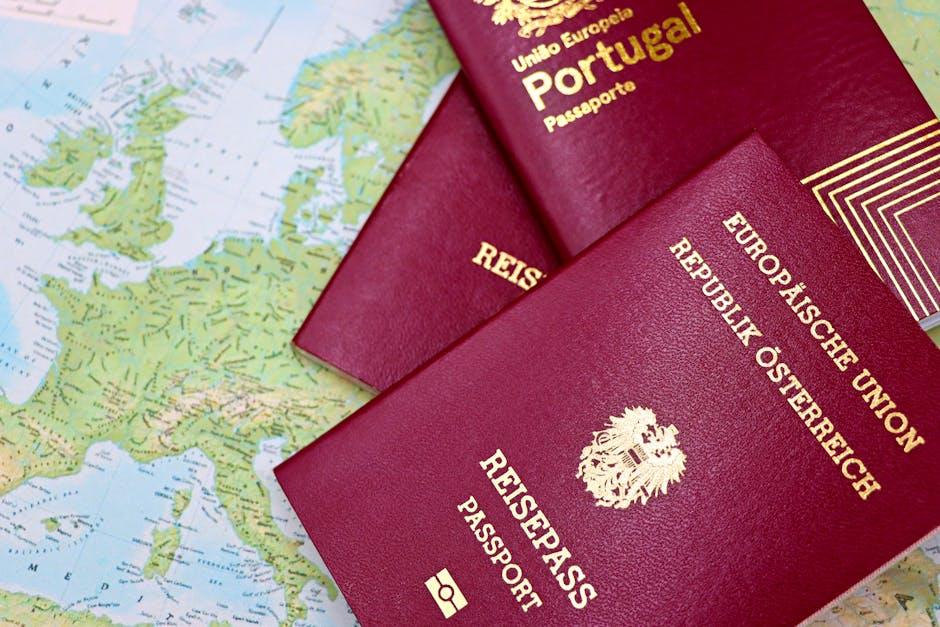
The Illusion of Equal Access in a World of Global Passports
At first glance, the concept of a global passport suggests an egalitarian promise: unrestricted mobility for all, dissolving borders and leveling the playing field. However, this vision conceals complex inequalities embedded beneath the surface. A global passport does not equalize opportunity; it merely redistributes gatekeeping. Access depends heavily on who controls the technology, the underlying infrastructure that supports biometric systems, digital identity verification, and the algorithms deciding entry priorities. These systems often exacerbate existing disparities, favoring citizens of powerful states with advanced data ecosystems and sidelining individuals from less developed or politically marginalized regions. Equality in access is thus an illusion shaped by underlying power structures rather than an inherent feature of global passports themselves.
Crucially, this illusion risks overshadowing subtler but more insidious forms of exclusion. While proponents imagine global passports as seamless tools for borderless travel, the reality is these documents can introduce new forms of stratification—dividing the world not by geography but by digital identity validity, surveillance susceptibility, and algorithmic risk profiles. The key trade-off lies between convenience and control: enhanced mobility for some is counterbalanced by disproportionately invasive scrutiny for others. Policies must therefore move beyond binary access debates and embrace a multipronged approach:
- Transparent algorithmic governance to ensure fair treatment across diverse populations,
- Robust privacy protections that do not erode rights in the name of security,
- Inclusive infrastructure investment aimed at reducing digital divides that shape mobility potential.
| Promise | Reality | Implication |
|---|---|---|
| Universal, borderless mobility | Variable access determined by digital infrastructure and political power | Risk of deepening global divides masked by surface-level ‘equal access’ rhetoric |
| Streamlined travel and security | Heightened surveillance and selective inclusion based on algorithmic profiling | Potential erosion of privacy and civil liberties for vulnerable communities |
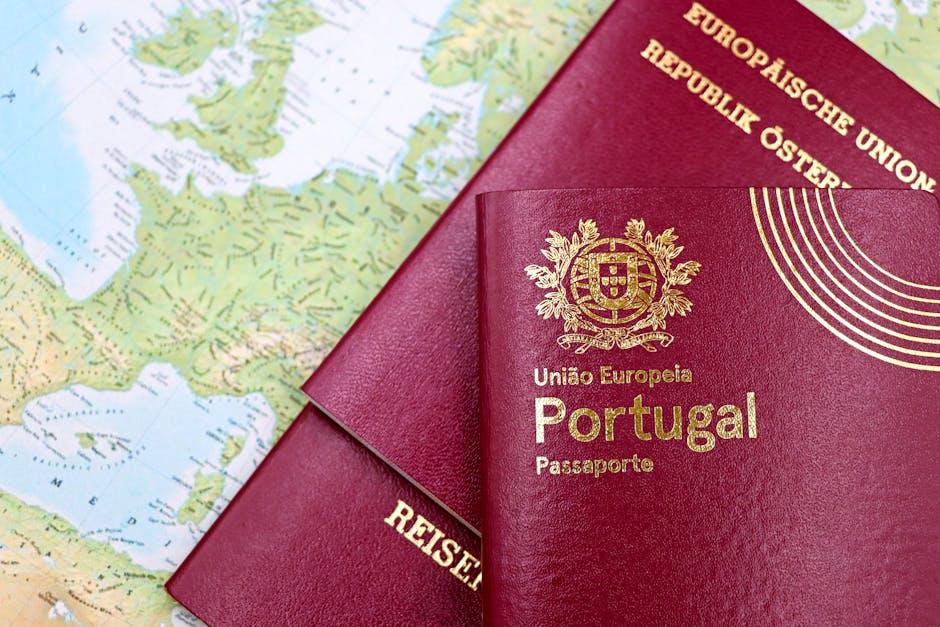
When Seamless Travel Conceals Deepening Inequality
At first glance, the expansion of seamless travel—enabled by biometric passports, e-visas, and integrated border technologies—signals a triumph of globalization and progress. Yet this veneer of universal mobility obscures a less visible but more insidious reality: profound inequalities are hardening beneath the surface of these efficiencies. Not all passports grant the same ease; the proliferation of “digital corridors” primarily benefits affluent travelers while reinforcing geopolitical hierarchies. In essence, the technology facilitating frictionless movement is not a great equalizer but a mechanism that selectively streamlines access for some while deepening exclusion for others. This contradicts the common assumption that mobility innovations are inherently democratizing and forces us to rethink whose freedom is really being enhanced.
Nuanced policy responses must grapple with these trade-offs instead of settling for incremental tech upgrades. Rather than uncritically investing in universal biometrics or “one passport to rule them all,” governments and global institutions should:
- Prioritize equitable access: Develop frameworks to ease visa acquisition complexity for historically marginalized regions without undermining security.
- Invest in alternative mobility infrastructures: Support local and regional travel networks that do not rely exclusively on global passport rankings.
- Implement transparency metrics: Track not only total traveler mobility but also disparities in who is enabled versus excluded.
This approach acknowledges that seamless travel’s promise must be measured not just by technological integration but by its capacity to dismantle invisible borders of socioeconomic, racial, and geopolitical privilege. Only then can universal mobility advance from an elite convenience to a genuine global equalizer.
Beyond Convenience Exploring the Social Costs of Universal Mobility
Universal mobility often gets framed as an unambiguously positive development, promising frictionless global access and a leveling of opportunity. Yet, this perspective dangerously oversimplifies a complex reality. While passport standardization and global travel ease can reduce bureaucratic barriers, they also obscure new, less visible social costs tied to identity, surveillance, and exclusion. Universal mobility systems, by their design, tend to privilege technologically advanced infrastructures and digital literacy, disproportionately marginalizing vulnerable populations who may lack access or face systemic discrimination. Moreover, the fetishization of ease and speed frequently masks a troubling trade-off: the erosion of localized social bonds and the rise of hyper-individualism. In striving for borderless movement, we risk overlooking how social capital, cultural belonging, and community resilience are integral dimensions of freedom—dimensions that universal mobility frameworks often fail to safeguard or even recognize.
Critically, the rollout of universal mobility protocols exposes unequal dynamics between citizens and non-citizens, insiders and outsiders, and even among different socioeconomic groups within a single nation-state. This disparity shows that mobility is not merely about physical travel but about the power to be seen, heard, and accounted for within global systems. Consider the following nuanced trade-offs:
- Standardization vs. Cultural Sovereignty: While global passports homogenize identity verification, they also risk erasing important cultural markers and local nuances that define personal and communal identity.
- Efficiency vs. Surveillance: Enhanced tracking and biometric data improve security and travel speed but embed travelers deeper into pervasive surveillance architectures, raising privacy and ethical concerns.
- Universality vs. Accessibility: Digital-first mobility solutions promise universal access but often exclude those without stable internet, technological proficiency, or government-issued IDs.
| Aspect | Potential Gain | Hidden Cost |
|---|---|---|
| Travel Efficiency | Faster, global ease of movement | Exclusion of marginalized groups without tech access |
| Identity Verification | Streamlined, secure cross-border processes | Loss of nuanced identity and cultural expression |
| Data Integration | Improved system interoperability | Increased surveillance and privacy breaches |
The challenge moving forward is not to abandon universal mobility but to consciously shape it with ethical frameworks that prioritize equity and cultural respect alongside efficiency. Solutions could include embedding digital inclusivity criteria, safeguarding data privacy through decentralized technologies, and preserving meaningful identity markers within global systems. Without these nuanced safeguards, the promise of borderless movement risks becoming another gatekeeper—reproducing old inequalities under the guise of innovation.
Reimagining Borders Smarter Alternatives to Global Passport Policies
The ambition to reframe border management through smarter, technology-driven policies reflects a necessary departure from traditional passport constraints, yet the challenge lies in balancing efficiency with equity. Simply digitizing passports or introducing blockchain-backed travel credentials risks perpetuating existing disparities if these tools are deployed without addressing systemic biases ingrained in visa issuance and border enforcement. For instance, biometric databases might speed up processing but can simultaneously institutionalize surveillance practices that disproportionately affect marginalized populations. Therefore, smart alternatives must be paired with transparent, rights-based governance frameworks that prioritize human dignity and privacy, rather than become slick facades for exclusion masked as modernization.
Compact, tiered mobility schemes that recognize diverse forms of global citizenship while respecting geopolitical realities offer a promising compromise beyond the fantasy of universal passports. Consider targeted mobility corridors or multi-level access passes supporting differentiated rights: short-term work, study, family reunion, and asylum options could be modularized, enabling more fine-grained control without relying on binary “allowed vs banned” logics. A simple breakdown illustrates this potential trade-off:
| Mobility Model | Key Benefit | Potential Pitfall |
|---|---|---|
| Universal Passport (Single credential) | Simplifies travel, promotes inclusivity | Obscures persistent inequalities; impractical politically |
| Tiered Mobility Pass | Flexible access aligned with purpose and risk profiles | Complex administration; might normalize stratification |
| Algorithmic Border Management | Data-driven efficiency and responsiveness | Risk of opaque biases and reduced accountability |
Ultimately, reimagining borders demands an honest reckoning with the fact that mobility will never be universally unconditional, but its management can be rendered more just and adaptable by rethinking how passports function. This means embracing nuanced gradations of legitimacy and vulnerability embedded in mobility regimes, instead of chasing utopian universal credentials or relying exclusively on stark digital fortresses that exacerbate existing inequalities under the guise of security. A smarter border policy is not about erasing borders but crafting calibrated, transparent pathways that recognize complexity over simplistic uniformity.
Invisible Barriers and the Strategic Realities of Cross-Border Freedom
While the promise of universal mobility suggests an erasure of geopolitical boundaries, the reality is far more complex. Invisible barriers—ranging from digital surveillance, socio-economic gatekeeping, and arbitrary visa restrictions—persistently undermine the notion of truly borderless travel. These barriers are less about physical checkpoints and more about systemic inequalities encoded in technology, diplomacy, and national security protocols. For instance, biometric data collection and AI-driven eligibility scoring can silently preclude certain travelers long before they step foot on a plane. This challenges the simplistic assumption that a ‘global passport’ inherently guarantees equal access, revealing instead a layered system where mobility rights are redistributed and recalibrated, often reinforcing existing power imbalances under the guise of modernization.
Addressing these invisible barriers requires a strategic recalibration that balances openness with sovereignty, efficiency with equity. Rather than striving for an unrealistic utopia of unrestricted global movement, policymakers and mobility advocates should focus on transparency in automated decision-making processes and multilateral frameworks that recognize socio-economic disparities. Here’s a nuanced approach to consider:
- Prioritize data privacy laws that ensure biometric and travel data are not weaponized against marginalized groups.
- Implement sliding-scale visa fees and streamlined processes that take into account country-level economic indicators and individual circumstances.
- Encourage digital literacy programs to reduce the exclusionary effects of tech-heavy border management systems.
| Invisible Barrier | Impact on Mobility | Potential Mitigation |
|---|---|---|
| AI-driven eligibility filters | Disproportionate denial of entry | Algorithmic transparency and audit |
| Digital skill gaps | Exclusion from e-visa systems | Targeted education initiatives |
| Economic disparities | Barrier to affordable visa access | Income-based fee adjustments |
Recognizing the nuanced trade-offs embedded in cross-border freedom is crucial; universal mobility cannot be achieved by merely unifying passports, but by dismantling the subtler structural barriers that perpetuate exclusion. This demands more than idealism—it requires a pragmatic commitment to equity and accountability across all layers of modern border governance.
In Conclusion
As the world spins ever faster toward interconnectedness, global passports symbolize both the promise and paradox of universal mobility. They open doors across continents, yet simultaneously cast new shadows where invisible borders rise—barriers etched not in ink, but in the uneven fabric of opportunity. In unraveling the story behind these seemingly simple documents, we uncover a profound truth: freedom to roam is not solely about crossing physical boundaries but navigating a complex maze of social, economic, and political divides. The challenge ahead lies not just in expanding access to passports but in confronting the deeper inequalities they silently expose, reminding us that true mobility transcends the pages of a booklet—it demands a more equitable world for all.




