
In a world increasingly defined by movement—of people, ideas, and opportunities—the concept of borders remains both a physical reality and a powerful symbol. Yet, traditional approaches to immigration, often rooted in rigid enforcement and deterrence, have repeatedly fallen short of addressing the complexities beneath migration flows. As the global landscape shifts, so too must our thinking. This article invites you to look beyond conventional solutions, challenging entrenched assumptions and exploring innovative strategies that acknowledge the humanity and nuance at the heart of migration. Rethinking borders is not just about policy—it’s about envisioning a future where movement is managed with wisdom, fairness, and respect for all.
Borders Reimagined Through the Lens of Complex Realities
- Borders are not fixed lines but dynamic interfaces: Traditional perceptions describe borders as static barriers to control migration flows, yet this view fails to grasp their inherent fluidity. Borders operate as complex socio-political ecosystems where sovereignty, identity, security, and economy intersect and constantly evolve. Treating borders as rigid fences ignores the nuanced interplay of local realities such as transnational communities, informal economies, and porous cultural ties—factors that defy simple legislative containment. Reimagining borders requires acknowledging these borderlands as hybrid zones where governance must balance enforcement with facilitation, recognizing that overly securitized approaches often exacerbate displacement rather than deter it.
- Balancing sovereignty with global interdependence demands calibrated trade-offs: Simplistic calls for absolute border control or open borders overlook the intricate trade-offs policymakers face. Efforts to clamp down on unauthorized crossings frequently drive migrants into more dangerous routes and fuels exploitation, while blanket liberalization can strain public services and trigger political backlash. Effective border management hinges on responsive governance that integrates context-specific strategies: enhancing legal pathways tailored to labor markets and humanitarian needs, investing in cross-border cooperation mechanisms, and deploying smart technologies that respect human rights. This requires moving beyond binary solutions and embracing a pragmatic middle ground—one that allows for flexibility, mitigates unintended harms, and aligns migration management with broader developmental and security objectives.
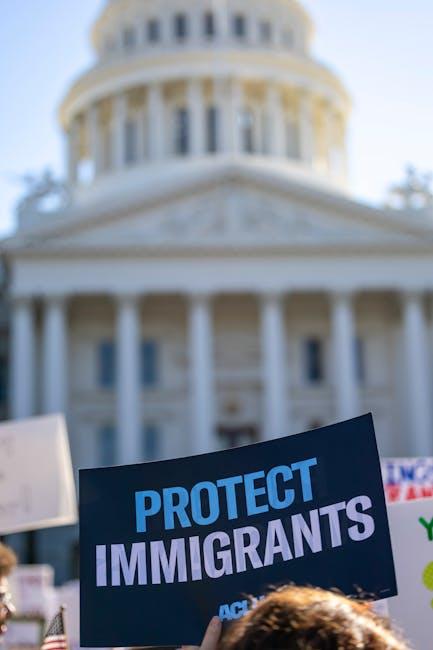
Unpacking the Illusions Behind Conventional Immigration Fixes
- Border Militarization: The prevalent fixation on intensifying border security often overlooks the paradox that walls and patrols incentivize riskier crossings rather than curtail them. This creates a perverse cycle where migrants’ stakes and vulnerabilities escalate, but the root causes—economic disparity, violence, and political instability—remain unaddressed. Simply put, fortified borders redistribute migration patterns instead of resolving migration pressure.
- Guest Worker Programs: While touted as a pragmatic fix balancing labor market needs and migration control, these schemes frequently trap workers in exploitative cycles. They lack adequate pathways to citizenship, eroding long-term integration and often inflating informal labor markets. Their design prioritizes short-term economic utility over sustainable social cohesion.
| Conventional Fix | Perceived Benefit | Unintended Consequence | Trade-Off |
|---|---|---|---|
| Increased Border Enforcement | Reduced illegal crossings | Riskier, more costly clandestine migration | Security vs humanitarian risk |
| Temporary Work Visas | Labor market flexibility | Worker exploitation and non-integration | Economic efficiency vs social justice |
The insistence on conventional fixes often stems from a desire for immediate, visible control, yet this reflects a fundamental misunderstanding of migration’s complexity. Borders are not mere fences—they are dynamic thresholds shaped by global inequalities and human aspirations. Any solution must dissect these forces rather than patch symptoms. It requires reimagining sovereignty through cooperation, not isolation, and coupling enforcement with meaningful opportunities for legal adaptation and integration.
Successful immigration reform demands a nuanced trade-off analysis where efficacy is measured not only by deterrence but by human dignity, economic sustainability, and diplomatic prudence. Rather than zero-sum games pitting migrants against citizens, we must conceptualize flows as reciprocal exchanges embedded within a shared future. This perspective dismantles illusions that simple closures or temporary labor fixes can suffice and invites policies that reckon with migration as a permanent, manageable, and potentially enriching phenomenon.
Beyond Enforcement The Case for Adaptive and Humane Strategies
- Shifting the paradigm from enforcement to adaptation is not merely a humane gesture but a pragmatic necessity. Traditional border enforcement strategies often operate under the assumption that immigration is a binary and controllable phenomenon, leading to rigid policies that fail to account for the complex socio-economic drivers behind migration. This approach creates a cycle of militarization and displacement, exacerbating vulnerabilities without addressing root causes. Instead, adaptive strategies recognize migration as a dynamic process requiring flexible frameworks—such as progressive regularization programs, community-based integration initiatives, and bilateral cooperation—that balance security concerns with human dignity. These methods acknowledge the inherent trade-off between controlling borders and enabling orderly, beneficial mobility, pushing policymakers to adopt nuanced solutions rather than one-size-fits-all enforcement.
- Humane strategies, when correctly calibrated, outperform traditional enforcement on multiple fronts:
| Aspect | Traditional Enforcement | Adaptive & Humane Strategies |
|---|---|---|
| Effectiveness in reducing unauthorized crossings | Temporary drop, often followed by spikes due to displacement effects | Gradual reduction through legal pathways and community engagement |
| Economic impact | High costs on surveillance and detention with minimal economic integration | Improved labor market stability and fiscal contributions via formalization |
| Social cohesion and trust | Widespread fear and marginalization in immigrant communities | Enhanced social stability through inclusion and mutual respect |
| Long-term policy sustainability | Politically and financially burdensome, often reactive | Proactive, with adaptability to evolving migration trends |
Moreover, adaptive and humane strategies require a recalibration of public discourse and political will. The relentless depiction of unauthorized immigrants as threats restricts the political space needed for reform. To break this impasse, communication must shift towards recognizing migrants as contributors, not merely subjects of control. This subtle but critical change fosters public support for policies that prioritize human rights while safeguarding societal interests. Ultimately, the challenge lies in balancing state sovereignty with moral and practical imperatives—a balance achievable only through innovative policy instruments that embrace complexity rather than attempting its erasure by force.
Trade-Offs at the Frontier Balancing Security Liberty and Opportunity
- Security versus Liberty: The perennial argument frames border enforcement as a zero-sum game—more security invariably means less liberty. Yet this dichotomy is oversimplified. Excessive militarization and surveillance at borders can undermine civil freedoms without delivering proportional safety gains. Instead, adopting intelligent risk assessment tools and community-based enforcement creates a more precise, less intrusive approach. Thoughtfully calibrated security measures that prioritize actual threat vectors over blanket restrictions protect both national safety and individual rights, illustrating that security and liberty are not mutually exclusive but can be mutually reinforcing when policy design is nuanced.
- Opportunity Costs in Policy Focus: Traditional strategies notoriously emphasize deterrence, often at the expense of economic potential and humanitarian obligations. This skewed prioritization exacts real opportunity costs: diminished workforce dynamism, stifled innovation, and social fragmentation. A balanced immigration policy acknowledges that fostering legal pathways and integrating newcomers is not a concession, but a catalyst for national prosperity. The trade-off isn’t simply security versus openness—it’s about intelligently sequencing enforcement with expansion of opportunity, emphasizing that a robust, flexible immigration framework enhances long-term stability far more effectively than reactive, exclusionary tactics.
| Trade-Off | Common Assumption | Nuanced Reality |
|---|---|---|
| Border Security | Maximal enforcement ensures safety | Strategic, rights-respecting security delivers greater, sustainable protection |
| Immigrant Integration | Strict limits prevent economic strain | Well-managed integration expands economic opportunity and social cohesion |
Reframing the Debate Towards Solutions Rooted in Systemic Insight
- Challenging the simplistic border-versus-open debate: The pervasive framing of immigration policy as either rigid border enforcement or unchecked openness obfuscates the reality that effective solutions demand systemic understanding. Traditional solutions, fixated on surface-level control metrics, overlook the intricate socio-economic networks influencing migration flows. Instead of treating borders as mere physical barriers, we must conceive them as dynamic interfaces embedded within global labor markets, human rights frameworks, and geopolitical landscapes. This reframing calls for prioritizing adaptive governance models that incorporate real-time data analytics, stakeholder collaboration, and a granular appreciation of migrant agency—elements often dismissed in polarized discourse.
- Balancing sovereignty, economic vitality, and human dignity: Reform efforts frequently entangle themselves in trade-offs between national security and humanitarian obligations, yet the false dichotomy undermines nuanced policymaking. Insight-driven solutions advocate for differentiated approaches that recognize the heterogeneity of migrant populations, distinguishing economic migrants, refugees, and displaced persons within legal frameworks tailored to their distinct statuses. Transparent mechanisms for evaluating labor market needs, coupled with robust integration pathways, can mitigate socioeconomic strains while fostering long-term cohesion. The trade-off table below illustrates how systemic insight mediates conflicting priorities with targeted interventions rather than blunt instruments:
| Policy Dimension | Traditional Approach | Systemic Insight Approach |
|---|---|---|
| Border Security | Hard physical barriers and increased patrols | Technologically integrated surveillance with community-based monitoring |
| Migrant Categorization | Binary legal/illegal classification | Context-specific classifications supporting tailored rights and protections |
| Labor Market Integration | Ad hoc guest worker programs | Dynamic visas linked to real-time economic demands and skill recognition |
| Humanitarian Responsibility | Minimal processing capacity and often reactive asylum measures | Proactive resettlement policies and collaboration with international agencies |
Concluding Remarks
As we stand at the crossroads of an ever-changing global landscape, it becomes clear that the old maps of immigration—marked by rigid lines and outdated policies—no longer guide us toward lasting solutions. Rethinking borders is not merely an exercise in bureaucracy but a profound invitation to embrace complexity, empathy, and innovation. True progress lies not in enforcing walls but in weaving networks of understanding that span cultures and economies alike. Only by redefining our approach can we hope to build a future where borders serve not as barriers but as bridges—connecting lives, opportunities, and shared human dignity.




