
In an era where the world is often celebrated as a global village, passports have come to symbolize the promise of freedom—an invitation to explore distant lands and connect across cultures. Yet beneath their polished covers and endless stamps lies a more complex reality. Rather than merely unlocking doors, global passports increasingly act as gateways to new kinds of boundaries, subtly redrawing lines that define who belongs and who remains on the fringes. This article delves into the paradox of global passports: tools that seem designed to transcend borders but in practice often reinforce them, reshaping the modern landscape of mobility and control in unexpected ways.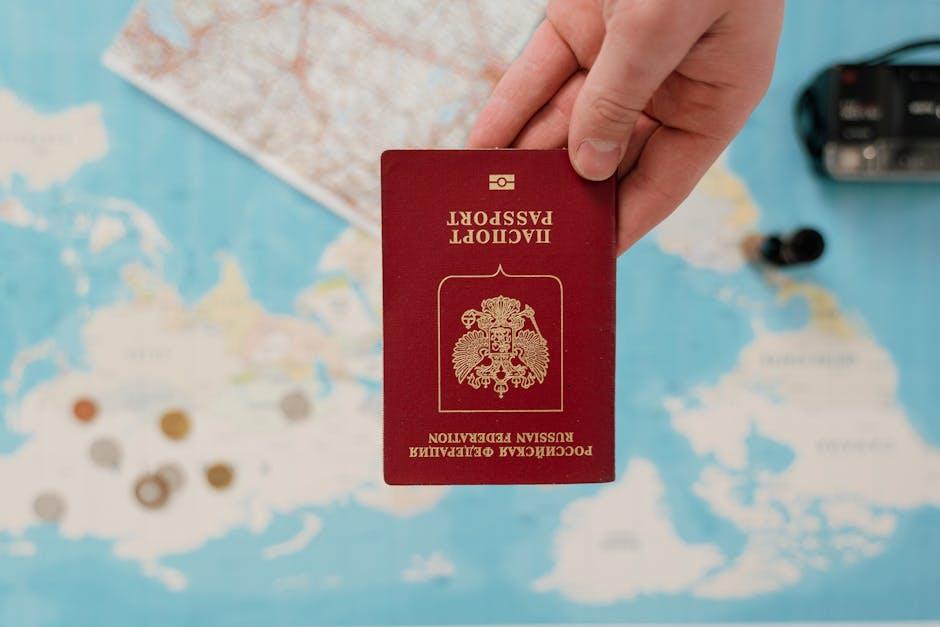
The Illusion of Unbounded Travel One World Passports Can’t Unlock
Global or “world” passports often receive praise as symbols of unrestricted mobility, promising a borderless experience that transcends national allegiance. However, this vision is largely an illusion. Despite the allure of one document to open every door, the reality is starkly different. International boundaries are not just physical but deeply political constructs tied to sovereign interests, security concerns, and economic strategies. A world passport may grant symbolic citizenship, but it cannot override the geopolitical friction that governs real-world access. In essence, these documents often serve to highlight the very limitations they claim to dissolve, revealing the entrenched structures of control rather than dissolving them.
Moreover, the trade-offs inherent in courting such alternative travel documents are often overlooked. Holders of world passports frequently encounter increased scrutiny, skepticism, or outright rejection due to the lack of recognition by most nation-states. Instead of true freedom, bearers often gain a badge of ambiguity that complicates their passage. Countries require assurances of responsibility, reciprocity, and legal accountability—standards world passports rarely meet. Travel is not merely about crossing lines but about the acceptance of an individual’s identity within an accepted social contract. Rather than chasing the mirage of unbounded travel through these passports, travelers might be better served by engaging with the actual political and diplomatic frameworks that govern borders and seeking more pragmatic solutions within those realms.
| Aspect | World Passport | National Passport |
|---|---|---|
| Legal Recognition | Limited, often symbolic | Globally recognized |
| Access to Services | Minimal; dependent on discretion | Comprehensive, including consular support |
| Political Influence | None | Significant, linked to citizenship rights |
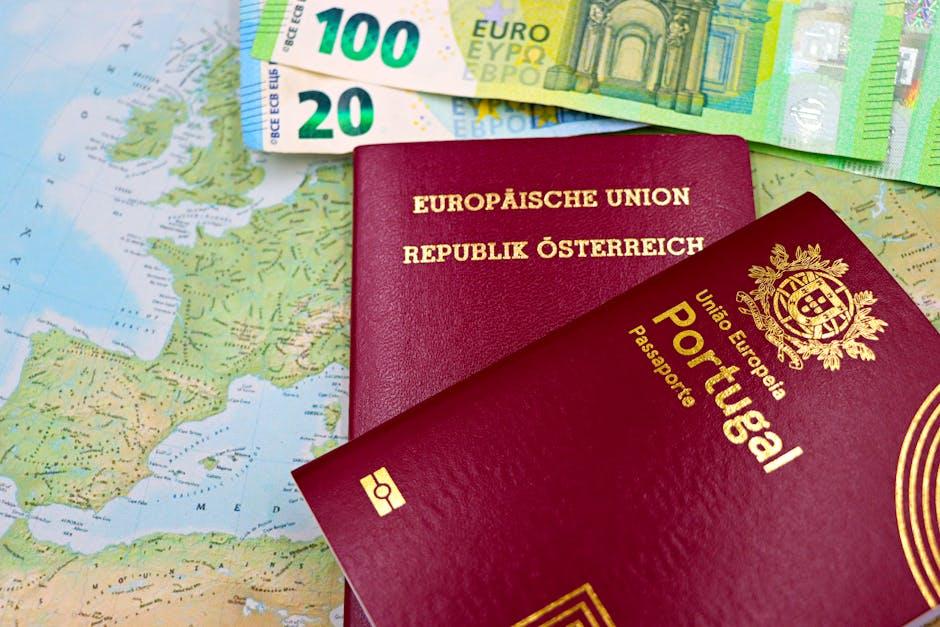
How New Global Documents Redefine Borders Instead of Erasing Them
Global documents branded as “passports of freedom” often mask a more complex reality: rather than dismantling borders, they reconfigure them. These documents create new layers of control that function less like keys to unlock mobility and more like finely tuned filters, subtly shaping who can cross which barriers and under what conditions. This dynamic challenges the popular assumption that such documents herald an era of borderless travel. Instead, they exemplify how borders evolve—becoming less about physical checkpoints and more about digital identities, compliance algorithms, and geopolitical leverage. Far from erasing divisions, global passports institutionalize novel forms of exclusion dressed as inclusivity, privileging certain nationalities, economic classes, or political affiliations while subjugating others to new bureaucratic hurdles.
While critics rightly deplore the persistence of borders, it’s vital to distinguish between the blunt force of traditional boundary enforcement and the sophisticated recalibration offered by these global documents. Here lies a trade-off: the increased efficiency and security of digitally augmented passports can facilitate smoother movement for some, but they also intensify surveillance and data dependency, raising ethical questions about privacy and equity. Policymakers and advocates should thus pivot from mere calls for “open borders” toward advocating for transparency in the governance of these documents, robust privacy protections, and equitable access mechanisms. The following table underscores this nuanced tension:
| Aspect | Traditional Borders | New Global Documents |
|---|---|---|
| Nature | Physical, visible checkpoints | Digital, data-driven control |
| Inclusivity | Conventional, rule-based exclusion | Algorithmic, opaque selection |
| Impact on Mobility | Hard barriers, delays | Seamless for some, prohibitive for others |
| Additional Risks | Bribery, corruption | Surveillance, data privacy concerns |
Beyond Convenience Why Global Passports May Entrench Inequality
At first glance, global passports promise a borderless world where mobility transcends nationality, but this ideal glosses over deeper inequalities entrenched by such systems. Access to “global” passports is often limited to individuals from already privileged socioeconomic backgrounds, effectively creating a two-tier citizenship market. Wealthier applicants can buy their way into elite statuses, while less affluent populations remain tethered to their original national identities with limited international mobility. This runs counter to the notion of freedom as equal opportunity; instead, it commodifies citizenship, transforming what should be a universal right into a scarce luxury. Thus, global passports function not as gateways to freedom but as sophisticated barriers, hardening geopolitical stratifications under the guise of convenience.
Moreover, the rise of global passports exacerbates existing disparities between countries and individuals by reinforcing a hierarchy of movement rights. Consider the trade-offs implicit in widespread passport commodification:
- Economic Capital vs. Civic Rights: Mobility becomes less about legal recognition or cultural belonging and more about financial capacity, deepening the divide between the rich and the poor.
- National Sovereignty vs. Global Uniformity: While global passports suggest erasing borders, they often impose globalized layers of control where mobility is monitored more intensively under private agreements and surveillance frameworks.
- Freedom of Movement vs. Exclusion: The promise of freedom applies selectively, promoting mobility for some while implicitly restricting it for others through newfound administrative hurdles.
| Aspect | Traditional National Passport | Global Passport |
|---|---|---|
| Access | Tied to citizenship or heritage | Often linked to wealth or investment |
| Mobility Rights | Dependent on bilateral relations | Market-driven, with variable privileges |
| Control & Surveillance | State-regulated | Privatized and multilayered |
Instead of naively heralding global passports as harbingers of freedom, the conversation should shift toward recognizing how they recalibrate global inequalities. Policymakers and advocates must critically examine who benefits from these passports and at what social cost, ensuring reforms do not simply digitize old borders or replace them with new, more insidious ones wrapped in the allure of globalization.
Rethinking Mobility The Case for Smarter Alternatives to Universal Passports
Universal passports are often heralded as the ultimate symbol of unrestricted movement and global citizenship, yet this assumption glosses over profound complexities. The uniformity they suggest masks the nuanced realities of mobility—where the ability to cross borders is unevenly commodified and heavily regulated. Instead of dismantling barriers, universal passports risk erecting subtler forms of exclusion by standardizing identity verification without addressing the political, economic, and social fractures that truly dictate freedom of movement. We need to rethink mobility not as a binary of presence or absence but as a spectrum shaped by diverse needs, rights, and capacities. Smarter alternatives, grounded in context-specific flexibilities rather than one-size-fits-all credentials, could better accommodate the variegated realities of migrants, refugees, business travelers, and remote workers alike.
Implementing these alternatives requires balancing security concerns with inclusivity, privacy with practicality, and national sovereignty with global cooperation. Rather than eroding state control entirely, a more pragmatic approach involves layered credentials tailored to specific mobility purposes—such as digital tokens for transient visitors, regional travel cards for cross-border communities, or biometric-linked IDs designed for humanitarian corridors. Consider this comparative outline:
| Credential Type | Best Use Case | Key Advantage | Potential Trade-Off |
|---|---|---|---|
| Universal Passport | Global long-term migration | Standardized recognition | Rigid bureaucracy, oversimplification of identities |
| Regional Travel Card | Cross-border regional mobility | Facilitates local commerce and social ties | Limited geographic scope, potential exclusion |
| Digital Mobility Tokens | Short-term business/educational travel | Streamlined processing, enhanced data control | Privacy risks, dependence on tech infrastructure |
- Flexibility: Mobility tools must adapt fluidly to identity nuances and changing geopolitical realities.
- Inclusivity: Efforts should focus on amplifying access, particularly for marginalized populations.
- Security: Any alternative system must maintain credible safeguards without reinforcing hidden biases or surveillance overreach.
In short, reimagining mobility credentials opens the door to layered, dynamic systems better aligned with the plural realities of human movement. This is a far cry from the paradoxically restrictive ideal of universal passports, emphasizing that freedom to move is less about uniform access and more about personalized, context-aware recognition frameworks.
Global Passports and the Quiet Expansion of State Control Mechanisms
At first glance, global passports appear as emblems of liberation—tools designed to dissolve the archaic boundaries of nationality and enable seamless human mobility. However, this superficial reading overlooks a far more insidious dynamic: the quiet expansion of state control mechanisms under the guise of globalization. Instead of diminishing the power of borders, global passports often recalibrate them, embedding surveillance, data aggregation, and risk assessment into everyday travel. Governments and private tech intermediaries collaborate to transform what should be simple travel documents into sophisticated instruments of biometric profiling, real-time monitoring, and predictive policing. The passport’s evolution from physical artifact to digital dossier exemplifies how freedom is paradoxically tethered to increased visibility and control, exposing a trade-off between mobility and privacy that remains insufficiently acknowledged in public debates.
Understanding this complex reality requires us to challenge the simplistic assumption that fewer physical barriers guarantee genuine freedom. In fact, the subtle recalibration of borders through these enhanced identification systems reveals the _reconfiguration_ rather than the removal of barriers. For instance, a “global” passport system doesn’t erase national sovereignty but rather overlays it with a panopticon-like architecture, where jurisdictional claims shift from territorial lines to data flows. This shift demands nuanced policy approaches: rather than uncritically embracing global passports as tokens of progress, stakeholders must insist on transparent governance frameworks, robust data protection standards, and inclusive accountability mechanisms. Only then can the promise of global mobility avoid morphing into a new paradigm of exclusion—one that cloaks control in the language of freedom.
Final Thoughts
As we navigate the evolving landscape of global mobility, it becomes clear that passports—those seemingly simple booklets—carry weight far beyond stamps and visa pages. Rather than gateways to unbridled freedom, they often act as intricate markers of new boundaries, subtly redrawing lines in an ever-more connected world. Understanding this paradox invites us to rethink the true meaning of movement, belonging, and the unseen borders that shape our modern lives. In the end, the passport is not just a key; it’s a mirror reflecting the complexities of freedom framed by control.




