
In an era where the lines between opportunity and influence blur, the concept of a “Passport for Investment” is heralded by many as a golden ticket to global freedom-an emblem of mobility, prosperity, and new beginnings. Yet beneath the glossy veneer of convenience and empowerment lies a more complex narrative. This passport, often marketed as a bridge to unfettered access, is less about liberating individuals and more about weaving a web of control, subtly guiding the flow of wealth, allegiance, and regulation across borders. As we unpack the realities behind these investment passports, it becomes clear that what appears to be freedom in hand often masks a sophisticated mechanism of governance, surveillance, and power. This article delves into why the promise of freedom is not the whole story-and how control quietly shapes the true purpose of this modern passport.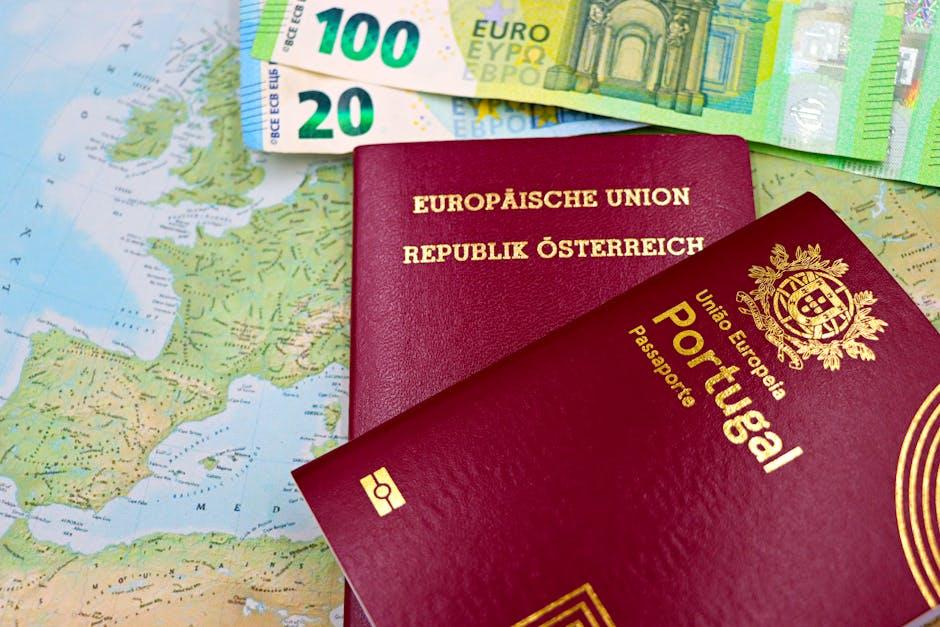
Shadows Behind the Promise of Liberty in Investment Citizenship
The glossy allure of investment citizenship often masks a complex web of financial gatekeeping and geopolitical maneuvering. While these programs advertise seamless global mobility and economic opportunity, they effectively commodify national identity, reducing citizenship-a deeply personal and political bond-to a mere transaction. This transformation carries significant trade-offs that rarely receive enough scrutiny. For instance, the promise of freedom is counterbalanced by layered bureaucratic oversight and selective exclusion. Rather than expanding genuine autonomy, investment passports can entrench elite privilege and foster new dependencies between wealthy investors and state apparatuses, subtly reshaping sovereignty into a purchasable privilege rather than a universal right.
Moreover, the regulatory frameworks governing these programs often reveal a deliberate tension between sovereign control and investor liberty. Jurisdictions offering such citizenships tend to impose rigorous due diligence and ongoing compliance requirements that can feel intrusive, undermining the freedom investors expect. This is where a sharp distinction becomes essential: investment citizenship is freedom curated by control, not freedom unleashed. Policymakers and participants alike should recognize that these passports act less as instruments of empowerment and more as mechanisms for states to selectively calibrate economic inflows, reputational risk, and demographic composition under the guise of openness.
Consider the following dynamics:
- Enhanced Mobility vs. Heightened Surveillance: Access to new markets often comes with greater scrutiny of financial histories and personal behavior.
- Economic Inclusion vs. Social Stratification: Wealth thresholds typically exclude average citizens, reinforcing global inequalities.
- Sovereignty Flexibility vs. Identity Dilution: Citizenship commodification risks eroding traditional notions of national belonging and civic duty.

When Mobility Masks Market Manipulation and State Control
At first glance, mobility offered through investment passports seems to epitomize freedom-liberating holders from visa restrictions and national borders. However, this veneer of liberty often masks a more insidious form of market manipulation and state control. Governments leverage these programs not primarily to expand individual freedoms but to attract capital under tightly controlled conditions, subtly shaping economic landscapes in ways that privilege certain industries, national interests, or geopolitical agendas. The mobility component becomes a bargaining chip rather than a genuine right, enabling states to reward favorable investors while sidelining those who might pose political or economic challenges. This dynamic challenges the simplistic narrative that passports sold for investment guarantee freedom; instead, they often reinforce hierarchies masked by the allure of openness.
Recognizing this interplay demands a nuanced approach, as the trade-offs are far from straightforward. On one side, investment passports can catalyze growth in targeted sectors and generate much-needed foreign capital in times of economic strain. On the other, they impose a curated version of freedom that hinges on compliance and alignment with state objectives. Rather than viewing these programs as blurring or dismantling borders, we should see them as engineered gateways-controlled corridors that enable selective access while preserving underlying mechanisms of exclusion and control. Policymakers and investors alike must therefore interrogate whose freedom is truly being expanded, how market incentives are reshaped, and whether these passports serve as tools for genuine economic democratization or simply strategic instruments of influence.
Rethinking Global Talent Strategies Beyond Passports for Capital
The dominant narrative around “passport for investment” programs hinges on the allure of global mobility as an unequivocal good-an emblem of personal freedom that transcends borders. Yet this perspective is overly simplistic and strategically myopic. Treating passports primarily as a currency for capital flow masks the broader geopolitical and economic consequences, reducing complex human capital deliberations to mere transactional convenience. Instead of celebrating these passports as gateways to liberty, we should interrogate how they reinforce a transactional view of talent, where citizenship becomes a commodity stripped of its socio-cultural and political gravitas.
True global talent strategies demand a fusion of economic insight and social intentionality that passport-for-investment schemes fundamentally lack. They perpetuate a paradigm where states compete to attract capital by tokenizing citizenship, often sidelining meaningful integration, innovation-driven skill development, and sustainable human capital retention. To recalibrate, policymakers and corporations must:
- Prioritize qualitative talent metrics: Skills adaptability, creative problem-solving, and cultural dexterity over mere financial investment thresholds.
- Embed long-term participatory frameworks: Encouraging immigrants’ civic engagement and socio-economic contributions beyond initial capital injection.
- Differentiate between capital mobility and knowledge flow: Recognize that capital alone cannot catalyze innovation ecosystems without deep-rooted human and institutional networks.
| Strategy Focus | Passport-for-Investment Model | Rethought Global Talent Strategy |
|---|---|---|
| Primary Goal | Capital acquisition via citizenship sales | Fostering innovation through integrated human capital |
| Talent Assessment | Financial capacity only | Comprehensive skills and cultural adaptability |
| Social Inclusion | Minimal to none | Active civic and economic participation |
By transcending the formulaic “investment-to-passport” exchange, a more profound and durable approach to global talent emerges-one that respects citizenship not as a mere asset but as a dynamic platform for mutual growth and innovation.
The Illusion of Choice in Second Citizenship Schemes
The notion that second citizenship schemes offer genuine freedom is a carefully crafted illusion, designed to mask the intricate web of control underlying these programs. On the surface, investors are enticed by the promise of mobility, security, and new opportunities. Yet, the fine print reveals a stark reality: these passports often come with strings attached-government surveillance, legal obligations, and geopolitical dependencies that cap the very autonomy they claim to provide. Choice here isn’t about liberation; it’s about navigating a complex trade-off between personal liberty and systemic oversight. What’s frequently overlooked is that these schemes commodify identity, reducing citizenship-a profound social contract-to a transactional product vulnerable to revocation or manipulation, especially in times of political tension or policy shifts.
Rather than an unmitigated tool for empowerment, second citizenship represents a form of constrained freedom, one that thrives within a curated spectrum dictated by states and intermediaries. The choice available to investors tends to be both narrow and highly conditional, influenced by factors such as the country’s geopolitical alliances, financial thresholds, and residency requirements. This situation calls for nuanced scrutiny and realistic expectations. Those considering these options should question not only the immediate benefits but also the hidden liabilities of dependency, including:
- Potential diplomatic fallout affecting the value of the passport
- Opaque vetting procedures and lack of transparency
- Risks of exacerbating global inequality by privileging the wealthy
To approach these schemes critically means acknowledging that second citizenship is less about escape and more about strategic repositioning within existing power structures-where genuine autonomy often remains elusive.
| Assumption | Reality | Implication |
|---|---|---|
| “Buying a passport means absolute freedom of movement.” | Passports are subject to international relations and can face sudden restrictions or suspensions. | Mobility is conditional and can be withdrawn, undermining the supposed permanence. |
| “Citizenship equals social integration and rights.” | Second citizenships often lack social inclusion and political participation rights. | Investment passports create a tiered hierarchy of citizenship, not equality. |
Balancing Security Concerns and Personal Freedom in Passport Investments
Passport investments are often championed as gateways to personal freedom, yet the underlying infrastructure prioritizes stringent security paradigms that can ironically curtail liberty more than they expand it. Governments wield these programs to enforce extensive surveillance and vetting, justified by national security concerns. However, the trade-off is less a liberation of mobility and more a recalibration of control under the guise of due diligence. The critical insight is that while investment passports offer an expedited path to citizenship or residency, they invariably embed the investor within regimes of state oversight that track financial flows, personal data, and behavioral compliance-not unlike traditional immigration channels, but often with fewer transparency safeguards.
To navigate this landscape wisely, investors must distinguish between nominal freedom-the mere possession of a travel document-and actual autonomy, which hinges on the extent of state intrusion and conditional rights attached to these passports. A nuanced approach advocates for evaluating programs not solely by their ease or speed but by the regulatory frameworks they impose post-investment. Consider the following trade-offs:
- Enhanced due diligence vs. privacy erosion: Heightened background checks increase security but erode anonymity.
- Faster citizenship vs. restricted rights: Accelerated programs may limit voting or political participation, constraining civic freedom.
- Economic opportunity vs. financial surveillance: Investment transparency requirements can invite scrutiny into personal wealth management and tax compliance.
| Aspect | Perceived Benefit | Control Mechanism | Resulting Impact |
|---|---|---|---|
| Screening Intensity | Security Assurance | Comprehensive Data Sharing | Privacy Compromise |
| Program Accessibility | Inclusive Investment | Conditional Approvals | Unequal Rights |
| Residency/Citizenship Speed | Immediate Mobility | Limited Civic Engagement | Restricted Freedom |
Ultimately, passport investments illustrate that liberty framed as mere access to markets and borders is superficial unless paired with substantive rights and protections. Savvy investors should therefore champion transparency demands, seek programs with independent oversight, and remain vigilant against the conflation of freedom with regulatory compliance. This balanced critique dispels the myth of unqualified freedom promised by these schemes and spotlights the sophisticated interplay between control and autonomy embedded within.
To Conclude
In the end, the allure of a “passport for investment” may shimmer with the promise of freedom and opportunity, but beneath its polished surface lies a complex web of control and regulation. What feels like a gateway to new horizons is often a carefully crafted mechanism, guiding choices and redefining sovereignty in subtle ways. As we navigate this evolving landscape, it becomes crucial to look beyond the glossy marketing and ask: who truly holds the reins when citizenship becomes a commodity? Only by understanding the layers of influence can we begin to reclaim the genuine freedom that such programs claim to offer.




