
In a world that has become increasingly interconnected yet paradoxically fragmented, the traditional passport-once the emblem of cross-border freedom-now stands at a crossroads. As digital landscapes redefine the way we verify identity, govern access, and navigate geopolitical boundaries, the physical booklet filled with stamps and visas is rapidly losing its relevance. This article explores the obsolescence of global passports, diving into how emerging technologies and shifting notions of sovereignty are ushering in a new era of mobility. It invites readers to rethink the very concept of borders in a digital age where data flows more freely than people, challenging long-held assumptions about travel, security, and citizenship.
The Illusion of Worldwide Citizenship in a Digitally Fragmented Globe
At first glance, the digital revolution seems to usher in an era where borders blur and the notion of “world citizenship” becomes attainable. However, this perception is more illusion than reality. While digital platforms connect us instantly, the underlying infrastructure of the internet is discretely segmented-whether through state-imposed firewalls, corporate gatekeeping, or localized data regulations. The resulting “digital fragmentation” inadvertently reinforces territorial divides rather than dissolving them. This dynamic challenges the naive assumption that digital fluency equates to borderless mobility. In truth, navigating the digital realm demands as much awareness of jurisdictional boundaries as physical travel, if not more. It’s a stark trade-off: the promise of global participation comes tethered to invisible, yet rigid, gatekeepers that monitor, filter, and restrict access based on location.
To meaningfully rethink mobility in this context, we must move beyond the simplistic myth of post-national belonging:
- Distinguish between digital connectivity and sovereignty: Countries wield increasing control over digital flows to protect economic interests and social narratives, sometimes undermining the idea of seamless digital citizenship.
- Recognize the uneven accessibility of digital rights: Digital inclusion is inconsistent, often privileging those in developed economies with robust infrastructure, and marginalizing those in restricted or surveilled environments.
- Embrace hybrid models of mobility: Instead of forsaking physical passports, consider layered certifications combining digital identity verification with traditional documentation to negotiate multifaceted border realities.
Only through such nuanced distinctions can we begin to approach a model of mobility that respects the evolving complexity of a fragmented digital globe, rather than succumbing to utopian ideals detached from practical sovereignty imperatives.
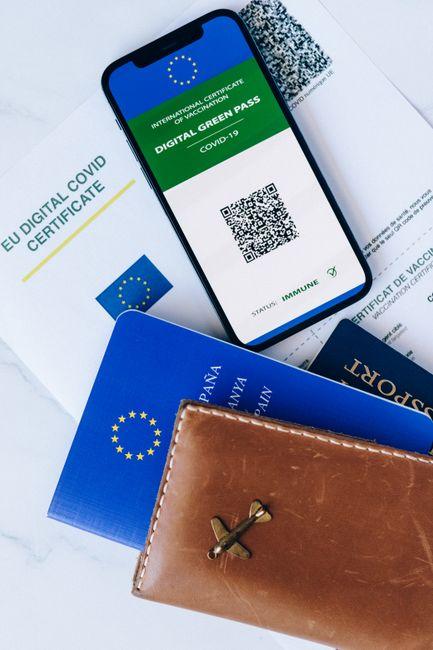
Beyond the Passport: Crafting Seamless Identity Verification for Cross-Border Movement
Relying solely on passports as physical tokens of identity perpetuates a narrowly entrenched conception of border sovereignty that digital innovation is primed to disrupt. The future of seamless identity verification demands a multi-layered, privacy-conscious ecosystem that transcends the limitations of plastic booklets and stamps. Digital identity wallets that aggregate verified attributes from trusted issuers-governments, financial institutions, and biometric databases-offer a richer, more dynamic profile than a passport number ever could. Yet, this is not a call to dismantle state authority wholesale; rather, it signals the need to separate identity assertion from mobility authorization. Clear delineation ensures that provenance and right to travel evolve as interoperable but distinct processes, enabling trusted verification without defaulting to opaque, centralized control. This approach resolves persistent trade-offs between security, user autonomy, and cross-jurisdictional trust, which passport-centric paradigms stubbornly exacerbate.
Implementing these sophisticated identity systems demands nuanced infrastructure choices that balance interoperability with jurisdictional sovereignty. Governments and private sectors must collaborate on open standards that both protect against fraud and respect individual data sovereignty. For example, a tiered verification model-where some attributes like biometric keys are universally recognized while others like health or vaccination status are selectively shared-can mitigate risks of surveillance creep while preserving operational agility. Consider the following distinction:
| Verification Layer | Scope | Trade-off |
|---|---|---|
| Core Identity (e.g., biometric keys) | Universal recognition | High security, low privacy risk due to cryptographic protections |
| Contextual Attributes (e.g., visas, health status) | Selective sharing based on context | Flexible control but requires robust consent frameworks |
- Prioritize decentralized identity frameworks that reduce the power imbalance between individuals and states.
- Invest in cross-border public-private partnerships that build interoperable trust registries rather than proprietary walled gardens.
- Incorporate user-centric consent mechanisms that give travelers granular control over who sees which parts of their verified identity.
Ultimately, transcending the passport necessitates acknowledging the inherent complexity of identity as a mutable social contract rather than a static token-a paradigm shift that requires both bold innovation and sober reflection on governance, privacy, and fairness.
When Convenience Masks Vulnerabilities The Hidden Risks of Relying on Physical Travel Documents
The allure of physical travel documents lies in their straightforward tangibility-passports and visas are universally recognizable, easy to show, and often seen as trustworthy tokens of identity. Yet this convenience dangerously obscures their fragility. Unlike digital credentials, paper-based documents are inherently vulnerable to forgery, theft, and loss, with each incident imposing significant barriers on the traveler and complex verification burdens on border authorities. The presumption that physical passports are inherently secure ignores how rapidly counterfeit technologies have advanced, making traditional safeguards obsolete. Simply put, convenience here has become a double-edged sword: the ease of use masks a brittle, outdated infrastructure struggling to contend with increasingly sophisticated fraud and identity theft tactics.
To navigate this dilemma, stakeholders must abandon the false dichotomy between “convenience” and “security” and instead pursue hybrid models combining the best of both worlds. Physical documents should not be discarded hastily; their offline operability remains invaluable in low-connectivity regions. However, relying exclusively on them neglects crucial opportunities to enhance verification with biometrics, encrypted digital identifiers, and real-time cross-border data sharing. Consider the trade-offs:
| Aspect | Physical Documents | Digital Credentials |
|---|---|---|
| Security | Prone to forgery and loss | Encrypted, harder to counterfeit |
| Convenience | Universally accepted but slow manual checks | Faster processing, but requires infrastructure |
| Privacy | Limited data exposure | Risk of mass data misuse if unregulated |
| Accessibility | Works offline | Requires digital access and tech literacy |
- Recommendation: Adopt layered verification protocols that allow travelers to use physical documents alongside tamper-proof digital tokens, minimizing reliance on a single point of failure.
- Recommendation: Invest in global digital infrastructure that supports seamless yet secure identity verification without sacrificing privacy, especially in underserved areas.
- Insight: The future demands redefining “convenience” from mere physical presence to secure, context-aware trustworthiness-ensuring passports serve as gateways rather than bottlenecks in global mobility.
Navigating Power Dynamics How Digital Borders Reshape Access and Exclusion
Digital borders are not neutral facilitators of mobility; they are active agents reshaping power dynamics in unprecedented ways. Unlike physical passports – limited by sovereignty and geography – digital borders involve algorithms, data governance, and corporate gatekeepers who interpret and enforce access criteria with opaque discretion. This transition redistributes control from states to a hybrid ecosystem where private platforms, international standards bodies, and tech conglomerates assume part of the custodial role traditionally held by governments. Such displacement risks entrenching new modes of exclusion rooted in data biases, infrastructural divides, and surveillance capitalism, rather than citizenship alone. Therefore, the real challenge lies not in digitizing identification but in exposing who designs these rules, whose narratives inform them, and who remains invisible within their logic.
To navigate this terrain effectively requires a nuanced recalibration of assumptions about inclusion and exclusion. For example, instant digital vetting can expedite border-crossing for some but simultaneously imposes steep barriers on individuals lacking digital literacy, consistent connectivity, or trust in digital identity ecosystems. The trade-offs are stark: efficiency and security can deepen inequity if policymakers and technologists fail to embed flexibility and transparency by design. What’s needed is a layered approach to digital borders – combining algorithmic accountability, robust rights protections, and alternative verification pathways that do not rely solely on standardized digital identities. Consider this comparison:
| Aspect | Physical Passports | Digital Borders | Implication |
|---|---|---|---|
| Control | State-centric | Multi-stakeholder, opaque | New gatekeepers emerge beyond state oversight |
| Inclusion Criteria | Citizenship-based | Data and behavior-driven | New forms of discrimination and exclusion |
| Flexibility | Limited | Potentially adaptive but precision-reliant | Risk of rigid automation without human nuance |
| Transparency | Formal and standardized | Often black-boxed algorithms | Accountability challenges |
- Recommendation: Design digital border systems with participatory governance, enabling affected populations to influence criteria and redress mechanisms.
- Recommendation: Maintain analog alternatives to avoid excluding marginalized groups disproportionately affected by digitization hurdles.
- Recommendation: Insist on auditability and explainability as fundamental pillars to balance predictive efficiency with human rights.
Choosing Security Over Tradition Embracing Smart Mobility in the Age of Data-Driven Travel
In the context of evolving international travel, clinging to traditional passport systems under the guise of ‘security’ often masks a reluctance to embrace smarter, data-driven mobility solutions. The paradox is clear: while passports are designed to secure borders, their physical and bureaucratic limitations increasingly expose travelers and states to inefficiencies, fraud, and outdated verification methods. Choosing security in the modern era means moving beyond paper-based artifacts toward an infrastructure that leverages biometric identifiers, real-time analytics, and interoperable digital identities. However, this shift demands more than mere digitization; it requires a paradigm where trust is algorithmically reinforced yet fundamentally human-centric-balancing privacy with public safety without the false security of opaque, one-size-fits-all controls.
Embracing smart mobility involves reconceptualizing identity validation as a dynamic process, not a static stamp in a booklet. This transition necessitates grappling with trade-offs between centralized control and decentralized verification, as well as between speed and robustness of authentication. For policymakers and technologists, the question is not whether to digitize borders but how to ensure inclusivity, minimize systemic biases, and guard against misuse. Practical implementations might consider:
- Hybrid Identity Models: Combining biometric data with contextual behavior analytics rather than relying solely on either.
- Tiered Access Controls: Differentiated access based on risk profiles rather than uniform standards.
- Interoperability Standards: Establishing global protocols that prioritize user consent and data sovereignty.
Below is a concise comparison of traditional versus smart mobility security paradigms to illustrate the nuanced shift required:
| Aspect | Traditional Passport Security | Smart Mobility Approach |
|---|---|---|
| Identity Verification | Static physical document with photo and stamps | Dynamic biometric plus real-time behavioral data |
| Security Paradigm | Border-centric, siloed checks | Networked, layered verification with adaptive risk assessment |
| Data Control | State-controlled, minimal traveler agency | Traveler-centric, emphasizing consent and transparency |
| Flexibility | Slow, bureaucratic updates and renewals | Rapid, continuous authentication and revocation |
In sum, the future of mobility security lies in discarding inherited assumptions about control and stability and embracing a fluid, intelligence-driven ecosystem that respects individual identity as an evolving attribute rather than a fixed credential. This is the premise on which truly smart, secure, and equitable travel can be constructed.
Future Outlook
As we stand at the crossroads of technology and tradition, the humble passport-once a symbol of identity and freedom-now teeters on the brink of obsolescence. In a world where digital borders redefine connectivity and reshape sovereignty, the way we move across the globe demands a fresh perspective. Embracing innovation without losing sight of privacy and security challenges us to rethink mobility altogether. Perhaps the true journey ahead is not just about crossing physical frontiers, but about navigating the evolving landscapes of trust, technology, and human connection. In this brave new world, the passport may become less a document and more a concept-an invitation to reimagine what it means to belong anywhere at all.




